
Author’s note on AI: This post was 100% human generated. Claude helped me identify holes and places where the story needed to be strengthened or rearranged.
I’ve been meditating on stuff.
You could call it a moving meditation, in which I was handling and schlepping stuff.
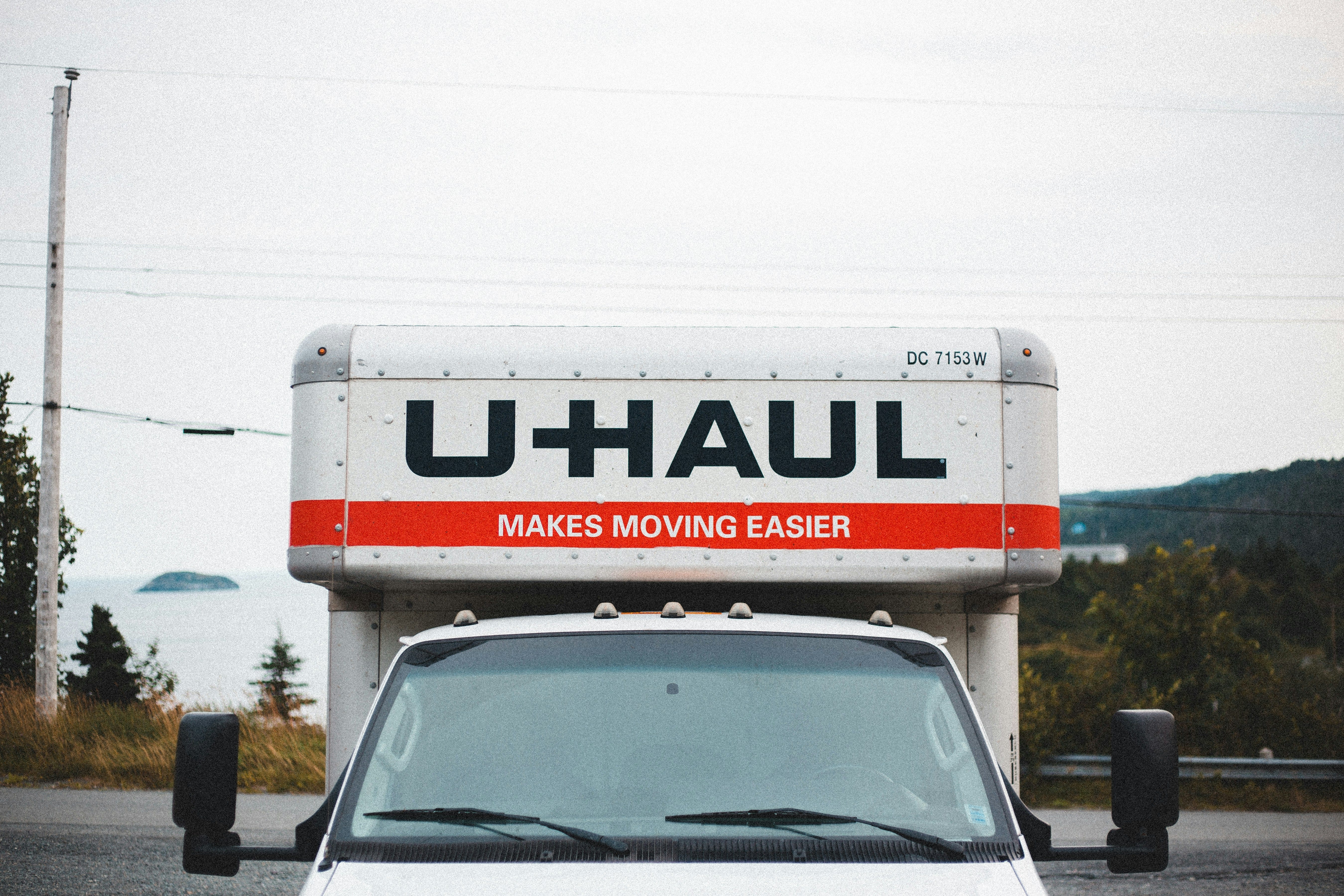
You could also call it a semi-forced moving meditation on stuff, as I was moving a U-Haul truck’s worth of my mother’s things—someone else’s stuff, but mine by inheritance—out of my stepfather’s house.
My mom passed away more than 14 years ago; it’s only now that my stepdad has felt ready to let go of her stuff. And that was okay, because I was largely not ready to receive it.
I’ll say up front I’m a terrible mover. I struggle to judge how much time it takes to physically fill boxes, move them, drive them, move them again, and unpack them. Every single time I will massively underestimate. And because I look at every single thing I’m moving and have some memory arise from it, or some sense of nostalgia, it just takes forever. Reverie overcomes me and I struggle to let go of things. While this was not a full-on move (thank everything that is holy), it still had a twang of that moving vibe that I so dislike.
Handling all this stuff made me think about what it is we pass on to our kids. What do we have a duty to pass on to our kids? What do we have a duty to deal with so we don’t pass our stuff on to our kids (or family members)? What else gets passed on along with physical items?
Few of us think about the fact that if we died tomorrow, someone would have to rifle through, look at, make decisions about, schlep and/or discard our stuff. And few of us really think about the burdens of that task.
I was all the way into the crawl space under the stairs, the one that is mostly neatly kept but definitely had a decayed mouse in the corner, tail left behind as evidence of what it once was. I was trying to pretend I hadn’t seen it. I was also trying to avoid shattering the old-school light bulb every time I accidentally pressed my back against it, hefting things around. Having already pulled out at least ten boxes filled with Christmas decorations, after years prior having already dealt with ten other boxes of Christmas stuff, I had myself a moment. Gripping yet another box full of Christmas ribbons, I sat there and thought… Mom, I just don’t know what to do with all this fucking stuff.
Christmas decorations are one thing, but then there’s the stuff that you can’t get rid of for one reason for another. The antique sewing machine that was likely my great grandmother’s, or possibly older, for example. It’s a beautiful piece of furniture but wildly impractical. Heavy. Needs serious cleaning and restoring. This is legacy right here — but Lily, my daughter, has no emotional connection to these people as she never met them. By the time she is an adult, this may be completely uninteresting to her. Perhaps my aunt or my cousin wants it, but then I’d have to ship it back to the East Coast. Do I sell it? Feels wrong. Clean it up and donate it to a museum as a period piece? Maybe. Either way, this will remain at my house until I figure this out. And let’s be honest, I may never figure it out, and this stuff may sit here until I pass and Lily has to figure it out.
Then there are the collectible items. My mother was a collector of books, beanie babies, all kinds of strangely valuable tchotchkes, etc. I had no idea what most of the tchotchkes were until I looked it up and realized no, I should not just donate these to Goodwill. But selling them responsibly requires eBay, Facebook Marketplace, or something of the sort. I could hire someone who sells collector’s items, or I could go to the Picker Nose, the local flea market (yes it’s really called that) and rent a booth for a month, but they’ve got a six-month waiting list.
Then there’s the stuff that you have to throw away because there’s nothing else to do with it. This is where my tree-hugging side wrings her hands. Just down the block from my stepdad’s house is another house with a huge dumpster parked in the driveway. The kind that requires 18 wheels to support as you haul it away. Every time I drove by it, it was piled higher. Stuffed animals, old furniture, pillows, etc. etc. That stuff is just going to the dump where it will rot (or not rot, because most of it is probably made of some kind of plastic hybrid), for all eternity. I hate that part too. I couldn’t help but think about the fact that there is no such thing as “throwing it away” every time I threw something in the garbage. It doesn’t just disappear into a void.
Look, you might be rolling your eyes by now, thinking that I’m a total brat for complaining about inheriting wonderful things from my mother. I accept that. I’m aware that not everyone has that experience, and that I’m coming from a place of privilege. I feel a lot of gratitude for the thoughtfulness with which Mom shopped. My house is now filled with truly lovely things, and the warmth of the dark wood furniture she favored has really changed the vibe of my house. I knew she was a shopper, but I had no idea she was a talented collector with an eye.
And… I can have the gratitude and still have to work through the fact that the dispensation of stuff is work. The storing, moving, and tending of stuff is time, space, and effort. For someone who is more attracted to the spiritual, intellectual, and emotional realms, rather than the physical realms, this is a lot of matter to contend with. For someone who has been contemplating having significantly less stuff prior to this experience, and what it might be like to pare down drastically, this is going in the opposite direction.
Some people actively decide not to pare down before they die. My stepdad is a classic elder Boomer who will absolutely not throw anything away unless you pry it out of his hands. We were once excavating the rafters of his garage and I pulled down a pair of Reebok sneakers, circa 1980. I moved to throw them in the trash and he exclaimed that he was, of course, “looking for those,” and would soon wear them. A battle ensued. I won that battle, but have lost many others.
My stepdad likes to joke about this. Once, I was standing in the basement, having already dealt with some task. He was sitting on the steps. I asked him about cleaning out some other closet, and he picked up his phone and began to scroll Instagram, telling me nonchalantly: “No, you guys can deal with that later.” I turned to look at him fully, hands on my hips, and said “Is this your strategy? To leave this to us to figure out when you die?” And he said “Yep! Ha ha ha!” with a big smile on his face.
I don’t blame him, though. He’s buried two women that he loved. His children grew up in that house, and then his grandchildren, and soon his great grandchildren will toddle around. Every single item in that house speaks to his joy and memories—and to the grief of saying goodbye to long-gone versions of those he loved, and himself. Though many of these items are precious, they come loaded with the energy of a time that no longer exists. That’s why it’s hard.
Not everyone hoards their grief in the rafters, though. There are those parents who go the other way. After I schlepped all of my mother’s things to my house, a friend told me that his parents had decided to start downsizing to spare them the ordeal of having to go through their things. This resulted in his parents arriving at his house one day, car filled with his high school pottery projects, telling him it was time for him to take care of this stuff.
I’d like to be better for my kid so she doesn’t have a mountain of multiple generations of stuff to deal with. It calls to question how exactly we choose what to preserve, how we choose what to archive. It makes you consider what things mean, what they mean to you, and what they might one day mean to your descendants.
While I was having my existential crisis in the crawl space, Lily happened to peak her head in at that moment. She asked what I was doing.
“Ohhh… Thinking about what it might be like for you when you have to inherit all my stuff… and if you even want all of that,” I said.
“Nope,” she said, and scurried off.
This publication is supported by readers like you. If you like the writing, please share.
If you feel you’d like to support the work, becoming a paid monthly subscriber is the best way to do so. Thank you for reading!
Comments
Nothing yet. Say the first thing.
Sign in to join the conversation.