
Animated films felt juvenile to me and that’s why I never really gave it a chance. I remember reviewing a short film for a writing class hosted by Prof Natasha Badhwar . It was called Alike and I remember writing all about the creative decisions such as using black and white, exaggerated emotions on characters, and leveraging the digital medium.
I think the extra shot of creativity you experience while watching an animated film has to do with the artistic decisions - they are much deeper and foundational than traditional films. With Animated films, you need to decide everything from scratch. There are no frames of references. Even the characters need to all be imagined first, conceptualized, and then crafted. Traditional filmmaking on the other hand has a few foundational truths that must remain. You can’t really change them - for example trees all look like trees, humans all like humans. Both the filmmaker and audience have this shared sense of foundation in that case.
This is totally lacking in Animated films, and production houses must put in extra effort to make sure that their characters (which don’t resemble real life stuff in a lot of cases) are understandable by the audience. The canvas is really totally blank. And once they hit the mark with that understanding, the audience’s acceptance becomes so complete and affectionate that we start calling it a “universe”—like the Marvel Universe or the Toy Story Universe.
And this blank canvas version is also reflected in the way I review animated movies. A lot of my evaluation are questions like these: How did they even think of that character? How did they even decide to make this setup? Mind = Blown
Back to my lack of animated movies in my life. I started properly by watching Madagascar. My friend Tanaya suggested this movie to me after I had gone to Zambia, Africa for my summer internship and I was completely obsessed with Baobab trees and all things wild. She said that the movie will take you back to those times, and boy it did! I loved that they used more pop, more saturation, more computation with nature - they made nature look animated than animation looking more natural.
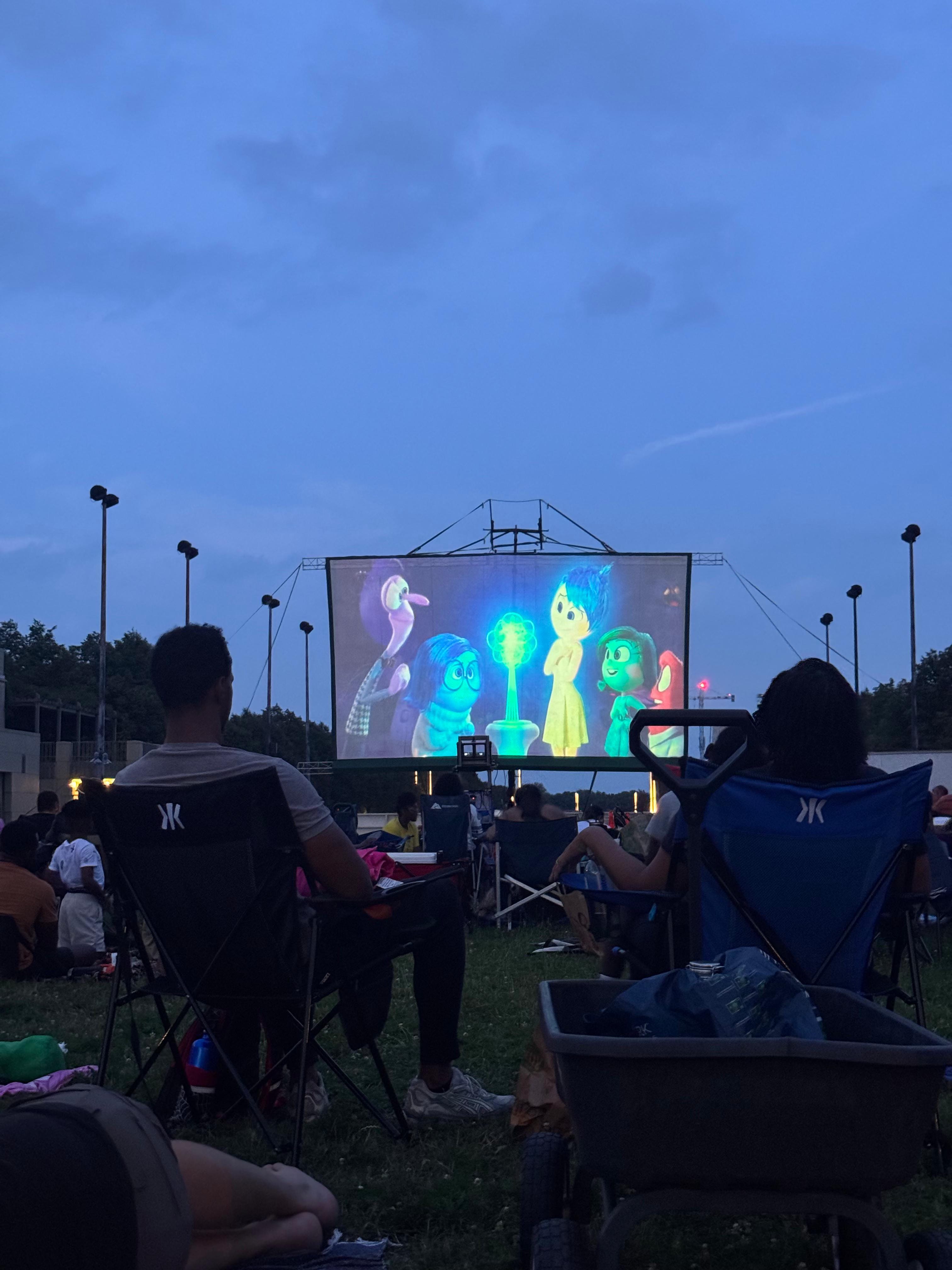
Then I resumed with Toy Story and that movie was amazing! From the larger message to the quippy humor in the film, everything was great! And one by one, I have now watched a lot of animated movies: Toy Story 2, Finding Nemo, Inside Out, Inside Out 2, & Cars 1, 2.
I always knew Disney and Pixar movies were the gold standard in animated movies, with Disney being the old, classic trendsetter, and Pixar being the new, edgy production house. But I wanted to know more, so I picked up a book called Creativity Inc. by Ed Catmull, the CEO of Pixar and his journey with Animation.
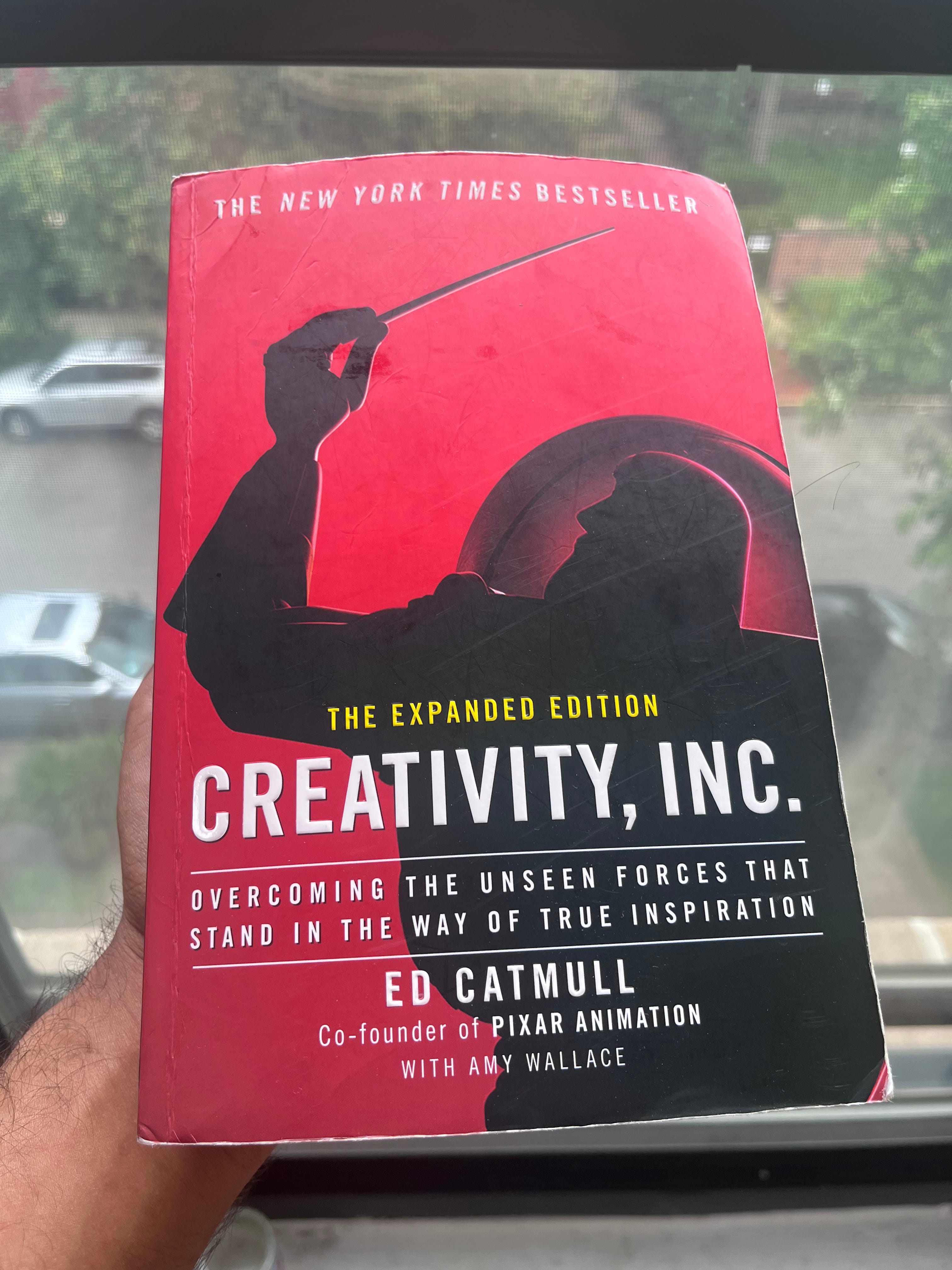
Reading this book in tandem with watching the movies felt like I was both a part of the audience and also the crew at the same time. I really highly recommend this book and Pixar movie marathons at the same time.
Knowing the thought process behind the construction of narratives, characters, and how they grew to the challenge of creating a full movie from nothing made me appreciate animated movies all the more.
Reading this book touched on a personal dilemma of mine. A lot of us know this famous quote, ‘Don’t let perfect get in the way of good’. I think this has become so famous that it graduated from becoming a quote to a platitude. But people get the wrong meaning from this.
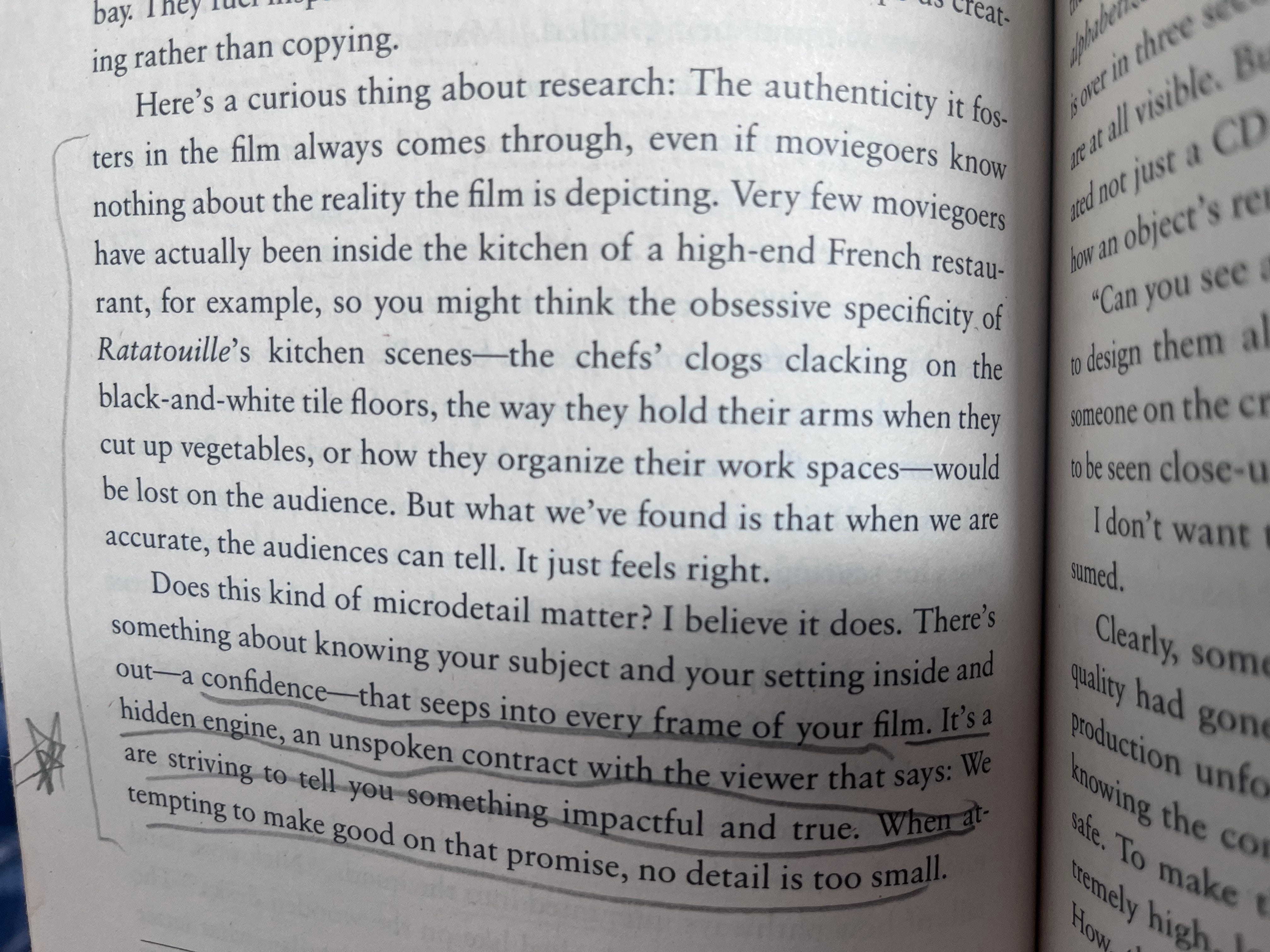
Perfectionism is good. Having an eye for detail, knowing the ins and outs of your craft reflects in the confidence with which you create art, and that comes through to the audience. However, perfectionism can also be addictive because it gives you a credible excuse to not show your work. Because when it is ready, it is also ready for critics, both inner and outer.
Now this is easier said than done, but also easier unsaid than said. I am always trying to question my perfectionism: Is this serving the purpose of the craft or is it avoiding criticism? In the answer to this question lies the balance of ‘meticulousness’ and expression.
Here is the quote from the book which I really love and you would too.
Oh! And I forgot to mention that right after my first Pixar movie, I looked up a dataset on their filmography. So there you have it, after my 5 minute monologue on lack of animation and now the excess of it, a data narrative on Pixar.
Pixar is a cutting-edge animation company which began in 1986. They started with Toy Story which was the first fully computer animated movie. Over the decades, they have gone through a total of 28 movies, some fully in-house and some in contract with Disney. They eventually got acquired by Disney in 2006.
The book talks a lot about the differing cultures in Disney and Pixar and thus their reluctance to get acquired. They wanted to merge with a bigger production house to not be impacted by economic forces, and in turn, Disney wanted to acquire them to revive its struggling animation division.
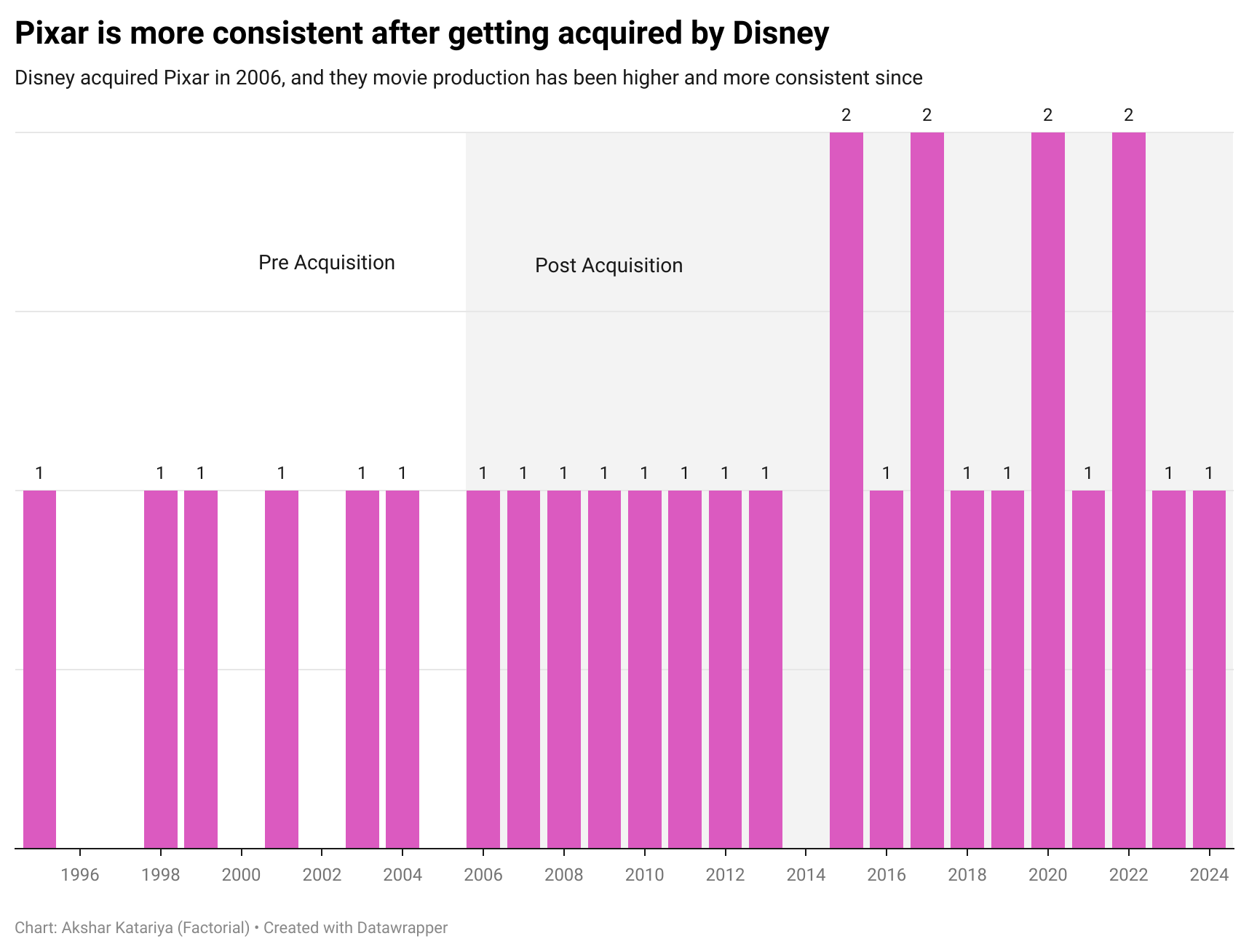
Since their acquisition, Pixar, from a plain production numbers lens, have been more consistent in their production.
One knows Pixar has a lot of sequels: Toy Story series, Incredibles Series, Finding Nemo/Dory, Monsters series, Inside Out series, & Cars series. That made me wonder if they have more originals or more sequels.
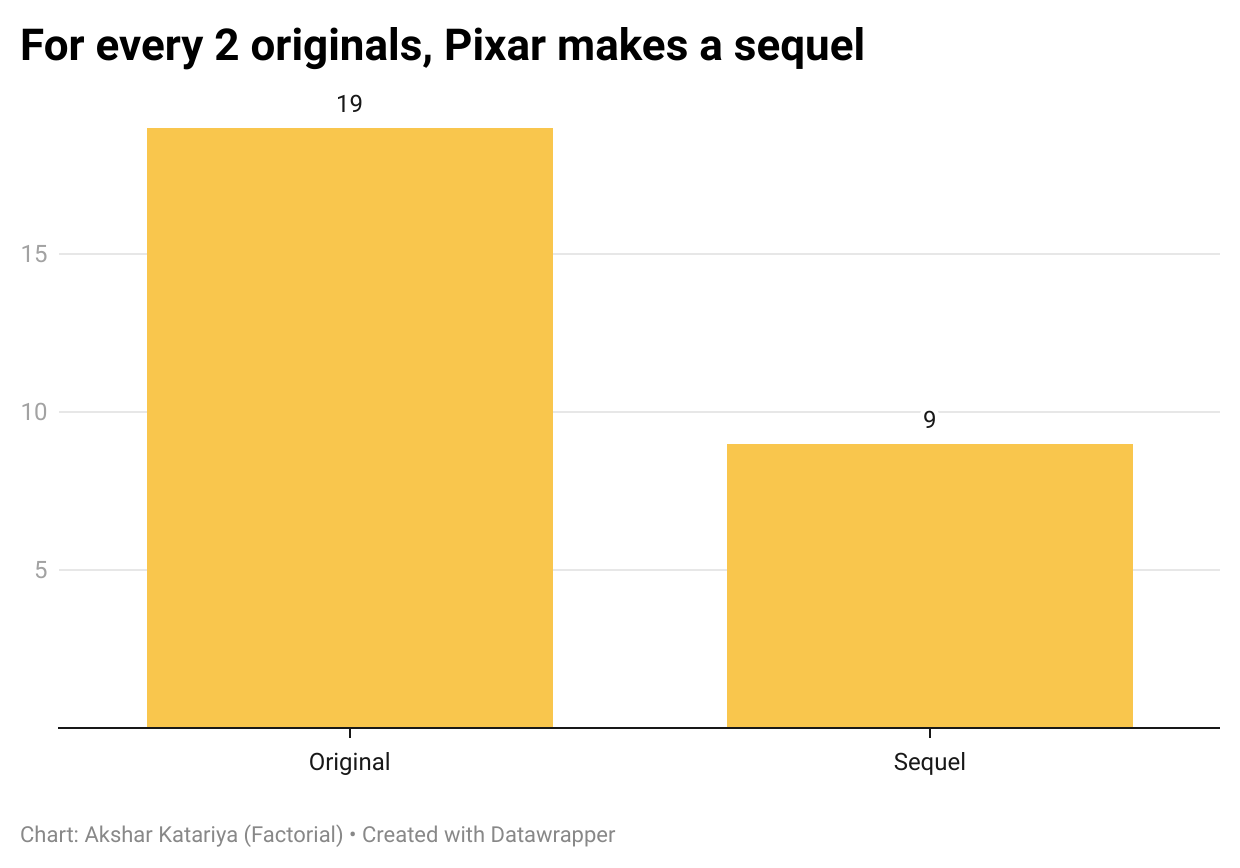
Pixar has a lot of sequels, but it's nothing as crazy as Housefull 1, 2, 3, 4, 5 (those who know it know it). According to the data it is mostly 1 sequel for every 2 originals. But why is that the case and why do most animation studios seem to follow this trend?
For one, Sequels are often less risky. The hard part that I spoke about in the beginning of the essay of creating everything from nothing doesn't have to be repeated with sequels, and they also have an established fan base. This is not to say that the sequels are an easy way out.
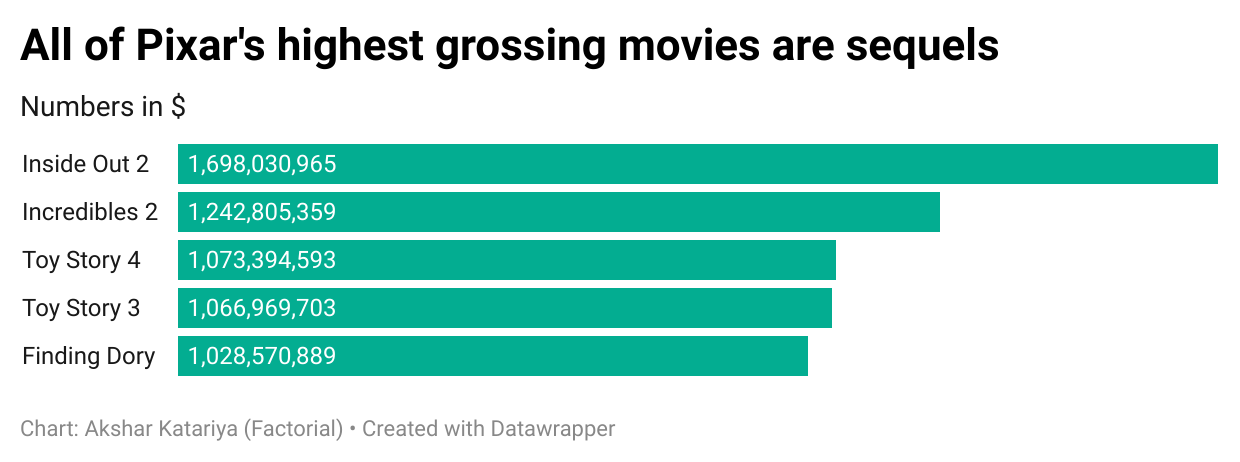
There was a 13 year gap between Finding Nemo and Finding Dory. Releasing sequels after so many years goes to show that their fan base isn't static. Those who loved Nemo are in a completely different age group for when Finding Dory was released and yet they are confident that the new movies will appeal to both age cohorts. Their confidence with sequels is well documented in its box office success.
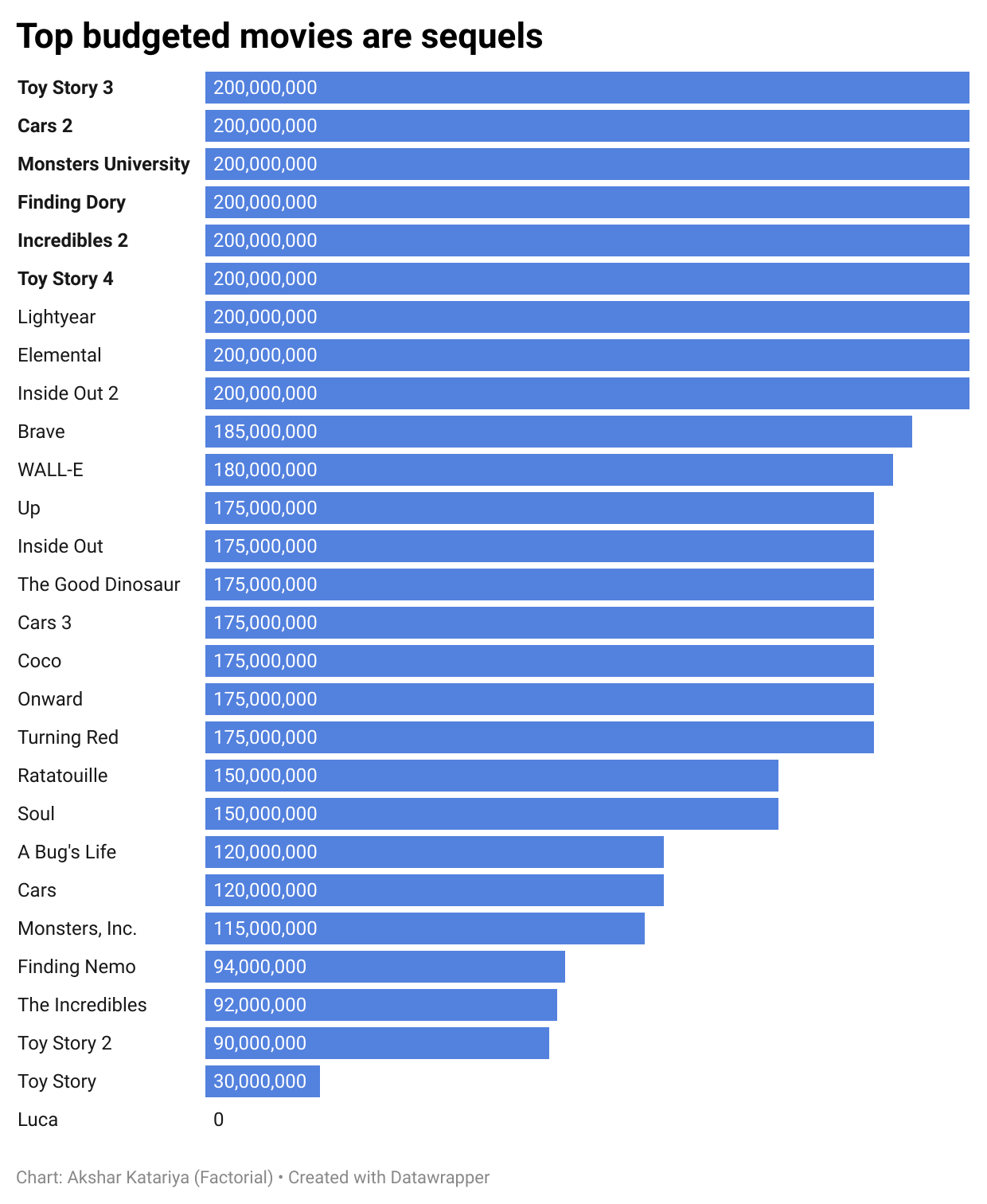
And as it would follow, they also have the highest budgets earmarked for sequels. There is no official budget data on Luca; that's why it states 0. But it could be somewhere between 70-100 Million $.
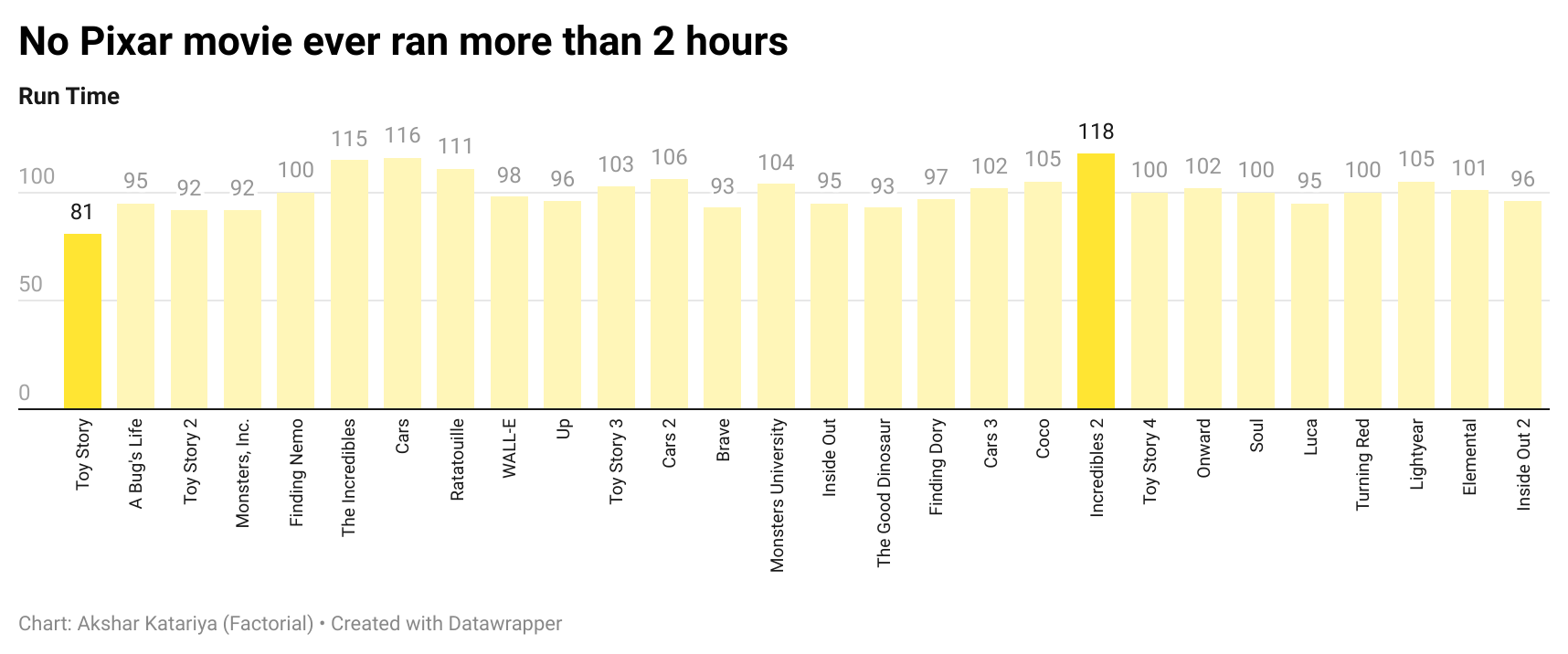
Pixar movies also run shorter generally with no movie of theirs ever crossing the 120 minute mark! Their shortest movie is just 81 minutes.
I was talking about this post with my friend Riya and she had this cool idea of seeing if Pixar movies pass the Bechdel test. Now that was an interesting proposition!
The Bechdel Test is checks if a movie treats female characters as more than just sidekicks. It has three simple rules:
It must have at least two women,
who talk to each other,
about something other than a man.
Many films surprisingly fail this test.
Fun fact: The Bechdel test is developed by a cartoonist named Alison Bechdel
Surprisingly, the answer is No. Like Finding Nemo, a lot of Pixar movies don’t pass this test. However, this test is a bit too simplistic to apply to animated movies like the ones Pixar makes.
A movie can pass the Bechdel Test with one shallow conversation but still have weak female representation overall. A film like Finding Nemo may fail the test but still have strong, complex female characters.
Here is the blog which shows which Pixar movies pass/fail the Bechdel test:
https://ladiesofcomicazi.com/posts/2014/03/05/bechdel-test-the-pixar-films-part-one
https://ladiesofcomicazi.com/posts/2014/04/02/bechdel-test-the-pixar-films-part-two
The Bechdel test, in my opinion, is a good gauge above the movie level. By this, I mean that it should not be used for individual movies as its too simplistic, but it can be very well used for gauging different movie industries, cinematic universes, and even production houses if it has a large number of films. That aggregated number can reveal broader patterns about systemic imbalances.
Asking my friends, I found that Rotten Tomatoes is a much widely used rating system, but it's not entirely straightforward to understand.
IMDb ratings are calculated based on individual user scores from registered users around the world. Each user can rate a movie on a scale of 1 to 10, and IMDb aggregates these into a weighted average. So it calculates perceived quality or rating of the movie, but it doesn't directly calculate how widely liked it is i.e. consensus
In contrast, the Tomatometer on Rotten Tomatoes measures the percentage of approved critics who gave the film a positive review (typically 3.5/5 or higher). A movie with a 90% score doesn’t mean it’s rated 9/10; it means 90% of critics liked it. Essentially, the tomatometer emphasizes consensus rather than rating.\
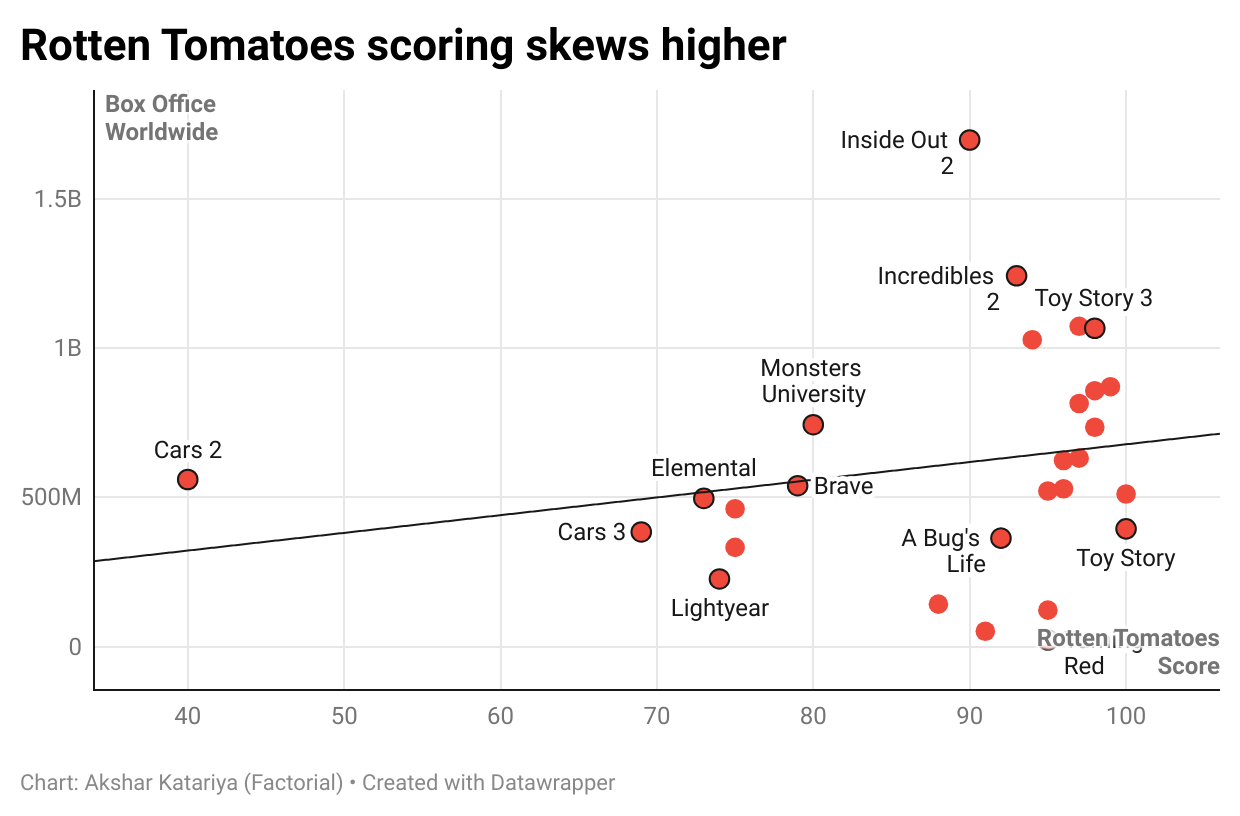
This checks out in the data as well; measuring consensus will yield higher numbers than ratings. You can see how the Rotten Tomatoes score is skewed a bit higher and is concentrated mainly in the 90-100 bin with some grouping also in 70-80s.
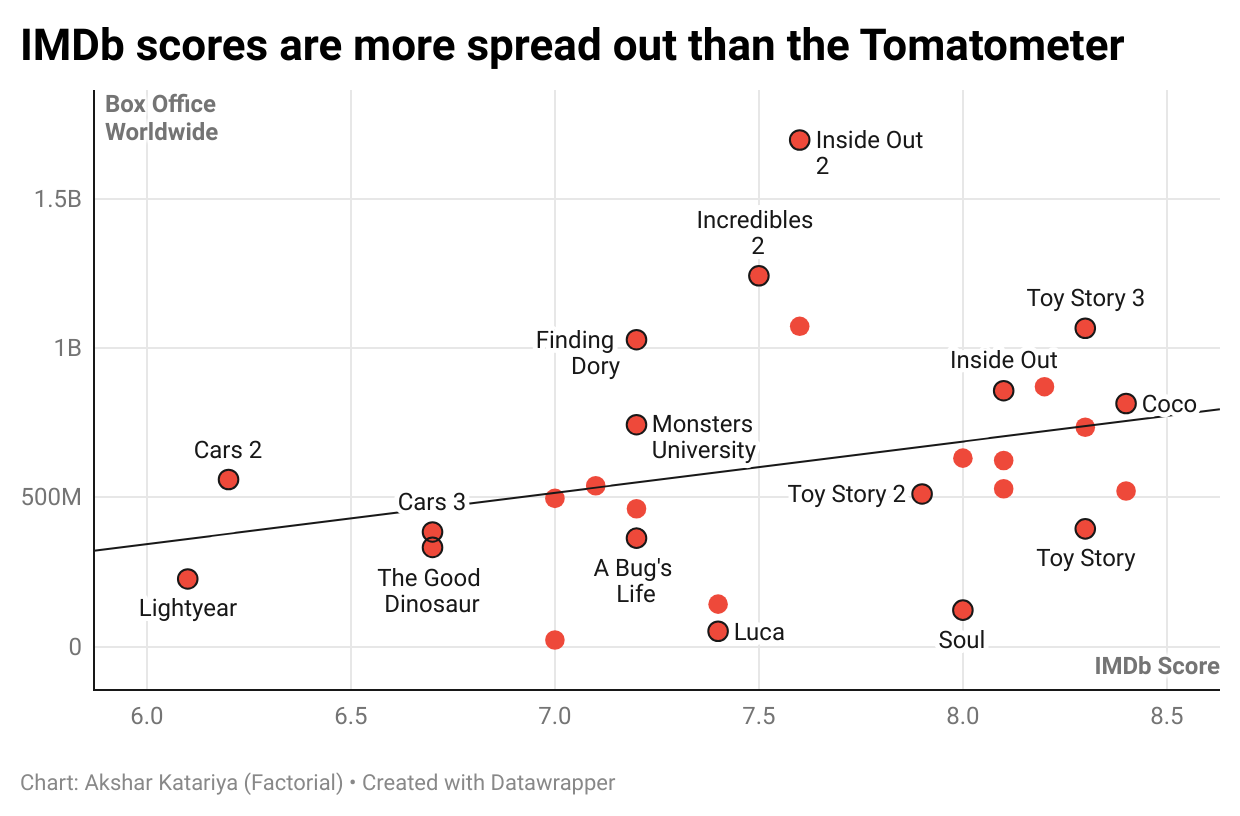
On the other hand, IMDb scores are much more spread out as it's not a consensus, its pure rating and so it will have inherently more spread.
We can also see both IMDb and Rotten Tomatoes generally go hand in hand with box office collections. Higher the rating, higher the box office collections.
Now I’ll tell you why these scatter or dot plots are my favorite to visualize. Note that the line is the line of the best fit. A line of best fit is a straight line that goes through a scatterplot to show the general trend of the data. It helps you see if two things are related and how they are related (positive or negative).
Know a friend who loves Animated movies? Like this post and share it with them to make their day!
With this plot and the line, we can figure out underrated movies. We need 2 conditions for this:
It needs to be in the right side of the chart as we only want movies with high ratings duh
It needs to be below the line of best fit sort of i.e. lower box office collections.
So applying both these rules together, we get a quadrant on the bottom right which are movies that are highly rated + low box office collection = underrated
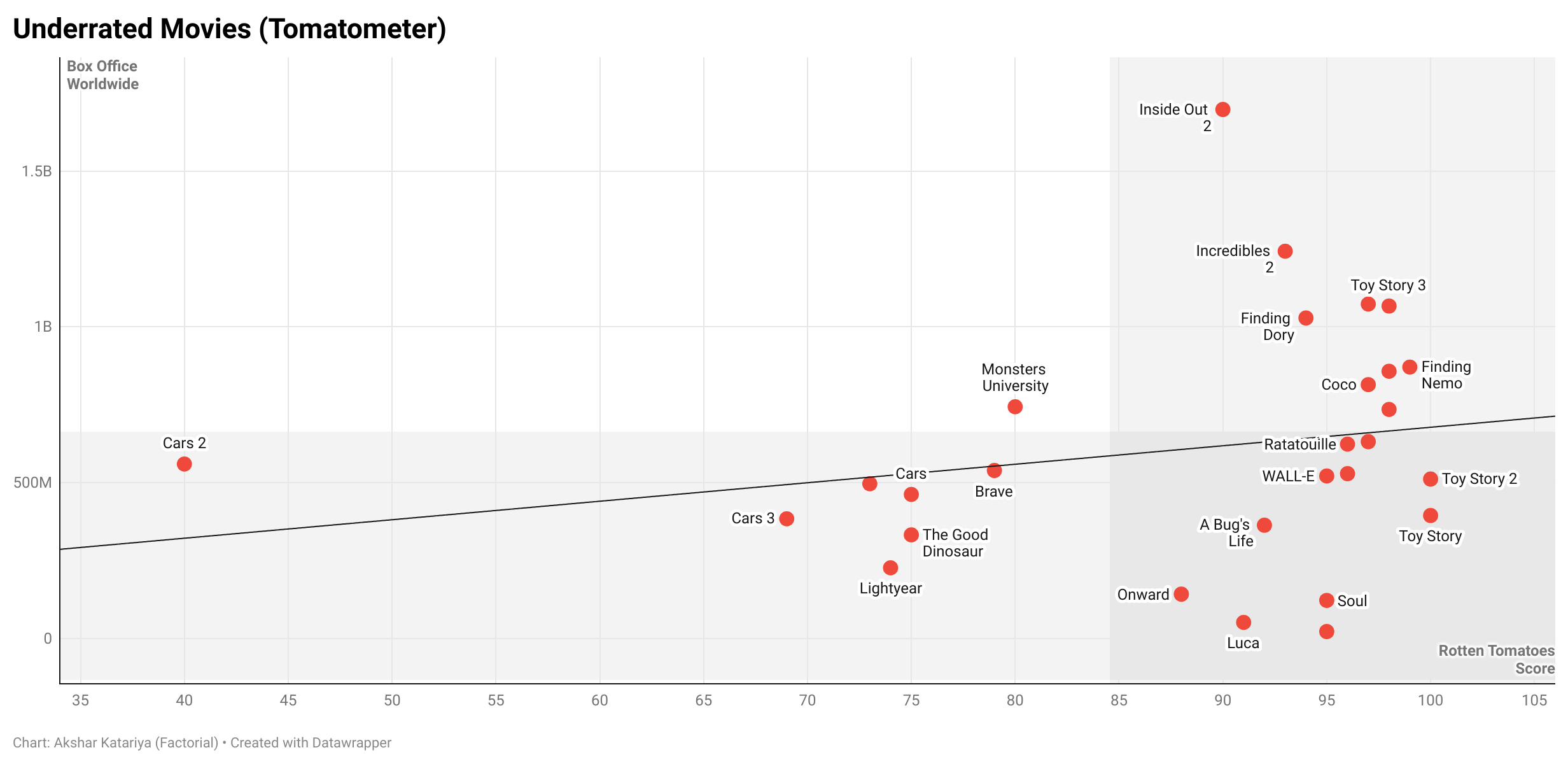
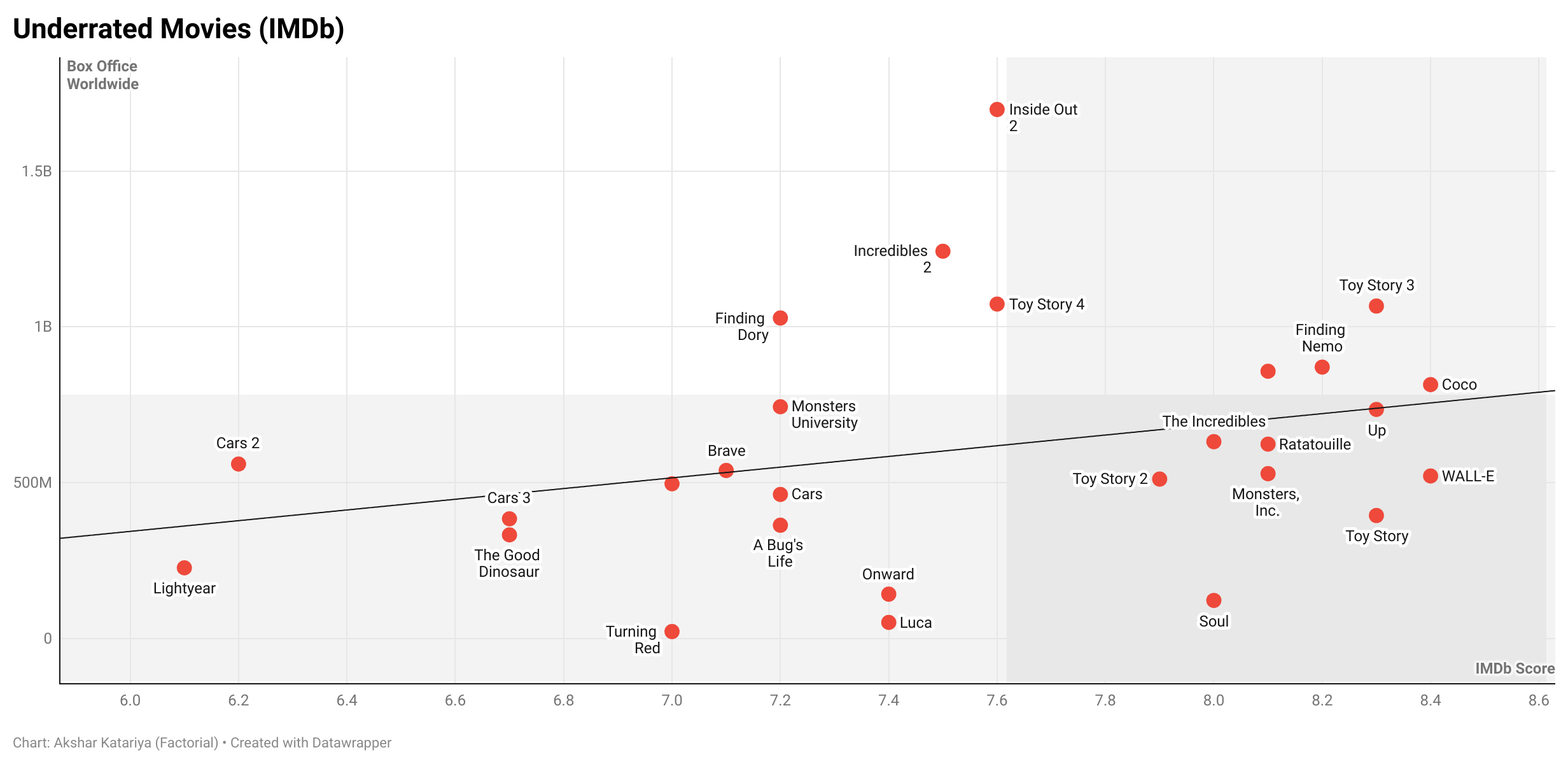
There you go, now you are a data detective. Not only patterns, but you can also identify individual parts of the plot and what they represent. And as a plus, you can use this to find your next watch.
Comments
Nothing yet. Say the first thing.
Sign in to join the conversation.