
My very first evening in Berlin, I saw my name and face more times than I ever have at once: Bills on outdoor walls, flyers, trifold programs, rear windows, framed on the wall, on stands outside doors. The reason: the fact that I was curator of the 2025 African Book Festival in Berlin, with a spotlight on Ghana and speculative fiction. Within certain constraints and parameters, this means I had a lot of influence over which authors and program activities occupied the stages throughout the festival weekend. However, one piece of the festival program I was consensually distanced from was the main event of the festival’s opening night: a staged reading of my debut novella—which had only just been translated to German that week—directed by Moses Leo.
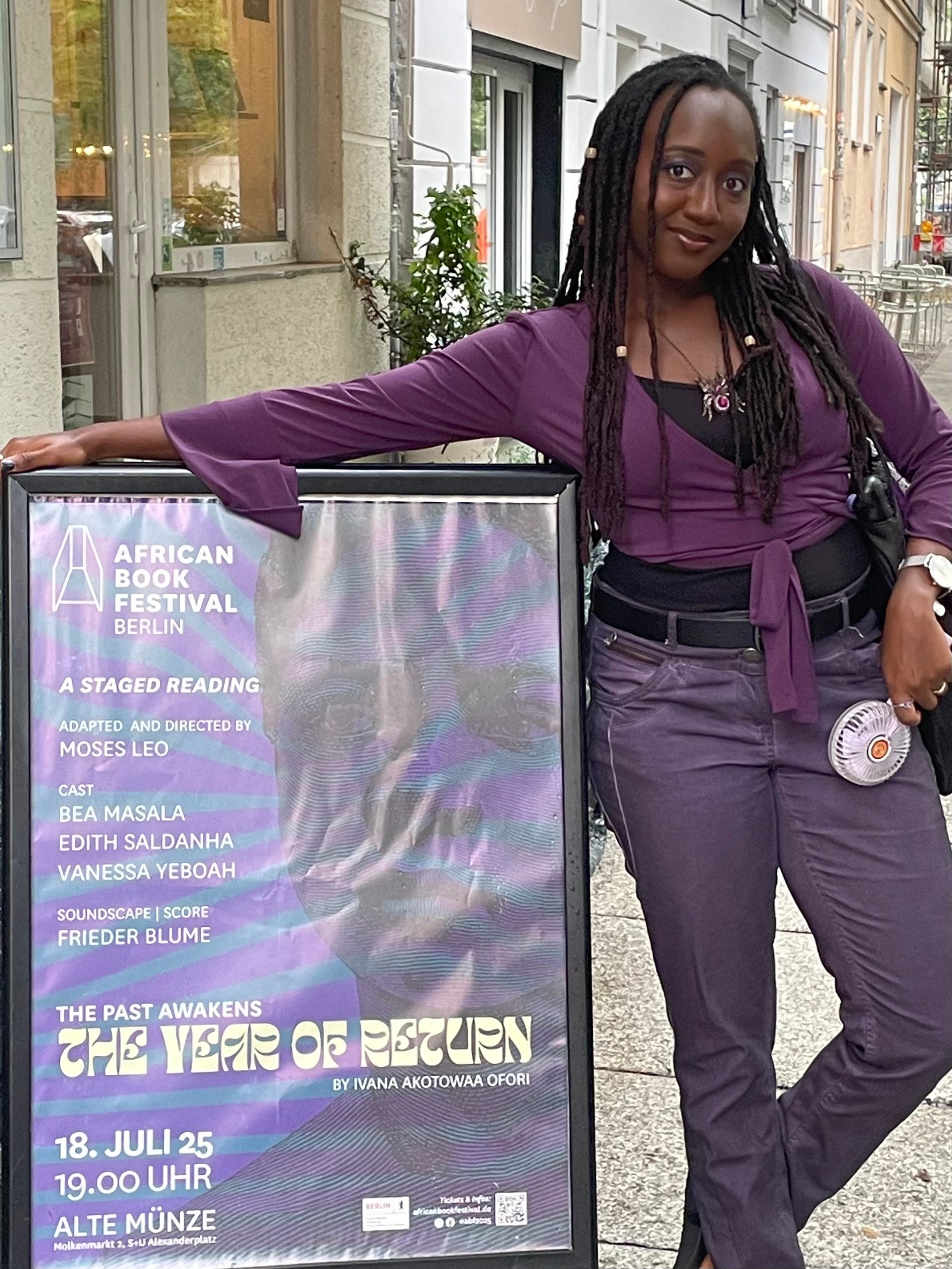
A few months before the festival, I was on a call with the director, Stefanie Hirsbrunner, which is when the idea of bringing The Year of Return to the stage came up. The prospect excited me. The closest I had ever come to seeing my work performed (other than my own performance poetry, of course), was in the recording of my scripted podcast, Green Green Grasses. But I had felt the cinematic quality of The Year of Return even before publication. I haven’t given up hope that I might one day convince Blitz Bazawule to adapt it. Anyway, I didn’t know anyone who could put The Year of Return on stage in Germany. Luckily, Stefanie did. Thus began conversation between her and the phenomenal—but at the time, unknown to me—Moses Leo.
I looked Moses Leo up but did not insert myself into the conversation. I had my hands full with trying to pull together the program for the rest of the weekend, and the rest of my life. I had enough faith to leave opening night out of my own hands.
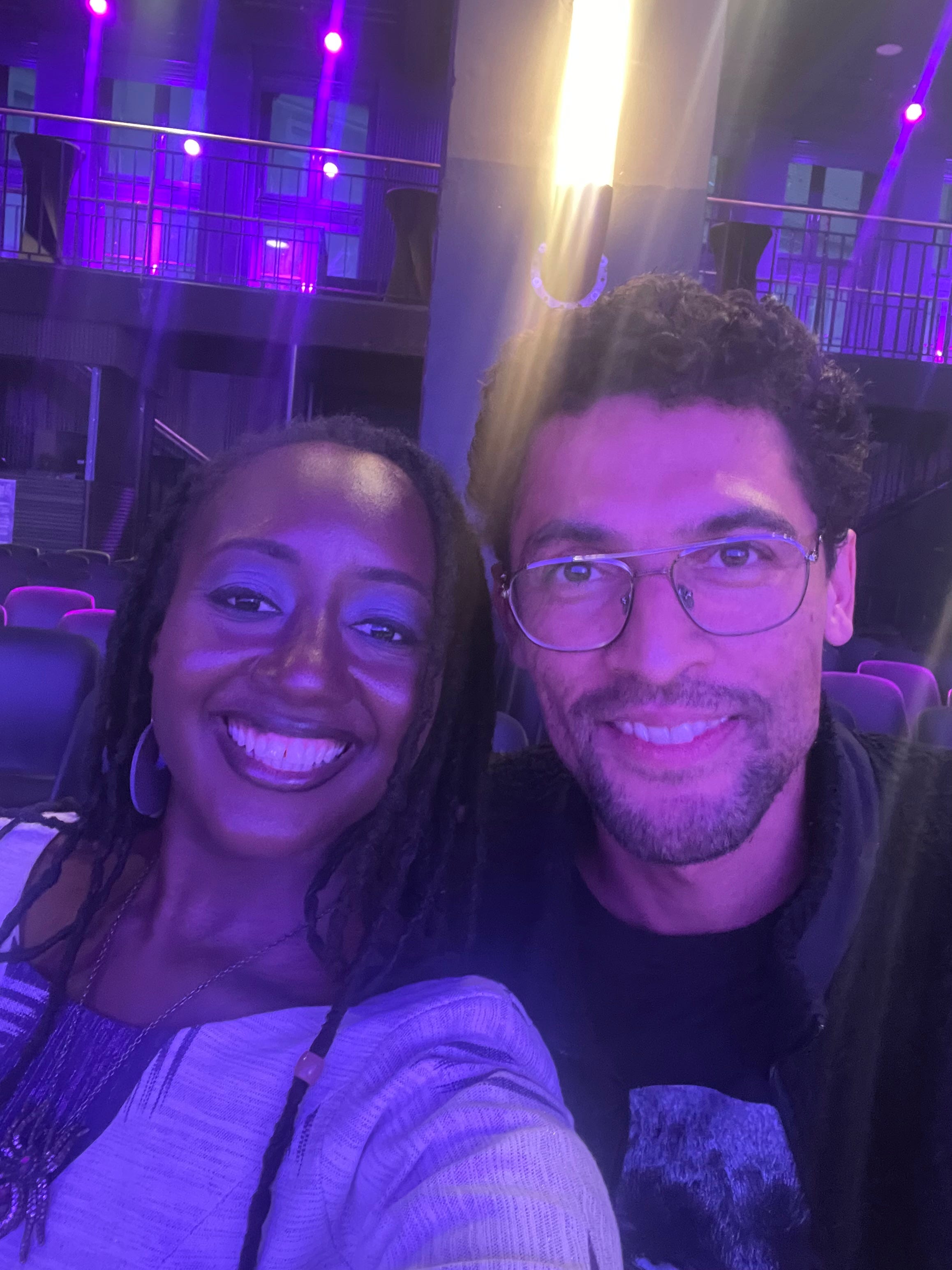
And so, on the evening of Friday 18th July 2025, as the festival’s guest authors and I milled around Alte Münze in Berlin, waiting for showtime, I caught only a glance of Moses Leo and the three actresses whom he had hired, rehearsing in the auditorium which was as yet closed to the public. That glance was the most I had seen of the staged reading’s progress since approving the idea and handing it off. I had no idea what to expect. It added to the excitement.
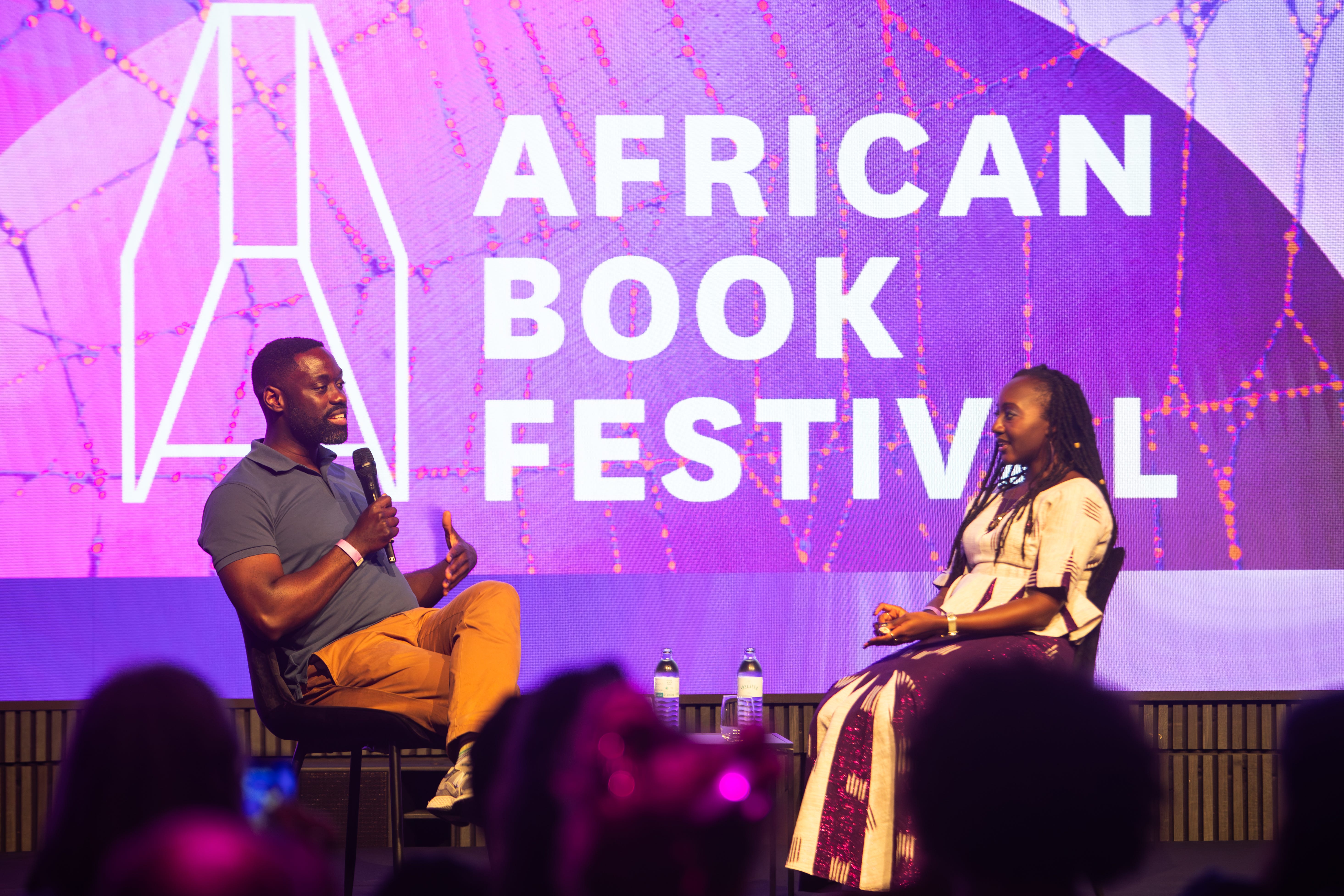
The staged reading was the main event of opening night. It was sandwiched between an opening keynote from me and a Q&A between myself and one of the warm and lovely members of the African Book Festival Board, Chiponda Chimbelu.
I was not prepared for the magic of what I witnessed that night, on that stage. More than once, I was moved to tears, several times inspired into laughter, an enraptured member of the audience, thrust with passion out of the author’s seat, knowing what came next and yet unable to detangle myself from the web of tension ensnaring me as though witnessing an original work for the first time. Moses Leo, I don’t think I will ever be able to thank you enough for this gift.
He had an hour and a half to somehow portray The Year of Return on stage. Despite the relative brevity of a novella compared to a novel, I knew that this would be no small feat. The angle he took was beautiful and brilliant—and he made sure it ended just before anything about the novella’s highly polarizing ending could be given away.
For one, Leo selected choice passages from within the novella to compose the script. As anyone who has ever edited written work knows, excising entire passages is a job on its own. What he was left with ended up highlighting the subplot which I had barely paid attention to earlier: the relationship between my main character, Adwapa, and her mother, Dr. Florence Mensah. Through Leo’s artful curation of passages, what came out was a haunting tale of three related women from different generations and how their relationships with one another and even themselves as individuals evolved and deepened over the course of the story. These women’s trajectories, when condensed in this way, was shockingly profound when unencumbered by the other plot elements. The dynamic tale of three women had always been there in the manuscript, but it took this reading for me to see it for what it was. I was stunned at the depth of what I had written, like I couldn’t believe this had come out of me.
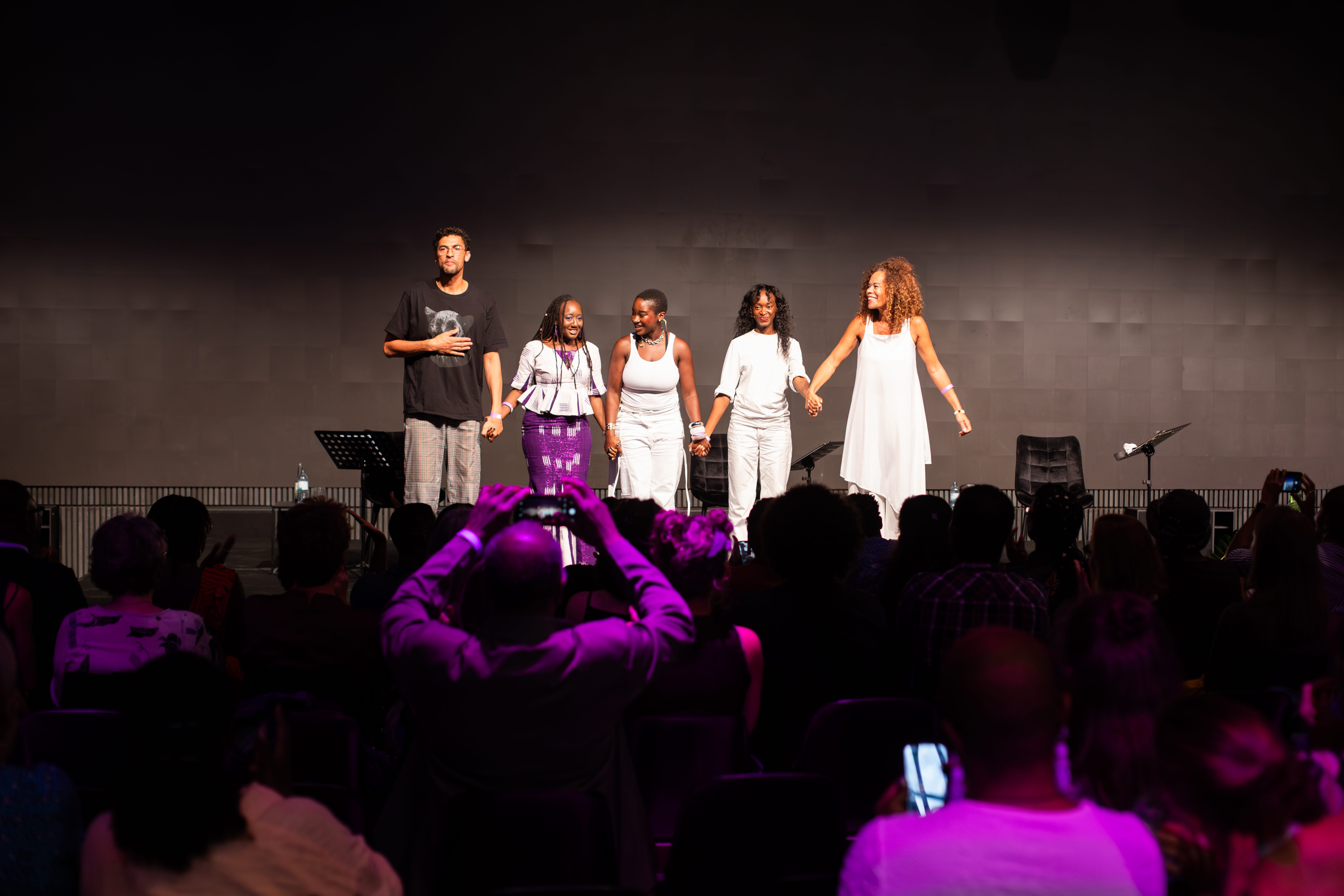
The lines were performed by three brilliant Black female actresses: Bea Masala, Edith Saldanha, and Vanessa Yeboah. For anyone not as familiar with the manuscript as myself, perhaps the storyline may have been difficult to follow (I haven’t asked) because the three actresses exchanged roles often, each switching between Adwapa as first-person narrator, Adwapa’s direct speech, Oneisha’s direct speech, Charlene’s direct speech, and Dr. Mensah’s direct speech. For me, this only increased the dynamism and gave the entire performance a sense of fluidity. Watching it unfold was like trying to keep up with the ebbs and swells of an ocean.
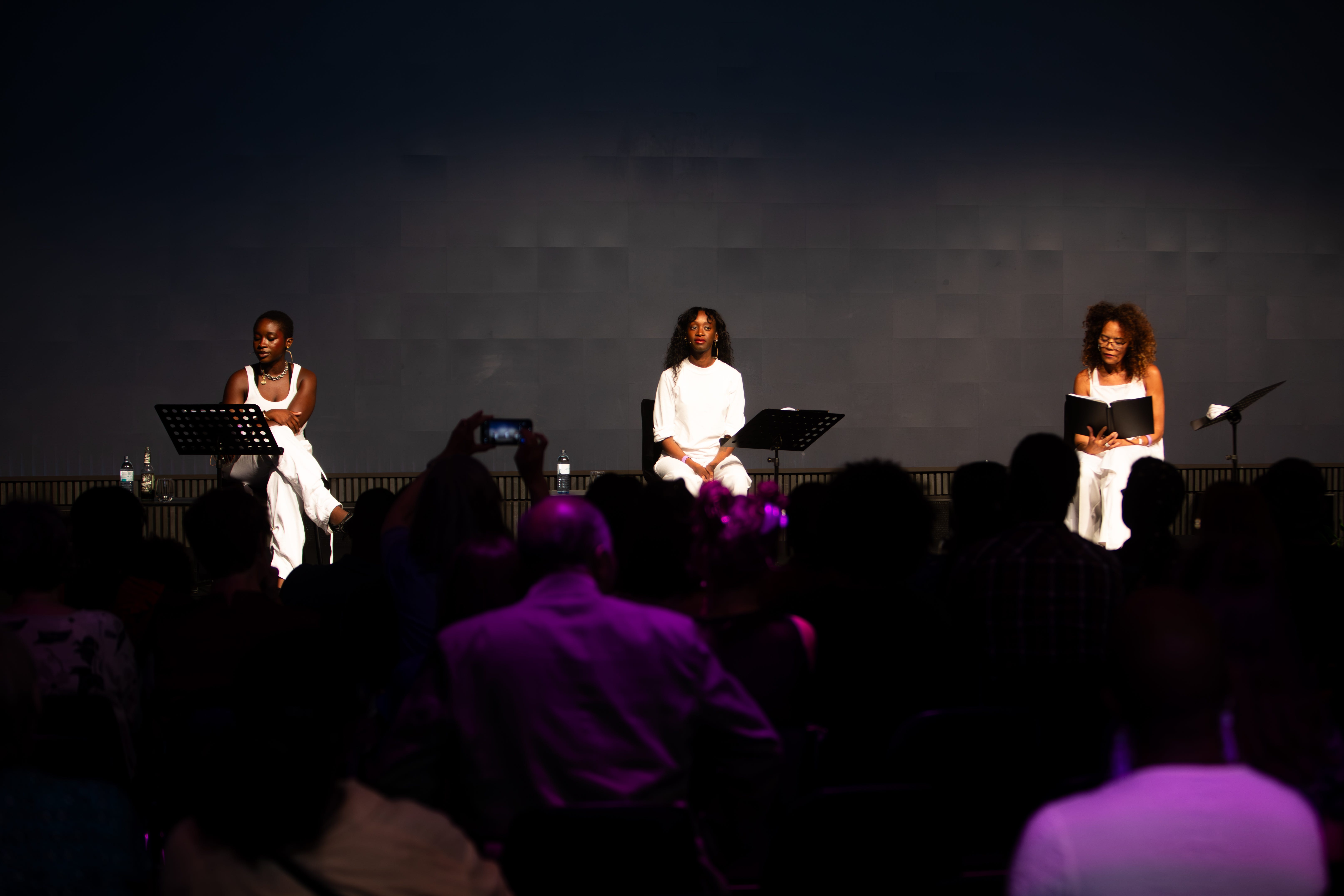
Beneath the voices and behind the actresses was another type of ocean. A unique soundscape created by composer/producer Frieder Blume made sure that the space between scenes was marked with drama — creepy enough to inspire thoughts of ghosts, undulating enough to have a listener visualizing waves, calm enough to encourage the audience to dwell for a few seconds in reflection of what they’d just heard. On the screen behind the actresses, kaleidoscopic graphics rose, crashed, and morphed at each interlude. The sound and visuals were immersive elements I may never have thought to add if creative direction been up to me. They made a world of difference, in conjunction with the dimmed lights, making me feel like, for an hour and a half, I had truly been transported to another world. For a time, the universe I had created in The Year of Return was the only one that existed.
Being so close to a work of art can sometimes desensitize you to its effects. Several times over the past year and some change, I have read from the same one or two passages at readings and publicity events. I rarely feel anything anymore at the opening scene than a mild cringe reaction to my main character’s sharp, judgmental opinions (even if she’s trying to be better). But I also rarely read past that beginning scene. I’d forgotten how swiftly the plot carries the characters through a rapidly changing world, how deep the wound related to the traumatic history the characters barely scrape the surface of really is. I hadn’t even been aware, until I saw the work through another artist’s eyes, how much depth was embedded in these vivid characters. For a year, I had been swimming mostly at the shallow end of this story.
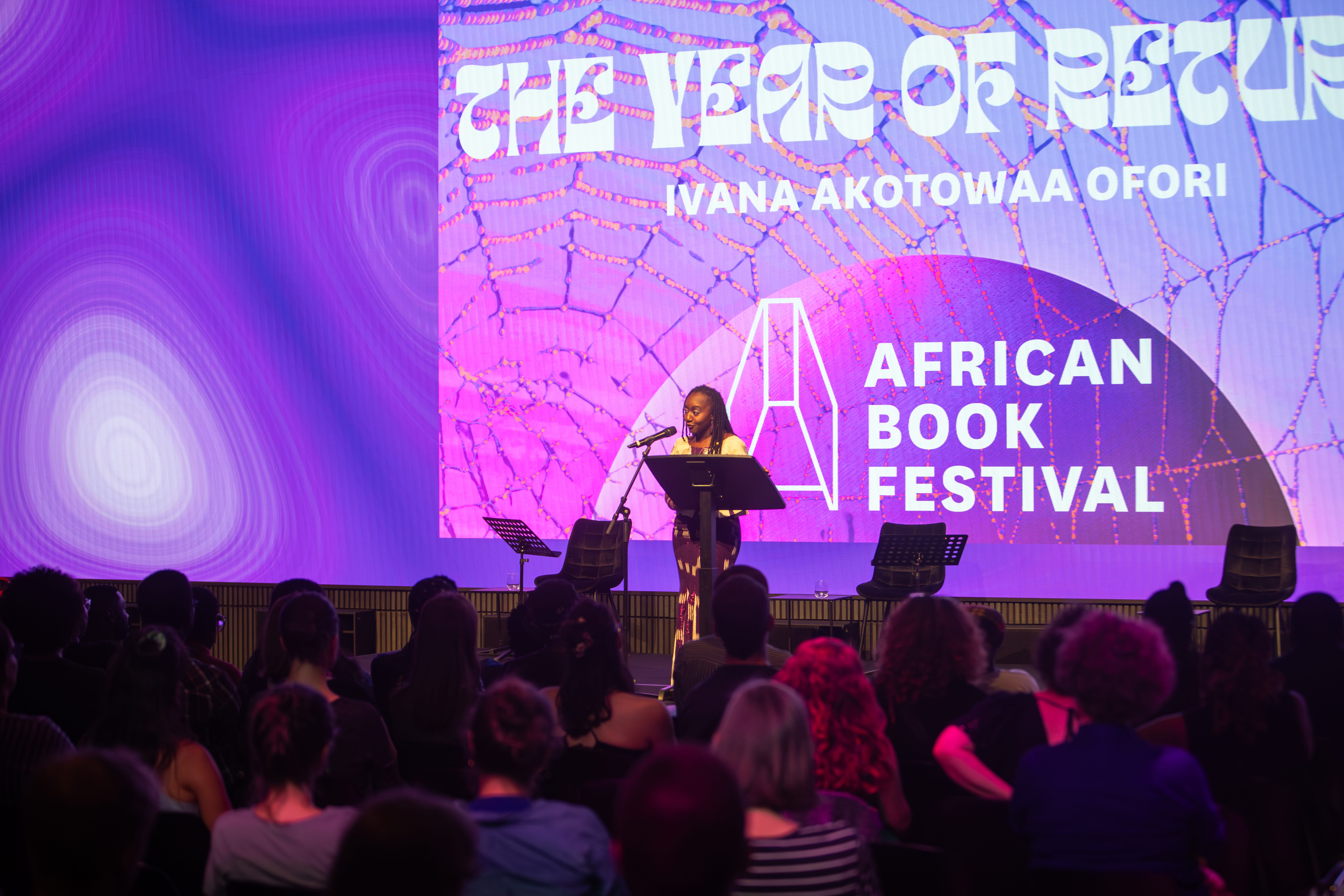
The Year of Return packs in so much more than I imagined it did, even in its brevity. I am so grateful to Stefanie Hirsbrunner for bringing Moses Leo to the festival, grateful to Moses Leo for his genius in execution, to Bea Masala, Edith Saldana, and Vanessa Yeboah for bringing my words to life, and to Frieder Blume for plunging me several feet deeper than my own mind could take me.
It was unforgettable.
Medaase. 🕸
No posts
Comments
Nothing yet. Say the first thing.
Sign in to join the conversation.