
Tokyo teaches you quickly that Japan is not one culture. It is thousands of local habits, loyalties, rivalries, shrine calendars, neighborhood committees, and seasonal obligations stacked on top of each other. Festivals are where that becomes visible.
That is why we do not see matsuri as decorative travel content. They are not just lanterns, floats, food stalls, and photos for people passing through. At their best, they are one of the clearest ways to understand how a place in Japan actually works.
And if you are thinking seriously about living here, buying here, or spending real time outside the tourist circuit, festivals matter more than most people realize.
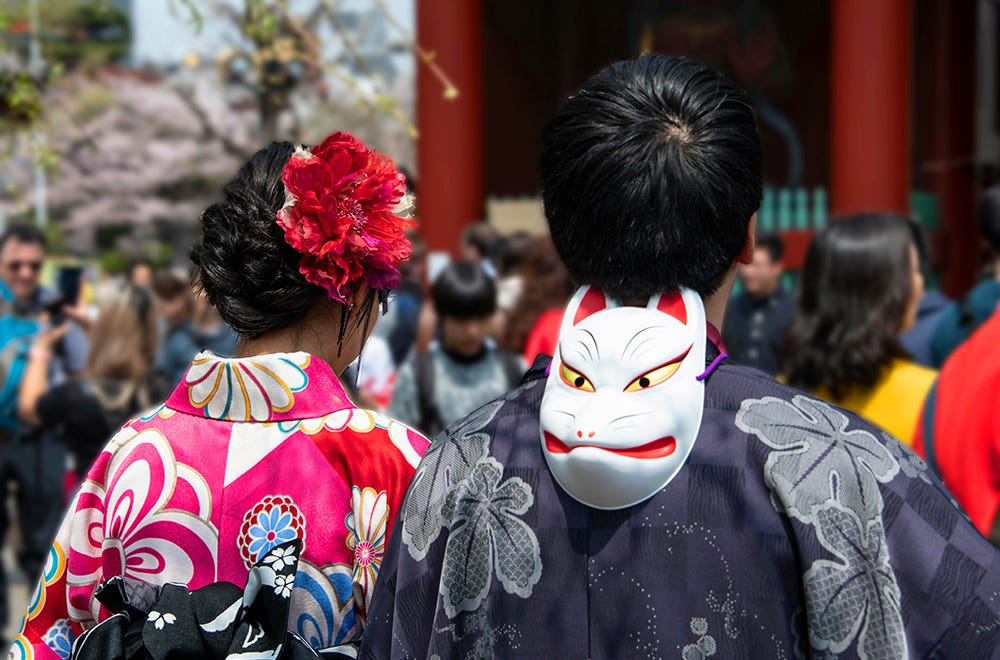
Gion Matsuri in Kyoto is the obvious starting point. It has more than a thousand years behind it, and the famous yamaboko floats are impressive, but the real lesson is continuity. Kyoto does not stage Gion Matsuri to entertain visitors. Visitors are allowed to witness something the city already does for itself. That distinction matters. Go for the July 17 or 24 parades, arrive early, and do not treat the streets like a private viewing platform.
Sapporo Snow Festival is a different kind of spectacle. It is newer, colder, and more outward-facing, but still deeply tied to place. Massive snow and ice sculptures in February make sense in Hokkaido in a way they would not anywhere else. This is the kind of event people casually underestimate until they realize accommodation is gone and the city is full. Book early, dress properly, and do not pretend winter in Sapporo is a mild inconvenience.
Awa Odori in Tokushima is probably the best correction to the myth that Japanese tradition is always quiet and restrained. It is loud, physical, repetitive, and communal. Thousands of dancers fill the streets in August, and the line between performer and spectator can become thin. That does not mean you should barge in like you own the place. It means you should understand the rhythm first, then join where joining is invited.
This post is public so feel free to share it.
Aomori’s Nebuta Matsuri is another reminder that regional Japan does not need Tokyo’s permission to be extraordinary. The illuminated floats are huge, theatrical, and aggressive in the best way. Warriors, gods, and mythic creatures move through the streets at night with dancers and musicians around them. If your image of Japan is minimalist beige interiors and quiet temples, Nebuta will correct you quickly.
Tokyo has its own old civic muscle too. Kanda Matsuri is not quaint nostalgia. It moves through Kanda, Nihonbashi, and Akihabara with mikoshi, priests, traditional dress, and shrine ritual tied to Kanda Myojin. The setting matters. Seeing a major shrine festival cut through modern central Tokyo is a useful reminder that this city did not erase its older layers. It built over them, beside them, and sometimes directly through them.
Osaka’s Tenjin Matsuri has the confidence you expect from Osaka. Land procession, river procession, illuminated boats, fireworks. It is crowded, direct, and not subtle. Good. Not everything in Japan needs to be meditative. Some traditions are meant to take over the city.
Sendai Tanabata is softer, but not shallow. The streamers and wishes can look pretty in a way that makes visitors reduce it to decoration. That is lazy. Tanabata is about longing, timing, separation, and hope. Walk the shopping arcades in early August, look up, and pay attention to how much care goes into temporary beauty.
Takayama Matsuri is another case where setting does half the work. The mountain town, Edo-period streets, yatai floats, lanterns, and puppet performances all fit together. This is not a festival that can be lifted out of place and reproduced honestly somewhere else. That is the point. Japan’s strongest local culture is often inseparable from its built environment.
Nagasaki Kunchi is important because it breaks the simplistic idea of “pure” Japanese tradition. Nagasaki was a trading port, and the festival reflects Chinese, Dutch, and Portuguese influence alongside Suwa Shrine worship. The dragon dance is not a gimmick. It is history moving through the street.
Then there is Obon, which visitors often misunderstand because it is not primarily for them. It is family, graves, ancestors, memory, and return. Public events like Kyoto’s Daimonji bonfires or Hiroshima’s floating lanterns are powerful, but they sit on top of something more private. Approach Obon with respect. Not every meaningful thing in Japan is available for consumption.
The practical advice is simple. Plan early. Read the dates carefully. Expect crowds. Pay for reserved seating when it makes sense. Learn what shrine or local history the festival is tied to. Most importantly, stop treating festivals as interchangeable seasonal entertainment.
For people looking at homes in Japan, especially in regional areas, matsuri can tell you things a listing never will. Who maintains the neighborhood? How active is the community? Is the town proud, tired, performative, or genuinely alive? You can learn a lot by standing still and watching who shows up.
Read the full original Akiya Heaven guide here: https://akiyaheaven.jp/japans-most-famous-festivals-and-how-to-experience-them/
Thank you for reading Akiya Heaven's Substack! Subscribe for free to receive new posts and support our work.
Comments
Nothing yet. Say the first thing.
Sign in to join the conversation.