
Last week I wrote a short post about Virginia Woolf’s 1918 novel Night and Day, which, while nostalgic about Victorian way of life, takes place in London around 1910. In the book, the character of Mary Datchet is involved in suffrage work, working for the fictional ‘S.G.S.’, in the heart of Bloomsbury in Russell Square. Woolf herself was involved in the suffrage campaign in London from 1909 to 1910 (when she was still called Virginia Stephen, before her marriage to Leonard Woolf).
It’s worth noting, as the suffrage historian Elizabeth Crawford points out here, the society that Mary works for might not have been an explicitly women’s suffrage society; the group that Virginia Stephen joined, the People’s Suffrage Federation based in Mecklenburgh Square, was to promote universal suffrage and campaigned to remove the property basis as the qualification for citizenship.
My historical theme for this month is Cambridge’s suffragists and suffragettes, and this week’s post is about a woman who became a friend of Virginia Woolf’s in 1909 and remained part of her Bloomsbury circle: Ray Strachey. Later, she would become one of the most influential figures in the fight for British women’s suffrage and employment rights in the first half of the twentieth century, and write a book about it called The Cause: A Short History of the Women’s Movement in Great Britain, published in 1928. She was a suffragist, not a suffragette, though if you read on, you’ll see that there was a moment when she was tempted to ‘cross over’. And it all started at Newnham College, Cambridge in 1905.
(Post edited July 16 to include more information about the suffrage poster seen behind Ray in the ‘suffrage caravan’ photograph below.)
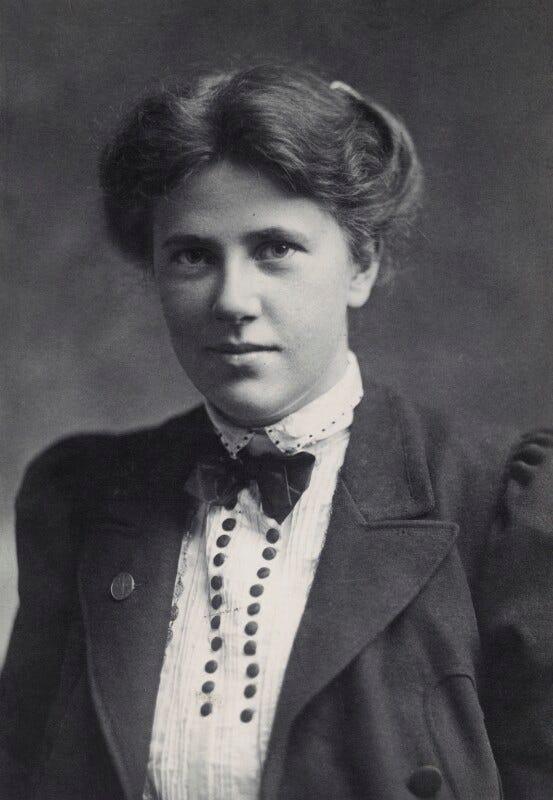
Rachel ‘Ray’ Strachey (née Costelloe) was born in London in 1887, the first child of Frank Costelloe, an ambitious Irish barrister-journalist, and Mary (née Pearsall Smith), a Quaker from Philadelphia. Mary’s evangelical parents moved to England soon after their daughter’s marriage, which they never approved of, given that Frank was a Catholic and Mary had converted to Catholicism. Ray’s sister Karin was born two years later, but the Costelloes’ marriage was unhappy, and Mary wanted to pursue her studies in art history. She moved to Italy to live with the art historian Bernard Berenson, whom she later married.
Ray and Karin were brought up by their father Frank, who had ambitions to become a Liberal MP but died of cancer when Ray was twelve. Their Quaker grandmother Hannah Whitall Smith took over the girls’ care, along with their American aunt Alys Pearsall Smith. Following Alys’s marriage to the British philosopher Bertrand Russell in 1894, ‘Uncle Bertrand’ spotted Ray’s mathematical ability and gave her weekly tutorials, which was a ‘terrifying, but elucidating’ experience, she recalled. But it was thanks to him that she passed the Cambridge Higher Locals examination and began her studies in mathematics at Newnham College Cambridge in 1905.
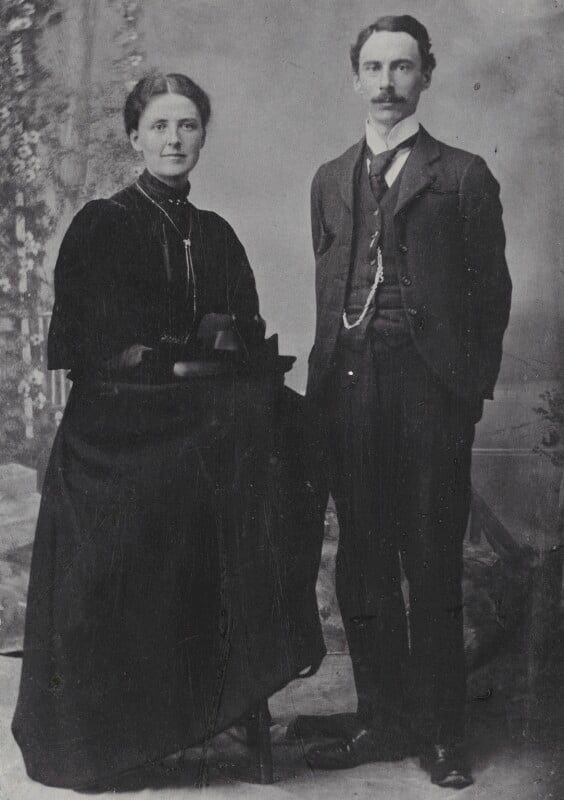
Her friend and fellow Newnham student Ellie (Elinor) Rendel, who was the granddaughter of suffrage pioneer Lady Strachey, introduced her to the campaign to obtain the vote for British women. Like other Newnham students at the time, Ellie and Ray became ‘suffrage mad’, holding suffrage meetings and founding Newnham College’s first suffrage society. Most of the college joined it, including staff, and in 1908 their group merged with its counterpart at Girton College to become the Cambridge University Women’s Suffrage Society. Instead of studying for final examinations, Ray and Ellie spent hours stuffing envelopes, putting up posters and writing letters to former students, appealing for funds for the suffrage cause. Ray managed to scrape through her exams and was placed last in the Newnham contingent that year, but she didn’t mind too much: ‘knowledge isn’t the only point of education’, she decided.
On 13 June 1908 Ray and Ellie along with three hundred university supporters (among them men) proceeded through London carrying a pale blue silk banner designed by Mary Lowndes and hand-sewn by Newnham and Girton students with daisies and irises with the motto ‘Better is Wisdom than Weapons of War’. This beautiful banner has been carefully preserved by Newnham College, where it is kept on display today in a special wooden case.
There were several suffrage gatherings in London that summer, including a national ‘Women’s Day’ on 21 June, when a third of a million people packed into Hyde Park for a demonstration organized by the Women’s Social and Political Union (WSPU), the increasingly militant organization led by Emmeline Pankhurst and her daughters. ‘We were in a howling mob of hooligans, & it was great fun,’ Ray wrote. She admitted that she almost ‘lost her heart’ to the suffragettes (’so repulsive as well as so fine!’), but decided to stay loyal to the constitutional campaigning and Millicent Garrett Fawcett, leader of the National Union of Women’s Suffrage Societies (N.U.W.S.S.).
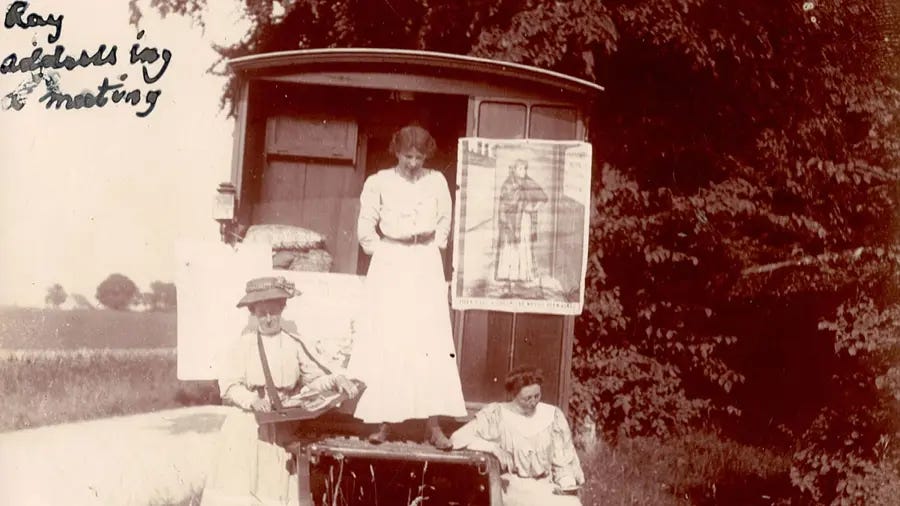
Five suffragists in a caravan
That summer Ray, Ellie and three other women spent a month touring Britain in a horse-drawn caravan called Eva. They worked hard to promote ‘the Cause’: selling badges, distributing literature, writing and delivering speeches. They cooked and camped out in farmers’ fields and encountered persistent rain in the Lake District, intense heat in Scotland and occasionally outright hostility from local people. Newspaper reporters were intrigued by the young women’s dedication to the suffragist cause, and noted how Ray’s impassioned speaking style captivated her listeners.
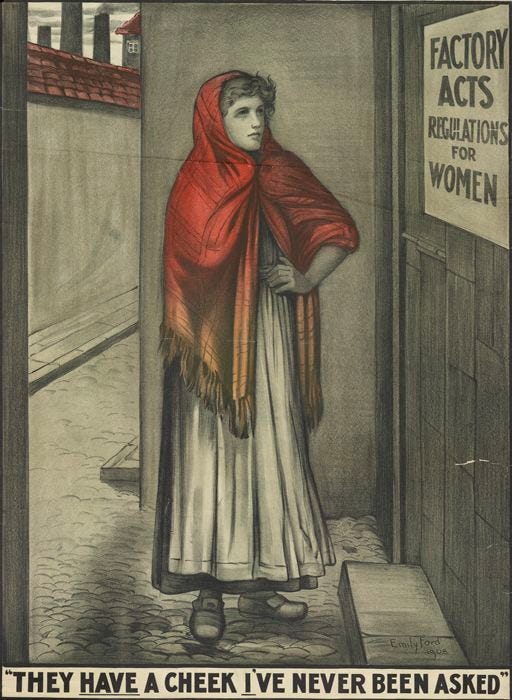
The caravan itself proved to have great novelty value. Ray commented: ‘The van is a great attraction, and helps us to collect our audiences. It gets much admiration and attention, and when it is covered with posters and planted in the middle of a market-place it is a really wonderful sight. We speak from the front which is a very good platform.’1 One of the posters (just visible in the black and white photograph of Ray Strachey speaking from the caravan) was directed at women working in textile factories, who had no employment rights. I was delighted to be invited to see Cambridge University Library’s collection of these rare suffrage posters recently, including this one above. More on this soon!
Her aunt Alys Pearsall Smith attended their final meeting in Oxford that summer and described her niece as wearing ‘a butcher’s apron which she had borrowed to hide her torn and filthy dress, with bare sunburnt arms and a battered straw hat on the back of her head’. People were inclined to laugh at Ray’s appearance, Pearsall Smith observed, ‘but she spoke so well, developing her theme with such clear logic, lightening her enthusiasm with so much humour, that she ended amidst hearty cheers from the crowd.’
Cambridge Ladies' Dining Society is a reader-supported publication. To receive new posts and support my work, consider becoming a free or paid subscriber.
Coming to America, 1908-9
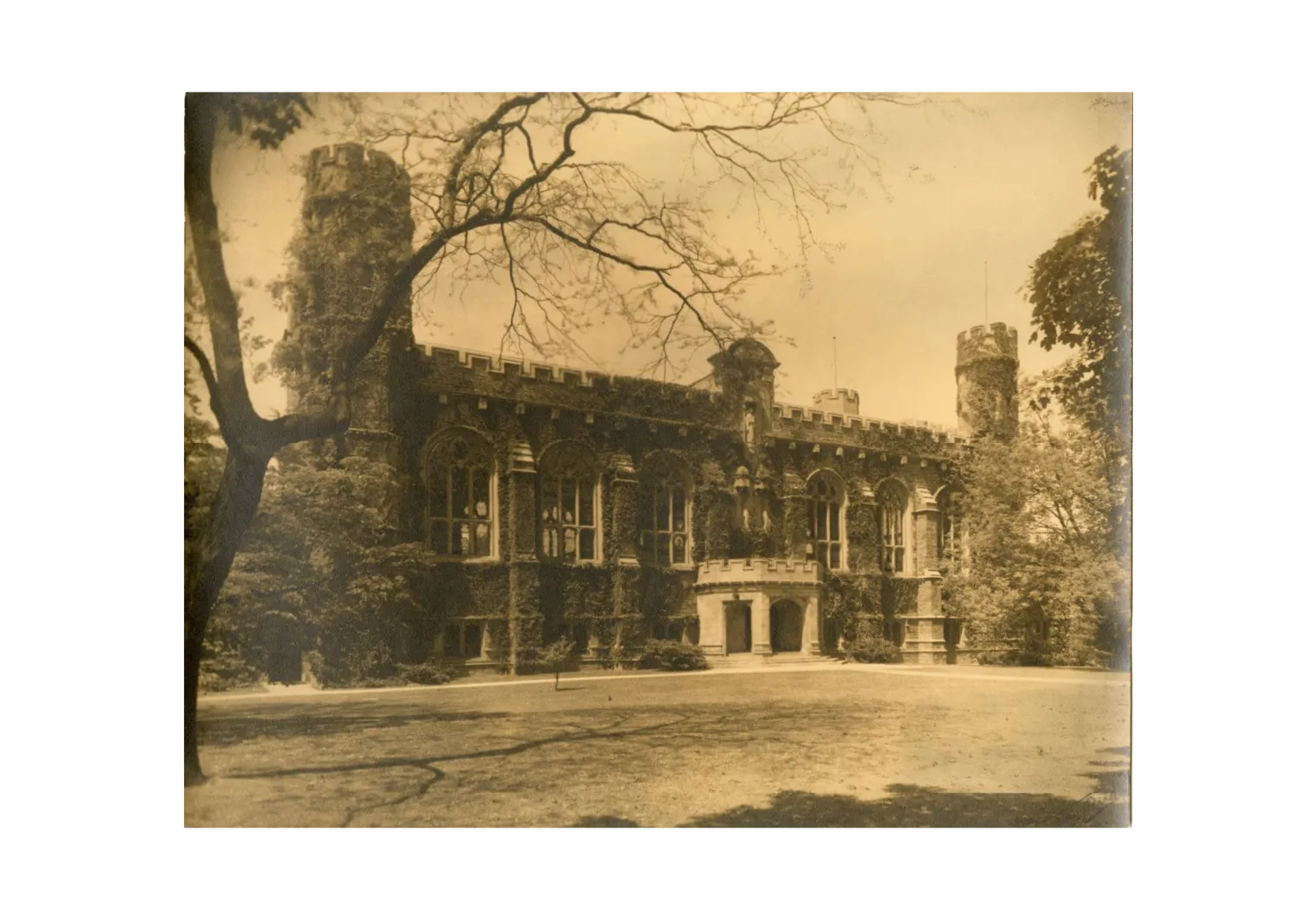
Ray’s mother, Mary Berenson, by now married to Bernard Berenson and an established art expert in her own right, was less impressed. She still longed for her daughter to embrace culture, not politics, and decided that her daughter should spend a year at the prestigious Bryn Mawr women’s college near Philadelphia, where Alys Pearsall Smith had studied. So Strachey travelled there in September 1908, but it ended up not having quite the outcome her mother was hoping for. Her friend Ellie Rendel won a scholarship to the college too, and accompanied her there. They found an ally in Bryn Mawr’s President M. Carey Thomas, who was keen to promote the suffrage cause among American college women.
Carey Thomas took Ray and Ellie along with her to a suffrage convention in New York, and Ray’s speech about the English suffrage campaign so impressed Rev. Dr Anna Howard Shaw, the President of the National American Women Suffrage Association, that she immediately invited the two young women to accompany her to Colorado, one of the few states that had given women the vote. Morale was low in the American women’s suffrage movement and Shaw was convinced that a fresh approach was needed. These two young dynamic British women, both educated at Cambridge, would help her to ‘preach the cause’ in the states they passed through by train on the way there and back, including Indiana, Tennessee and Kentucky.
At first it was an exciting adventure, and in her article for the Denver Daily News, Strachey described how wonderful it was to see women voting: ‘To us women who are struggling so hard on the right of suffrage, and who are willing to go to prison for our convictions, it seems marvellous that the Colorado women can take their voting for granted as much as they accept their right to go on a shopping trip or attend a musicale.’ But the truth was that, although their speeches went down well, the more of America she saw, the more despondent Strachey became about the point of promoting suffrage. ‘They are not awake enough here’, she told her grandmother, ‘all the meetings are drawing-room ones, and consist of the converted.’
An unexpected convert
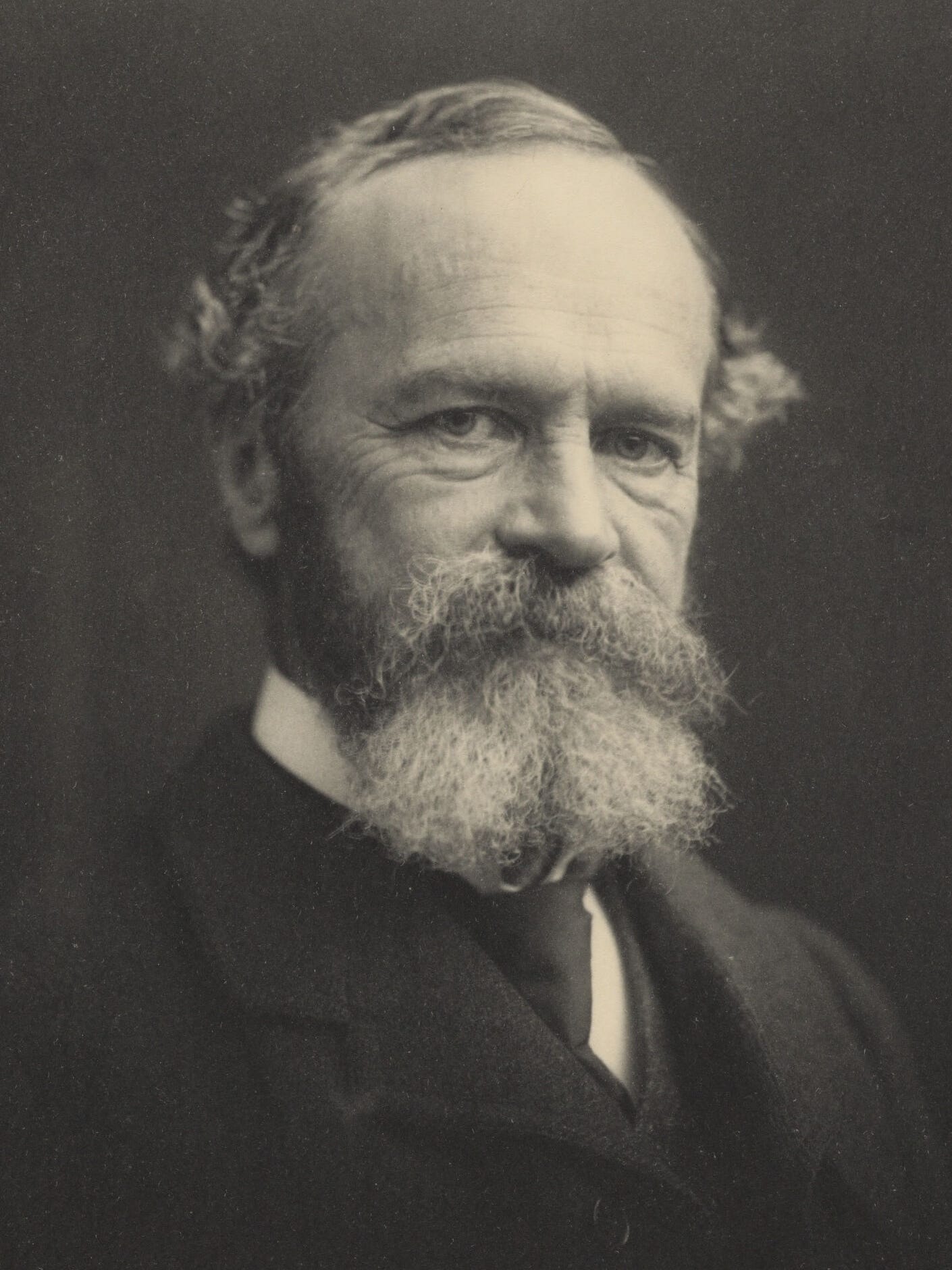
A subdued Strachey and Rendel returned to their studies at Bryn Mawr in 1909, where their speeches to their fellow students were met with a lukewarm reception: ‘here was another subject to be learnt, another field of exploration to explore’. Then, on a trip to Boston in February 1909, they happened to meet the distinguished philosopher William James, then 67 years old. The subject of women’s suffrage came up, and was being discussed in the familiar polite drawing-room manner, when suddenly James ‘burst out’ with an impassioned speech to the young British suffragists.
‘How you must despise us all’, he told them, ‘you two, who come all burning & snapping with your cause - with the whole thing rushing through you like electricity – & you find us everywhere – dull, uninterested, unenthusiastic, superficial, scoffing & frivolous about it – just a great lump of unenlightened and commonplace humanity who won’t take this serious thing seriously.’
He told them he was going to sign their petition ‘just for your sake... just to let you know that your enthusiasm does not meet with no response.’ Ray told her family that that she could have kissed him for his unexpected kindness.
Returning to England
There was a long way to go before women would achieve equal suffrage in the UK and the USA, but as Jennifer Holmes writes, Ray Strachey’s youthful American journey allowed her ‘to observe a suffrage movement from the outside, to hone the speaking skills which a suffrage activist needed, and to refine her ideas of what she wanted to do with her life.’
Ray took a course in engineering at Oxford in 1910, and the following year married the civil servant Oliver Strachey (brother of Virginia Woolf’s great friends Lytton and Pernel Strachey), convinced that she would be fulfilled by marriage and motherhood.
And by 1913 she was firmly back in the suffrage fray, giving a speech while being pelted with mud and insults by the crowd. She described the experience as ‘very exciting, but nasty & dirty’.
When war broke out in 1914 Ray Strachey threw herself into organizing the NUWSS’s wartime campaign, helping to place women in war work ‘& trying to see that they don’t ruin the whole labour market by taking low wages’.
‘If we get the vote now,’ Alys Pearsall Smith wrote in 1918, ‘it will be entirely due to her, because even Mrs Fawcett can’t do much without Ray’s driving energy.’
Ray Strachey spent the 1920s and 1930s campaigning for an extension of women’s professional employment and for equal pay, and stood for parliament three times, but was never elected. In 1931 she became private political secretary to the first woman MP, Lady Astor.
Building houses
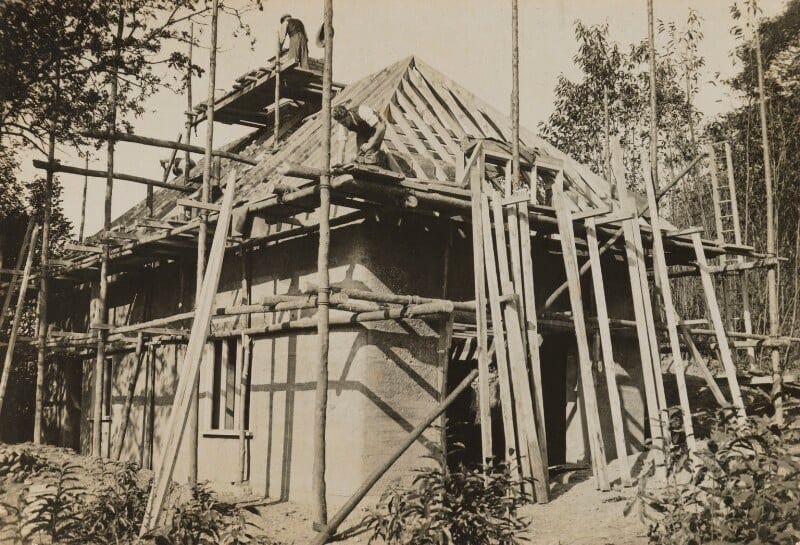
Despite her mother’s disapproval, Ray Strachey also kept up with her support for women engineers and her practical interest in building, especially in connection to women’s ability to design and build much-needed affordable post-war housing. ‘She bought nine acres of land and built a house of pisé de terre (rammed earth). She named it Copse Cottage but it is known to this day as the Mud House” writes John Simpkin here. ‘She installed an 80ft x 30ft pool (where she swam in the nude), and acquired Women’s Land Army clothing - corduroy breeches, boots and a straw hat - to wear around her estate.’
Virginia Woolf was a frequent visitor to Mud House over the years, and in 1938 the Woolfs’ Hogarth Press published Our Freedom and Its Results, a collection of essays edited by Ray Strachey.
Next time: the story of how one student from Newnham College Cambridge became a suffragette, was imprisoned… and later won an OBE.
Further reading
Elizabeth Crawford, The Women's Suffrage Movement: A Reference Guide 1866-1928 (1999); ‘Suffrage Stories: Bloomsbury Links (Part 3)’
Jennifer Holmes, A Working Woman: the Remarkable Life of Ray Strachey (Troubadour, 2019)
Fred Lewsey, “Our weapon is public opinion”: Posters of the women’s suffrage movement at the University Library
Sue Slack, Cambridge Women And The Struggle For The Vote (Amberley, 2018)
Ray Strachey, The Cause: A Short History of the Women’s Movement in Great Britain (G.Bell, 1928)

From ‘Touring for the cause: Ray Costelloe and the NUWSS’’, National Motor Museum website, 2018.
Comments
Nothing yet. Say the first thing.
Sign in to join the conversation.