
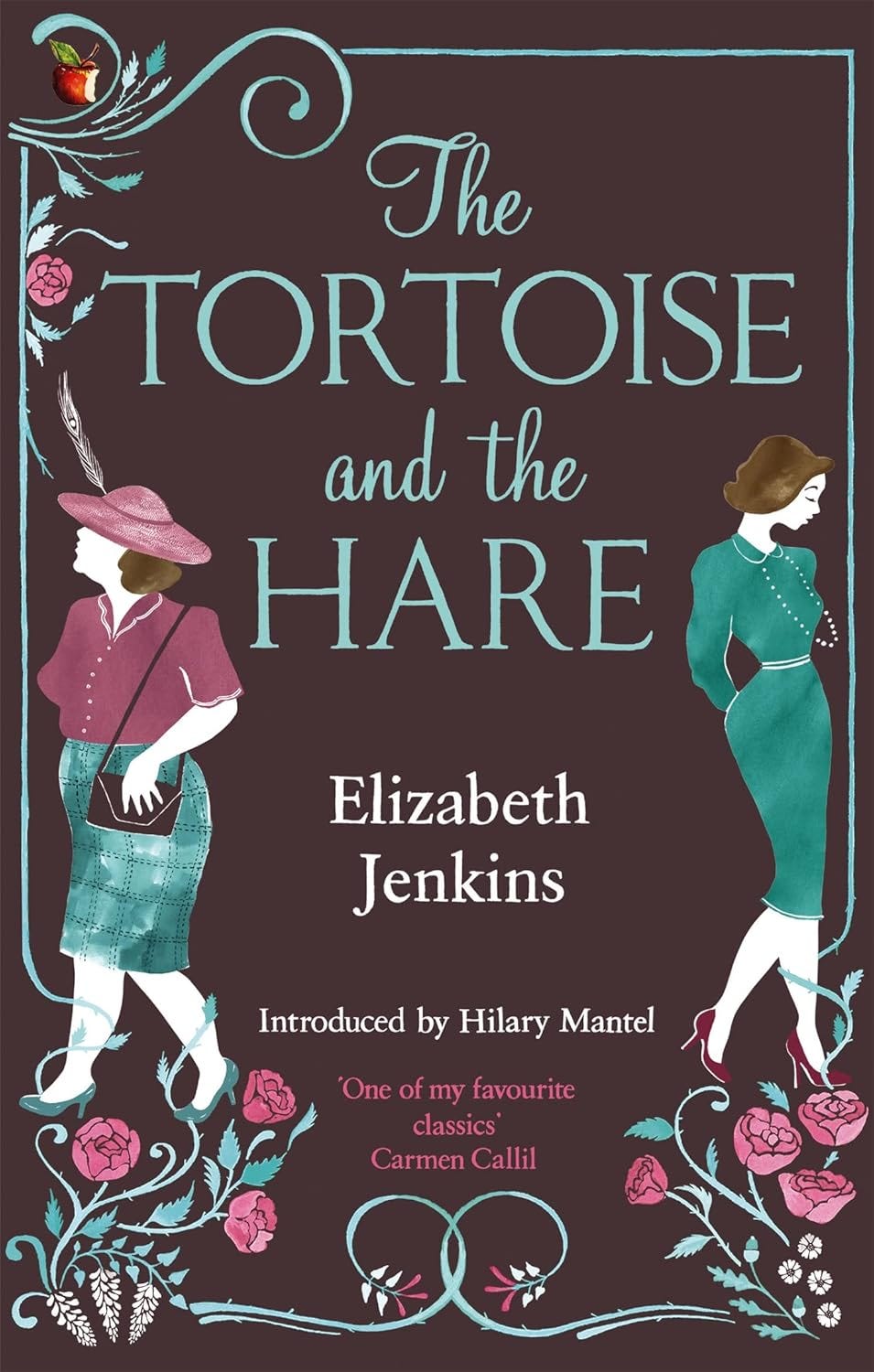
‘One of the great fables about late bloomers is the tortoise and the hare. We are taught as children its simple moral that the race is not to the swift. However, what we are not told is that applying the fable isn’t straightforward. The real race is against ourselves, not other people.’ (Henry Oliver, ‘The Tortoise and the Hare’)
Elizabeth Jenkins is the author of The Tortoise and the Hare, a 1950s novel about upper-middle-class British people’s lives that, like all the best novels, still carries a powerful and relevant message today. In my previous post here, I wrote about how – as well as being a celebrated novelist – Jenkins also published eleven well-received biographies, and one memoir, during the course of her long writing life. The distinction in her work between fiction and nonfiction is not always clear-cut; her meticulously researched novels Harriet (1934) and Dr Gully (also known as Dr Gully’s Story, published in 1972) were based on true-crime stories from the Victorian era. The latter was her personal favourite among her works of fiction, perhaps because – as Jenkins confessed – she ‘fell in love with’ her protagonist, a charismatic but possibly dangerous doctor, even while she wrote about him.
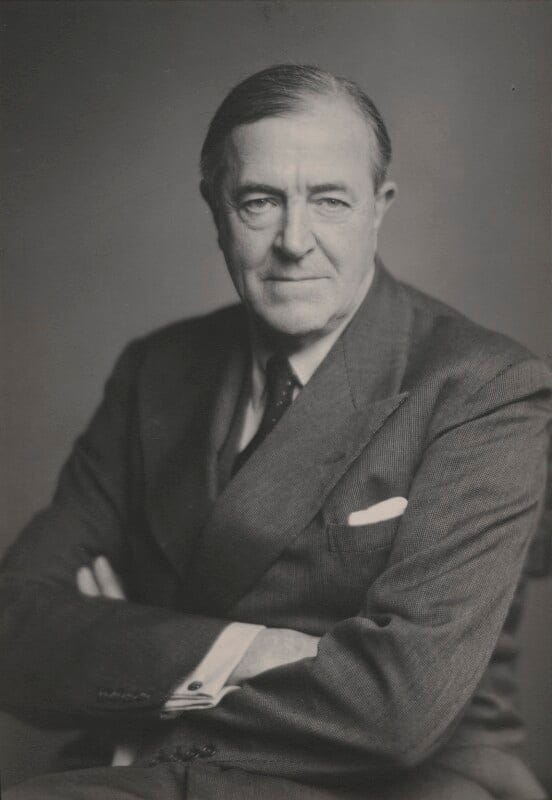
This seems fitting, as The Tortoise and the Hare was inspired by Jenkins being treated cruelly by her former lover in real life, a prominent obstetrician called Sir Eardley Lancelot Holland.1 The sudden end of their affair and his apparent indifference to her heartache did, for a while, seriously disrupt her sense of self and ability to write. As far as is known, Elizabeth Jenkins began her affair with Eardley Holland towards the end of the Second World War. She was then in her early forties, living in her own house in Hampstead and supplementing her earnings as a writer by working as a script-reader for her publisher, Victor Gollancz.
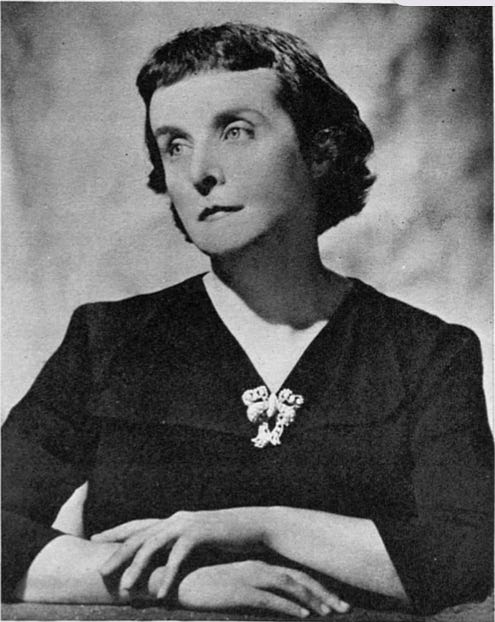
The tall, supremely confident and handsome Eardley was 64 and at the peak of his medical career when Elizabeth met him. The sadness in his life was that his wife Dorothy (née Colgate), a fine amateur violinist and the mother of their three daughters, had suffered a stroke during the war and remained seriously ill. While Elizabeth Jenkins claimed that she never wanted to marry or have children, she was nevertheless deeply shocked when, four months after Dorothy’s death in October 1951, he married his friend and well-connected country neighbour, Olivia Constable. The sense of betrayal that Jenkins felt was profound, and she poured her pain and grief into writing nonstop for months, working on the novel that became The Tortoise and the Hare. By the time that it was published to great acclaim in 1954, Eardley had given up his medical practice in London and retired to a quiet life in rural Chichester with Olivia.
What happened next was a complete surprise to Elizabeth Jenkins, as she told the Virago publisher Carmen Callil many years later. ‘Then, suddenly, he came back, within a fortnight of the novel’s being published, and asked could they go on as before?’ At first Jenkins wondered how to respond to this. Then, instead of writing a letter, she simply sent him a copy of her book, and never heard from him again.
How important is it for us as readers to fall in love with a novel’s characters? When Callil told her how completely detestable she found the fictional Evelyn (based on real-life Eardley) in The Tortoise and the Hare, Jenkins replied ‘well of course you didn’t know him.’ Below the line, more about how the balance of power shifts over the course of the novel, who appears to win the race and what the ambiguous ending tells us.
This is a post for paying subscribers to Cambridge Ladies’ Dining Society. If you’d like to join this friendly community and support my work, there’s a 25% discount on an annual subscription this month.
Comments
Nothing yet. Say the first thing.
Sign in to join the conversation.