
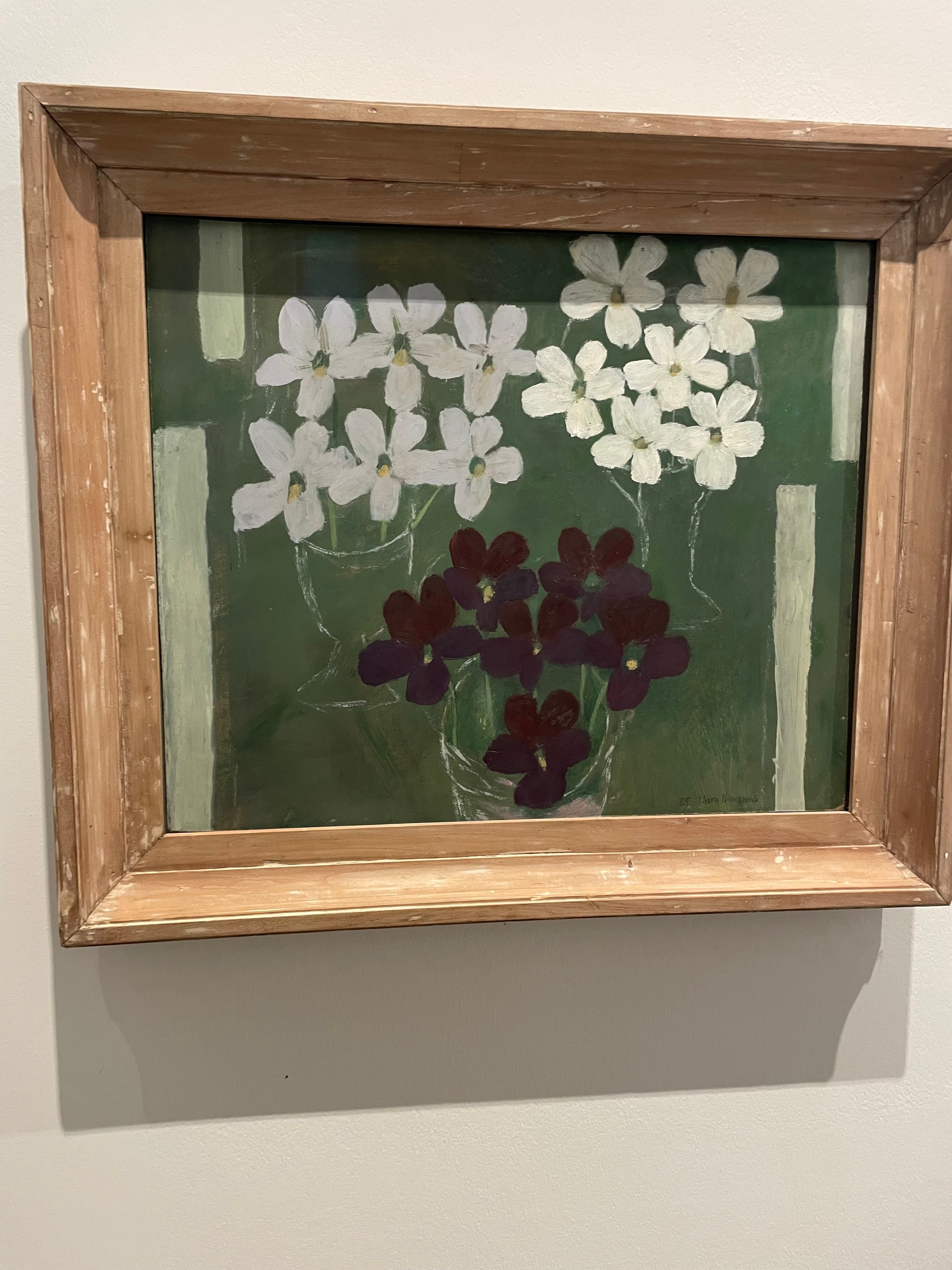
My diary has been full of literary-cultural-library treats this week, springing up everywhere like billowing clouds of white cow parsley by the river in Cambridge in May (after poetically mislabelling this lovely, ubiquitous wildflower as ‘meadowsweet’ in my photo of King’s College Chapel below, I’ve decided to lean into the flower theme).
I hope you’ll sign up for more literary-cultural-library treats in your inbox, weekly, and consider becoming a paid subscriber to support my work.
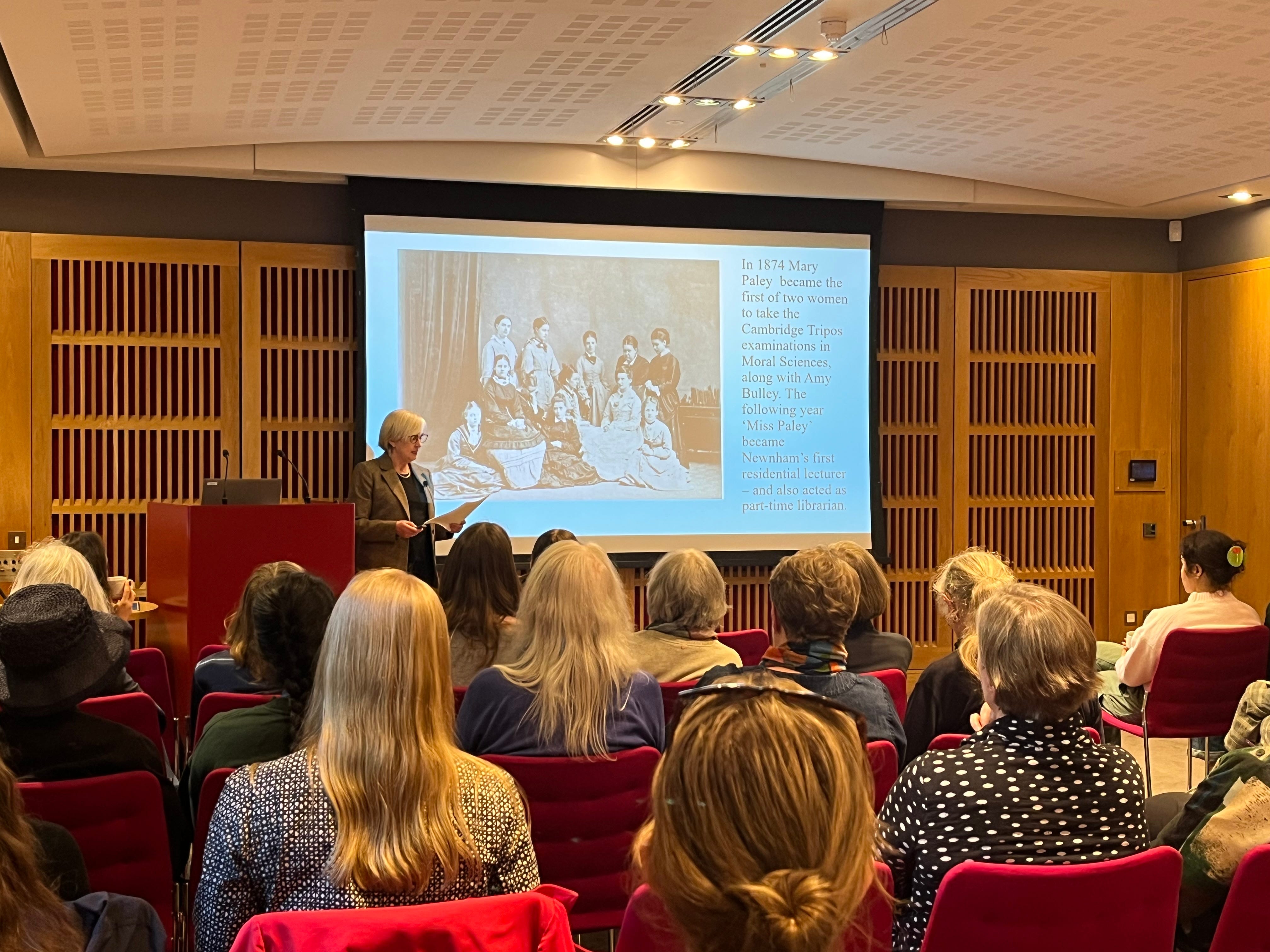
Last Tuesday I was in Newnham College Library, looking at a rare copy of Theophrastus Such by George Eliot; it was her last published book, a best-seller in its day but little read these days. On Wednesday I braved torrential rain with a good friend and an umbrella to see a stunning new exhibition of flower paintings at Kettle’s Yard in Cambridge (details below); on Thursday I went to Cambridge University Library for a celebration of forty years of Poems on the Underground (more on this in a minute) and on Friday I gave a lunchtime talk at Newnham College, as part of its delightfully named ‘pudding seminar’ series, on the economist Mary Paley Marshall and the significance of her 1944 book bequest to the college library, including a unique annotated copy of the book she co-wrote with her husband Alfred Marshall, The Economics of Industry (1879). It’s such an enjoyable part of my work, being able to connect with others interested in my research into these pioneering Cambridge women, and I felt very honoured to be invited and to have such an engaged, encouraging audience.
On Saturday afternoon it was back to the busy city, when I travelled to Foyles bookshop in London to hear and discussing Helene Hanff’s epistolatory classic, 84 Charing Cross Road. It was an added treat to bump into fellow Substacker there – I have long admired her Substack, ‘The Austen Connection’, a public-humanities project connecting Austen’s literature to pop-culture and current events. So, all in all, a bouquet of delightful things.
Poems on the Underground
Forty years ago, having recently moved to Cambridge from Ireland, it was a huge treat to take the train to London for exhibitions and the occasional theatre outing on a Saturday afternoon. Getting a stuffy, crowded underground ‘tube’ train to the West End was a less enjoyable experience, and I admit that I was glad not to be a regular commuter. I don’t remember when, rattling along on the Piccadilly Line to Leicester Square, I first looked up and saw, alongside the advertisements, a strikingly designed, small rectangular-shaped poster with a poem on it. It was like a window into another world.
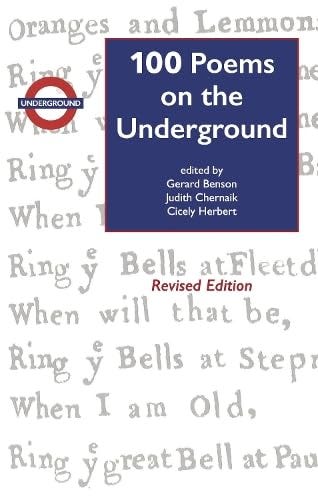
It seems that Judith Cherniak, an American writer who had moved to London, got the idea of scattering poetry in underground trains from reading As You Like It. The love-sick Orlando hangs sonnets from the branches of the Forest of Arden; Judith and the project’s co-founders Gerard Benson and Cicely Herbert decided to place a rotating series of poems on tube trains where ordinary people might enjoy them, on the way to or from work. They aimed to offer ‘public glimpses of an imaginative world different from the common pressures from life’, as Cherniak writes in her introduction to the new, revised edition of 100 Poems on the Underground (The Poetry Business, 2026).
At the event I attended at Cambridge University Library last week, Cherniak was there, still full of great spirit and enthusiasm for the project which by now has made connections on public transport in major cities everywhere. She was accompanied by poets Imtiaz Dharker and George Szirtes who are now Judith’s co-editors on the project, which is supported by London Transport, the British Council and Arts Council England. As Cherniak points out, the poster designs by typographer Tom Davidson (which appear three times a year on Underground and Overground trains) are as striking as ever. You can see them all in their original designs, along with a full index, on the website here, where there are recordings of all the poems including Milton’s ‘On May Morning’, featured this month.
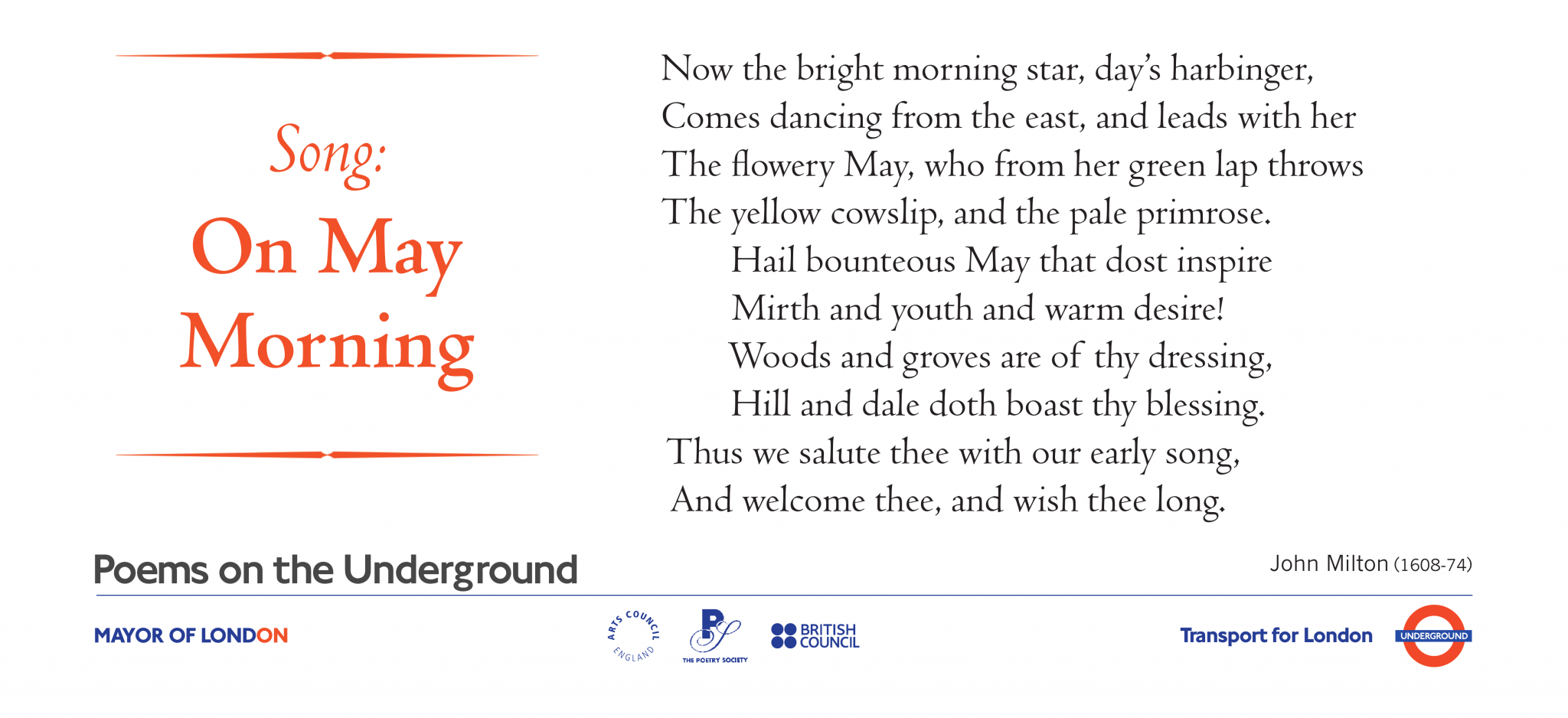
As the Guardian writes, ‘Transport for London has a long tradition of art and design. Poetry and art bring humanity underground. They allow nature and imagination into this subterranean labyrinth of civil engineering.’ It was wonderful to hear some of the poems read aloud by George and Imtiaz in the underground labyrinth of the University Library last week; and to know that this unique archive has been acquired by Cambridge University to keep safe for future generations. As Cicely Herbert writes in ‘Everything changes’:
What’s happened has happened
Poisons poured into the seas
cannot be drained out again, but
everything changes. We plant
trees for those born later.
More uplifting May things
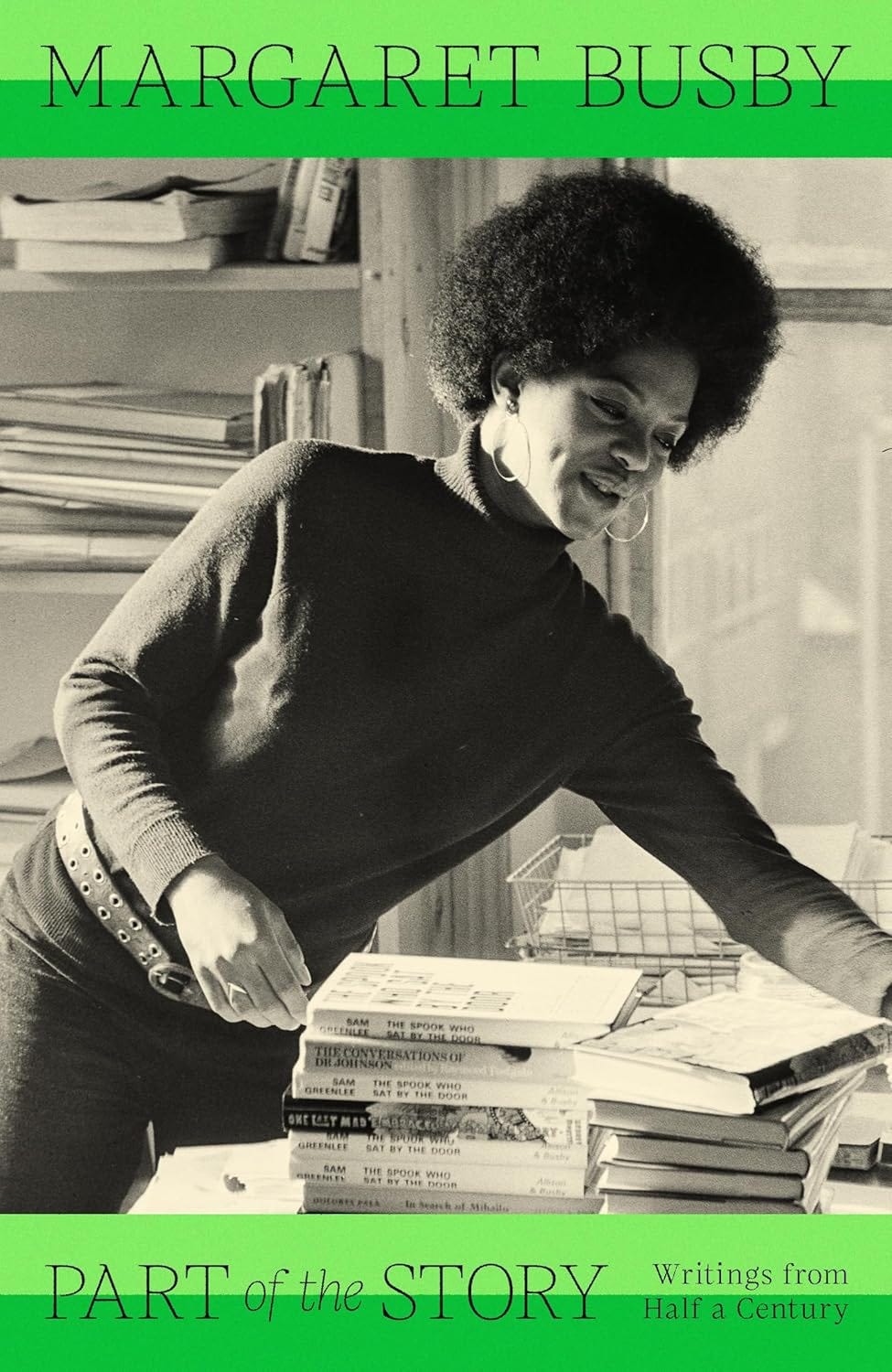
This past month I’ve been enjoying Margaret Busby’s Part of the Story: Writings from half a century (Hamish Hamilton, 2026), a collection of her published essays and articles. Busby first became famous as Britain’s youngest and first Black woman publisher when she co-founded Allison & Busby in 1965. ‘Skin Deep’, the earliest essay in this book, was first published in the New Statesman in November 1966. A literary agent offered to represent her and the magazine offered her a regular column, but Margaret Busby had other plans. It was great to hear her discussing her life and work with and Samira Ahmed at the Cambridge Literary Festival last month.

A few years ago I wrote in the TLS about the pernicious effect of the ‘Plath myth’ (see my post below) based on biographers who focussed on her death rather than her groundbreaking achievements as a poet. Now there’s a new edition of The Poems of Sylvia Plath from Faber, edited by Amanda Golden and Karen V. Kukil. ‘Here, at last, is Sylvia Plath’ writes poetry critic in his excellent review for Prospect magazine. ‘The Poems of Sylvia Plath tells the story of her writing life rather than her overwritten death.’
Also here on Substack this month, I’ve enjoyed ’s recent ‘Out and About’ post for news of enticing exhibitions coming up, all connected to women-centred history; on planning a twilight garden for an English summer; cheerful May thoughts from ; the artist on the merry month of May; and ’s uplifting post on cow parsley, new life for old patchworks and a beautiful poem by Robert Graves (perfect for Poems on the Underground) here.
Continuing the flower theme, if you get the chance to visit Cambridge this summer, don’t miss the free exhibition ‘Handpicked: Painting Flowers from 1900 to Today, at Kettle’s Yard gallery until 6 September 2026. It features works by Vanessa Bell, Henri Rousseau, Winifred Nicholson and Tirzah Garwood as well as by contemporary artists such as Lubaina Himid, Jennifer Packer and Chris Ofili.
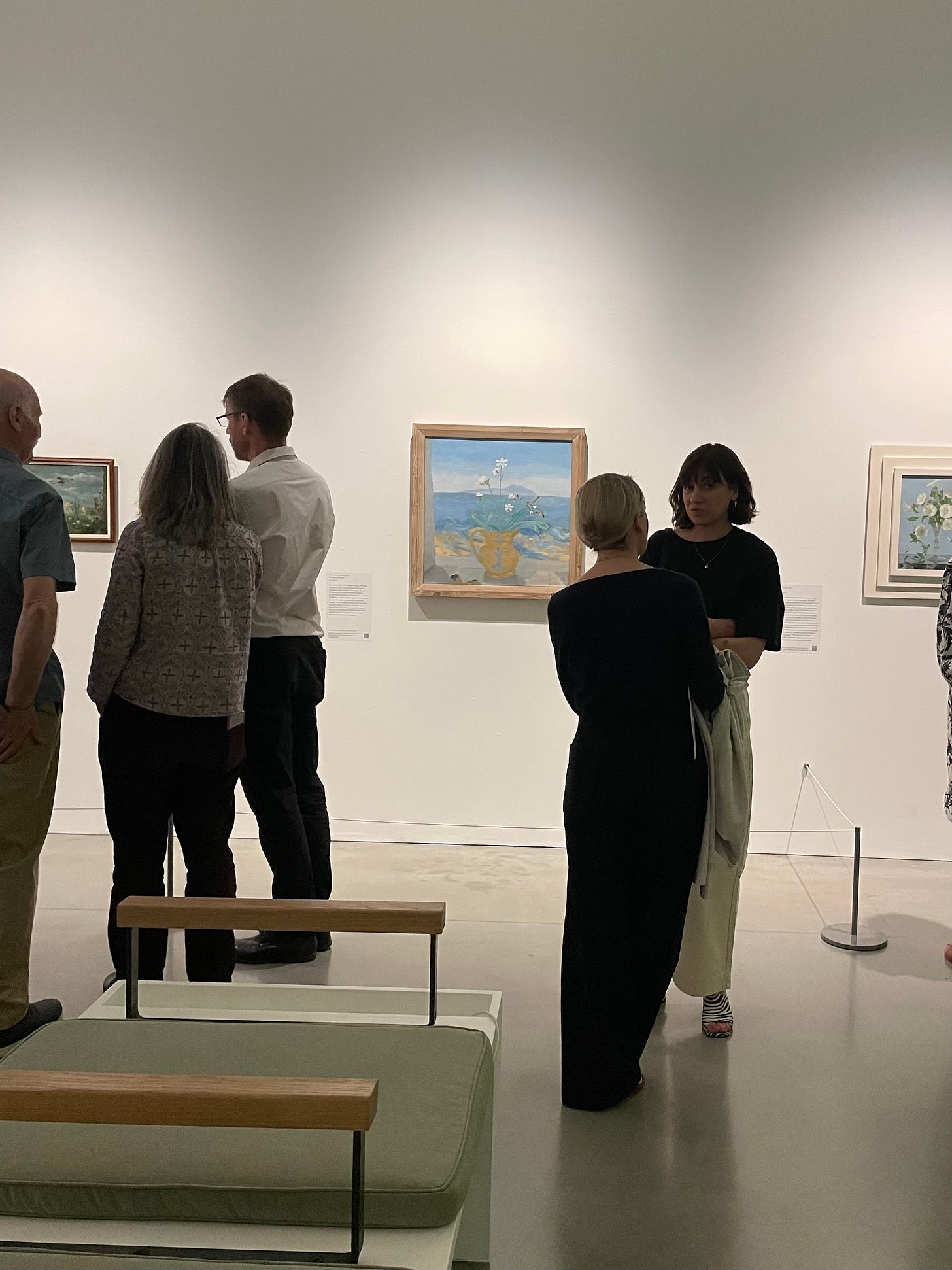
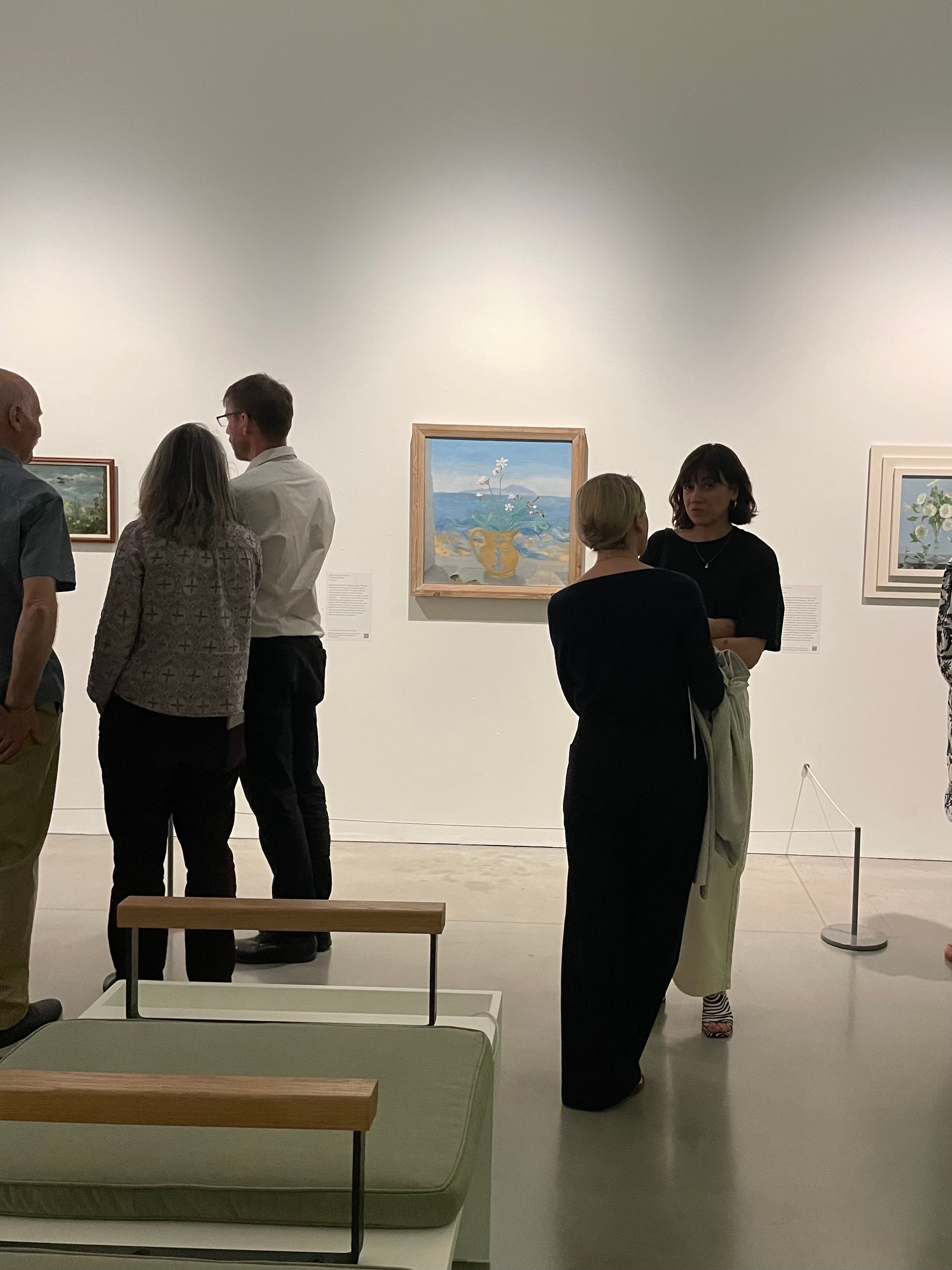
At the preview of ‘Handpicked’ at Kettle’s Yard, with painting by Winifred Nicholson in the centre. And finally, I find myself coveting this item from the London Review of Books online store. The ‘Author Clock’ not only displays a literary quotation for every minute of the day, it also boasts ‘multiple unique quotes per minute, rotating over time’. It sounds, and looks, very appealing, but you might spend your entire day (and night) gazing at it.

That’s it, thank you for reading! What books/films/other cultural events have you been enjoying this week? I’d love to know. And if there is a short poem that has stayed in your mind over the years, do share it with us! Next time I’ll be continuing with our reading of Elizabeth Jenkins’s Tortoise and the Hare, part of our Twentieth-Century Book Club series. Hope you’ll join us.

Cambridge Ladies' Dining Society is a reader-supported publication. To receive new posts and support my work, consider becoming a free or paid subscriber.
Comments
Nothing yet. Say the first thing.
Sign in to join the conversation.