
The Quincy Law Department is Out of Hand.
For those of you wondering what I’m on about now, in the Game of Thrones fantasy series, the Hand of the King is the monarch’s chief advisor and the second-most powerful figure in Westeros—the fictional realm where the stories unfold. The Hand executes the king’s commands, manages the affairs of the realm, and wields enormous power on behalf of the crown.
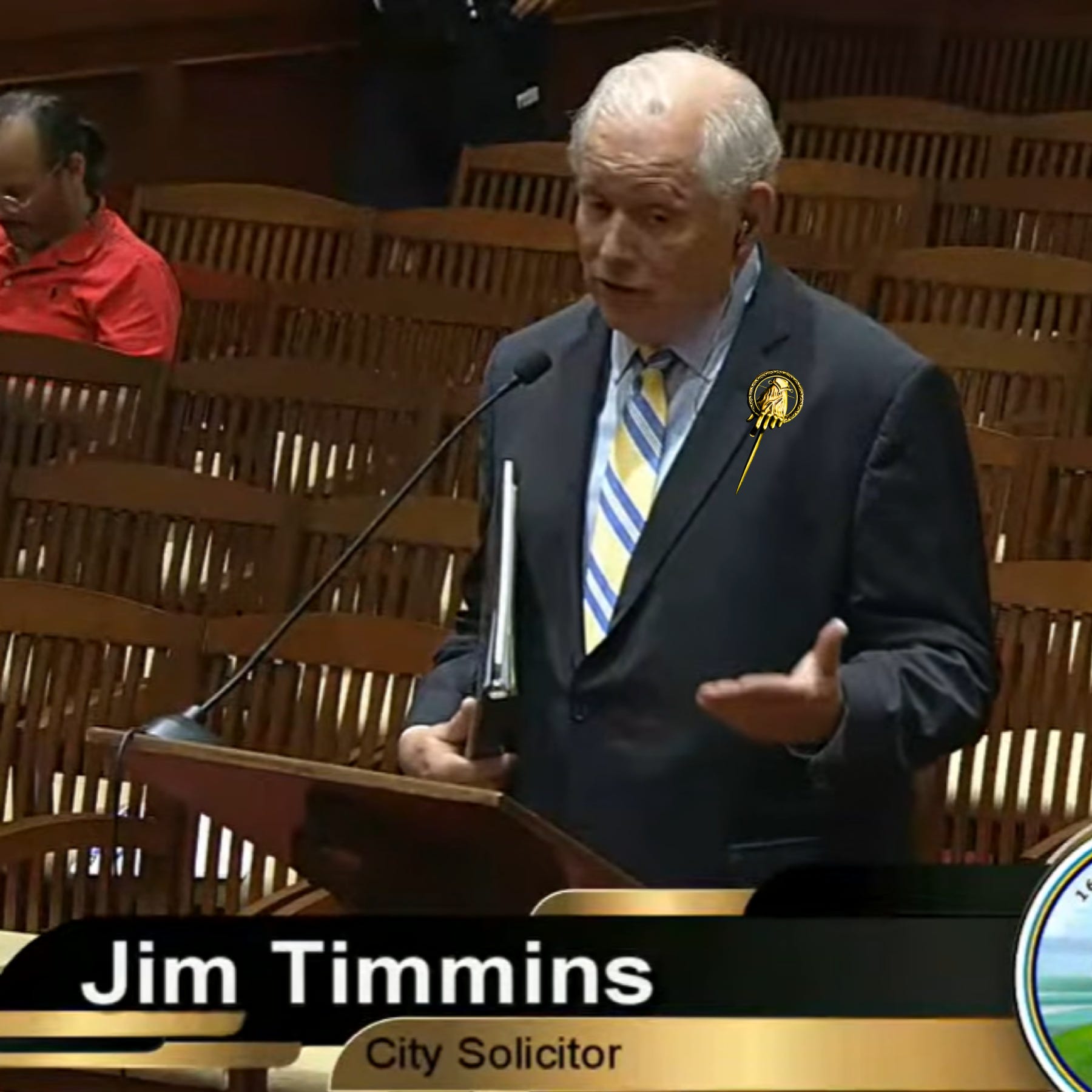
I think of Jim Timmins the second-most powerful person in Quincy. If Quincy were Westeros, a good argument could be made that he would be Hand of the King (with due respect to Chris Walker). Like any Hand worth his salt, he has spent his long tenure cleaning up messes, throwing punches, taking punches—and accumulating an outsized amount of power along the way.
Mayor Koch gets the headlines. The City Council casts the votes. But somewhere behind an extraordinary number of consequential decisions at City Hall, you will find the Law Department—which is the domain of Solicitor Jim Timmins.
A City Solicitor is, basically, the City’s lawyer. The job is to advise municipal officials and departments on the law and represent the City in legal proceedings. Like any lawyer, the Solicitor represents a client. In this case, that client is Quincy—not any particular elected official or political interest.
Quincy’s Charter gives the Mayor enormous authority over department heads. They are appointed by the Mayor without confirmation by the City Council, and the Mayor has the power to remove them. But the Charter also requires the Mayor, when making those appointments, to certify that they are made “solely in the interest of the city.”
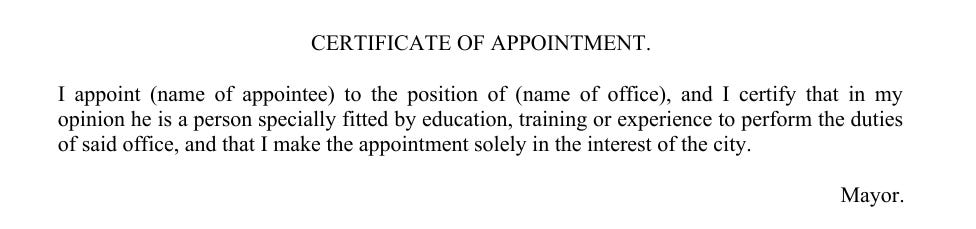
That’s ultimately the standard I’m interested in here: the interest of the City.
After many years as an assistant city solicitor under Mayor Sheets, Timmins interrupted an elected term on the School Committee to become City Solicitor at the beginning of Mayor Koch’s administration. He has held the position throughout Koch’s 18-year tenure. In that role, he advises the administration and City Council, interprets the laws governing the City, defends Quincy in litigation, determines when outside counsel is necessary, and frequently becomes involved when residents challenge City Hall or ask to see public records.
That’s a lot of influence for an official most Quincy residents have never heard of, let alone vote for—or against.
I’ve found myself wondering whether anyone is overseeing how that influence is being used.
Not because, under Mr. Timmins, the City has lost many lawsuits. It has.
Nor is it because Quincy has sometimes chosen to fight with the winds of law blowing in its face rather than at its back. There are times when government has good reason to spend substantial amounts of taxpayer money defending a position—even when the odds are long and the fight is ultimately lost.
No, the reason I’m asking is that some of the legal battles the Solicitor chooses to pursue seem to have a political motivation rather than a municipal objective.
To me, this comes down to judgment and oversight. What legal battles are worth fighting with taxpayer money? How much are they worth? And who decides when it’s time to stop?
At the June 17 budget hearing, the Council briefly tried to put a little more friction into that system.
Councilor David Jacobs proposed cutting the Law Department’s $195,000 outside-counsel line by $86,000. His concern was that a large standing appropriation allows costly cases to continue without the Solicitor having to return to the Council and explain why more money is needed.
Jacobs called that return trip a “reminder” to taxpayers of how much the City was spending.
Timmins pushed back, arguing that the department needed flexibility because cases can arise unexpectedly. Instead of reducing the appropriation, he offered to return regularly—even quarterly—to update councilors on legal expenses.
But there is an important difference between those approaches. By the time Timmins returns with an update, the City may already have committed itself—and taxpayer money—to a legal path. That was precisely the fait accompli Councilor Jacobs was trying to prevent
The proposed cut was eventually reduced to $43,000 and passed narrowly.
And there are a few recent examples that make Jacobs’ concern worth thinking about.
(Disclosure: I am a plaintiff in the case I’m about to discuss.)
If you’ve followed AJQ for the past year, you know of the legal fight surrounding the citizen petition seeking to repeal Quincy’s controversial 2024 raises for the mayor and City Council.
For all the legal wrangling, the signature dispute came down to a pretty simple dispute.
Thousands of petition signers had provided both a handwritten signature and their printed name. When election officials could not readily decipher some of those signatures, the City took the position that the clearly printed name sitting alongside the signature could not be used to help identify the voter.
The petitioners disagreed.
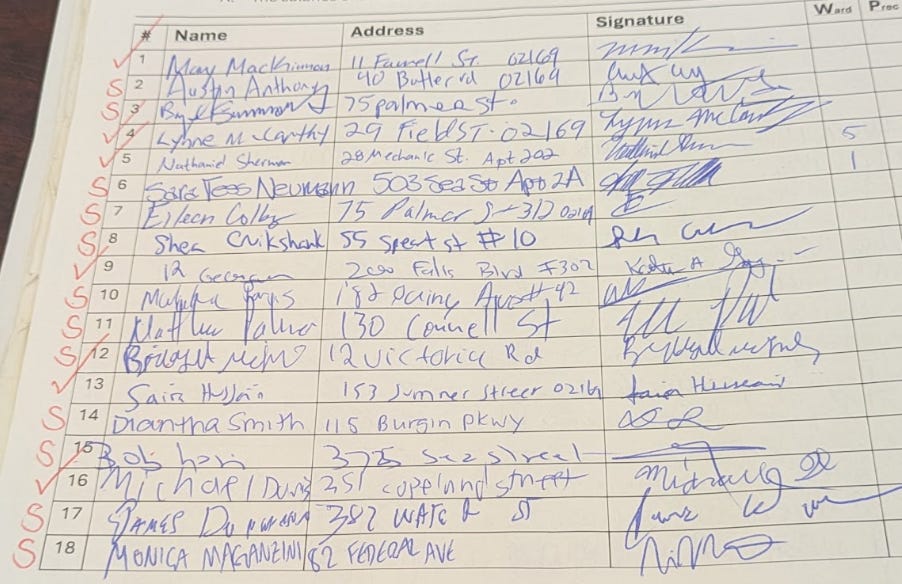
That disagreement ended up in Superior Court.
And Quincy brought in the cavalry.
Rather than having the City’s own solicitors defend the case, Timmins determined that outside counsel was necessary because the City’s attorneys are mayoral appointees and the petition implicated the mayor’s compensation.
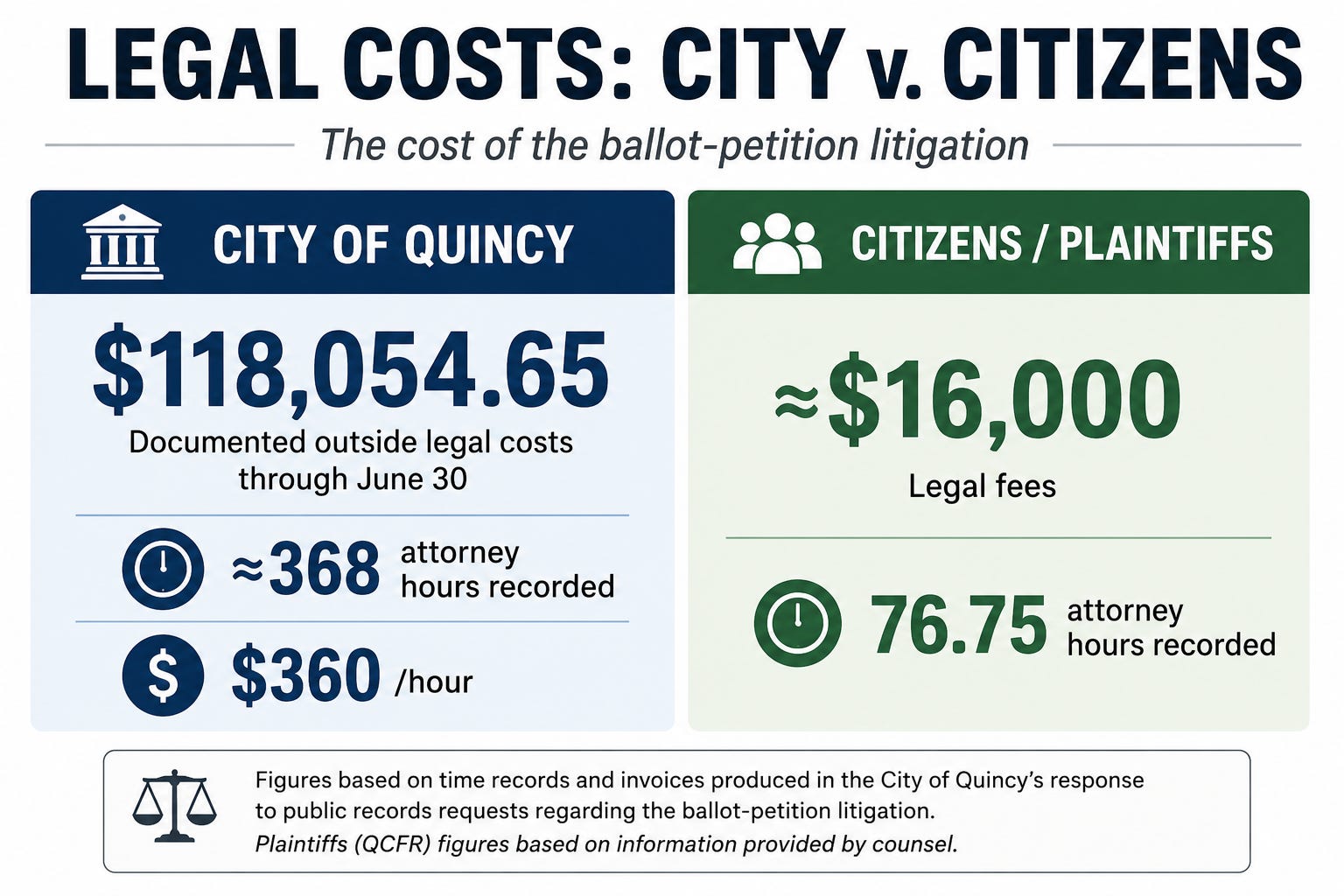
Quincy retained KP Law, one of the Commonwealth’s leading municipal and election-law firms, at $360 per attorney hour, plus expenses. They recorded approximately 368 hours of attorney time on the case through June 30. About 318 hours were ultimately charged to the City.
By the end of February—when closing arguments had concluded—Quincy had incurred $110,847.29 in outside legal costs.
That’s the same figure Timmins later reported to the City Council.
The bills didn’t stop there.
Additional May and June invoices brought the documented total to $118,054.65 through June 30. For comparison’s sake, the plaintiffs spent approximately $16,000 in legal fees.
Hiring an outside law firm doesn't mean handing it a blank check. Someone at City Hall still has to decide whether the work being done is necessary, whether the bills are reasonable, and whether continuing the fight is worth the cost.
And after all of that, the court rejected the City’s position on the central signature issue. Again, losing doesn’t necessarily mean a fight wasn’t worth having. But not every fight is worth having. Much of a city solicitor’s job is determining which punches to throw.
Here’s a thought experiment. Imagine the City’s outside firm, KP Law, had won. What would Quincy taxpayers have gotten for their $118,000?
No damages were at stake. The City wasn’t protecting itself against a multimillion-dollar judgment. Nobody was trying to take City property.
At the heart of the dispute was whether election officials could look at a petitioner’s printed name when they couldn’t readily read that person’s cursive signature.
Was this really a $120,000 hill for Quincy taxpayers to die on?
But this particular battle has a twist worthy of the Small Council in King’s Landing.
Timmins has explained that the City’s Law Department could not represent the defendants because its attorneys are appointed by the mayor, whose compensation was implicated by the petition.
Fair enough.
Except the Law Department wasn’t exactly a stranger to the controversy before the lawsuit arrived.
Timmins had already met with petition organizers and the City Clerk to discuss the petition’s legality and the process it would follow. He analyzed the relationship between Quincy’s charter and state law governing elected-official compensation. And in September 2025, he issued a legal opinion concluding that the petitioners’ proposal “fails as a matter of law.”
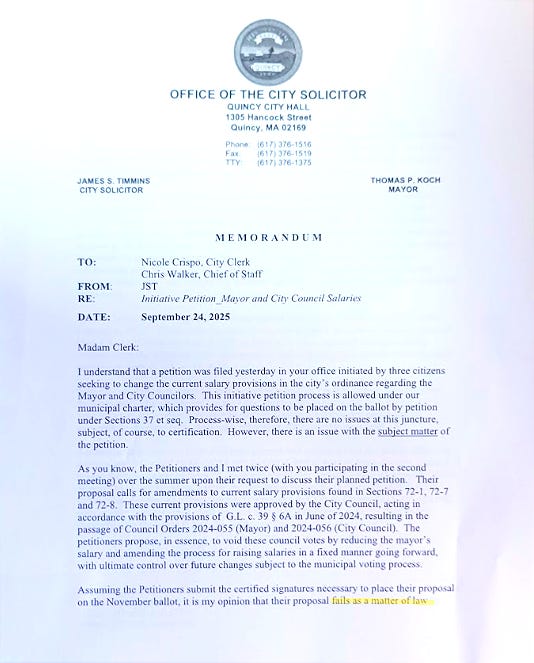
If being mayoral appointees prevented the City’s attorneys from defending those positions in court, why didn’t that same relationship prevent the Solicitor from helping formulate them beforehand?
There may be a legal distinction between those roles. But the distinction isn’t self-evident, and given what taxpayers subsequently spent after the Law Department recused itself, it’s one worth explaining.
The $118,000 question has become even more difficult to understand because the case isn’t necessarily over.
The plaintiffs have proposed ending their litigation with a final declaratory judgment resolving the signature issue.
The City appears to want something more.
Its proposed path would continue the statutory petition process, potentially reaching the stage at which Quincy voters could file objections challenging additional signatures.
Think about where that leaves us.
The City spent nearly $120,000 unsuccessfully defending one method of rejecting petition signatures.
The plaintiffs are now offering a path toward ending their litigation.
And the City appears prepared to continue litigating toward a process that could provide another opportunity for signatures to be challenged.
What would further litigation accomplish for Quincy taxpayers?
The raises that started this entire controversy have already been repealed.
During the upcoming legislative session, the City Council is expected to take up elected-official compensation again—this time using salary data and public input to determine what compensation should look like going forward.
So what exactly remains worth fighting over at $360 an hour?
During the budget discussions, Timmins offered to keep the City Council informed about litigation.
I think the Council should take him up on that offer.
Invite him in.
Ask where the case stands. Ask what the City is still trying to accomplish. Ask what additional litigation is expected to cost. And after nearly $120,000 already spent, demand to know what benefit Quincy taxpayers would receive from continuing the fight.
Those aren’t questions about whether another legal argument can be made.
They’re questions about whether taxpayers should continue paying to make it.
AJQ readers will recall my recent tussle with Quincy’s Law Department. It was, of course, on a much smaller financial scale, but it raised a similar question about judgment.
Here is a brief summary for those who may have missed it.
In June, I submitted a public records request seeking the bills, invoices, payment records and contracts associated with the QCFR litigation—the records that ultimately revealed many of the costs detailed above.
In other words, I wanted to know what taxpayers were spending.
The request was eventually referred to Timmins.
He denied it.
The City’s response invoked the pending-litigation exemption, attorney work product and attorney-client privilege as reasons for withholding the requested material.
I appealed to the Massachusetts Supervisor of Records.
The Supervisor didn’t accept the City’s blanket justification and their reasoning was pretty straightforward: privileged information somewhere in a record doesn’t necessarily make the entire record secret. The City had to establish why information was exempt and address whether non-exempt portions could be segregated and released.
The Supervisor ordered Quincy to respond again.
And suddenly, we learned quite a lot.
The City produced the KP Law engagement agreements, invoices and payment records. Descriptions of legal work the City considered privileged were redacted, but the non-privileged financial information was released.
That’s how we now know KP Law’s $360 hourly rate.
It’s how we know approximately 368 attorney hours were recorded.
It’s how we know the January bill approached $49,000.
It’s how we know Timmins’s $110,847.29 figure reported to the Council in June represented the outside legal costs through February.
And it’s how we know additional invoices subsequently pushed the documented cost above $118,000 so far.
None of that required the City to reveal its litigation strategy.
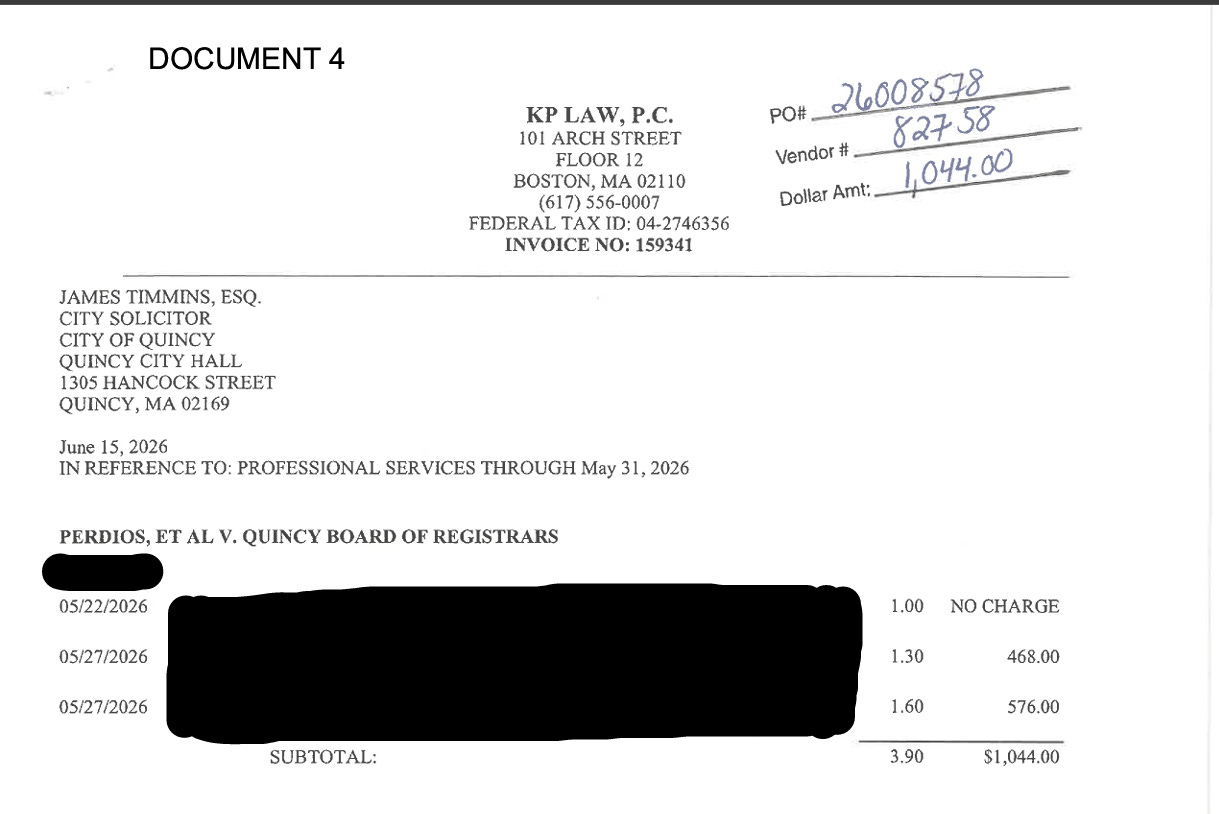
And none of it would have been publicly known from the City’s original response.
It took an appeal to the Commonwealth to get there.
My experience gets more interesting when you compare it with some of the other records requests we’ve looked at.
Massachusetts’s own guidance contains a wonderfully uncomplicated instruction: All requestors must be treated the same with respect to the response to their requests.
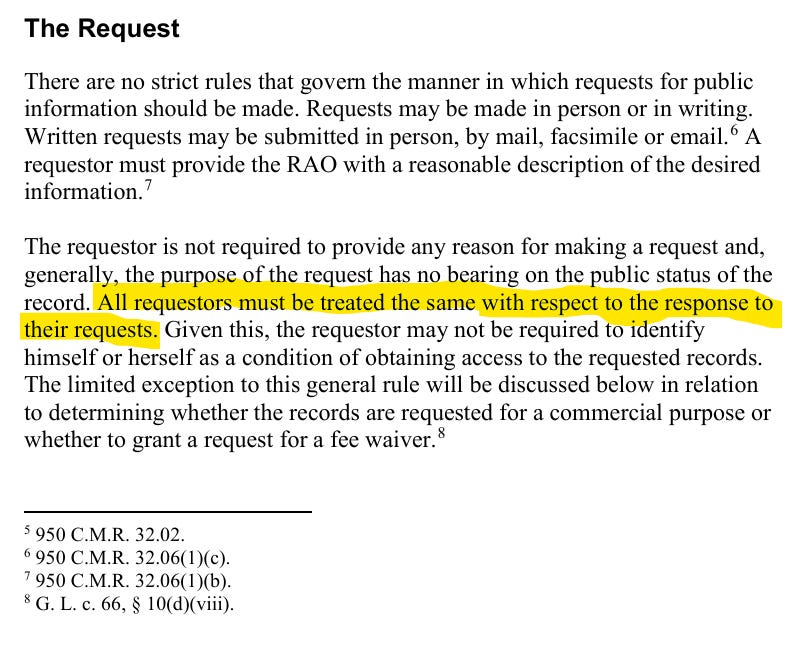
But the chore of requesting records from Quincy can look quite different depending on the request.
When a Weymouth resident, who has made it their mission to support the Koch administration and attack anyone who challenges it, sought emails exchanged between City Councilor Maggie McKee and Solicitor Timmins, those records were produced promptly.
But as we just discussed, when I sought records showing how much taxpayers were paying lawyers in current litigation, I had to send a reminder after the legally allowed 10 business days passed without a substantive response. What eventually came back was a blanket denial invoking Exemption (d) of the Massachusetts Public Records Law. The City’s justification for withholding the records didn’t survive review by the Supervisor of Records.
As noted in an earlier piece, RECORDing in Progress, “In one matter, communications between a councilor and the City Solicitor were released toot suite without any apparent claim of attorney-client privilege. In another, attorney-client privilege was invoked broadly to withhold records relating to outside legal expenses.” At the time, I concluded simply: “The contrast is difficult to overlook.”
It still is.
But the contrast alone doesn’t prove favoritism.
Nor does a difference in response time prove that two requesters were deliberately treated differently. Public records requests vary enormously in complexity, applicable exemptions and the work necessary to fulfill them.
Often, AJQ stories come down to the distance between what the evidence proves and what it strongly suggests (what we can prove vs. what we know).
I’ve encountered enough variation in my broader reporting on Quincy’s handling of public records to make the question worth asking:
Is the Public Records Law being administered with the same urgency and scrutiny regardless of who is asking?
Then there is the Long Island Bridge.
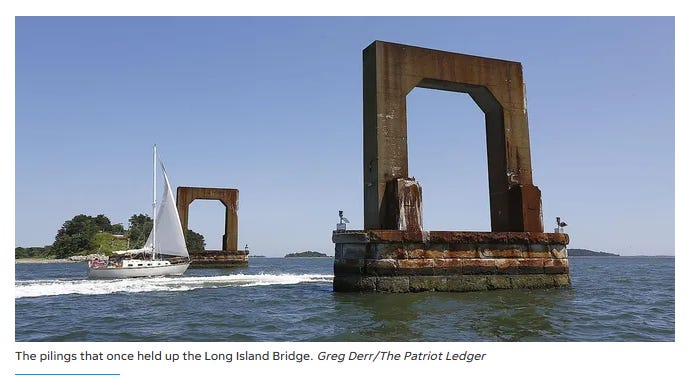
For nearly a decade, Quincy has fought Boston's effort to rebuild the Long Island Bridge, which would restore road access through Squantum to Boston's Long Island and its proposed addiction-treatment facilities. Boston has generally prevailed in the resulting legal and permitting disputes, but nearly a decade later, the bridge still hasn't been rebuilt.
The only land route to Long Island runs through Squantum and across Moon Island. City officials and residents have raised concerns about the impact on the neighborhood from vehicles traveling to and from the island. There would almost certainly be increased traffic and additional stress to public safety, though how much is certainly up for debate. Quincy has also argued that Boston should not be able to impose those impacts on Quincy simply to provide access to a Boston-owned facility.
That opposition has played out through a succession of permitting challenges, administrative proceedings and lawsuits. As of January 2025, City financial records obtained by The Patriot Ledger showed Quincy had spent more than $819,000 on outside legal counsel and another $162,000 on consultants—a total approaching $1 million.
Some Quincy residents will look at that history and see money well spent.
After all, the City’s objective was to stop the bridge. Nearly ten years later, the bridge still hasn’t been rebuilt. For Squantum residents concerned about the traffic and other impacts a reopened Long Island could bring, that matters. From their perspective, the City’s legal strategy has worked.
My perspective has always been a bit unpopular.
Imagine your neighbor’s house burns down while they’re away. It’s awful for them, but suddenly you have a gorgeous water view. You enjoy that view for years. Maybe it even increases the value of your home.
But it doesn’t become your view.
Your neighbor didn’t choose to tear down the house, and your enjoyment of its absence doesn’t give you the right to prevent them from rebuilding it where it stood.
That’s roughly how I’ve always viewed the Long Island Bridge. The bridge carried traffic through Quincy for decades. Boston didn’t choose to remove it; the old bridge was condemned. Squantum then enjoyed years without that traffic—an understandable benefit that residents understandably don’t want to lose.
But was permanently preventing the bridge from returning ever a realistic objective?
I say that from the relative comfort of Houghs Neck, far removed from the neighborhood that would actually experience the impacts. But if rebuilding was ultimately likely, perhaps the better question wasn’t simply how long Quincy could stop it.
What might Quincy have gained if, instead of devoting nearly a decade to fighting Boston in courts and before regulatory agencies, City officials had used some of that leverage to negotiate?
Perhaps Quincy could have secured meaningful restrictions on traffic or use of the access road. Perhaps Boston could have been pressed for transportation improvements or other concessions. Perhaps Quincy could have sought some direct benefit for its residents from the addiction-treatment and recovery services planned for the island.
Maybe Boston wouldn’t have agreed to any of it.
We’ll never know.
The Long Island Bridge fight is an article of its own. For now, I’m interested in what it has in common with the QCFR litigation:
Is litigation being used as one tool available to protect Quincy’s interests—or has fighting itself sometimes become the strategy?
Keeping the bridge from being built may itself be a victory. But was delay the most Quincy could have gotten out of this fight?
Sometimes the better measure of success isn’t how long you can keep the other side from building the bridge.
It’s what you can bring home for the people you represent.
Back to Westeros…
Despite what you may occasionally conclude after watching a City Council meeting, Quincy isn’t Westeros.
But strip away the swords, dragons and palace intrigue, and the analogy raises some very real questions for Quincy:
Who decides when a legal objective is worth $25,000, $100,000 or $1 million? Who reassesses that decision as circumstances change? And who tells the City’s lawyers that while another argument may be available, pursuing it isn’t worth another dollar of public money?
The pattern I’m beginning to see isn’t simply that Quincy sometimes loses lawsuits. It’s that the City appears remarkably keen to fight.
The fights are different. The stakes are different.
But the money comes from the same place.
Us.
At the June 17 City Council meeting, Timmins offered regular updates on legal spending as an alternative to seeing more of his outside-counsel budget cut.
When the Council reconvenes in a few weeks, it should hold him to that promise.
The Council may not decide which arguments the City’s lawyers make in court. But it does control the purse strings, and that gives it both the opportunity and the responsibility to ask what taxpayers are buying.
But the QCFR case is no longer a new emergency. It is a long-running case that has already consumed nearly $120,000 in outside legal fees.
Before another significant round of taxpayer money is committed to the ballot-petition litigation, call the Solicitor back to the microphone and ask a simple question:
What are we paying to accomplish?
If the answer is persuasive, fund it.
If it isn’t, rein him in.
That isn’t micromanaging litigation.
It’s oversight.
James Timmins has held an enormously influential position in Quincy government for a long time. There’s real value in that kind of institutional knowledge. An experienced municipal attorney who understands the City’s government, history and legal obligations can be an enormous asset.
In an earlier piece, I argued that Councilor McKee’s decision to retain her own lawyer threatened some of Mr. Timmins’s influence. Legal knowledge can be a form of political power, and when City officials no longer rely solely on the Solicitor for legal expertise, some of that power is diminished. My concern isn’t that Timmins has power. It’s whether enough people are questioning how that power—and the taxpayer money behind it—is being used.
My concern is not that Quincy loses lawsuits sometimes. That doesn’t make Timmins a bad lawyer, and I’m certainly not suggesting the City should surrender whenever somebody threatens to sue.
My hypothesis is simpler: Quincy’s Law Department may have become too accustomed to fighting first and leaving taxpayers to pick up the bill.
The QCFR litigation gives us nearly $120,000 worth of reasons to examine that hypothesis.
The Long Island Bridge gives us nearly a million more.
And my recent public records appeal raises a different but related question about what happens when the same Law Department becomes the gatekeeper determining what residents can learn about those expenditures.
Before drawing a final conclusion, taxpayers deserve the chance to question the Solicitor, and Timmins deserves the opportunity to answer their questions. I hope the City Council gives both that opportunity.
After all, in Westeros the Hand works for the King.
But in Quincy, he works for us.

No posts
Comments
Nothing yet. Say the first thing.
Sign in to join the conversation.