
If you were picking a day to launch a GitHub competitor, you could not script a better one than the morning the legacy platform went down. Cursor hit that window exactly, launching Origin as an alternative to the place the world has held its code for two decades. Three days earlier, SpaceX closed its $60B acquisition of Cursor’s parent company. The challenger to Microsoft’s code vault now reports to Elon Musk.
The pattern worth watching: every layer of the developer stack that felt permanent is now in play, and the people moving into those layers are not the ones who built them.
In today’s AI news:
Cursor’s Origin hits GitHub on its worst day
Stripe buys the AI model layer for $7B+
Higgsfield hits $5.4B on a $700M run rate
ByteDance signs Hollywood’s first AI copyright deal
Wispr raises $280M to kill the text box
The news: Cursor launched Origin, a code hosting platform that brings repositories, pull requests, reviews, and merges inside the editor, pitched as Git hosting at agent scale. Roughly three and a half hours later, GitHub went into a six hour and forty-two minute global degradation that took SAML, OIDC, SCIM provisioning, and Copilot down with it. Cursor’s team says the timing was not planned. Nobody believes them, and it does not matter.
Details:
Origin lives in a new Codebase tab with bidirectional GitHub sync, so GitHub stays the source of truth while teams evaluate. Vercel handles preview deploys, Depot and Buildkite run CI, and existing Actions workflows still execute.
The architecture argument is throughput. Cursor published 296,000 clones per hour and 22 commits per second per repository, because agents commit hundreds of times in minutes while GitHub was built for humans pushing a few dozen times a day.
When an agent breaks CI, Origin dispatches a sub-agent to fix it in the background and escalates to a human only if that stalls. Stacked pull requests came from the Graphite acquisition, and every agent-written line carries an audit trail naming the model, the prompt logic, and the context window.
GitHub’s reliability is the real opening. Third-party tracking logged 257 incidents between May 2025 and April 2026, 48 of them major, with average recovery over six hours. That is roughly one significant outage a week against $2B in annual revenue for Microsoft.
SpaceX closed its $60B all-stock acquisition of Anysphere on August 14, the largest sum ever paid for a startup, folding Cursor into a new SpaceXAI division alongside Grok and the Colossus cluster. Origin is the first major product to ship after the close.
Why it matters: It is about damn time somebody gave GitHub a run for their money. GitHub was built for humans, and humans do not push code at agent volume, which is why you hit rate limits exactly when your agents get useful. Twenty-two commits per second per repository is not an incremental improvement on that, it is a different category of throughput, and stacked pull requests plus a sub-agent that fixes CI in the background is the rest of the answer. Cursor has been on an absolute tear: the SpaceX close, Grok Bot, now this, and we have watched this ship for months.
The news: Stripe finalized an agreement to acquire OpenRouter for more than $7 billion, according to Bloomberg, with Axios confirming the deal ahead of an official announcement. OpenRouter is the neutral gateway that gives 8 million developers one API into more than 400 models. Stripe just bought the toll booth on model traffic.
Details:
The price marks a 5.4x markup on the $1.3B valuation OpenRouter carried in May, when it raised a $113M Series B from Sequoia, a16z, Menlo Ventures, and Alphabet’s CapitalG. Total capital raised sits at $164M.
CEO Alex Atallah, who co-founded OpenSea and ran it as CTO through the NFT peak, has called OpenRouter “the equivalent of Stripe for AI.” That comparison is now literal.
Stripe already runs OpenRouter’s billing, and it processes payments for the frontier labs themselves. This is a customer acquisition, not a cold approach.
The deal lands while Stripe pursues PayPal alongside Advent at $53.4B, a bid PayPal rejected in July and that restarted this month. Two mega-deals in flight from a company that still refuses to IPO.
Stripe inherits a geopolitical problem. A CNBC investigation found Chinese-origin models peaked at 46% of tokens routed by US organizations through OpenRouter, with DeepSeek alone at 17.6%.
Why it matters: We did not see this one coming, and then it made total sense inside of a minute. Atallah calls OpenRouter the Stripe for AI, Stripe already ran their billing, and Stripe spent March shipping Tempo and the Machine Payments Protocol so agents could pay for things on their own. Buying the router plugs the world’s model traffic straight into that stack, so Stripe now owns both ends of the agent economy: the inference an agent consumes and the money it spends. OpenRouter became the default with no real challenger, which is exactly when you sell.
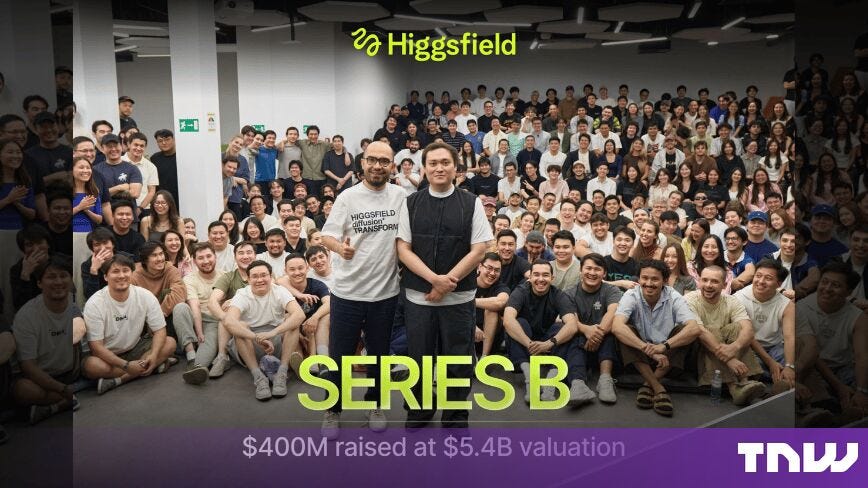
The news: Higgsfield closed a $400M Series B at a $5.4B valuation led by DST Global, more than quadrupling the $1.3B mark it carried out of its Series A eight months ago. The AI video and image platform says annualized revenue reached $700M this month, up from roughly $20M a year earlier. That is one of the steepest revenue ramps anyone has put on paper in this cycle, and we have watched this team inside our community since long before the headlines found them.
Details:
The round drew Goldman Sachs Alternatives, Intel Capital, Fifth Wall, Tribe Capital, Smash Capital, Mirae Asset, and NTT DOCOMO Ventures, alongside existing backers Accel and Menlo Ventures.
Higgsfield counts 30 million users across 238 countries and territories and now powers visual production for 390 of the Fortune 500.
The engine is agentic. Since the Supercomputer rollout in May, users of the agentic products grew 42-fold in three months, driving more than 20 million generations per month.
The customer base flipped. Business customers made up less than a quarter of revenue in January and are now the majority.
Founder Alex Mashrabov built AI Factory, the computer vision company behind Snapchat’s face filters, before Snap acquired it in 2019. His framing: the filters were for teenagers, and this is for marketing departments.
Why it matters: This is not an inflated valuation. At $5.4B against a $700M run rate the market is paying under eight times revenue, which in 2026 is what investors pay when they think revenue is durable rather than a story. A year ago this team was chasing consumers, and we did not think that was the right play. They moved to enterprise visual production, and 390 of the Fortune 500 tells you everything. Generative video became a line item in the marketing budget, and marketing budgets renew. So the opening is not another generator, because models commoditize. It is brand controls, asset libraries, approval workflows, and rights clearance around the generation. Build toward the budget, not the model. Very well done to them.
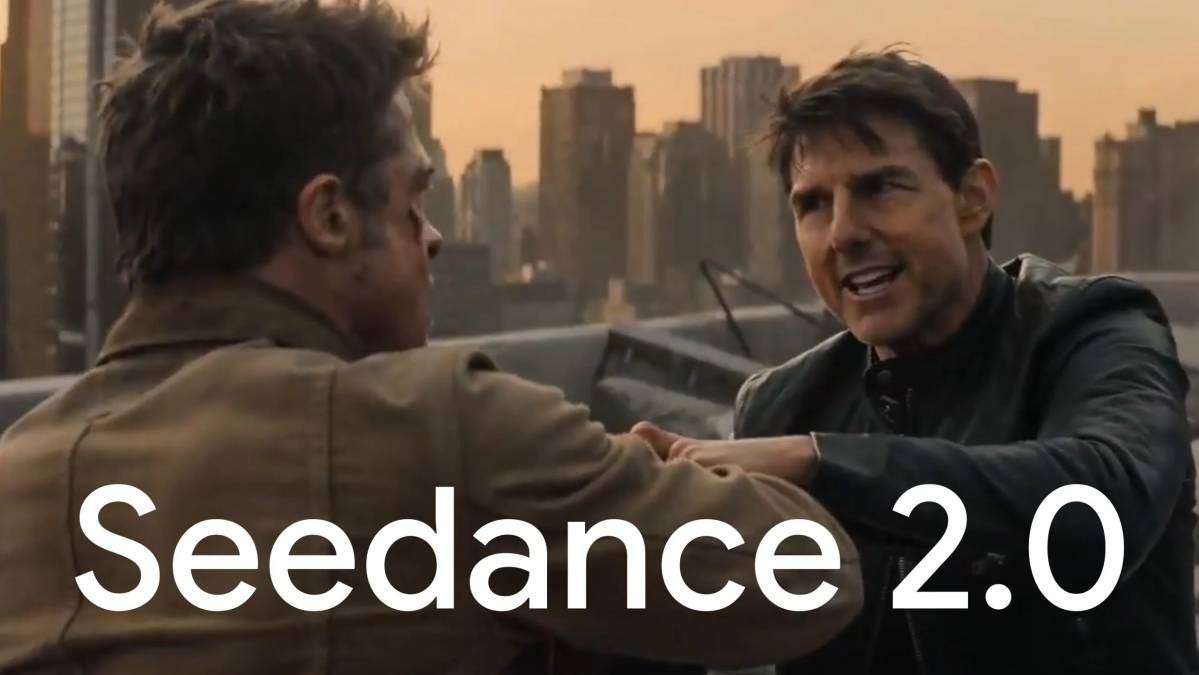
The news: ByteDance and the Motion Picture Association signed a memorandum of understanding establishing a framework to protect film and TV intellectual property across the Seedance and Seedream models. It is the first agreement of its kind between Hollywood’s studio lobby and an AI company. Six months ago these two were exchanging legal threats.
Details:
The MPA sent a cease-and-desist in February over Seedance 2.0, after creators generated riffs on Brad Pitt and Tom Cruise, accusing ByteDance of disregarding copyright law on a massive scale.
The MOU covers TikTok, the TikTok USDS joint venture, CapCut, and Dreamina, so the guardrails travel with the models across ByteDance’s entire app surface rather than sitting on one platform.
Both sides say the safeguards are already reflected in last month’s Seedance 2.5 and Seedream 5.0 Pro releases, which means this codifies work that shipped before the ink dried.
MPA chief Charles Rivkin framed copyright as a cornerstone of the industry, while ByteDance general counsel John Rogovin said responsible innovation goes with protections for rightsholders. Two companies that were shouting in February are now sharing a press release.
Disney and other studios raised the original concerns in February over unauthorized characters and celebrity likenesses. An MOU is a framework, not a binding license, and the enforcement details are not public.
Why it matters: These two were in a legal fight six months ago and are now sharing a press release, which tells you how fast this landscape moves. Hollywood appears to have decided it cannot keep AI out of the industry, so it would rather shape the thing than pretend it does not exist. Credit ByteDance for navigating it well, because negotiating early bought distribution while resisting would have bought depositions. For builders, provenance stops being a compliance chore and becomes a product feature: the platforms that can prove what they trained on and what they refuse to generate are the ones studios and brands will sign. It is an MOU, not binding law, so watch whether the MPA takes this template to Kling and the open-weight long tail.

The news: Wispr raised a $280M Series B at a $2B valuation led by Menlo Ventures, nearly tripling the $700M mark it carried in November and bringing total funding to $361M. The company also previewed Canto, its first proprietary speech model, built for cars, streets, and open offices rather than the quiet booths most voice systems are benchmarked in. The thesis behind the round is that AI’s bottleneck moved from the model to the interface. Another team we have had the privilege of watching build up close.
Details:
Canto cuts word error rates in hard conditions with background noise, wind, heavy accents, or music from more than 30% to between 5% and 10%, and Wispr expects it to cut dictations needing edits by 30% to 35%.
Users have generated more than 60 billion words on the platform, which now reaches nearly every Fortune 500 company and more than 10,000 enterprises.
Revenue has grown more than 150% in each of the last four quarters, and Menlo led back-to-back rounds on the argument that frontier labs built superhuman intelligence without building delightful human interfaces.
Wispr is moving past dictation into meetings with its new Notetaker, putting it against Granola, Fireflies, and Read AI, while Willow, Monologue, Aqua, and Superwhisper crowd the dictation category from below.
The new Advanced Interfaces Lab is led by chief scientist Ariya Rastrow, a founding member of Amazon’s Alexa team who previously led multimodal foundation model work at Meta.
Why it matters: Where Higgsfield is a demand story, this is a supply story, and what is short is not intelligence. Flow became the default for a lot of us, and building a proprietary model tuned for noise, wind, and accents is the right call because that is where people actually dictate, not in a recording booth. Read the Canto numbers backwards though: today the shipping product misses more than three words in ten in hard conditions, and users had already flagged the dip. Publishing your own worst metric on funding day is rare and it is correct. The frontier labs built superhuman reasoning and shipped it through a text box, which means the interface layer is wildly underbuilt, and that gap is open to builders who will never train a frontier model.
⚡ Gemini 3.7 Flash - Three weeks after 3.6 Flash, Google reports FrontierCode 1.1 Main at 43.6% versus 34.4% and DeepSWE v1.1 at 65.3% versus 49.0%, at half the previous price through December 31
🗣️ Sonic-3.6 - Cartesia’s new text-to-speech model across 44 languages, launched in beta three months after Sonic-3.5 and claiming the top spot on Artificial Analysis’ provider and controlled voice streaming leaderboards
🔐 HEIR - Google’s open-source compiler toolchain that runs inference on encrypted inputs, so the server never sees the data
🤖 Grok Bot - xAI’s always-on agent teammates run on a persistent cloud VM with browser, terminal, and file access, sign into your existing tools, and keep working after you close the laptop
Etched raised $700M at a $21B valuation led by Jane Street, more than doubling the $10.3B mark it set in late July, and is recruiting Nvidia talent for its transformer-specialized ASIC roadmap.
The DOJ has spent nearly a year investigating a16z over whether partners violated Section 8 of the Clayton Act by sitting on boards of competing AI and data companies. It is the first known interlocking-directorate action aimed at a VC firm.
A GitHub Copilot Autofix patch introduced a shell-injection hole in a Snowflake repo that Wiz Red Agent exploited within five days, exfiltrating a Jira token. Worth reading next to the Origin story: agent-written code needs review that agents cannot provide.
Alipay launched a full-stack agentic commerce platform letting merchants turn products and workflows into agent-ready skills and MCP tools. KFC, Luckin Coffee, and phone brands covering over 70% of China’s smartphone share are already integrated.
DeepSeek shipped V4-Pro and raised API prices by as much as 1,100% with new peak and off-peak tiers. The cheap-inference era has a ceiling, and anyone who built margin assumptions on it just found out where.
Comments
Nothing yet. Say the first thing.
Sign in to join the conversation.