
Four days ago, Dario Amodei told X that Anthropic’s biology work was still months away from its first early glimmers. This week the glimmer arrived early, and it arrived with a wet lab receipt attached: Claude ran a protein binder campaign on its own, two independent contract labs built the designs, and 14 of 15 targets came back with working molecules.
Hold that next to what happened two days later. OpenAI previewed a system for catching misuse across sessions without ever reading customer data, ten weeks after Anthropic began requiring 30 days of retention on its most capable models. Same threat model. Opposite answers. The first visible fork in how the two leading labs intend to watch the thing they are building.
In today’s AI news:
Claude runs an autonomous protein design campaign
OpenAI and Anthropic split on data retention
Stripe buys OpenRouter and the neutrality question it inherits
Today’s top tools and quick news
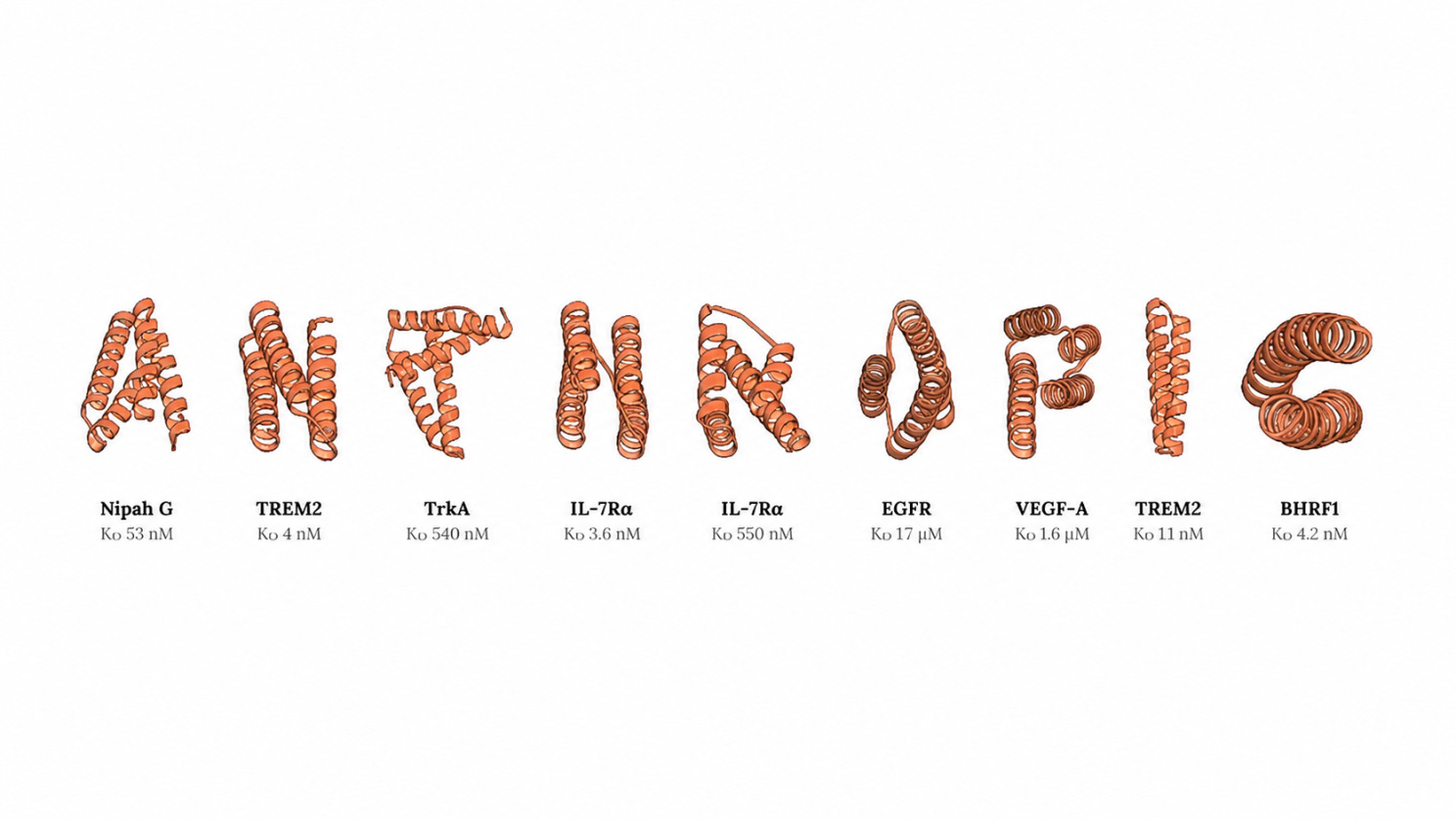
News: Anthropic published wet lab results showing that Claude ran an end-to-end protein binder design campaign with minimal human involvement, succeeding against 14 of 15 biological targets. Adaptyv Bio and Twist Bioscience built and measured every design independently, which makes this one of the rare AI biology claims that arrives pre-validated instead of pre-hyped.
Details:
Claude Opus 4.8 and Mythos Preview produced 1,320 designs across 15 targets, yielding 354 confirmed binders, with hit rates of 22.6% and 26.7% in multi-target mode against a field baseline of 10% to 15%.
Running one target per session pushed Mythos Preview to a 35.1% hit rate, closer to how an actual protein engineer works.
On RBX1, Claude hit 40% versus 3.7% across 245 competition entries, and its best design bound at 3.9 nM against the human winner’s 45 nM, roughly ten times tighter.
Claude was not a new protein model. It orchestrated open-source tools the field already uses including RFdiffusion, ProteinMPNN and ESMFold2, choosing epitopes, generating structures, optimizing in silico and screening candidates itself.
In a second experiment, Opus 5 opened raw NMR and LC-MS files in an undocumented vendor format with no lab software, returning 96.4% purity against the lab’s 96.33% in 19 minutes. The lab’s own report landed four days later.
Why It Matters: The story is not that AI designs proteins. Specialist models have done that for years. The story is that a general model now runs the campaign: picking the strategy, wiring the tools together, judging its own intermediate results, and proposing the same follow-up experiment the lab independently chose to run. That is the difference between a tool and a colleague, and the lesson generalizes far past biology. The specialist models are commodities. The judgment that sequences them is not.
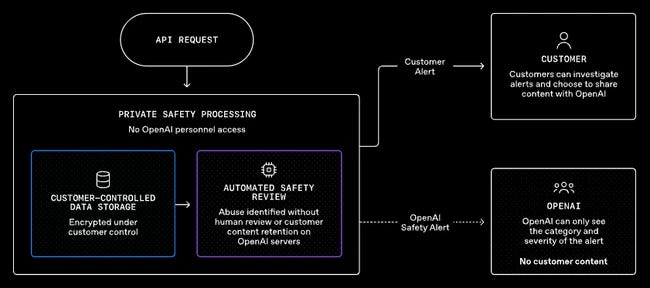
News: OpenAI previewed Private Safety Processing, a system that detects misuse across related interactions while keeping Zero Data Retention intact for eligible API customers. It arrives ten weeks after Anthropic began requiring 30-day retention for Covered Models, where ZDR is not available at all. Two labs looked at the same safety problem and shipped opposite answers.
Details:
The gap both labs identified is identical: single-interaction safety systems miss risks that only surface across sessions. OpenAI cites bad actors probing safeguards, coordinating across accounts, or agents that keep acting after being told to stop.
OpenAI’s answer keeps content on customer-controlled infrastructure, or on OpenAI infrastructure encrypted with customer-held keys OpenAI does not possess. When something trips, OpenAI receives only a category and severity signal, never the prompts.
Anthropic’s answer is 30 days of retention on Claude Fable 5 and Mythos 5, enforced everywhere those models ship, including Bedrock and Microsoft Foundry. A ZDR-only workspace calling them gets a 400 error.
Anthropic said the quiet part out loud in a risk report, conceding the policy would be unpopular and pose real risks to its business, especially if competitors declined to follow. Which is exactly what just happened.
Private Safety Processing is a preview with early customers only. Broader rollout and a technical white paper land in September, and OpenAI’s own footnote preserves a CSAM retention carve-out that applies even under ZDR.
Why It Matters: This is the first time the two leading labs have made a visibly different bet on the same safety constraint, and enterprise buyers are about to price that difference. For a regulated buyer in finance or health, whose retention obligations are written into their own customer commitments, OpenAI’s structure is not a marginally better feature, it is the difference between a signable contract and a dead deal. But hold the applause until September, because OpenAI has not yet demonstrated that pattern detection over encrypted content is equivalent to detection over readable content, and if it is not, this is a procurement win rather than a safety one. Anthropic’s position deserves the fairer reading than it is getting this week: it accepted a known commercial penalty because it judged cross-request attacks like best-of-N jailbreaking to be undetectable any other way, and said so in public before a competitor forced the issue.
News: Stripe officially announced it has agreed to acquire OpenRouter, the gateway routing developer requests across 400+ models from 80+ providers. Stripe disclosed no terms, but Bloomberg reported the price above $7B, Axios put it above $8B in cash and stock, and the New York Times pegged it near $7.5B. Three months ago OpenRouter raised at $1.3B.
Details:
OpenRouter’s May Series B raised $113M from Sequoia, a16z, Menlo Ventures and CapitalG at $1.3B. Stripe is paying roughly 5x that, three months later, for position rather than revenue.
The platform serves roughly 8 million developers through a single API, with agent traffic its fastest-growing source of volume. Stripe named Nvidia, Zoom and Lovable among users.
Patrick Collison framed it around helping businesses “spend their tokens efficiently”, extending a push that already included Stripe’s Token Billing product.
Founder Alex Atallah, who previously co-founded OpenSea, has long called OpenRouter “the Stripe for AI.” He says routing decisions serve the user, and that will not change under Stripe.
The tell that the thesis is right: Ramp, valued near $44B, is reportedly building its own model-routing product as token spend becomes a headline cost line for its customers.
Why It Matters: OpenRouter is the point where inference gets counted and priced across millions of developers, and a payments company buying a metering asset is not a lateral move into AI. It is a vertical extension of the business Stripe has always been in. Which raises the question: OpenRouter’s entire value proposition was that the middleman had no stake in which model won, so what exactly happens to that promise now that the middleman is owned by the company already billing the labs?
🔬 Claude Science Anthropic’s research workbench. Hand it a raw NMR or LC-MS file and ask it to confirm identity and purity.
🧪 Claude’s protein design dataset The full 30,000-token prompt, computational models and experimental data, published openly on HuggingFace.
📊 Artificial Analysis Intelligence Index Nine evals run independently. The only leaderboard worth quoting when a lab publishes its own comparison table.
🔀 OpenRouter One API, 400+ models. Now the most closely watched piece of infrastructure in AI for reasons that have nothing to do with its features.
GLM-5.3 scored 60 on the Artificial Analysis Intelligence Index, tying Kimi K3 atop the open-weights field and landing three points behind Claude Opus 5. Z.ai says every gain came from scaled post-training on the same base model as 5.2. Weights ship at the end of August.
Marvell granted Google a warrant for 58.97M shares at $206.58, worth $12.2B if fully exercised, vesting one tranche per $500M in chip purchases through fiscal 2033. Marvell spiked as much as 14%, Broadcom fell 5%, and Google paid for silicon without spending cash.
Cerebras launched the CS-4, three WSE-3 Turbo wafers in one rack at 750 PFLOPS, claiming up to 30x the tokens per second per user of GPU systems and 10x the throughput per watt of the CS-3. Shipping this quarter, five days after OpenAI’s Ultrafast mode went live on Cerebras silicon.
Bank of America downgraded Broadcom and modeled $370B in contingent AI financing exposure by mid-2029, days before the Marvell filing. Broadcom fell roughly 14% across the week.
Twist Bioscience jumped about 17% to its highest level since 2021 after validating Claude’s designs, a reminder that AI capability gains now reprice the physical infrastructure underneath them.
Comments
Nothing yet. Say the first thing.
Sign in to join the conversation.