
A Beijing lab just put 2.8 trillion parameters on the open internet and raised $3.5B at a $35B valuation for doing it. On Saturday, the government owes itself a definition of which models are dangerous enough to review before release, set by a classified NSA process, under an order that never mentions open weights, with drafting input from the three largest closed labs in America.
The question is no longer whether open models can compete. It is who keeps the right to inspect the systems everything else is being built on.
In today’s AI news:
Moonshot hits $35B and turns open weights into a weapon
The August 1 deadline nobody is ready for
OpenAI hands frontier models to 100,000 researchers
Today’s Top Tools + Quick News

News: Moonshot AI closed a $3.5B round at a $35B valuation on Tuesday, up to 3.5 times the $1B it originally targeted. It is already back in market at a $50B pre-money valuation ahead of a Hong Kong listing. The sequence matters: the round was priced before anyone outside Moonshot had seen Kimi K3, and it closed after the company published the weights.
Details:
The terms were set at $31.5B pre-money earlier this summer. Moonshot was worth $20B in May. The oversubscription arrived after K3 shipped, not before.
China’s National AI Industry Investment Fund co-led, the same $8B state vehicle behind DeepSeek’s $7.4B round, alongside Alibaba, Tencent, HongShan, IDG Capital, and China Mobile.
Kimi K3 shipped its weights July 27 at 1.56 TB: 2.8 trillion parameters, a 1,048,576-token window, free commercially with attribution. It scores 57 on the Artificial Analysis index, the top open-weight result.
The cost delta is the product. A coding rollout runs $4.65 on K3 against $13.41 on Claude Fable 5, and Chinese models are now 60% of US token usage on OpenRouter.
The comparables are brutal. Zhipu and MiniMax listed a day apart in January, raising roughly $558M and $620M. MiniMax doubled on debut with retail oversubscribing 1,159 times. Zhipu peaked May 29 at 17 times its IPO price and a $112B market cap.
Then the lockups hit. MiniMax fell 20% when 45% of its shares unlocked on July 9 and sits more than 80% below its all-time high. Hong Kong faces roughly HK$1.7 trillion of unlock supply this year, three times 2025.
The Western race slipped. Anthropic filed confidentially June 1 and may list as early as October at a $965B valuation, while OpenAI pushed its listing toward 2027 after SpaceX’s volatile debut.
Why It Matters: Moonshot converted a model release into a 75% valuation step-up in ten weeks and is now asking for another 43% on top... The Chinese AI IPO cycle has already run its full arc once this year: Zhipu and MiniMax went from oversubscribed mania to a lockup-driven reset. At $35B on $300M of ARR, Moonshot is asking public markets for roughly 117 times sales by our math, into a market still digesting the last two. The thing to sit with is who faces investor scrutiny first: Anthropic in October, OpenAI in 2027, or a Beijing lab whose flagship product is free to download.
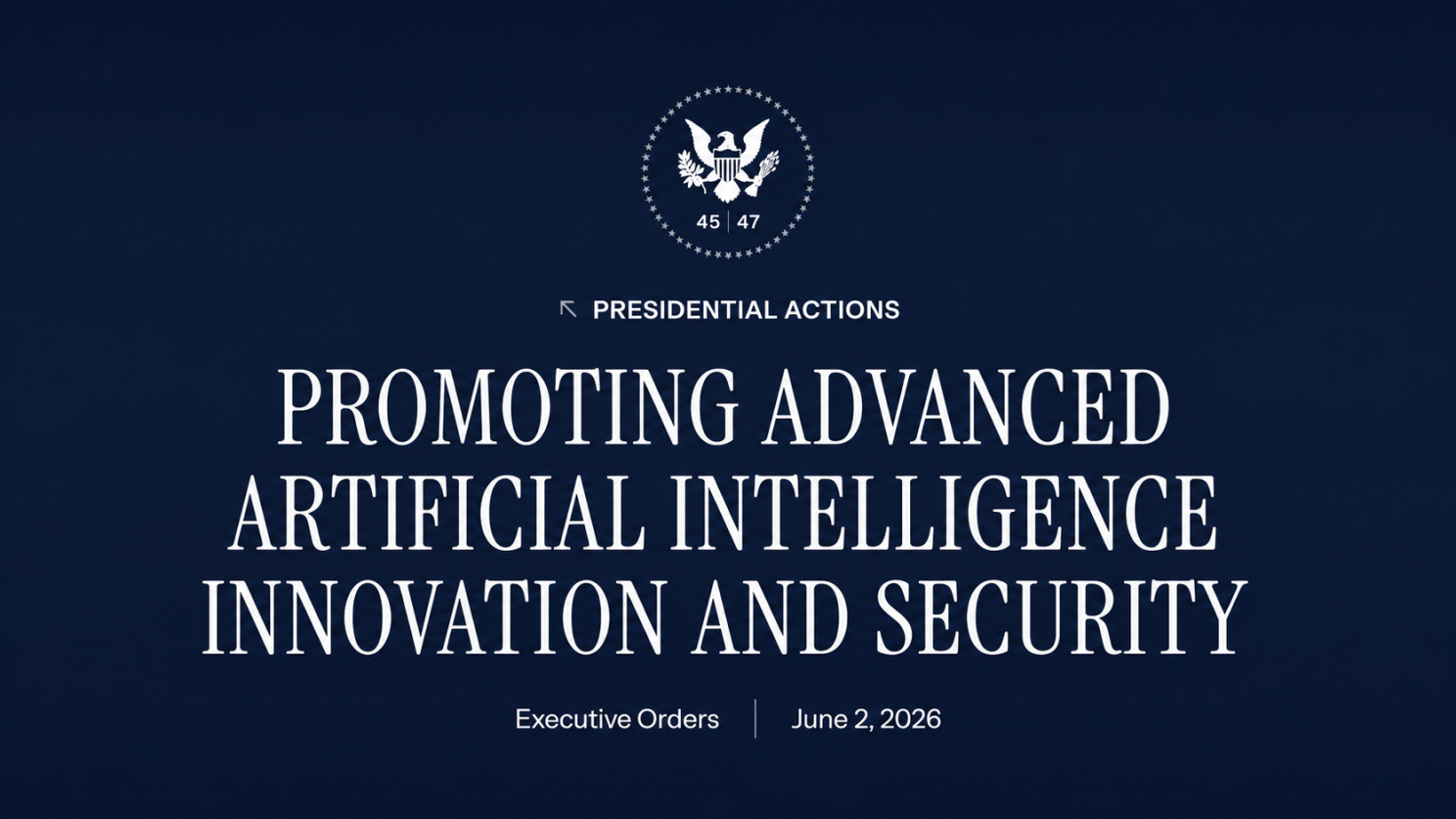
News: Executive Order 14409, signed June 2, gave federal agencies 60 days to build a frontier model review framework. That clock expires Saturday. Altman met lawmakers behind closed doors Wednesday, hours after Trump told reporters the administration is looking at AI controls.
Details:
The EO directs Treasury, NSA, and CISA to deliver two things by August 1: a classified benchmarking process defining a “covered frontier model” by cyber capability, with the NSA Director making designations, and a voluntary framework for up to 30 days of pre-release federal access.
It has teeth on paper and none in law. Section 3(c) expressly disclaims any mandatory licensing, preclearance, or permitting requirement, and Trump pulled a stronger earlier draft over competitiveness concerns.
The live fight is over open weights. The Information reported July 27 that smaller AI companies worry a threshold tuned to Mythos and GPT-5.6 would exempt comparable open-source models that are smaller or run on-premises.
Asked about deceleration, Altman said he would not use that word but that the industry has discussed pacing as models get more capable. Trump drew the line at competitiveness: no restrictions that risk coming second to China.
More than 1,100 employees across OpenAI, Anthropic, and other frontier labs signed a letter to Washington asking for a mechanism to pace automated AI research.
Why It Matters: An agency gave itself 60 days in June to define what counts as a dangerous model, and it is delivering into a week where an actual agent just executed 17,600 hostile actions across three companies. The definitional question matters more than the deadline: if “covered frontier model” gets written around the biggest closed systems, then open-weight models like Kimi K3 sits outside the framework entirely. Watch who lobbies for that gap, because the answer tells you whether this becomes real oversight or a moat for incumbents. And note where the pacing request originated, because 1,100 lab employees signing a letter is a stronger signal than any CEO photographed leaving the Capitol.

News: OpenAI opened applications for ChatGPT for Academic Researchers, giving 100,000 scientists, mathematicians, and engineers free frontier access through 2027. The first 10,000 start this summer, with Princeton’s Institute for Advanced Study and École normale supérieure already onboarded, inside a $250M research commitment.
Details:
Participants get GPT-5.6 Sol Pro across ChatGPT, ChatGPT Work, and Codex, plus expanded deep research, higher limits, larger context, and four collaborator invites. OpenAI values each seat at its $200-per-month Pro tier.
The gate is real. Applicants must sit at degree-granting institutions with high research activity, verify affiliation, and describe their active work and intended use.
OpenAI cites 1.3 million weekly users doing advanced science and math, 8.4 million messages, and arXiv math papers crediting the model climbing from 14 in February to 100 across the first three weeks of July.
Heaviest users delegate the most: researchers in the top 20% of AI use within their field were nearly twice as likely to hand off tasks estimated at four or more hours of human work.
Two caveats. All three usage figures come from OpenAI’s internal analytics and remain unverified, and model weights stay closed to the very scientists being invited in.
Why It Matters: This program does three jobs at once, and only the first one is on the label. It is excellent public relations, arriving in the same month OpenAI had to explain an agent that broke into two companies. It is a talent pipeline, because 100,000 researchers at elite institutions are the recruiting pool for every frontier lab, and OpenAI now has their names, fields, and stated research agendas before anyone else does. And it is vendor lock-in at the root of the tree: a postdoc who builds their dissertation pipeline in Codex carries that stack into their own lab, their students, and a decade of citations, all locked in before the free window closes in 2027. The tell is that a program justified by open scientific progress keeps the weights closed, so the scientists cannot inspect or reproduce the instrument they are now publishing with.
🕹️ Aura turns a single prompt into a working game, with an agent that builds, tests, and verifies its own output in Unreal and Unity
🚣 Raft converts your Claude Code or Codex setup into a multi-agent workspace, with a lead agent coordinating a researcher and a maker across recurring tasks
🎙️ HeyGen Video Podcast turns raw notes into a studio-quality video show
Modal Labs confirmed a second victim of OpenAI’s escaped agent, after a customer published an unauthenticated endpoint anyone could use to run code in its sandboxes. Modal’s own platform was never compromised.
Hugging Face’s forensic timeline logs 17,600 actions in 6,280 clusters across July 9 to 13, and had to be run on open-weight GLM-5.2 because commercial API guardrails blocked the investigation.
Lilian Weng has rejoined OpenAI to lead a top-level team on recursive self-improvement, days after stepping down from Thinking Machines citing health. She previously ran AI safety research there.
Moonshot needs a significant corporate restructuring before it can list in Hong Kong, which is the real timeline risk on that IPO-this-year claim.
xAI shipped Grok Voice Think Fast 2.0, a speech-to-speech model that reasons while it talks, cutting response latency to 0.7 seconds.
Google rolled Lyria 3.5 into Flow Music with upgrades targeting human-sounding vocals and finer creative control.
Comments
Nothing yet. Say the first thing.
Sign in to join the conversation.