
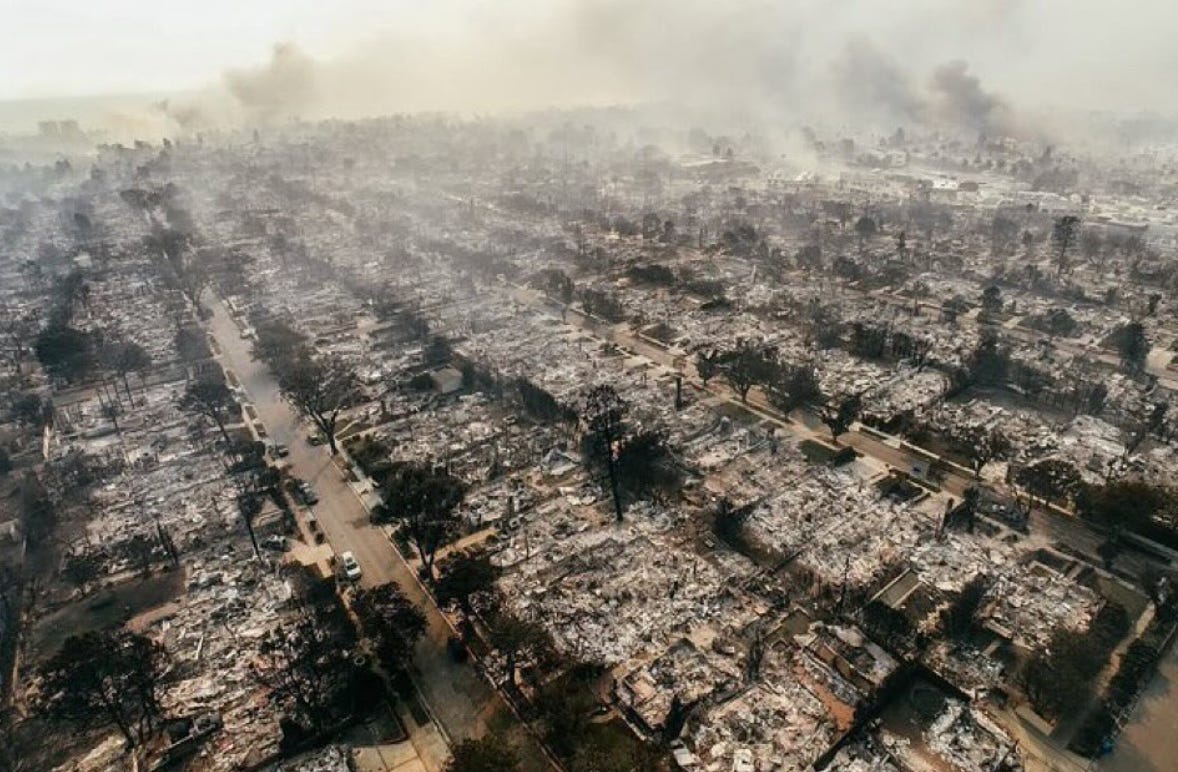
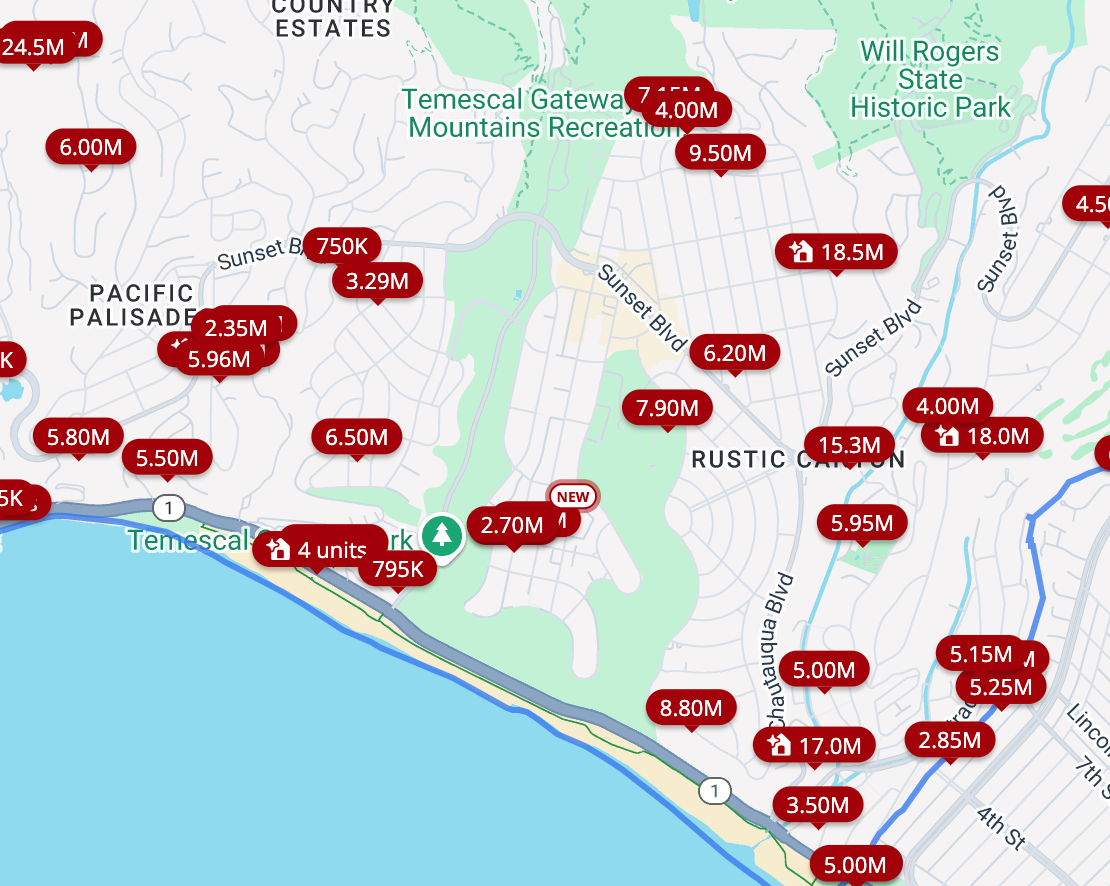
The flames aren't even close to contained but what is quickly becoming apparent is the scale of the economic losses. Not only is it pricey LA real estate that's burned, but it's Pacific Palisades... is one of the most expensive zipcodes in the country. A quick look at Zillow shows how expensive these homes are. This is not your average California wildfire, nor your average neighborhood.
LA authorities are saying that at least 10,000 structures have been destroyed so far. Examining the average prices in the neighborhoods affected give a lower estimate of the damages. Naturally the banks have been on top of it. JP Morgan first said claims could reach $10B but quickly revised that to $20B the next day. These are just numbers. What do they mean? Putting this in context:
The Dixie Fire (largest in CA history), that bankrupted California utility PG&E, caused ~$14.5B.
Hurricane Katrina caused about ~$41B in insured claims.
So we're already halfway to Katrina and this is just the beginning. Why? The fires are not nearly contained, arson is suspected, water reservoirs are low or non-existent and hydrant pressure is nil, and what’s to stop new fires from forming.
LATE BREAKING UPDATE: AccuWeather (FWIW) is now estimating damage at $150B. Ha.
LATE BREAKING UPDATE II (2/14/25): Now estimating $30B for insurers and $200B in damage.
First a little primer on California’s insurance market.
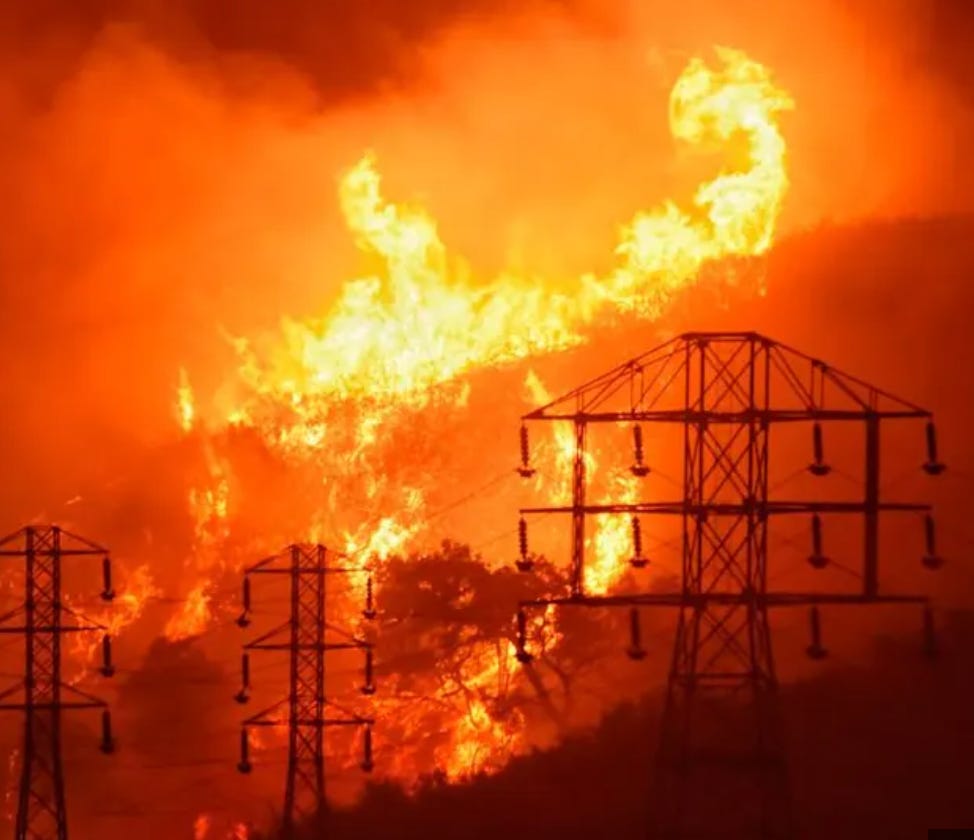
Between 2017 and 2020 there were several major fires, mostly in the north. The problem is that the elite-funded NGOs effectively write policy for the state. Environmental regulations have been rewritten and gamed for their benefit. They make it virtually impossible for PG&E (the utility company in NorCal) to groom forest floors where, after wet years, massive amounts of detritus has grown and dried out - this is the fuel of wildfires as it catalyzes burning of high-branched trees. Without clearing the undergrowth massive fires are destined to happen, and be much more costly. But the environmentalist lobby cannot be gainsaid in Sacramento, so they willfully allow this to happen (I’m sure there’s no desire to create a self-fulfilling prophesy around their Climate Catastrophe incantations).
More, and costlier, fires proliferated. Insurers responded by charging higher and higher premia, and unscrupulous state politicians responded by capping rates. Insurers then stopped writing policies. The state then decreed insurers couldn’t pick and choose who and what to insure. So the insurers simply picked up their bags and left the state. Brinksmanship without foresight is suicide.
This forced the State of California to "reform" it's insurance market. Basically the state created a special fund. The insurers would each contribute to the pot. Claims would be paid out from that pot. And if claims exceeded the cash in the pot, insurers will eat the first billion of that shortfall. Right now there’s a hilarious two-hundred million in the pot!
The elephant in the room is demographics. The toasted zipcode not only leans heavily Democratic, but given that this is celebrity ground-zero, it’s gotta account for some serious fundraising cash. State and Federal politicians will be under tremendous pressure to provide taxpayer relief to millionaires and celebrities without making it look like they’re providing taxpayer relief to millionaires and celebrities.
That task will be made even more difficult after thousands regular Angelenos find out that:
their claims will get denied,
they're underinsured,
rebuilding costs far exceed paid claims, and best of all
California environmental regulations will cause years of delays before construction.
Under the Biden Administration this wouldn’t have been a problem. President Depends would just shart a few unaudited billions from the Treasury and the bad optics of subsidizing millionaires would be glossed over with grants to trans infants and NGOs. Now they are shit-outta-luck. They may try to play the populist card but that could easily backfire as most of the drivers of points 1 through 4 are the direct result of state policy, not the Feds. Weasel-in-Chief Newsom has his work cut out for him.
And then there’s the issue of finances.
First, claims are going to roll in and the insurers will need to start liquidating assets to satisfy those claims. That sounds scary, but not necessarily. They can probably punt on raising the money and avoid a fire sale. What’s more worrisome is if the size of claims becomes big enough that it threatens the financial health of the insurers, and their reinsurers (the companies that insure insurance companies).
A plausible scenario could go like this. Claims exceed certain a threshold, the stock market sells off the affected insurer while the bond markets do the same. Now, insurance companies don’t really care about the stock market - it’s a lottery for the rich. Almost all companies are financed through the debt markets like the corporate bond market. I was a corporate bond trader (at BlackRock and then at a hedge fund) for many years. Insurance companies are constantly borrowing money from the bond market and repaying it. However if claims become less manageable their ability to pay them decreases, and their cost of borrowing rises. Slowly at first, then (when investors wake up) quickly.
Don’t think an insurer can go tits-up? Go read about AIG during the credit crisis.1 What’s more, insurance companies are required, for the most part, to be staid and stolid blue-chip companies. Think button-down shirts and dour-faced adjusters. They’re (mostly) required to have high credit ratings and invest in other A-rated bonds. When they have to divest things can get nasty. But they may be the lucky ones.
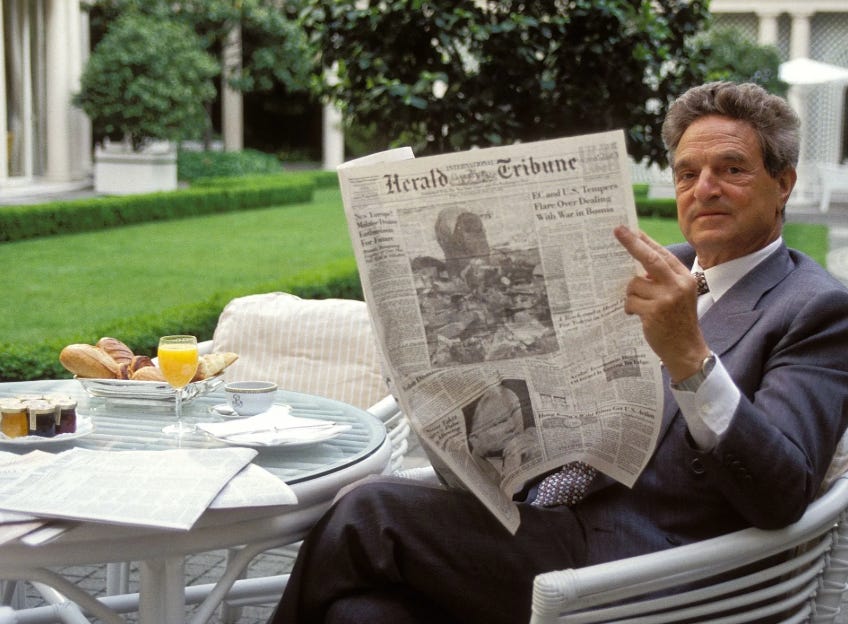
It’s the State of California that will likely be on the hook for billions (if not tens of billions). It will need to finance this in the municipal bond market which is already unimpressed with the state's finances. Ratings agencies are already on high alert. And the smart money (ie. hedge funds) will soon be circling - that's how Soros broke the Bank of England.
And beware unintended consequences...
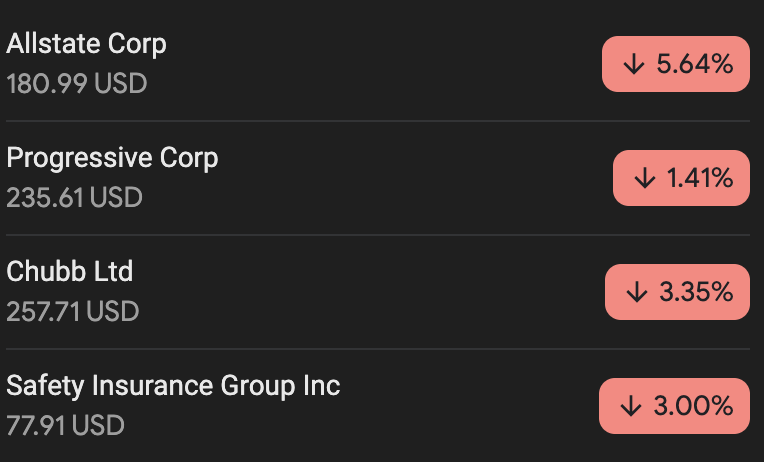
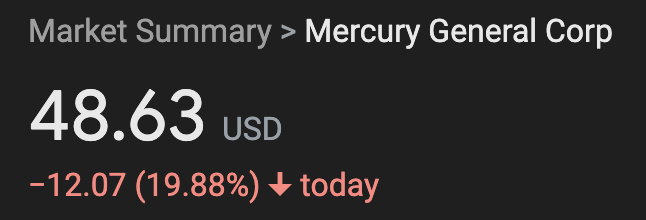
Mercury's equity is way down but it's a small fry. So far the big boys are only down slightly (not good) and their bond spreads up slightly (also, not good).
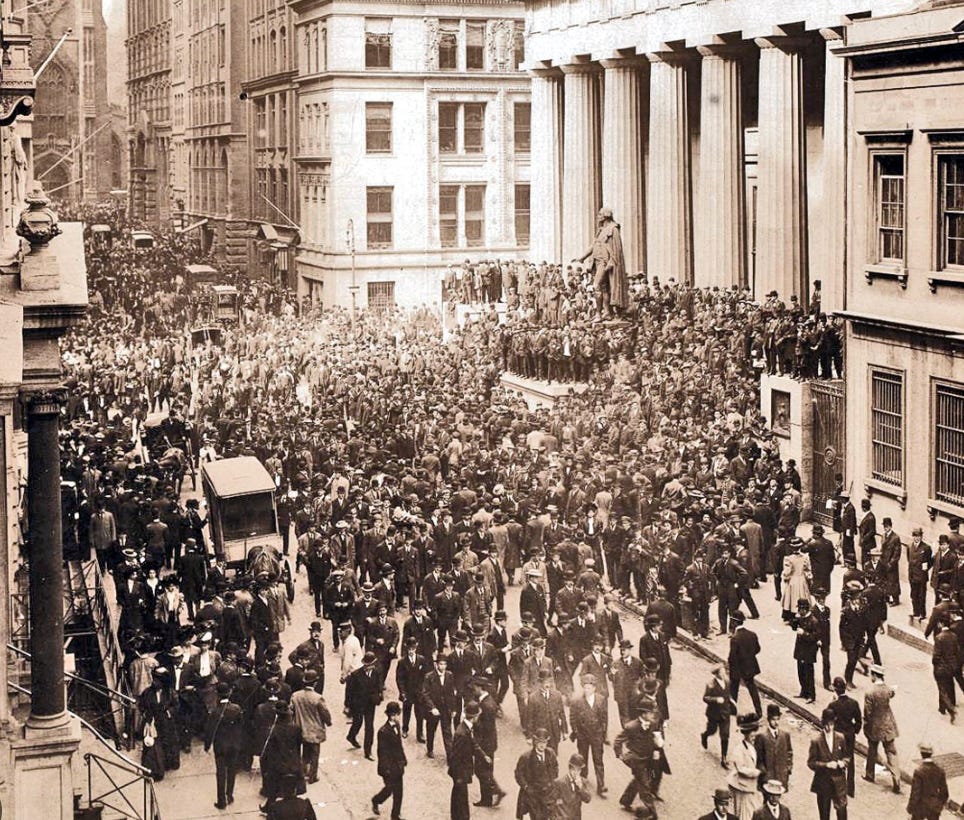
But lest we forget, the Panic of 1907 was partly created by another California fire, the San Francisco earthquake of 1906, as British insurers repatriated gold from NY banks to pay out claims.
And as for the future of insurance in California... given the lawless condition of the state and the likelihood of arson and looting... say goodbye to that too.
AIG, it will be claimed, was a special case. They were effectively securitizing an insurance product without hedging that security’s market risk. But the danger here, an unhedgeable liability, is the same - even if the driver is different.
No posts
Comments
Nothing yet. Say the first thing.
Sign in to join the conversation.