
Sometimes looking through a camera lens feels like entering another dimension. Each shutter click opens a passage - a traveler’s feeling. That day, in Stanley Park, was like that.
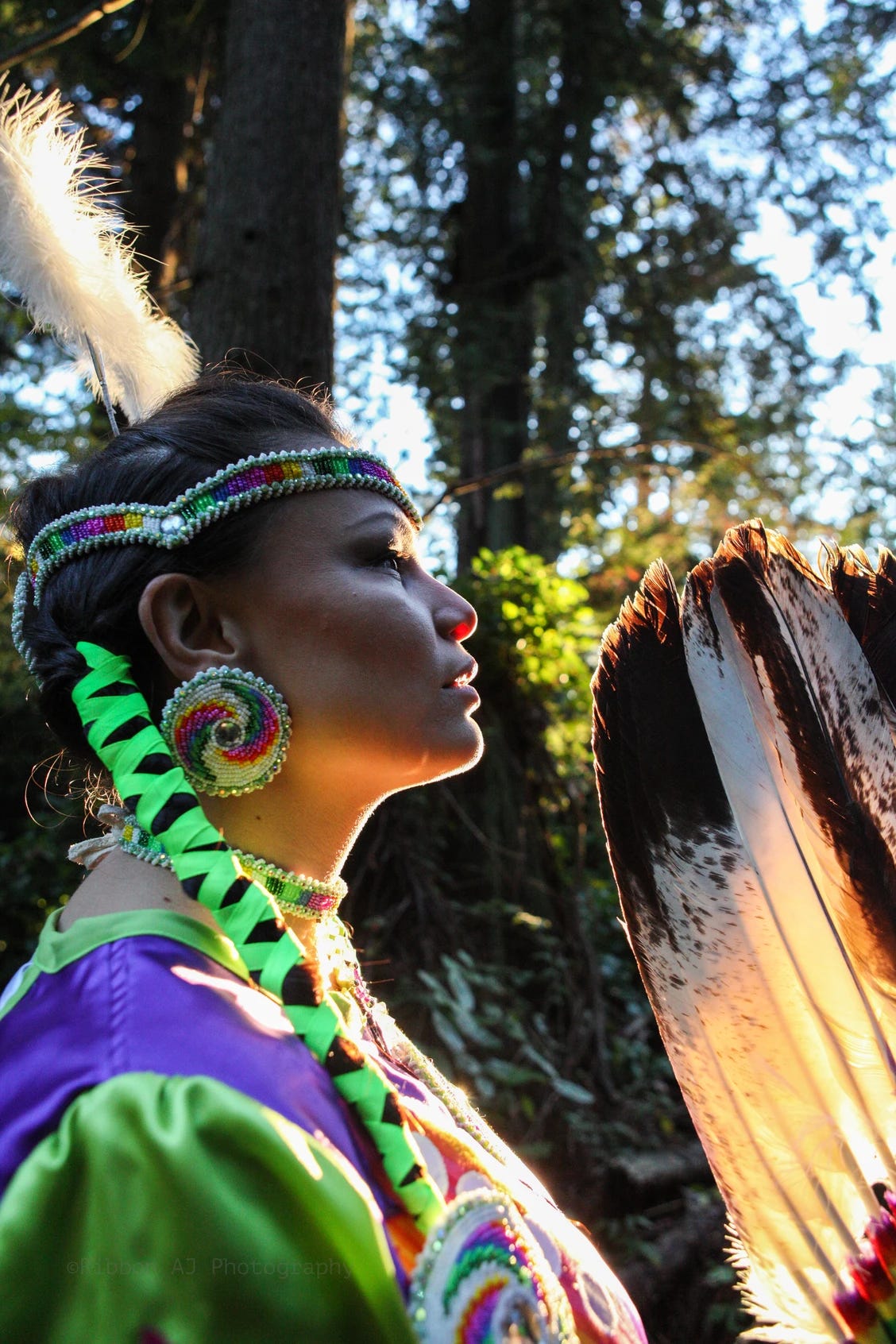
With hair down to her waist and clear, striking eyes, Madelaine waited for me for a profile shoot and interview. She’s Métis, from Île-à-la-Crosse in Saskatchewan — an artist, speaker, and MC, competing for Miss Vancouver under the title Strong Earth Woman and Rainbow Dancer. She told me she’d found healing and self-expression through traditional dance. In regalia patterned with bright motifs, she moved, and in the most beautiful golden light nature makes, a twenty-minute shoot carried what felt like the reverberation of a hundred and fifty years. I don’t fully understand what happened in me that afternoon, but goosebumps kept rising - an unexplainable current, like I was sharing breath with a history that wasn’t mine.
That shoot made us friends. The following summer, her team invited me to a play and community workshop on intergenerational trauma and youth suicide in Indigenous communities. The lights dimmed, the curtain rose, and it began with monologues — misunderstandings inside families where communication had broken down, the hunger for recognition, the ordinary tangles of human conflict that turn out not to be so ordinary when they’re carrying the weight of everything that came before them.
By the end I couldn’t stop crying, and I couldn’t fully explain why. The director hugged me afterward and said something I still think about: maybe the sorrowful spirits filling the theater were crying through me that night — cry a lot, for them. Later, outside under the dark, we smudged together as a group — cast, crew, family, friends — an Elder moving sage smoke over our heads, hearts, hands, feet, saying it would help us hold the pain fully rather than flinch from it.
That was 2015, in Vancouver, and it was where my education actually began — not the history I’d absorbed in headlines, but the history that lives inside a room of people who are still, generation after generation, metabolizing what was done to their families.
I want to be careful here, because it’s easy to let a personal encounter stand in for a history it can’t carry alone. So let me put some of that history down plainly.
Residential schools operated in Canada for more than a century, from 1883 to 1996, with a total of 139 schools at various points and more than 150,000 First Nations, Métis, and Inuit children passing through them. The Truth and Reconciliation Commission documented the deaths of over 6,000 residential school students as a result of their time there, and said plainly there are probably more. In 2015, the TRC’s final report described the system as amounting to cultural genocide against Indigenous peoples in Canada, and issued 94 Calls to Action toward repair — most of which are still, a decade later, works in progress.
The aftershocks aren’t abstract. As of early 2026, there are still 40 long-term drinking water advisories affecting 37 First Nations communities across the country, some of them in place for more than thirty years. Among Indigenous youth aged 15 to 24, the suicide rate runs five to six times the national average, and for Inuit youth specifically it climbs to roughly eleven times the national rate. In northern Ontario, youth mortality overall runs well above the provincial average, and researchers are explicit that this isn’t cultural or inevitable — it’s traceable, as one addiction researcher put it, to a system created by colonialism and racism, not to anything intrinsic to the communities living through it.
I share these numbers not to make a case, and not with any interest in assigning blame in a way that closes a conversation instead of opening one. I share them because without them, a personal story like mine risks becoming sentiment without substance — a nice feeling about smoke and firelight, detached from the machinery that produced the grief in that theater in the first place.
Years after Vancouver, a friend and therapist, Brian, opened a door for me to support an Indigenous community in Ontario. Until then, my contact with Indigenous communities — in both BC and Ontario — had mostly happened in cities. Downtown centers, urban gathering spaces, the version of “meeting” a community that still lets you go home to your own apartment that night.
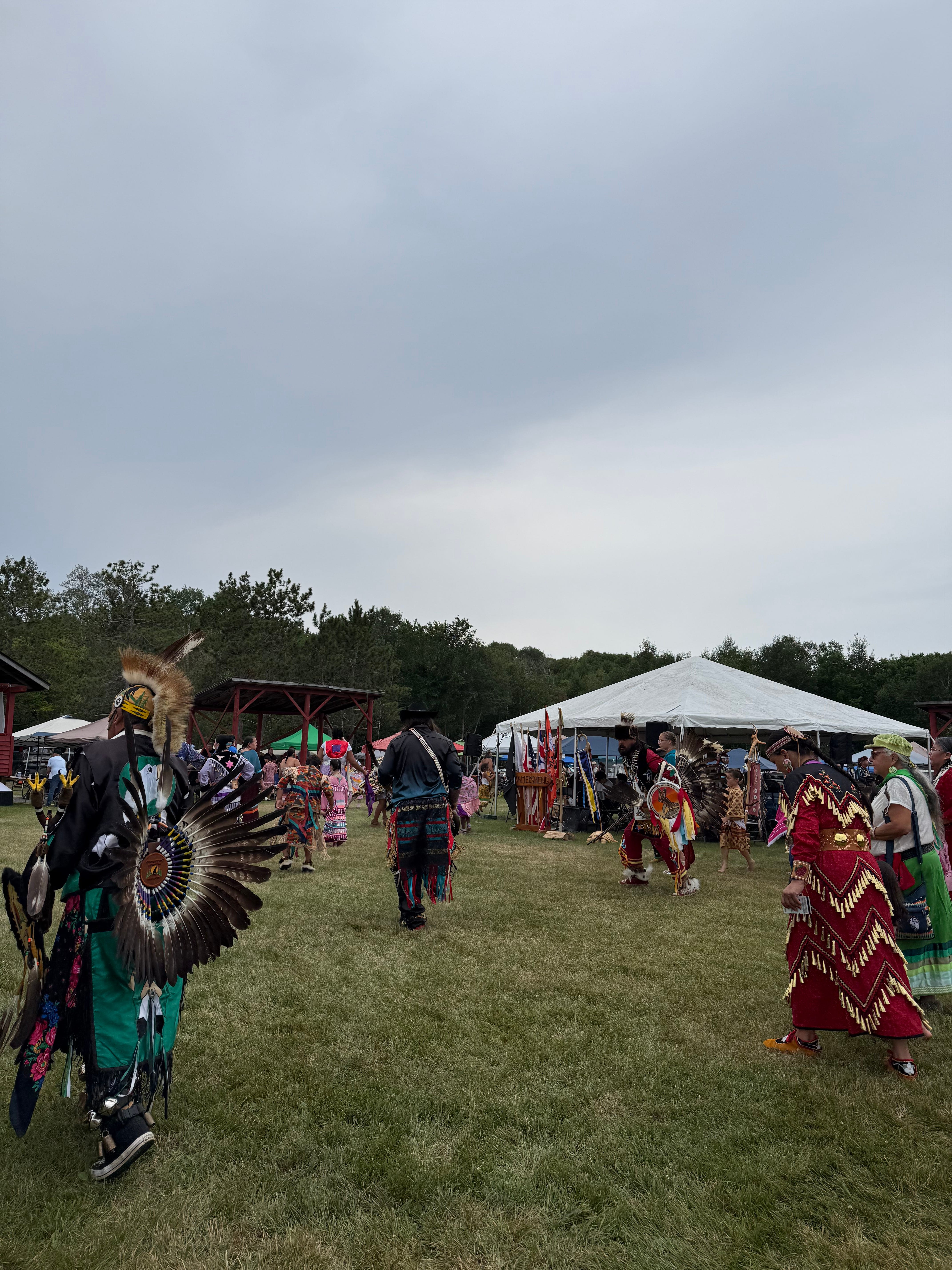
This was different. I said yes to Brian and went north for the powwow and sundance healing season — a real visit, inside a real community, four hours’ driving distance from where I live. Four hours. Same country, same province. And I want to be honest about something that surprised me: I felt more distance, more genuine separation from the people there than I had ever felt doing humanitarian work in African suburb regions on an entirely different continent.
I’ve turned that over a lot. I don’t think it’s about geography at all. I think it’s about depth — a history so layered, so specific, so bound up with spiritual practice and land and unresolved grief still actively metabolizing in real time. And yet this is Canada! — one of the most developed places on earth. No one would imagine issues this severe still existing here: broken infrastructure, real safety risks and crimes, water people still can’t drink. That’s the wall an outsider feels before they even understand what it’s made of. Within the communities themselves, I learned there are still divisions — including discrimination faced by people of mixed or half-Indigenous heritage — and there’s a real, earned wariness toward external frameworks, including things like Western mindfulness or imported spiritual language, arriving yet again from outside to explain a community to itself. That wariness isn’t paranoia. It’s the accumulated, rational residue of a hundred and sixty years of outsiders arriving with their own agendas and calling it help.
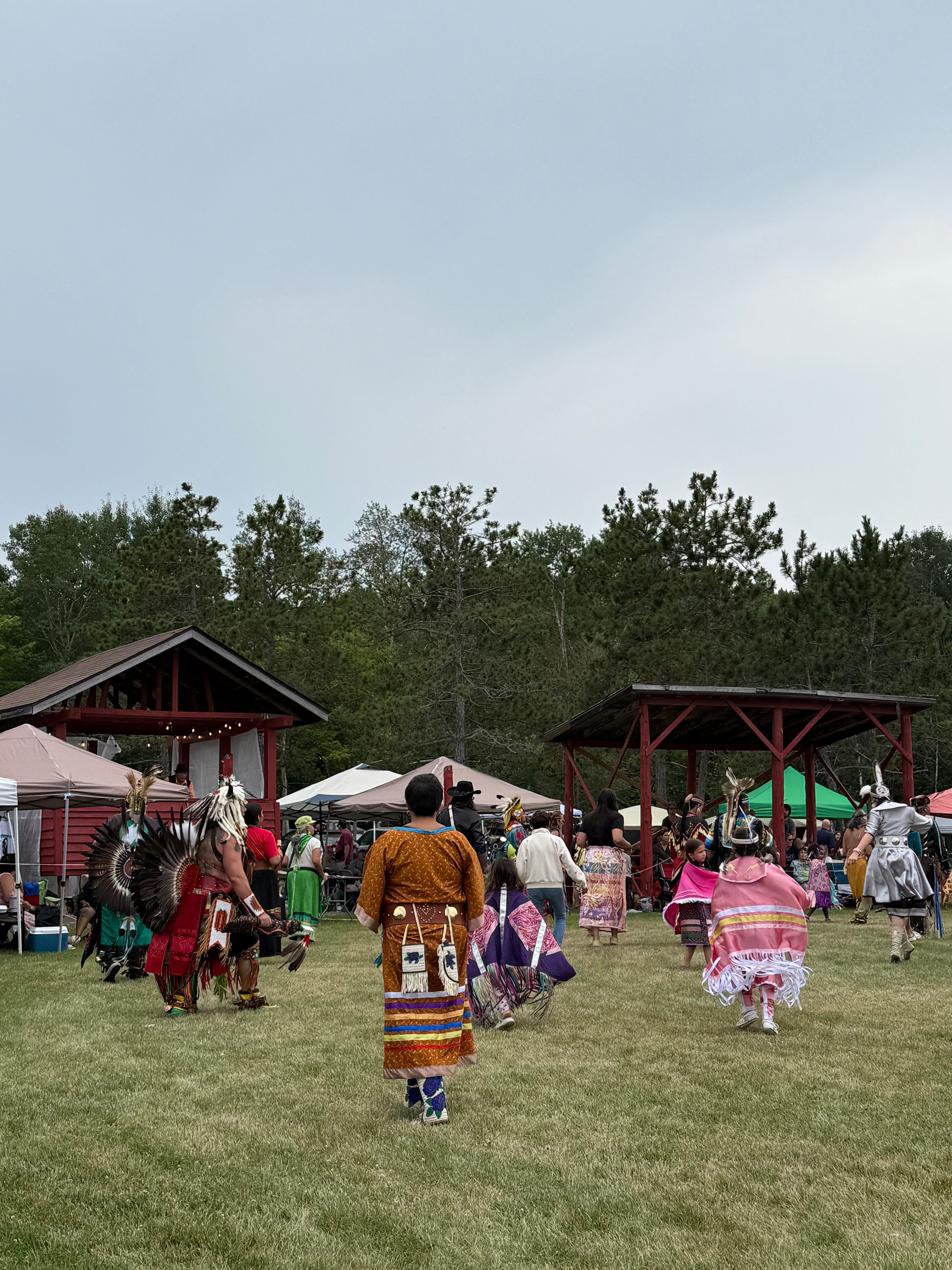
What I encountered, mostly, was severe and widespread addiction and generational trauma running through families like weather — and a real shortage of the kind of holistic, sustained, systemic support that could actually meet it. And one thing became clear to me almost immediately, something I’d already half-learned doing relief work elsewhere but had to relearn here in a sharper form: handing someone free food or free money is not, by itself, an answer. The real question underneath any humanitarian work, the one I now ask before almost anything else, is: are we helping people walk on their own, or are we indirectly training them to need us forever? Sustainability was never a nice-to-have. It’s the entire ethical center of the work.
I’ll admit something else, because pretending otherwise would make this essay dishonest. I felt afraid at points — genuinely, physically afraid — in a way I hadn’t in other humanitarian settings, after experiencing harassment from a few individuals in the community. I found myself thinking about news stories that surface every so often — an aid worker murdered and raped somewhere in the world, someone hurt in a place they’d gone to help — and realizing, for the first time, viscerally, that it could be me. I want to name that honestly rather than edit it out, while also naming its limits: a handful of frightening moments with individuals is not a verdict on a people, any more than one bad landlord is a verdict on a country. I was a guest, an outsider, carrying my own nervous system into a room I didn’t fully understand — and fear, in that position, tells you more about the visitor than the host.
Here’s where I land, and where I think the dharma has something honest to offer that isn’t just decoration.
I will never be able to say I’ve walked the same road as the people I met in that community, or as anyone carrying the specific, textured weight of what colonization did to their families across generations. That gap is real, and I don’t think it closes just because I feel moved by a ceremony or grieve at a play. Pretending otherwise would be its own kind of disrespect.
But the Buddha’s first teaching wasn’t a teaching about Indigenous suffering, or Korean suffering, or Canadian suffering. It was about dukkha — the simple, unglamorous, universal fact that beings suffer, that suffering has causes, and that those causes are workable. Not identical suffering. Not comparable suffering. But suffering that runs on the same underlying architecture in every nervous system that’s ever carried it: separation, loss, the ache of not being met. We have, as a species, this strange and enormous gift — the capacity to empathize with a life we’ve never lived, to feel something real in the body for a history we didn’t inherit.
Society builds a lot of walls between one life and another — titles, borders, race, the sheer administrative apparatus of “who belongs where, what defines what.” Some of those walls are earned and necessary, especially where an outside group has already caused harm and trust has to be rebuilt slowly, on the community’s terms, not the visitor’s timeline. But underneath the walls, at the level of raw, sense-based human experience — grief that closes the throat, fear that speeds the heart, the particular ache of watching a child inherit a wound they didn’t create — we are far closer to each other than any of our categories admit.
The Haudenosaunee carry a teaching called the Seventh Generation Principle: that every major decision should be weighed by its impact seven generations into the future, that a nation’s leaders are responsible not only to their own families and communities but to descendants they will never meet. It’s not a metaphor for me anymore. It’s the actual standard I try to hold my own work to now — not “did this feel good today,” but “does this leave people more able to stand on their own, seven generations from now, than if I had never shown up at all.”
I am an outsider.
I expect to remain one, in the deepest sense, for as long as I do this work — and I’ve come to think that’s not a failure state to fix, but an honest place to build trust from. The task was never to stop being an outsider. It was to keep showing up as one, carefully, humbly, useful — and to let that be enough.
Share Wisdom in Motion: Letters & Dispatches on Peace & Wellbeing
Residential school history & TRC findings:
Residential schools operated 1883–1996, 139 schools total, 150,000+ children, 6,000+ documented deaths — CBC, “Truth and Reconciliation Commission: By the numbers” — https://www.cbc.ca/lite/story/1.3096185
TRC’s “cultural genocide” finding, 94 Calls to Action — CBC, “Residential school interactive map” — https://amp.cbc.ca/news/indigenous/residential-school-interactive-map-beyond-94-1.4693413
Current drinking water advisories (2026):
40 long-term drinking water advisories, 37 communities, some 30+ years — Council of Canadians, “Safe Water for First Nations” — https://canadians.org/fn-water/
Youth suicide statistics:
Indigenous youth suicide rate 5–6x national average, Inuit youth 11x — Centre for Suicide Prevention — https://www.suicideinfo.ca/resource/mental-health-and-suicide-in-indigenous-communities-in-canada/
Northern Ontario youth mortality and colonialism/racism framing — Aboriginal youth suicide rises in Northern Ontario, PMC/NIH — https://pmc.ncbi.nlm.nih.gov/articles/PMC4527921/
Seventh Generation Principle:
Haudenosaunee Confederacy origin and meaning — Yale Center for Faith & Culture, “The Haudenosaunee Confederacy on Responsibility to Future Generations” — https://lifeworthliving.yale.edu/resources/the-haudenosaunee-confederacy-on-responsibility-to-future-generations
No posts
Comments
Nothing yet. Say the first thing.
Sign in to join the conversation.