
It’s officially August! The beginning of the end of a long and hot Summer. Here are a few joys and beautiful things I recently encountered. Hope something inspires you. (Sorry for the strange formatting. I wrestled with it and then gave up.)
Reminder to close the computer when you feel blocked, stuck, or just tired.
I have been knee-deep in writing my next book, but spending too much time staring at my screen, stressing out, and overthinking everything left me feeling completely uninspired. Eventually, I had to follow my own advice and listen to the research that tells us getting up, moving around, and going outside can be better for productivity than working nonstop. So I closed my computer, visited a few museum exhibitions, sat in a garden, and browsed the gift shops. But now that it is August, my computer will be slapped shut a lot.


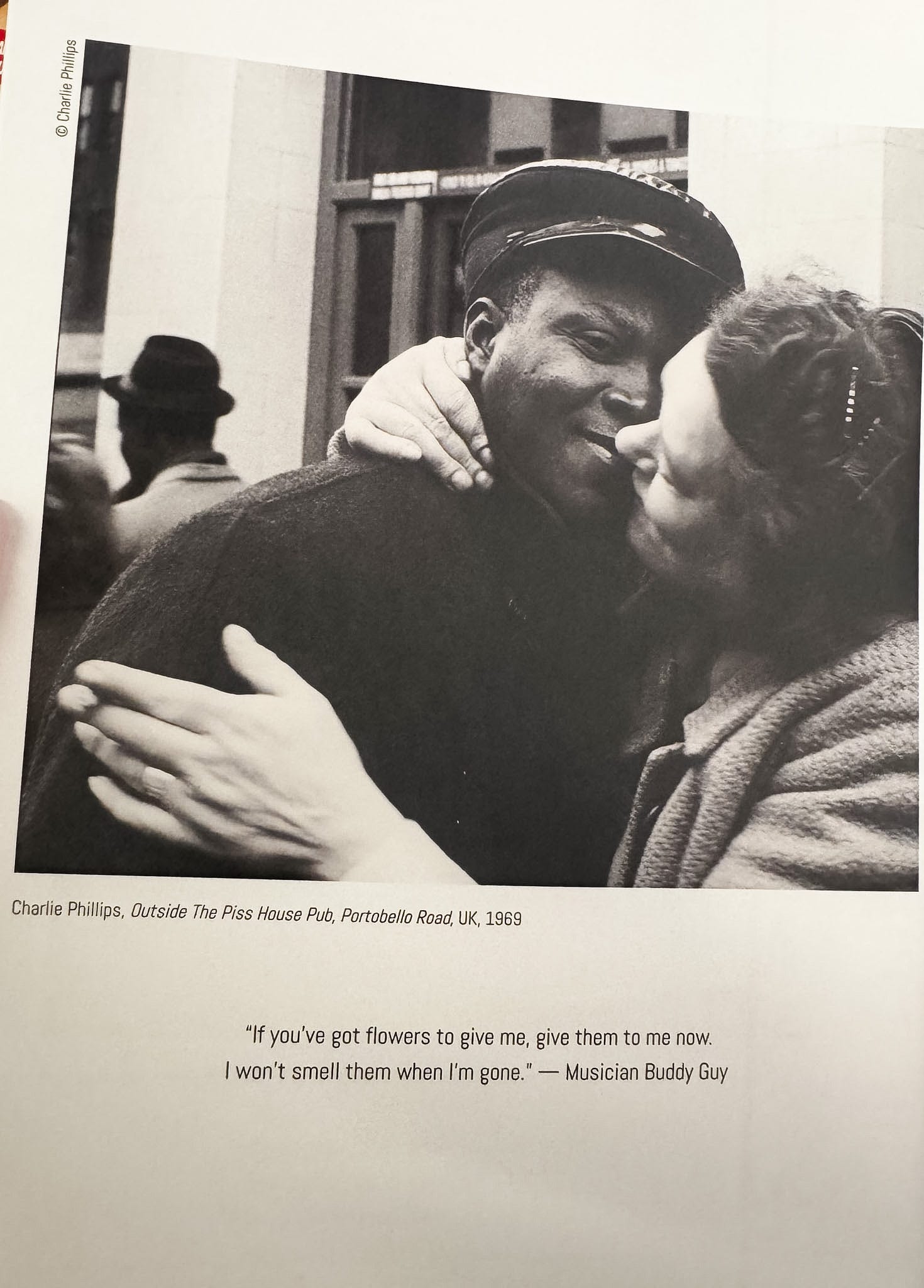
2. IN WAVES
At the end of June, I went to the premiere of In Waves, a film produced by a friend of mine. It is based on the graphic novel by AJ Dungo, a Filipino American surfer and illustrator. She read the book years ago and immediately knew she wanted to turn it into an animated film. AJ was courted by several major American studios but chose to work with my friend and make the film in French because he could feel her love of the water and her heart.
It was a perfect match. The story captures the power and peace that surfers find in the water, but it is also about first love and the depth of true friendship. I can’t say much more without giving anything everything, but I cried my eyeballs out. The colors, the characters, the story…it is all so very beautiful.
For my English speakers, if you want to practice your French, watch the trailer above. But know that Netflix snatched up the worldwide rights, and the film will be released in English this winter.
Ezra Klein podcast about a dystopian novel, pleasure and being in search of beauty. Sometimes I like to scroll through episodes of The Ezra Klein Show looking for something to listen to. I came across one called “I Keep Telling People We’re Living in This Dystopian Novel.” The title was long and strange and sounded like exactly the sort of doom and gloom I was not in the mood for, so I purposefully ignored it. Then a friend texted to tell me I should listen. She was so right.
In the episode, Ezra interviews the author Gary Shteyngart. They begin by discussing his dystopian novel, Super Sad True Love Story, which feels remarkably relevant to our lives today. It imagines a world in which everything is ranked and everyone is constantly searching for validation and measuring themselves against others.
But the section my friend wanted me to listen to was about Gary’s forthcoming essay collection, The Sensualist: Adventures in Pure Pleasure, which comes out this November. They discuss how our obsession with restrictions, optimization, and maxxing everything makes us forget to actually enjoy our lives. Hard to enjoy when we are so obsessed with fixing, changing, counting, etc… Gary believes that many people are uncomfortable admitting to enjoying something. We have trouble appreciating the things that bring us pleasure and most people are suspicious of joy.
He points to America’s Protestant roots and to the experiences of many immigrant families, where time is money and people live to work rather than work to live. No time for joy or pleasure. Gary sees this as no way to live. His new book is a collection of essays about the things he loves and those that bring him joy and pleasure. This kind of makes me want to write essays devoted to things that bring me pleasure in this life. Ezra observes that Gary is always searching for beauty and cares deeply about how things are made. Naturally, this spoke directly to my joy and pleasure seeking big heart.
You will need to skip to the section titled “The Sensualist’s Rebellion” to hear this part, but I enjoyed the entire episode. You can listen to the podcast here.
The Science of Connection
Recently, I stumbled upon this February article in UCLA Magazine about the science and importance of human connection. I was especially struck by the research showing that acts of kindness can do more to reduce depression, anxiety, and loneliness than acts of self-care. Its exploration of empathy, compassion, friendship, and how doing good for others can improve our own well-being feels like a timely reminder in our deeply divisive world. It’s a long article, but it is full of fascinating, science-backed nuggets.
5. Auntie Mame…oh Auntie Mame
During the past few weeks while my kids were off at camp I binged Off Campus, Lady Chatterley’s Lover, and even a really horrible movie series called After in the evenings. By the end of it, I was deeply in need of something that would inspire me instead of making me pine for my youth. My palate cleanser was to settle into some Hollywood classics because I am oddly obsessed with their fake Mid-Atlantic accents, quick, witty zingers, fashion, and interior styles. I rewatched How to Marry a Millionaire with Lauren Bacall and Marilyn Monroe, All About Eve with Bette Davis, Auntie Mame with Rosalind Russell. (Next up will be my all-time favorite, The Women).
Skip to the last paragraph if you don’t want my movie summary.
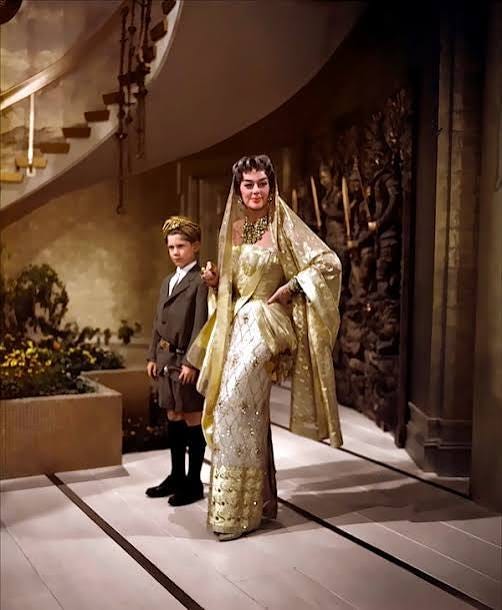
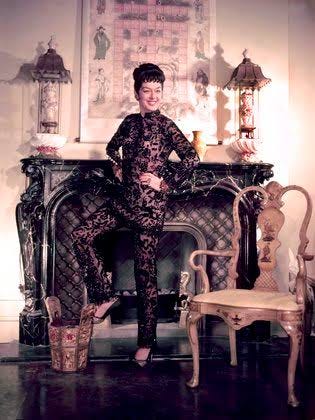
Auntie Mame is an eccentric single woman living in New York City. Her uptight brother dies, making her the sole guardian of her young nephew Patrick, who suddenly finds himself immersed in her wild, bootleg-drinking world. He is immediately fascinated by her and the colorful world she introduces him to. She teaches him to love fish jam, otherwise known as caviar, and to mix martinis for her guests. They get caught in a speakeasy when he is ten, and he often puts her drunk friends to bed in the guest room. He is shipped off to boarding school because the trustee of his father’s estate thinks Mame is too wild and wants the boy to become a conservative snob instead of turning out like his boho auntie. But he comes home for holidays, so he still gets a taste of his auntie’s carefree life. Even when she loses all her money during the Depression, they still find ways to enjoy themselves.
Let me pause here to say that there are some very questionable and offensive scenes in Auntie Mame. There is the scene where Mame forces Gooch, her secretary, to go on a date with her shady ghosteditor. Fast forward we see that Gooch is pregnant after saying that she doesn’t remember anything from that evening in which she got drunk and stumbled home from a night with the shady editor. Even more disturbing is the 1950s racial stereotyping of Mame’s Japanese household staff member, Ito, which is similar to Mr. Yunioshi in Breakfast at Tiffany’s. Ito is not played in yellowface like Mickey Rooney’s character was, and the actor is Asian, but they make him behave like a goofy caricature and speak in a horrible accent. It is especially odd considering that the story is also about exposing prejudice against people who do not fit into a conservative suburban mold. But it was the 1950s, so you can imagine that exposing and denouncing prejudice only applied to certain people. With that very necessary acknowledgment, back to what I enjoyed about the movie.
When Patrick gets engaged to a conservative girl, Auntie Mame doesn’t love her family, who hate Jews, foreigners, and anything they consider eccentric. Mame attempts to hide her eccentricities, as Patrick has requested, but it is impossible because she is who she is and proud of it. The future in-laws cannot pronounce Mame’s unusual name and keep calling her Mamie.
She hosts an apero and it all comes out. There is her foreign staff, whom she considers family, all with unusual names; her unwed pregnant former secretary Gooch; her new secretary Pegeen; and her bohemian friends from the theatre all make appearances. Her home is full of art from abroad, modular mechanical furniture, eccentric food, and strong cocktails. Everything blows up.
The future in-laws finally decide they cannot take it anymore when Auntie Mame announces that she will donate all the proceeds from her upcoming book about her wild and eventful life to a Jewish children’s home that will be built next door to them. They declare they cannot tolerate any more of what they call “revolting riff-raff.” Auntie Mame tells them that they are empty, selfish bigots, and the engagement is off.
I love Auntie Mame’s look and her entire vibe. She gets dressed every day as though she is off to a party, even when she is just sitting at home, wearing caftans, sparkles, fur, and over-the-top headpieces. Her arms are stacked with bangles and her hands loaded with giant rings. (Get ready for me to increase my already loaded stacks of jewelry). Just my kinda style! She redecorates her apartment several times during the film to fit her mood and the season of her life. She loves to travel and takes up and abandons hobbies whenever she feels like it. She is loyal and endlessly entertaining to almost everyone around her. Auntie Mame is always up for a challenge, much to her detriment, but genuinely seems to find joy in every situation. Even when she loses all her money and has to look for work, she makes a mess of a series of jobs but still manages to smile and move on to the next.
The best scene in the whole movie sums up who Auntie Mame is and what she brings to everyone around her.
“Live! That’s the message! Yes! Life is a banquet, and most poor suckers are starving to death!”
I love that line, and I am going to silently repeat it to myself from time to time. Thanks, crazy ol’ Auntie Mame.
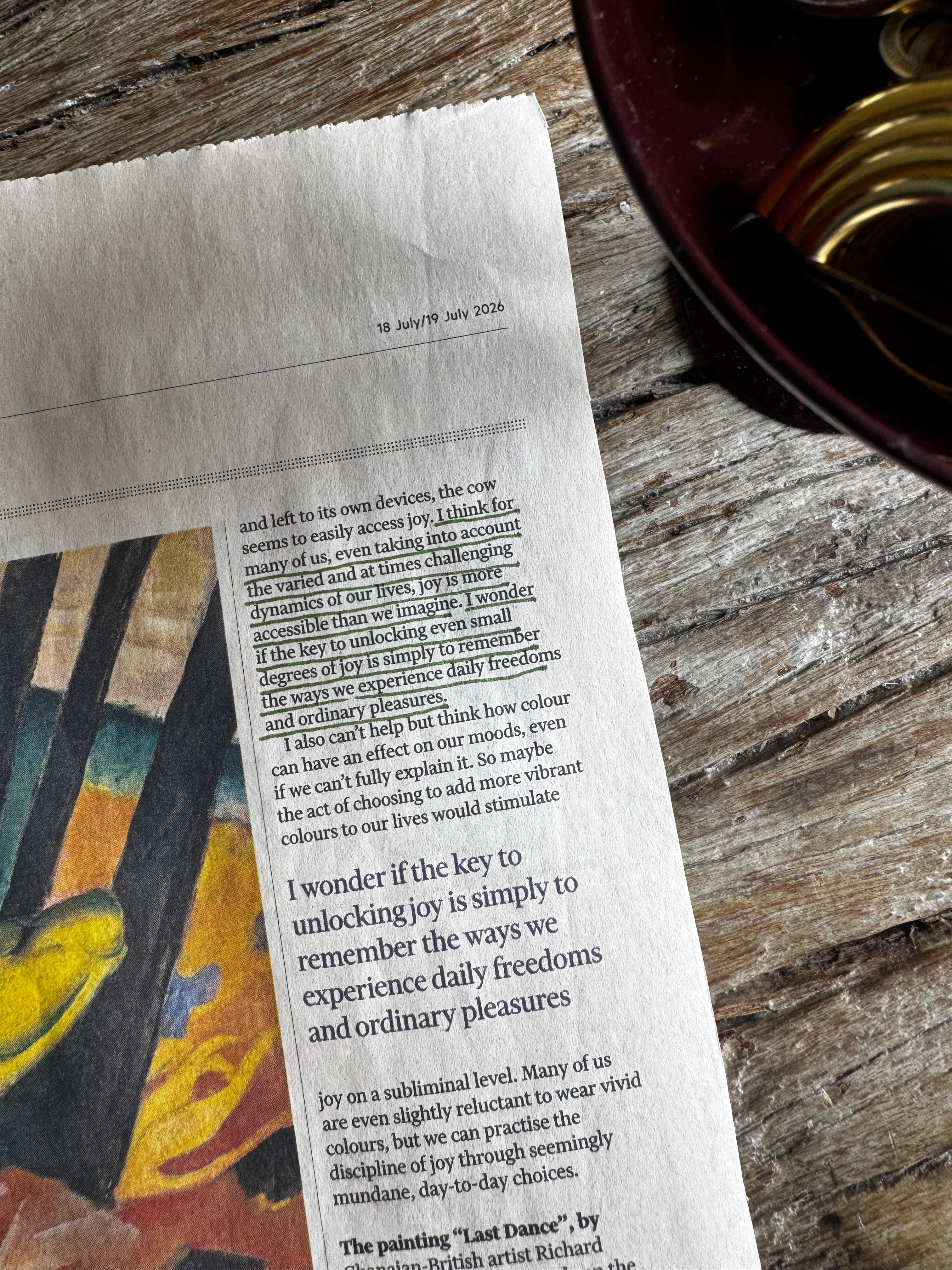
The Necessary Art of Cultivating Joy by Enuma Okoro
I can’t afford a subscription to the Financial Times and have always complained about it because all I really want is to receive HTSI magazine and read Enuma Okoro’s weekend column, The Art of Life. So I was very excited to discover that a newsstand near me sells the weekend edition of the FT. I happened to find it on the perfect weekend, when Enuma had written a wonderful article called “The Necessary Art of Cultivating Joy,” a subject very dear to me, as you know. If you have a subscription, you can read it here.
7. Healing Beauty

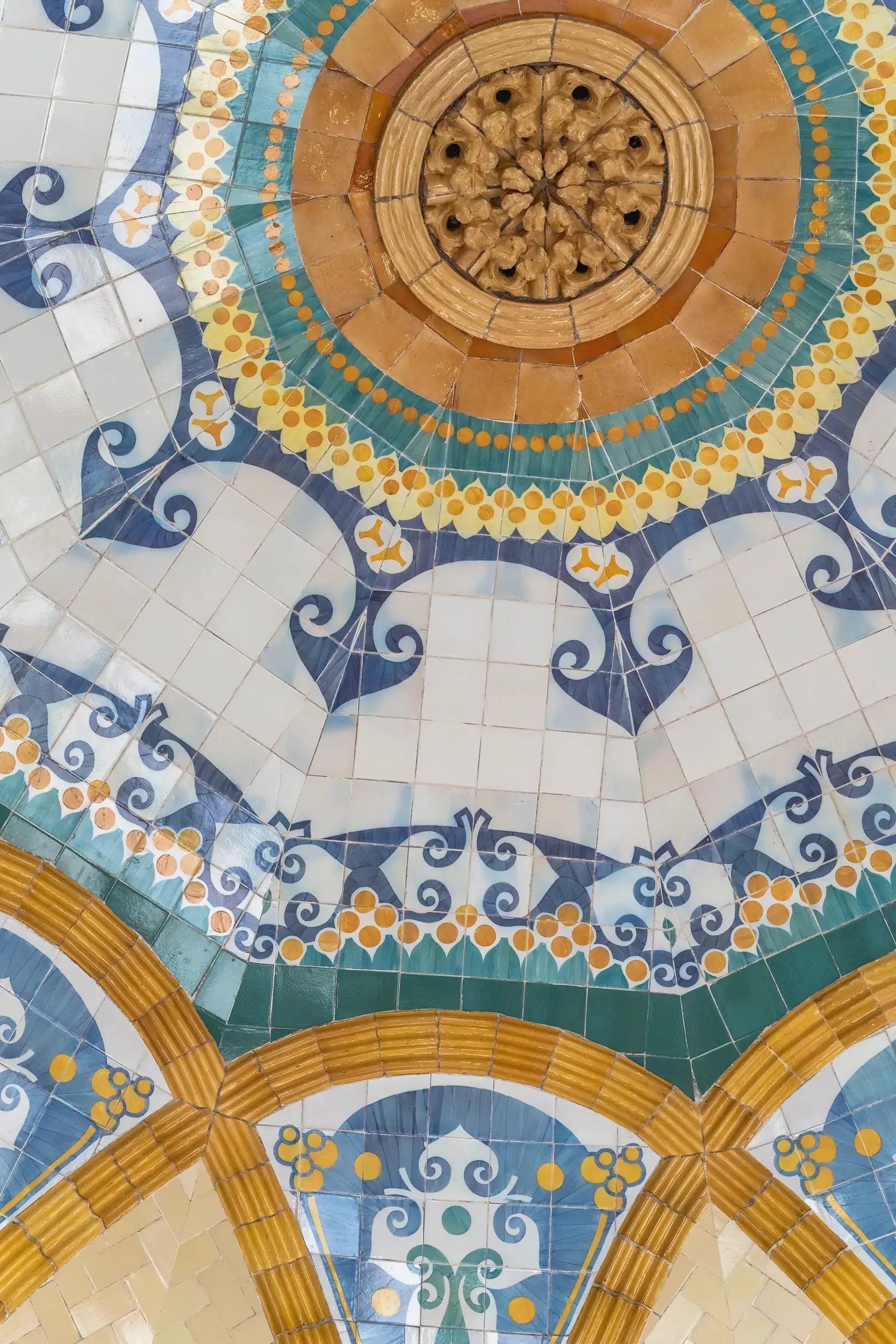
There is a hospital in Barcelona that believes beauty helps to heal their patients. This would’ve been better than the boring room I stayed in when I flipped off a mountain scooter in Switzerland. Read all about it here.
Comments
Nothing yet. Say the first thing.
Sign in to join the conversation.