
They weren’t always the CEO. They weren’t necessarily the most qualified person in the building. They rarely sought the spotlight.
But when a difficult decision had to be made, someone would inevitably say, “Let’s ask Margaret,” or “John’s probably seen this before.”
They carried institutional memory. They knew why a policy existed. They’d lived through previous restructures. They’d watched fashionable ideas come and go. They understood that people mattered more than processes.
In other words, they possessed something that’s becoming surprisingly rare.
Wisdom.
We celebrate knowledge, reward expertise and promote technical ability. Yet wisdom – the ability to apply knowledge with discernment, humility and good judgement – often feels like an underused resource in modern workplaces.
Perhaps that’s because wisdom doesn’t fit neatly into a dashboard.
It can’t be measured by response times or productivity metrics. It rarely trends on social media. It usually speaks more quietly than confidence.
After almost 30 years in communications, I’ve met remarkably talented people. I’ve worked alongside gifted writers, journalists, designers, strategists and leaders. Technology has transformed almost every part of the profession. Artificial intelligence can now draft reports, summarise meetings, analyse documents and generate images in seconds.
Yet one thing hasn’t changed. The people I’ve learned the most from weren’t always the smartest people in the room.
They were the wisest. They knew when not to send the email. They knew which meeting mattered and which one didn’t. They understood that relationships outlast organisational charts. They recognised that timing can matter as much as truth.
Most importantly, they taught me that listening is often more influential than speaking.
Those lessons never appeared in a university textbook. They were passed from one person to another.
That’s mentoring.
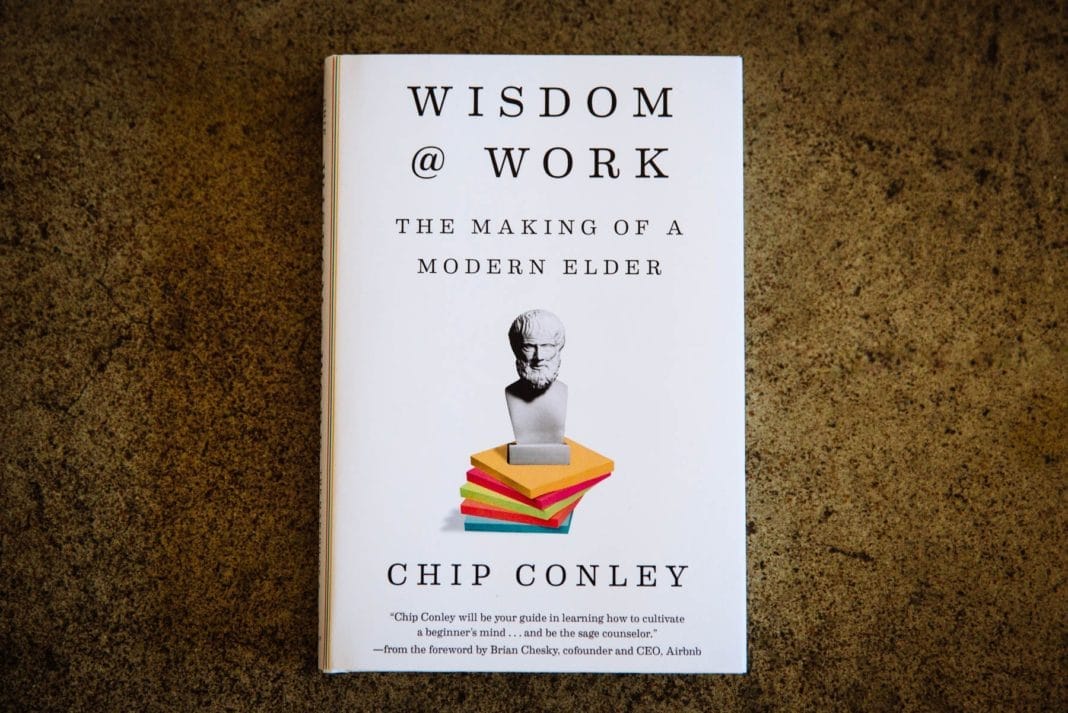
In Wisdom at Work, Chip Conley argues that organisations have entered a new era where experience alone is no longer enough. After joining Airbnb in his fifties, surrounded by colleagues young enough to be his children, he realised that the most valuable people weren’t simply experts. They were what he calls “Modern Elders” – people who are as curious as they are wise.
That phrase has stayed with me. For generations, age was often equated with authority. Today, technology evolves too quickly for anyone to assume they have all the answers. Conley suggests that the best leaders exchange emotional intelligence for digital intelligence. Younger colleagues teach emerging technologies and cultural shifts. Older colleagues offer perspective, judgement and resilience earned through experience.
Learning flows both ways.
That sounds remarkably familiar to Christians. Discipleship has never been about one person having all the answers. It has always been about walking together, listening together and learning together.
Research consistently shows mentoring benefits both the person receiving guidance and the person offering it. Those being mentored report stronger career development, greater confidence and higher job satisfaction. Mentors themselves often experience renewed purpose, deeper engagement and a stronger sense that their experience still matters.
Faith has always been passed on. Jesus didn’t simply deliver information to crowds. He invested deeply in twelve ordinary people.
Perhaps we’ve assumed discipleship happens naturally. Or perhaps we’ve become so busy running churches that we’ve forgotten to intentionally walk alongside people.
We’re living in a culture that prizes speed over reflection. AI can answer almost any factual question in seconds. Search engines have placed the world’s knowledge in our pockets. Every day we’re exposed to more information than previous generations could have imagined.
But information and wisdom aren’t the same thing.
Information tells us what happened, wisdom helps us understand why it matters.
Information offers options, wisdom helps us choose.
Information is accumulated, wisdom is formed.
Conley makes another observation that’s particularly relevant in the age of AI. He says the best teachers remain students.
The wisest people I’ve known have remained curious. They’ve asked thoughtful questions. They’ve welcomed younger voices. They’ve allowed themselves to keep learning while generously sharing what experience had taught them.
Humility, it turns out, may be one of the greatest forms of wisdom.
One of the quiet tragedies of contemporary workplaces is how often organisational memory walks out the door through retirement, redundancy or restructuring without ever being intentionally passed on.
Knowledge management systems can preserve documents. They can’t preserve judgement. They can’t explain why one approach built trust while another damaged it. They can’t teach emotional intelligence. They can’t model courage. Only people can do that.
Perhaps this matters even more as artificial intelligence becomes woven into everyday work.
If AI increasingly handles routine knowledge work, then our uniquely human contribution shifts elsewhere, to judgement, character, discernment, empathy and ethics.
These are becoming the new competitive advantage, not because machines will never imitate them, but because people still long to be led by someone they trust.
I’ve been fortunate throughout my career to work with people generous enough to share not only what they knew, but how they’d learned it. Sometimes the greatest lessons came after meetings, over coffee or during difficult conversations when someone quietly explained, “Here’s why I approached it that way.”
Those conversations shaped me far more than any professional development course.
I suspect many readers could name people who’ve done the same for them and perhaps now we’re being invited to become that person for someone else.
The Book of Proverbs describes wisdom as more precious than silver and more profitable than gold. That’s a striking image in a world that often values novelty above experience.
Wisdom doesn’t become obsolete, it becomes richer.
Across churches the pews are filled with people who’ve spent decades leading organisations, raising families, navigating grief, building communities and following Christ through seasons of joy and disappointment. Their greatest contribution may no longer be chairing another committee or leading another programme.
It may simply be becoming a modern elder, someone who is still learning while helping others grow. Someone who knows that wisdom isn’t about preserving the past but equipping others for the future.
We need more people willing to ask questions, to tell stories, to share mistakes, to encourage courage.
Which leads to the fact that perhaps every community should ask a simple question.
Who is intentionally passing wisdom to whom?
Because if we don’t create those relationships, we risk becoming communities rich in information but poor in formation.
The most valuable person in the room isn’t always the one with the newest ideas. Sometimes it’s the person who’s remained curious long enough to grow wise, and generous enough to pass that wisdom on.
In an age that will increasingly move toward and be defined by artificial intelligence, that may be one of the most deeply human gifts we have to offer.
So who are the modern elders in your midst?
Thanks for reading The Long Conversation. Subscribe for free to receive new posts and support my work.
Comments
Nothing yet. Say the first thing.
Sign in to join the conversation.