
What a phenomenal achievement Christopher Nolan’s film is.
It’s technically astonishing‚ emotionally ambitious and visually unlike anything else showing in cinemas at the moment․Shot entirely on IMAX film‚ every frame feels enormous without ever sinking into some hollow kind of spectacle․The scale is ultimately more part of the story than a distraction․
Matt Damon lends Odysseus the quiet weariness you would expect from a Nolan movie‚ a smart and brilliant man tortured by the decisions that led them to victory but left destruction in their wake‚ rather than the swaggering hero of a typical sword and sandal epic․Anne Hathaway gives Penelope strength and dignity and Tom Holland a quiet vulnerability that actually makes the reversals of the various family relationships feel surprisingly intimate against the scale of the narrative․
Yet for all its astonishing craftsmanship‚ I left the cinema asking a different question‚ is Christopher Nolan really making a film about ancient Greece or is he making a film about us‚ or perhaps both?
But all Homer has ever been about is the journey home after war‚ so in this particular instance‚ Nolan seems less interested in monsters and the mythology of Greece than he is in the nature of victory and what comes after victory when an empire thinks it has won.
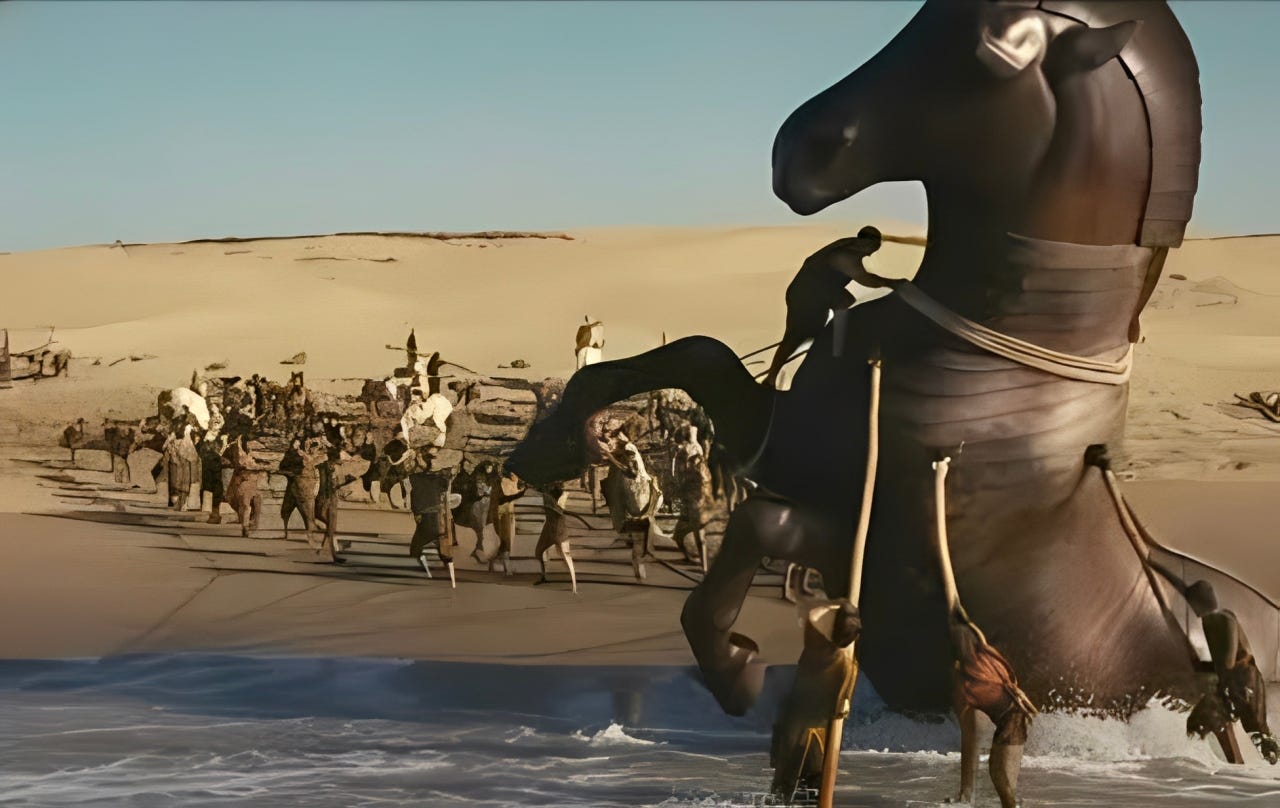
The Trojan Horse‚ then‚ was more than a ruse․Here you have the first great technological advance that changes everything in warfare forever‚ an advance so successful that it destroys the moral basis of civilization․
It’s impossible not to think of Oppenheimer‚ with Nolan having made a film about a scientist who invented something he thought would end the war‚ but then also created an age of constant anxiety‚ and now‚ with The Odyssey‚ he reexamines the man (Odysseus) who devises the stratagem that wins Troy for the Greeks and becomes most troubled by it․ A victory and a catastrophe are now inseparable․
It seems that some kind of Trojan Horse-allusion was intended‚ and that the two films can be seen almost as companion pieces to each other․
But we live in an age of innovation‚ where artificial intelligence‚ surveillance technology‚ autonomous weapons and data-driven power can promise greater efficiency and greater control․ Yet every new advance raises a question about its unexpected outcomes․ History keeps teaching us that the tools which make nations powerful also have the capacity to hollow them out from within․
Nolan seems to be fascinated by the paradox that throughout The Odyssey, Greece has technically won the war․And at last‚ Troy has fallen with the enemy defeated․ But nobody emerges victorious․
The kingdoms are divided‚ the trust all but gone․The leaders are now prisoners of their own ambition‚ and what was once home no longer feels like home․
Perhaps that’s why‚ much of the time‚ it feels strangely post-apocalyptic․ Nolan treats the collapse of the Bronze Age as if civilization has survived its own version of a nuclear exchange․ But although the buildings stand and kingdoms exist‚ there is a feeling of emptiness․
And there is something about Nolan’s obsession with empires․ If you think of it‚ it’s The Dark Knight‚ Dunkirk‚ Oppenheimer and now The Odyssey going back to the empires at the moment of doubt․ His heroes are rarely villains but they aren’t uncomplicated saviours either․ They are usually people whose intelligence enables them to achieve miraculous feats while unleashing forces beyond their control․
And meanwhile‚ there’s a collapse of trust in institutions around the world‚ there’s increasing political polarization‚ there’s wars that seem impossible to resolve‚ there’s a rapid pace of technological advancement that seems to outstrip our ethical frameworks‚ and countries that are willing to fight wars to seek dominance because they believe that’s what will keep them secure․
Though Nolan may have a different view‚ The Odyssey shows that civilizations do not fall simply because they come under attack․ They collapse when they abandon the values that held them together․
The theme of xenia‚ the Greek law of hospitality with its sacred duty to protect guests and strangers‚ is central to the film as each of the major scenes depicting violence begins with someone breaking the sacred obligation to be hospitable to strangers․ Compassion quickly turns to suspicion and decpetion with Circe․ Hospitality becomes exploitation and fear replaces faith during the sacking of Troy․ At some level‚ Nolan always returns to the idea that a civilization is only as good as its weakest members‚ not by the strength of its military․
As contemporary debates over refugees‚ migration and nationalism show‚ and as Nolan’s film suggests‚ there is always a temptation to define neighbours as enemies rather than as fellow human beings․
As a writer about faith and culture‚ a second parallel immediately came to mind for me. Many Biblical accounts caution against power without humility (Babylon‚ Egypt‚ and Rome‚ who all assumed their power would last forever). Scripture and indeed humanity itself repeatedly reminds us that pride comes before a fall and that justice is always more important than military success․
Nolan might be arriving at a similar conclusion‚ though perhaps a different way․His film doesn’t preach.It doesn’t offer easy political analogies․ It asks whether our most serious threat isn’t our enemies as much as our belief that intelligence‚ technology‚ and power can save us without the need for wisdom․
That‚ perhaps‚ is the real Trojan Horse that is hiding in plain sight․Not the building outside the gates‚ but the seductive idea that control is the same thing as security․
There is no doubt that The Odyssey is one of the most extraordinary undertakings ever to be committed to film and the great achievement of the film is that it turns one of the oldest stories known to humankind into one of the most contemporary․Nolan isn’t just saying that this tends to be how every force in a civilization eventually makes its decision: to conquer at any cost‚ or to return to the values of a civilization worth saving․
By the end of the film‚ Odysseus learns that the greatest journey is not across the sea nor is it against the monsters of the world, but to accept and reconcile the consequences of one’s actions in one’s journey to repentance and homecoming․
In an age obsessed with power‚ that may be Christopher Nolan’s most radical statement yet․
Comments
Nothing yet. Say the first thing.
Sign in to join the conversation.