
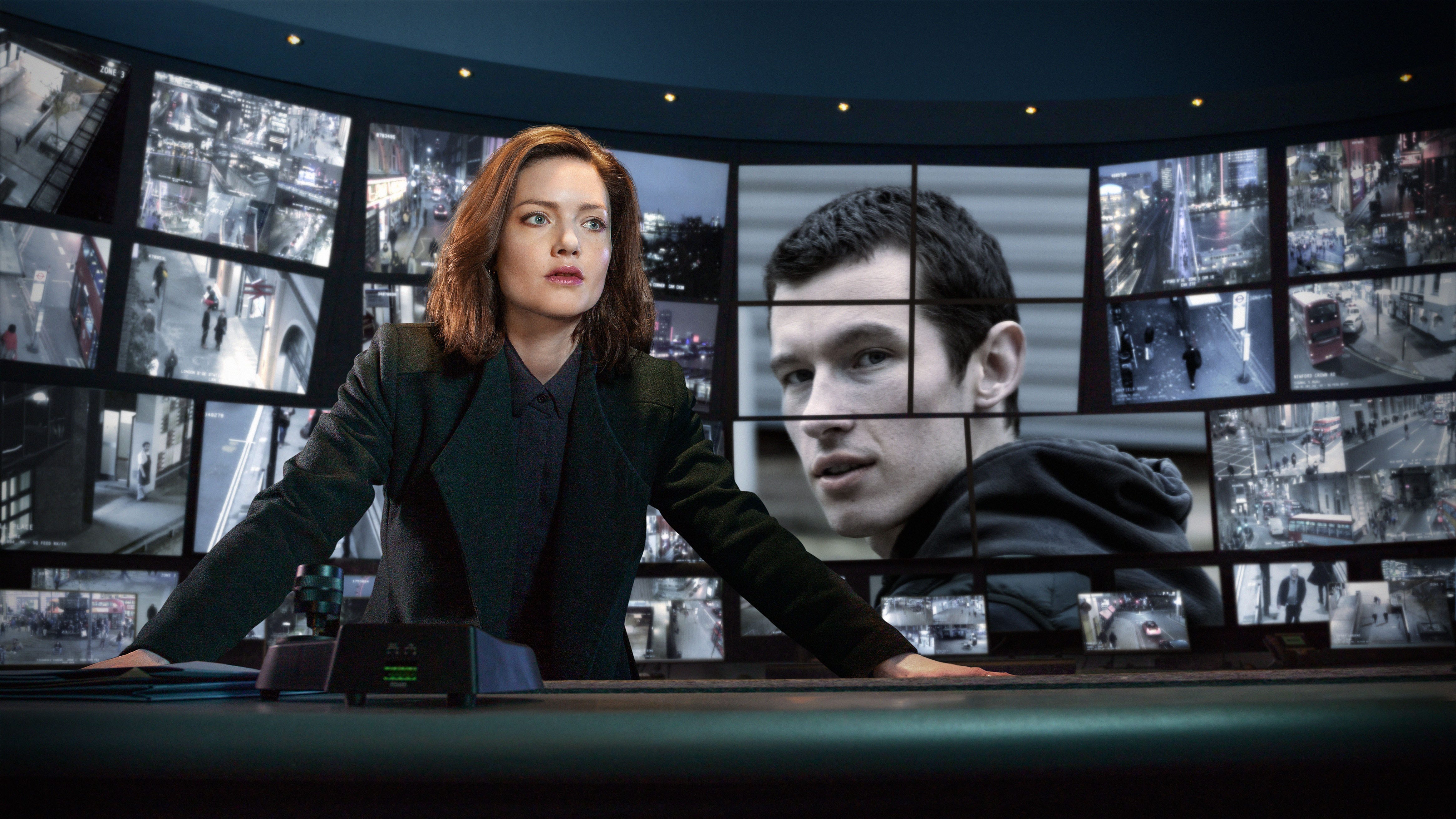
Season one of The Capture came out in 2019. It peaked my interest when I saw the third season had just appeared on ABC iView.
Why had I never seen this brilliant British drama?
Now having watched its first season, it kind of bewilders me to think that many of the technologies it imagines – AI-generated media, deep fakes, facial recognition, mass data collection and sophisticated video manipulation – are now familiar realities in 2026.
When it first aired in 2019, viewers must have thought its premise must have felt provocative but comfortably fictional, almost like science fiction. Today, it feels unsettlingly close to home and watching it now feels a story that has grown into its own prophecy.
I then Googled why there was a four year gap between season two and three to discover that its creator Ben Chanan has admitted the reason the third season took so long to come out is that he was waiting for real-world technology and societal attitudes to catch up with the advanced concepts he introduced in seasons one and two.
At first glance, The Capture appears to be a familiar police thriller, because it has all the familair hallmarks. Soldier Shaun Emery (Callum Turner) has just been acquitted of a war crime after video evidence against him is successfully challenged in court. Mere hours later however, after a celebration of the victory, CCTV footage appears to show him assaulting and abducting his barrister Hannah Roberts (Laura Haddock). Detective Inspector Rachel Carey (Holliday Grainger) is assigned to investigate what seems like an open-and-shut case.
Then the ground begins to shift when the evidence doesn’t quite add up. Emery denies that he abducted Roberts despite the fact that there is CCTV video evidence to the contrary. What initially appears to be a criminal investigation slowly becomes something far more disturbing – an exploration of who controls truth in a world where images themselves can no longer be trusted.
That’s the genius of The Capture. It understands that technology doesn’t merely change what we can do. It can change what we believe.
For generations, cameras have occupied a privileged place in our culture. Photographs and video recordings have been treated as impartial witnesses. They captured what happened by revealing facts and settling disputes.
The Capture quietly dismantles that confidence by introducing the fictional concept of “correction” which is the seamless manipulation of surveillance footage in real time. The Capture asks a deceptively simple question: What happens if recorded reality itself becomes editable?
When the series premiered, that question seemed speculative. Unfortunately it no longer does.
Artificial intelligence has accelerated at astonishing speed. Deepfake videos can convincingly place words into someone’s mouth. Voice-cloning software can reproduce a person’s speech with remarkable accuracy. AI-generated images regularly circulate online, many indistinguishable from authentic photographs. Editing tools that once belonged to intelligence agencies or Hollywood studios are becoming available to ordinary users.
The technology portrayed in The Capture remains more advanced than what is publicly available, but that almost misses the point. The series wasn’t trying to predict every technical development. It recognised something more fundamental.
The real disruption would not come from fake videos. It would come from the collapse of confidence in truth itself. It’s no surprise that in 2019 the real world was reeling with Trump’s notion of “fake news”, which is subtly alluded to throughout this first gripping series.
Once we know images can be fabricated, every image becomes open to suspicion. That may prove to be one of the defining challenges of our age.
The internet once promised unlimited access to information. Increasingly, it offers unlimited reasons to doubt it. We scroll through manipulated photographs, AI-generated content, algorithmically amplified misinformation and competing narratives, each claiming to represent reality. Our problem is no longer scarcity of information. It is abundance without certainty.
Ironically, the more connected we become, the harder it can be to know what is true.
The series also explores another transformation that has unfolded almost unnoticed. Constant surveillance has become an ordinary part of life in big cities.
Few of us think twice about the cameras that accompany our daily lives. We are recorded entering train stations, shopping centres and office buildings. Smartphones continuously generate location data. Smart watches monitor our movement and health. Voice assistants wait patiently for commands. Social media platforms collect extraordinary amounts of behavioural information, often building remarkably accurate portraits of our interests, habits and relationships.
Most of us participate willingly because the exchange feels worthwhile. We gain convenience, efficiency and connection. But every convenience leaves a trail.
The Capture asks whether we have fully considered who owns those trails, who can access them and what happens when those fragments of data are assembled into a complete picture of someone’s life.
This isn’t an argument against technology. Technology has brought enormous good. Artificial intelligence is transforming medicine, education, accessibility and scientific discovery. Surveillance cameras solve crimes and protect vulnerable people. Digital tools connect families separated by oceans. The issue is never technology alone. The issue is whether our ethical imagination develops as quickly as our technical ability.
History suggests it rarely does and one of the most compelling aspects of The Capture is that it refuses simplistic moral categories. The intelligence officers believe they are protecting national security. Police officers believe they are pursuing justice. Politicians believe they are serving the public interest.
Nobody wakes up intending to undermine truth. Instead, compromises accumulate one decision at a time. Each exception seems reasonable. Each shortcut appears justified by the urgency of the moment. Eventually the exception becomes the system.
That progression feels painfully plausible because it reflects human nature more than technological innovation. This is where the series becomes especially thought-provoking.
Christian faith has always centred on truth, but not simply as information or factual accuracy. Truth is ultimately relational before it is informational. It is embodied before it is argued and that matters in an age increasingly shaped by artificial intelligence.
AI can generate words, images and voices. It can imitate style, predict language and simulate conversation. What it cannot do is bear moral responsibility. It cannot exercise wisdom. It cannot love its neighbour. It cannot distinguish between what is technically possible and what is ethically faithful.
Those remain profoundly human callings. Perhaps that is why The Capture resonates so deeply. Beneath its conspiracy and suspense lies an older question that Scripture has wrestled with for centuries: Who tells the truth?
The Bible repeatedly warns against false witness because communities cannot flourish without trust. Justice depends upon truthful testimony. Relationships depend upon honesty and love itself depends upon reality rather than manipulation.
When truth becomes negotiable, everything else begins to fracture.
That doesn’t mean Christians should fear technology. Fear has never been a particularly fruitful Christian response to cultural change. The printing press, radio, television and the internet all transformed society in ways that created both opportunities and dangers.
Artificial intelligence is no different because the calling isn’t withdrawal but discernment. Perhaps one of the most important spiritual disciplines emerging in our digital age is simply learning to pause. To resist reacting instantly. To verify before sharing. To ask not only, “Is this convincing?” but, “Is this true?” and perhaps even more importantly, “Who benefits if I believe it?”
Discernment has always been a Christian virtue. It may now become a civic necessity.
Holliday Grainger anchors The Capture beautifully as Rachel Carey, portraying a detective whose confidence in institutions slowly gives way to something more complicated and ethically nuanced. Callum Turner gives career soldier Shaun Emery a quiet vulnerability that makes his bewilderment believable. Around them, Ben Chanan’s writing maintains relentless tension without relying on spectacle. The real drama isn’t found in explosions or chase scenes. It’s found in uncertainty and to be honest that uncertainty lingers long after the credits roll.
Watching The Capture today feels less like revisiting a thriller and more like holding up a mirror. The surveillance society it imagined has largely arrived, not through authoritarian decree but through thousands of small choices made in the name of convenience. The deepfakes it warned about have become increasingly sophisticated. The crisis of trust it anticipated is now visible in politics, media and everyday conversation.
The series ultimately asks what happens when seeing is no longer believing. So the question is: How do we remain people of truth when truth itself has become contested?
The answer won’t be found in algorithms, it will be found in communities that value honesty over influence, wisdom over speed, and integrity over persuasion. In a culture increasingly capable of manufacturing convincing illusions, authenticity becomes quietly radical.
That may be The Capture‘s greatest achievement. It isn’t really a story about surveillance or artificial intelligence. It’s a story about the fragile gift of truth, and our responsibility to protect it.
I am keen to watch season two and three now and see where Ben Chanan takes viewers. Watch this space as I’ll no doubt post my thoughts as they evolve because it is fascinating.
But I’ll leave you with this thought: In an age where almost everything can be simulated, perhaps the most countercultural act is simply to become people whose words can still be trusted, so how do we do that successfully?
Comments
Nothing yet. Say the first thing.
Sign in to join the conversation.