
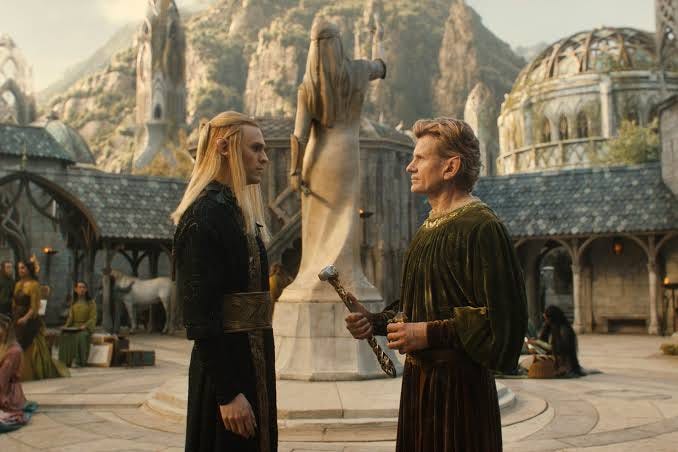
This question is one that has popped into my head numerous times over the last decade, but thundered back to the forefront on reading a recent Empire piece about the making of The Lord of the Rings: The Rings of Power Season 3. The piece gives away what in an original series would never be discussed - the climax of the season to come, intended to be the forging of Sauron’s One Ring in the fires of Mount Doom. A key part of the mythology deep within the universe of J. R. R. Tolkien’s literary epic.
Now, honestly, my interest in The Rings of Power is low. I watched the first season and a couple of Season 2 before I checked out. It’s all a bit high fantasy for me (I prefer my fantasy a bit more grimdark and grounded). If I ever go back, it will probably be once it’s all over. Yet if you’re an LOTR fan or Tolkien book nut, chances are—whether you love or hate it—you’ll almost certainly watch it, because you need to know. You need to see Sauron strutting about like an evil Robert Smith being dastardly. You need to watch him forge the One Ring, which will be so crucial to the in-continuity Peter Jackson films.
The longer in the tooth I get, while I understand the impetus of studios and corporations mining this stuff (Benjamin’s, baby!), I struggle to fathom why we feel we need it.
I’m not talking about audiences at large, people not invested in the material. I enjoyed the first three Lord of the Rings movies but I’m not obsessed with the lore. To me, Sauron forging the One Ring elicits a ‘huh’ and I move on. Two or three people I podcast with, however (behind the excellent One Rules Them All - shameless plug), will hang on every detail of these episodes. They’re fans. I’m talking about fans. People who live and breathe the material.
This isn’t me being holier than thou, because for certain intellectual properties, I’m absolutely the same. Star Trek once, albeit not any more (for reasons I’ll expound upon), The X-Files, James Bond. My knowledge of the lore around these properties is sizeable and come forthcoming new X-Files and James Bond projects, I’ll be scouring them intently for connectives and details. Thankfully, with those two examples, the future of their franchises is not about obsessively filling in canonical gaps and telling prequel stories. Star Trek has spent a decade falling into these traps.
Nor am I suggesting here that people shouldn’t be deep rooted fans of a fictional world. While fandom can breed weaponised toxicity, it most often demonstrates a sense of community, connectivity, friendship and shared values which can make it feel rewarding way beyond the confines of whatever is being watched and discussed. The perils and pitfalls of fandom is a separate discussion. What interests me is why we’re so keen, in embracing projects like The Rings of Power and various recent Star Trek series for example, to know backstory as opposed to just theorising about it.
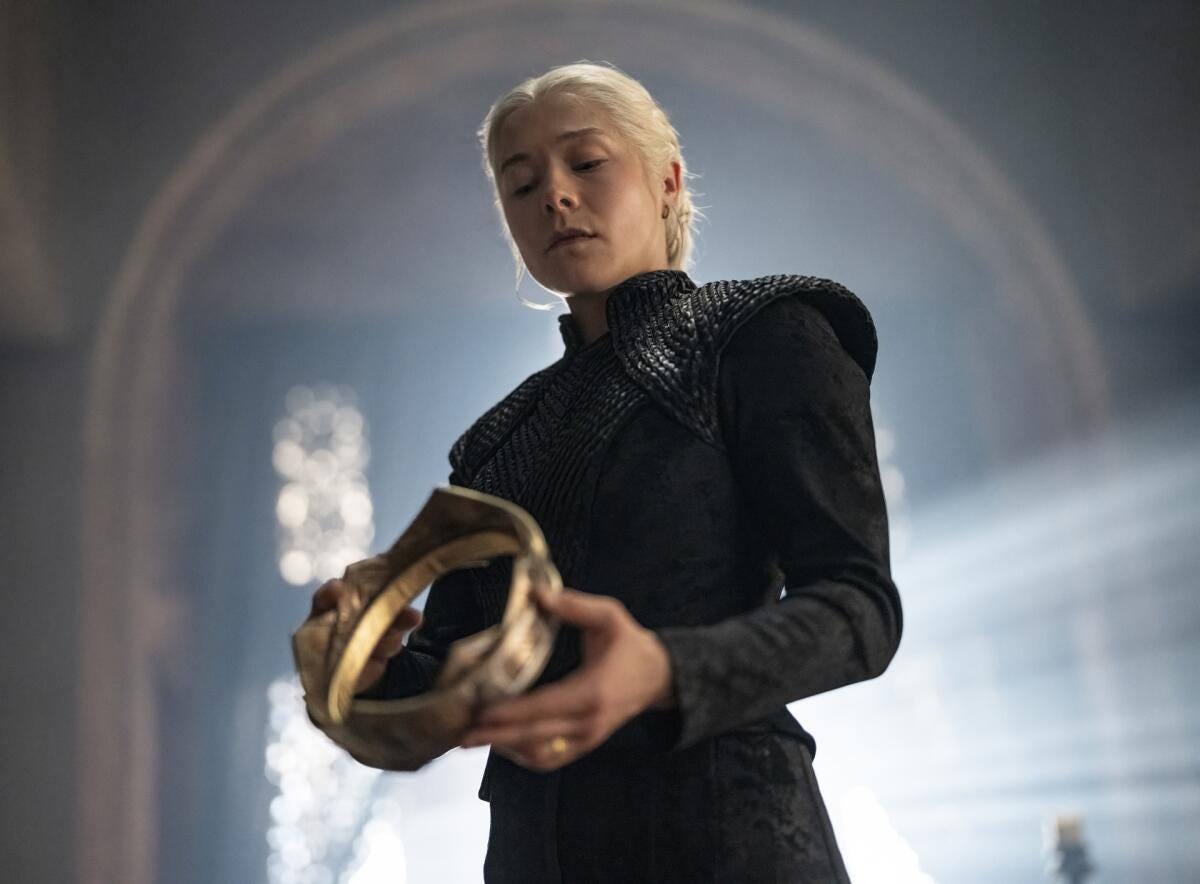
If you consider Tolkien, he has already given the answers in his novels to the Sauron backstory, with The Rings of Power working largely from his vast appendices that sketch out the wider history of the various Ages before the story he was telling. The same is true of Game of Thrones: House of the Dragon, which comes partly from George R.R. Martin’s novels but heavily from his in-universe Targaryen history, ‘Fire and Blood’. Shows such as this can be forgiven, as they are largely adapting source material, much like the original products they are spun-off from did to great success.
Where it gets knotty is when shows such as The Rings of Power and House of the Dragon sketch in their own details around the established literary facts. The Rings of Power are actively characterising Sauron in a way that you question whether Tolkien wouldn’t have done, and House of the Dragon is taking hold of the liberty Martin has granted by the fact ‘Fire and Blood’ was written by an in-universe chronicler centuries after the events, meaning much like medieval histories or the Bible (sorry, Christians!), it’s all embellished fusions of fact, fiction and myth. House of the Dragon can change things and add a level of detail without compromising the source material.
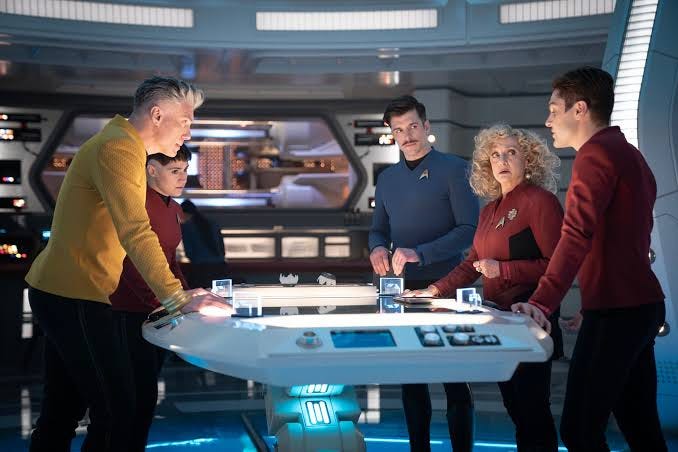
This is why I have such a problem with Star Trek over the last decade, because so much of it is an exercise in plugging gaps in the historical canon of the universe, or revealing reasons for character histories and choices made decades earlier by writers who were happy to leave questions open, or more often than not not even worry about asking them. Christopher Pike in Strange New Worlds is a key example; a strange beast of a character who from the beginning has known the details of his own death, details we as audiences have had some insight around since 1966.
To its credit, Strange New Worlds has portrayed him as a Captain who lives for today rather than obsessing about tomorrow, but the show has also had to deftly ignore where Pike heads up in order to avoid it being relentlessly dour. Indeed, it has primarily served as an exercise in stitching together characters and events in Star Trek continuity building up to the beginning of the 1966 Original Series. It has answered questions no one was asking. Or were they? Were the writers? Writers who I’m convinced have been little more than fan fiction scribes with means across these shows since the beginning.
Now you could argue, Star Trek should be written by fans. Patrick McKay and J. D. Payne who have brought The Rings of Power to the screen certainly are of Tolkien (and indeed Trek given they penned a draft of 2016’s Star Trek Beyond). Ryan Condal certainly is of Game of Thrones shepherding House of the Dragon. Maybe now you have to be in order to take on exercises in etching canon, as opposed to writers of the shows that popular culture has built on. Writers of Star Trek decades past, for instance, certainly threw in old characters or references, homages, even sequels here and there, but Ronald D. Moore or Ira Steven Behr etc… were all about pushing what Star Trek could do going forward. They weren’t constantly looking back.
Which is perhaps the problem now. Studios and corporations know nostalgia can be weaponised and commodified, which spurns them to hire creatives who love the source material so much they will tell us Sauron’s story or what Pike’s Enterprise got up to etc… Maybe we’re not obsessed with these answers as much as the people who want to keep this IP churning out material understand that by asking the questions, they can keep fans on the hook to consume, spend and engage on lesser examples (for the most part) of what came before.
Because for all they might entertain, none of these examples above better the material they’re inspired by, whether it’s Tolkien’s novels (or Jackson’s films) or Gene Roddenberry’s 60s kitsch. They are imitations and extensions that nobody really needs. They don’t particularly add anything to what the initial story said about humanity, about history, about culture. They provide a contemporary lens in places but on some level, that could date them as popular culture often inevitably dates. 1967 Star Trek says far more about the world of Civil Rights and the anti-war movement than it does our world today.
Perhaps my point is that we should seek, even demand, storytelling that pushes us forward rather than back. The initial question—why do we want to know everything—is more about wanting to connect with what came before. There is security in the past, in the familiar. All these extensions do is allow us, by focusing on and answering these questions, to stay comfortable. These corporations are guardians of IP and, in not too dissimilar a way to political populists, they weaponise it. They market it as being new and relevant when most of it is anything but. It keeps us in a holding pattern.
So maybe in the end, it’s not that we’re obsessed with answers. Maybe we just deserve better questions.
If you enjoyed this piece, and you fancy ‘buying me a coffee’ to show it, you can hop over to Ko-fi and donate. Thanks if you do!
No posts
Comments
Nothing yet. Say the first thing.
Sign in to join the conversation.