
Every now and then, I’ll drop you a generalised, free-wheeling update on what I’m watching, TV-wise. These are looser, diarised thoughts without a broad thesis or anything behind them…
Honestly, I’ve had a little bit of football cold turkey after the World Cup these last few weeks, and especially now we’re in the brief mid-season no man’s land of July and most of August. Getting a bit antsy for more Premier League, as I might take the plunge and pay the dreaded Sky to watch some games at home this year, which I’ve never done. Aston Villa in the Champions League again & perhaps the best they’ve been in a long time might warrant spending the eye-watering sum of money to subscribe!
Thanks for reading A. J. Black on Popular Culture! Subscribe for free to receive new posts and support my work.
Anyway, you aren’t hear to listen to me talk about football (or maybe you are, so watch this space if so), rather to see what I made of some of the above shows Mrs Black and I have been dipping into. The school year is over so being on the six week break has afforded me a little more time to watch some things, movies as well as TV, but a holiday abroad and then some summer work with new Year 7’s is incoming ahead of September, so that window of time will lessen a bit. Packing in as much as possible before then.
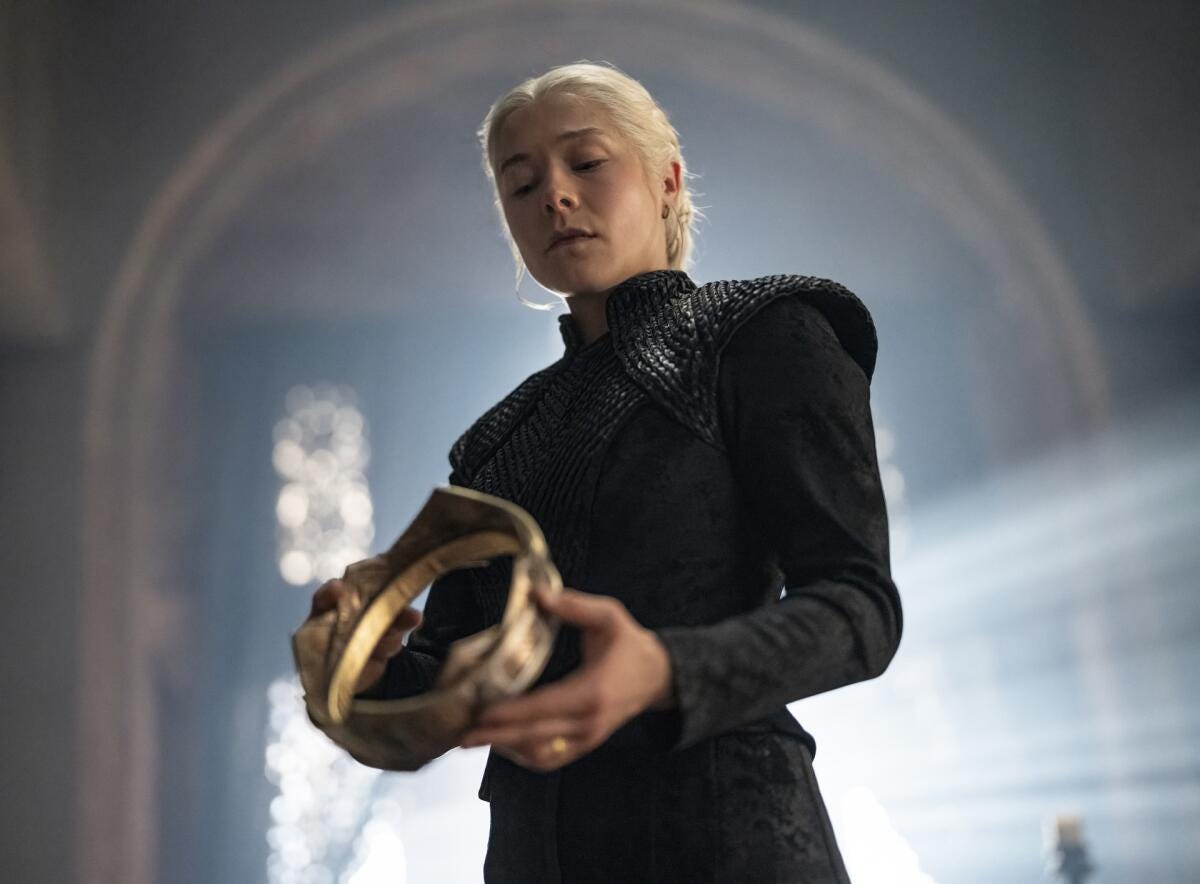
I’ll start with Game of Thrones: House of the Dragon, which I admit I haven’t finished yet (none of us have, in fact, because it’s still airing weekly), but what I have seen thankfully has been a step up from Season 2. I’m a huge fan of the original Game of Thrones, which we recently rewatched after being hooked into the final few seasons when it first aired. That was a majestic slow binge and remains, to my mind, one of the all time great series, with a hugely misunderstood and unfairly maligned ending. Don’t get me started (maybe that’s a future article…)
House of the Dragon isn’t honestly as good overall. After the first season that was largely a prologue, the second built up the Targaryen dynastic divide the series is covering and then just… ended. For whatever reason, they ported what would have been a logical end to S2 (Rhaenyra temporarily winning and seizing King’s Landing) into the first two episodes of S3, which meant a barnstorming opening salvo but an uneven platform to build on. This seems to be better balancing some of the character dynamics and narratives so far, with some delightful new additions (James Norton as a swaggering new bastard is great fun) that have helped.
You can’t help but feel it’s all a bit unnecessary, though. I’m not sure what it really tells us that Game of Thrones didn’t a decade ago. It feels like sketching in historical canon while adding in a few bits of prophecy about what’s to come (that we’ve already seen), and honestly for me Game of Thrones was always more entertaining when indulging in the fantastical side in parallel with the medieval war elements. House of the Dragon only really has the latter. It’s a good watch though and if S3 continues as the first half has begun, it’ll be a better platform for the fourth and final climactic season than S3 was provided.
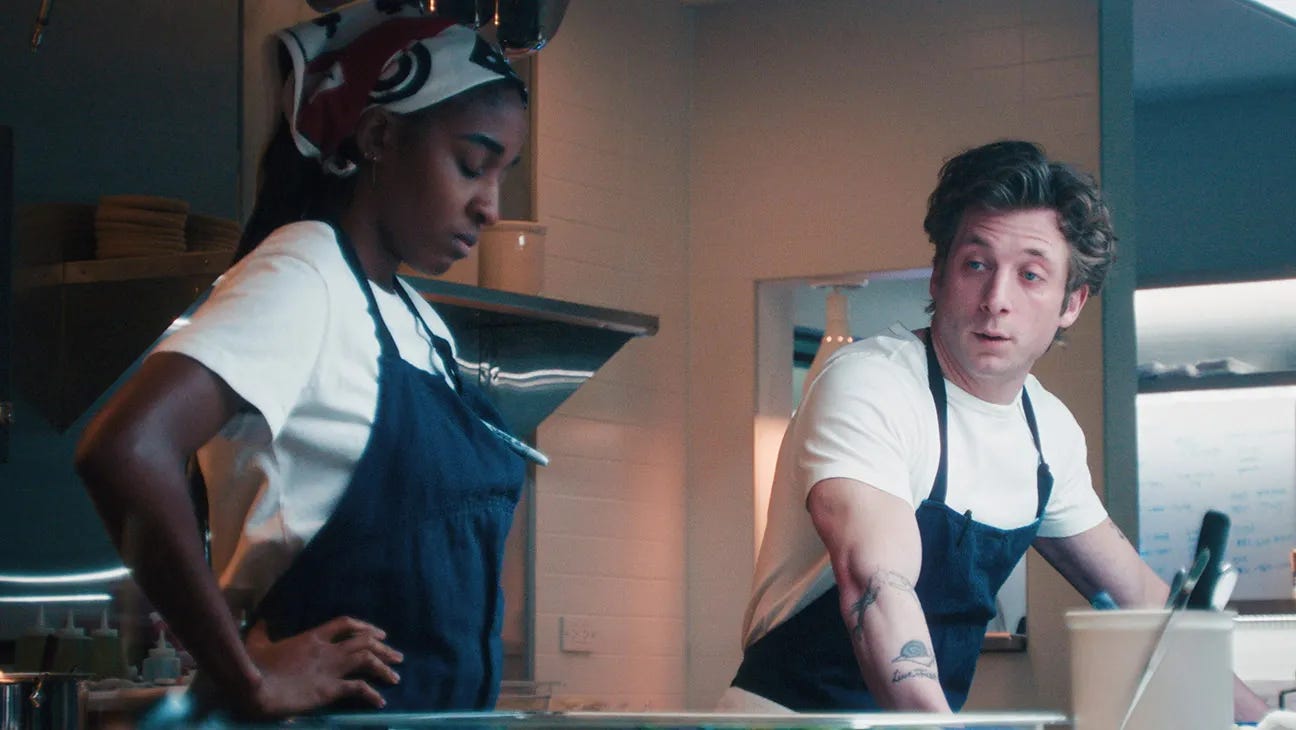
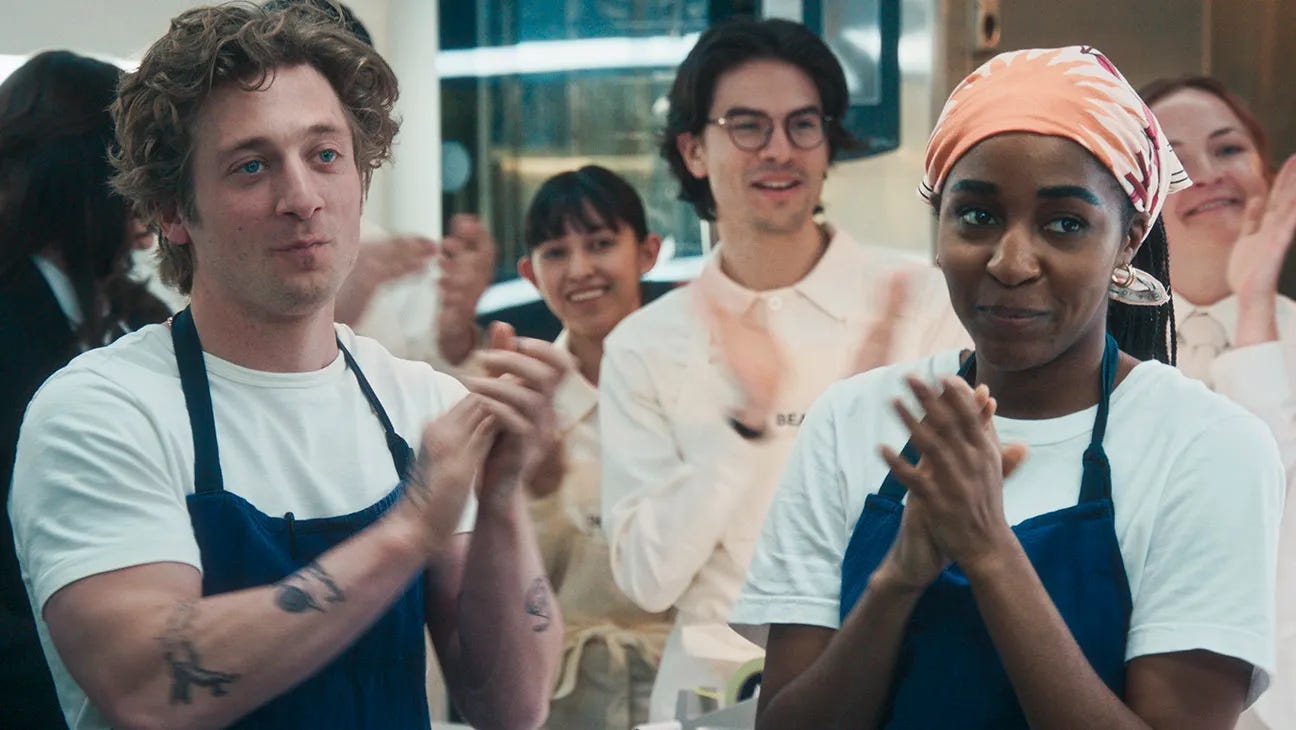
Talking of climactic seasons, we watched the fifth and final run of The Bear, FX’s intense drama about running a Chicago kitchen/restaurant.
It ended well and stuck a landing it was, at points, in danger of crashing into completely. Christopher Storer’s largely auteurist blend of Scorsese-esque rapid fire visuals and dialogue with an arthouse, even at time surrealist sensibility, is on one level quite absurd. It treated the fall and rise of a group of Chicago chefs with a blend of New York peril and Shakespearean level drama. You could so easily parody it, I’m surprised nobody has yet done so.
Yet The Bear season on season hooked me in, even when it diverted on tangents or took characters to places that were hard to watch. It’s certainly made megastars of Jeremy Allen White, Ayo Edebiri and Ebon Moss Bachrach, and quite rightly as they’re all tremendous. You feel and care about their efforts in this final season, condensed into around two or three days, to finally open the Bear and prove they have emerged from the trauma they started from into an unified family who can, importantly, work as a team.
Storer’s arc in that respect is crystallised by condensing the timeframe, which having put all of the character work and establishment and resolution of pain in the first four seasons, works well as a payoff. It’s like an exhale after repeated inhales and an inverse really of the enormously intense first season, which was the closest to feeling a heart attack through the TV screen in progress I imagine I could ever feel. Despite how sad and angry that season was, I still think it’s the best The Bear has ever been.
Truth is, I never entirely understood The Bear in terms of dialogue, but a bit like watching The West Wing, I always felt what was happening to to Carmy or Syd or Richie or Sugar or whoever it was. As an exploration of grief and how you emerge from the trauma of loss, through passion in no small part, The Bear works and I suspect it will make a terrific binge watch. Fast and furious might be the best way to tackle it, chefs.
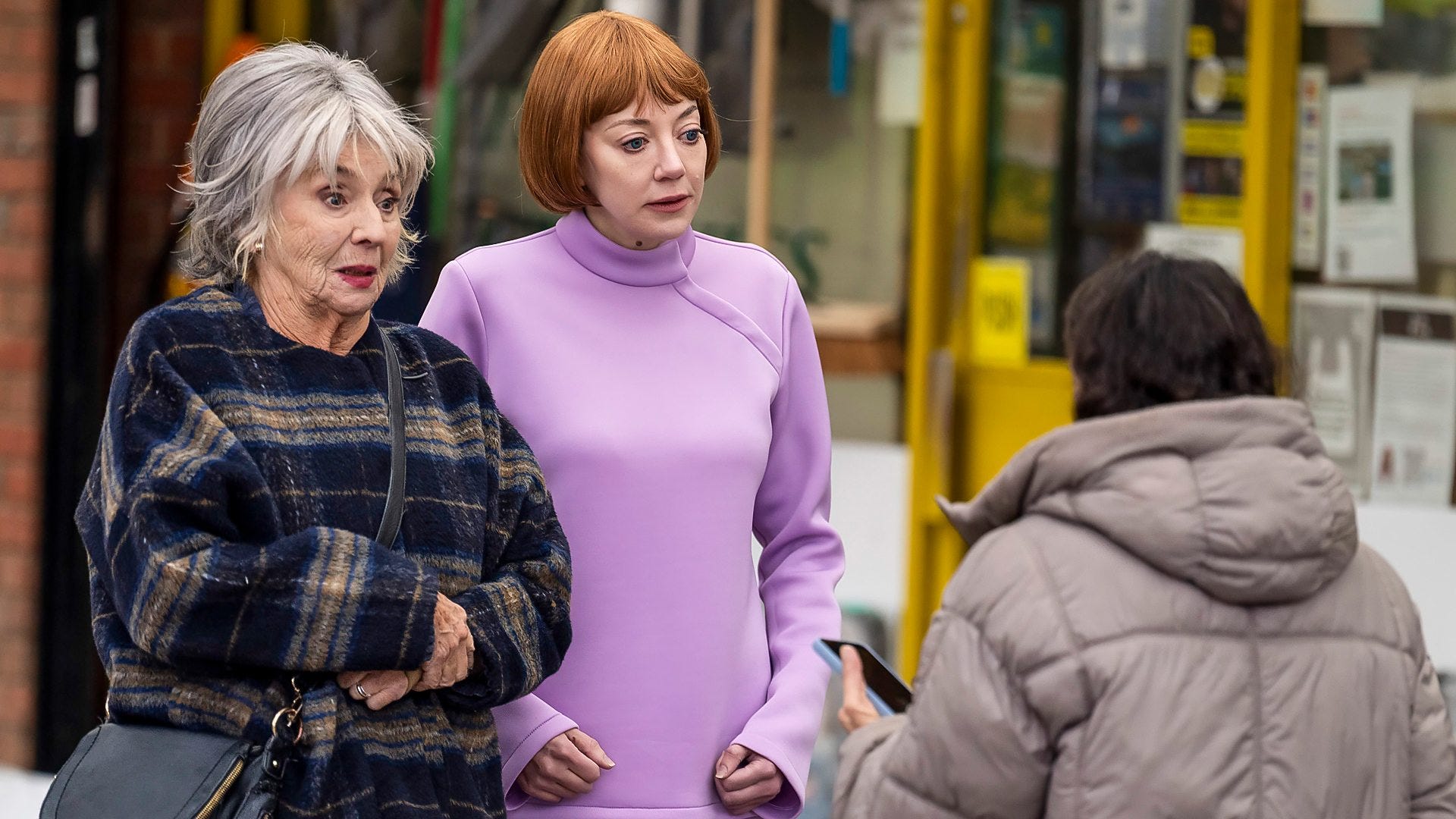
In a much different vein, we’ve also recently enjoyed the first series of BBC comedy, Ann Droid, which I’m going to delve into a little bit more under my ‘No Laughing Matter’ series about the meaning of British comedy.
This combines the comic forces of Diane Morgan (aka Philomena Cunk) and the great Sue Johnston and uses them as a vehicle to explore advancing technology through the most mundane British scenario: elderly care. Morgan’s Linda (christened by Johnston’s OAP Sue) is the ‘ann droid’ of the title, and she’s delightfully naff. She has the outspoken lack of filter that an old woman has while the capabilities of a fit, healthy and strong younger person, arguably more akin to androids we have seen throughout TV and cinema history.
British comedy is expert at finding the funny in such mundanity and even though Ann Droid has some science-fiction lurking behind it (even in the last episode, a hint of dystopia), it is defiantly normal in tackling grief and entitlement (through her son Michael, played by the master of the ‘simp’, Motherland’s Paul Ready) through a semi-futuristic lens. I’d be surprised on that basis if Ann Droid doesn’t strike a chord. Maybe too unusual and ‘genre’ to appeal like, say, an Amandaland would, but hopefully enough to warrant renewal and gain a cult following. I’ll certainly be back for more.
Anyway, more to come on Ann Droid I think, and next we’re casting our eyes definitely to the fifth series of Trying on Apple TV (a show that means a lot to us for reasons I’ll go into some day), and probably Russell T. Davies’ recent drama Tip Toe. I’m sharking for us to have a run at Apple’s Widow’s Bay too but we’ll see. All to come.
Do let me know what you’re watching and any good recommends, old or new!
AJB
If you enjoyed this piece, and you fancy ‘buying me a coffee’ to show it, you can hop over to Ko-fi and donate. Thanks if you do!
Thanks for reading A. J. Black on Popular Culture! Subscribe for free to receive new posts and support my work.
Comments
Nothing yet. Say the first thing.
Sign in to join the conversation.