
You remember 1976, right? The long, hot summer. The Yorkshire Ripper. An economy on the brink. The Jeremy Thorpe scandal.
Well, I’m glad you do, because I wasn’t born for another six years, so I have to rely on the internet and elder relatives to clue me in. What I do know, however, is that 1976 had its fair share of cracking movies across the world. The peak of the ‘New Hollywood’ in America was perhaps behind it, with Jaws a year earlier beginning that steady move toward the blockbuster era and commercialisation. The British film industry was conversely in absolute decline, with the days of grand David Lean epics over and when even the Carry On films couldn’t deliver anymore. Around this, there was films great, good and now largely unknown that deserve revisiting.
So I’ve decided to try and zero in on some of these pictures now 50 years old and use it as firstly, a means of expanding my movie vocabulary by visiting films I might otherwise not have seen, and secondly share some insights with all of you. Ideally this will be monthly but it all depends on the time I have, but I do want this to be a recurring series, one that then rolls into 1977 films next year and so on.
Without further ado then, five movies that sum up August 1976 as released in American and some cases British cinemas:
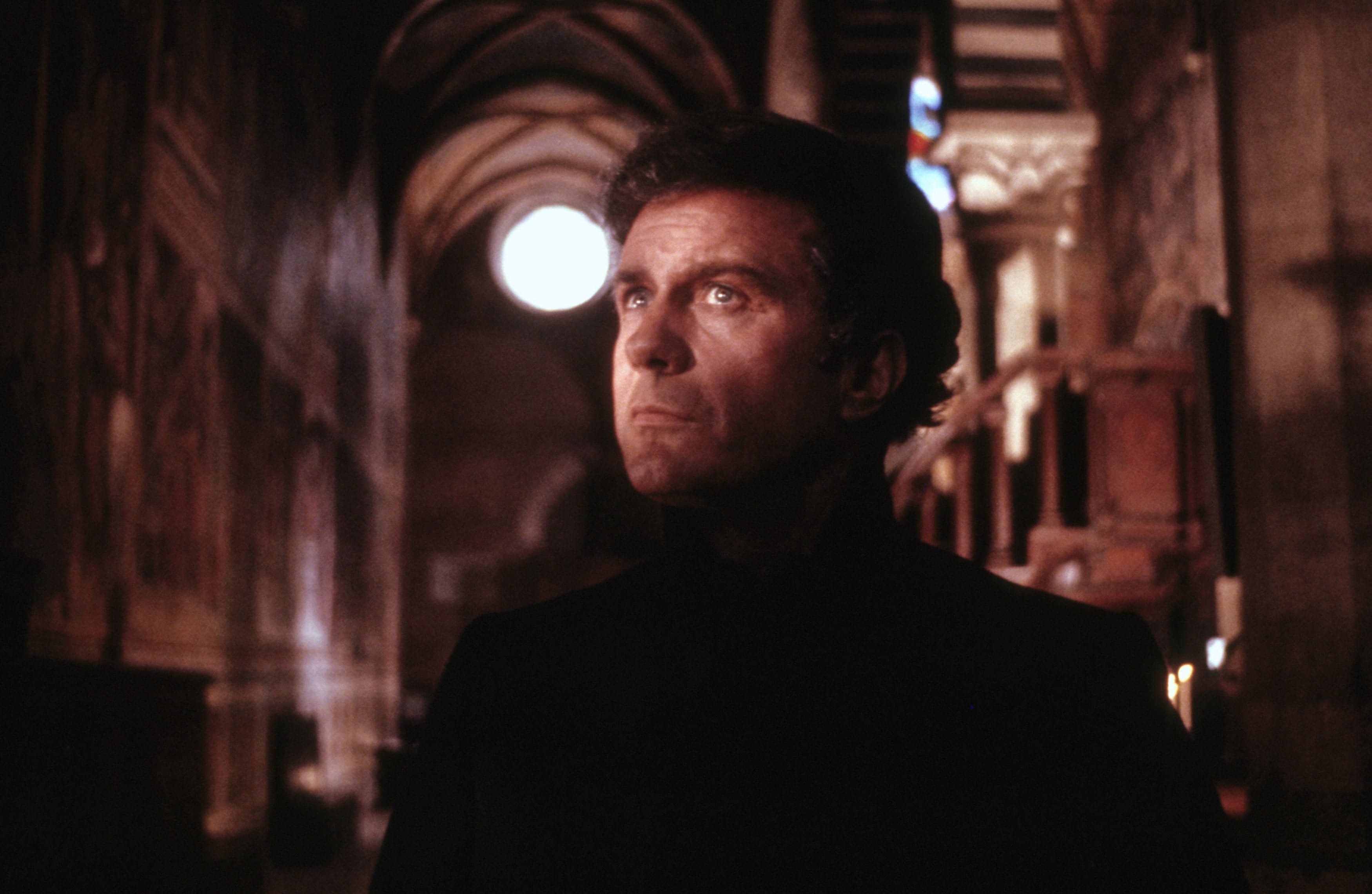
We’re all a bit obsessed right now with another film called Obsession, but Curry Barker’s horror is certainly not the first picture to wear the word as a title. Brian de Palma, the same year he made the movie that arguably launched his career (Carrie), teamed up with a fellow ingenue of the New Hollywood, Paul Schrader (on script duties) for this melodramatic potboiler about a middle-aged businessman who becomes obsessed with a woman who looks the spit of his dead ex-wife.
Many would go on to suggest de Palma more than borrowed from Alfred Hitchcock across his career, but Obsession is absolute pure-blood Hitch from start to finish. It very much wants to be Vertigo (1958), even if it never matches that masterpiece, even down the same composer in Bernard Hermann (who would also provide his seminal score for Taxi Driver (1976) before passing away that same year). His score does a significant amount of heavy lifting as Cliff Robertson’s melancholy figure draws further into the orbit of Genevieve Bujold’s plucky young artisan, while John Lithgow as his partner grows more concerned.
The melodrama ends up taking over in the end, leading to a tricksy denouement which forces Bujold into some very ridiculous scenes (not her fault, instead that of creative decisions) as de Palma tries to sell the emotional beat at the heart of the film. He and Schrader can’t make the preposterousness of that land, but thanks to how arresting his film always looks, that can be forgiven. This is sumptuously shot and lit throughout. If there’s anything about the film to be obsessed about, it’s that.
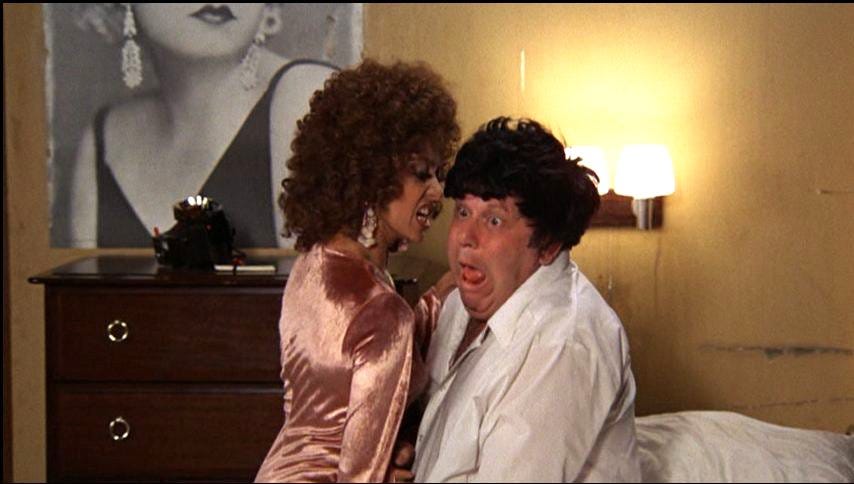
Very much a curate’s egg by modern standards. Richard Lester’s second film of the year after Robin and Marian, his take on an elder version of the Sherwood myth, and The Ritz is a much less remembered affair. Based on the 1975 plan by Terrence McNally, it brings much of the cast who were celebrated on Broadway for these roles - Jack Weston, Jerry Stiller F. Murray Abraham, Rita Moreno (who won a Tony Award) - so they are very comfortable with the material.
Lester was no stranger to comedy or indeed anarchy - he had directed one the British cinematic artefacts of the 1960s in Beatles film A Hard Day’s Night - and here he brings a farcical lightness of touch to a romp which sees Weston’s blundering husband on the run from the family of his sinister, deceased father-in-law, only to stumble on a gay bathhouse and an assortment of bizarre characters and madcap situations. It’s a great cast. Abraham vamps it up, Weston plays hapless like no else, and Moreno is a force of nature.
Truth is, it hasn’t aged all that well now to modern sensibilities. What it gives to gay representation it also takes away, especially in the climactic shenanigans. Yet while it runs out of steam on film in a way one suspects it didn’t on stage, The Ritz is always charming. And name another film where Rita Moreno and British comedy legend Peter Butterworth both appear. I’ll wait.
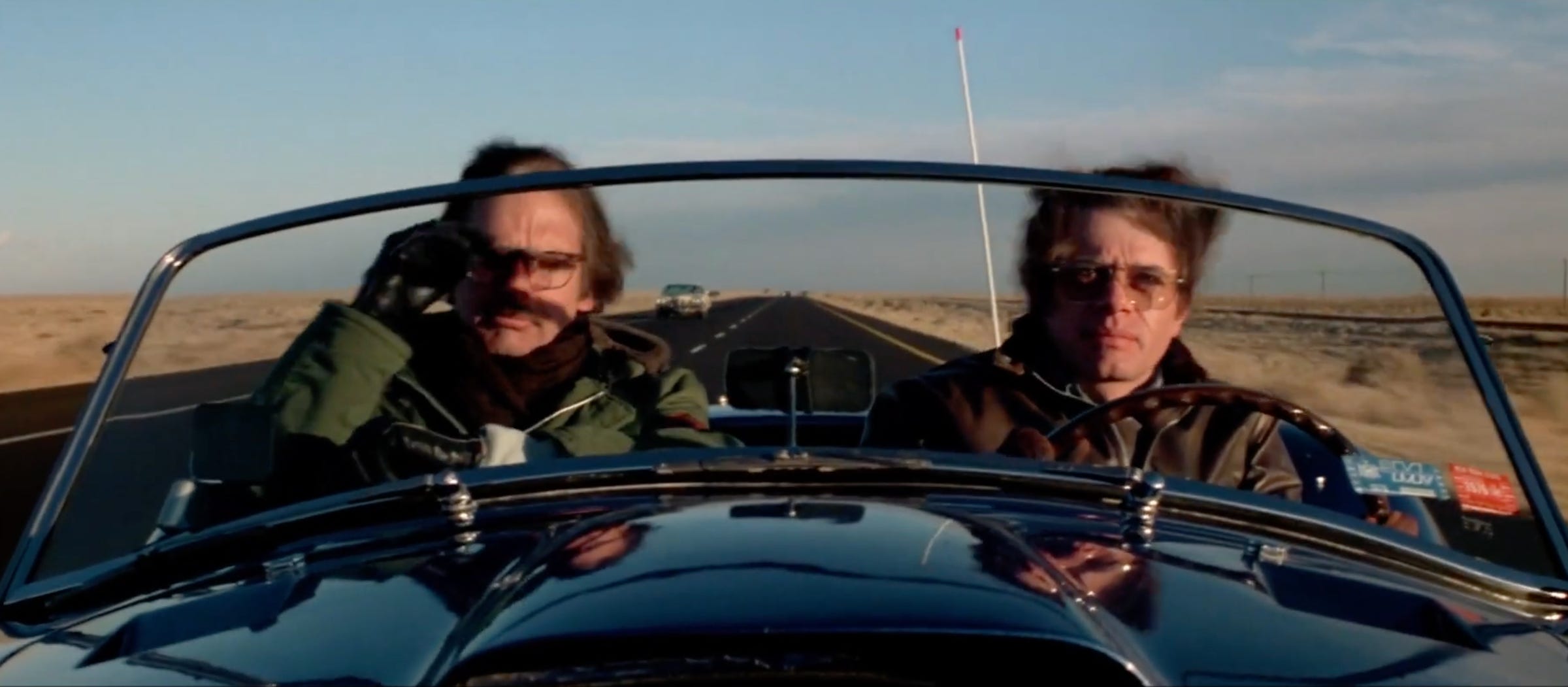
A little seen precursor to the much better known Cannonball Run series, The Gumball Rally has essentially the same premise - a bunch of bored eccentrics who decide to race across America to win a simple gumball machine, indeed simply for the thrill & heck of it. Charles Bail’s movie however doesn’t approach the concept in quite the same way as Hal Needham later did, and consequently while the Cannonball Run movies were absolutely no kind of benchmark, this fairly repetitive & routine ‘zany racing caper’ ends up a forgettable footnote only truly memorable for the fact it inspired many real-life ‘Gumballs’ that still live on even today.
What The Gumball Rally could have done with, a trick that benefited the Cannonball Run series later, were truly recognisable movie stars. Sure we get a young Raul Julia turn up here as an exuberant Spaniard (he really was the Javier Bardem of the 70’s & 80’s), or Gary Busey being the annoying idiot he made a career out of, but beyond those guys you literally won’t recognise anyone, the cast boasting no true ‘stars’ with the charisma of a Burt Reynolds or the comic warmth of Dom DeLuise.
It’s ironic a film should be chastised for not having enough big names, when many could do with scaling down, but a caper like this needed to have a range of faces to hang the story off - as pretty quickly the characters start to blend together. While Bail shoots everything proficiently--and Dominic Frontiere provides a fantastic jazzy 70’s score it’s a crime you can’t get hold of--the whole endeavour isn’t nearly the fun, exciting, comedic riot it could or should have been.
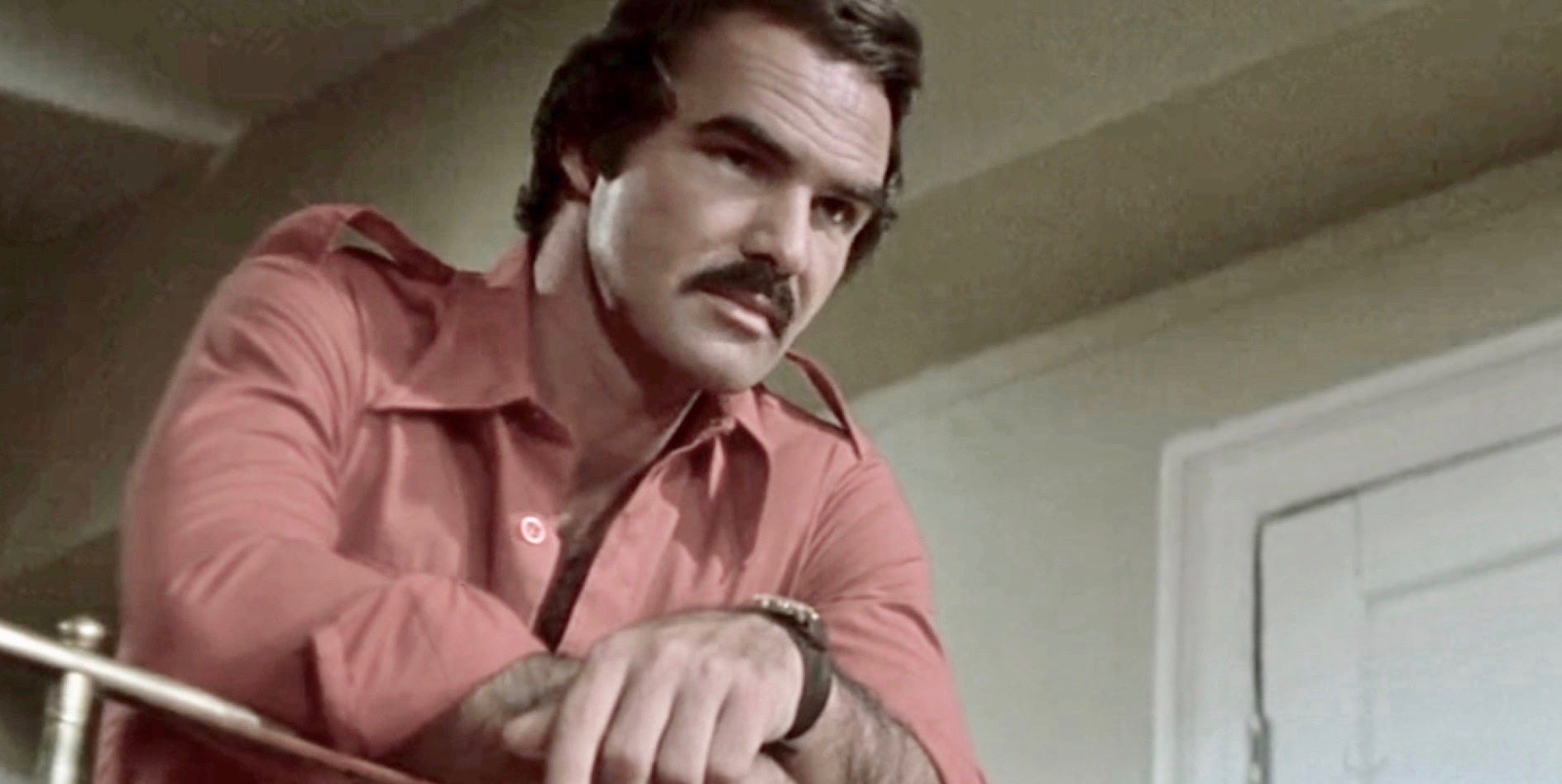
After success with 1973’s White Lightning, where Burt Reynolds essayed the charming ex-con and moonshine maker ‘Gator’ McKluskey for Joseph Sargent, the actor chooses to revive the role for his directing debut in Gator. It’s just as well he focuses on being behind the camera because the script requires nothing of Reynolds but to glide through the picture as a ‘bayou Bond’, charming Lauren Hutton and beating up bad guys.
Though the script would never win any awards, being a fairly routine tale of Gator being drafted in by the FBI to take down Deep South hoodlum Bama McCall and his nefarious empire that includes child prostitution, Reynolds makes sure there is a quirkiness to the whole endeavour in certain eccentric side characters and some fun support casting - this is the second film here to feature Jack Weston, in a more thankless role than The Ritz.
It’s all silly and forgettable, smoky Deep South semi-exploitation fun that fits the era. The only thing I can’t get past is casting country legend Jerry Reed as a crime boss. Yes, the man who sang this (my favourite tune from Grand Theft Auto V):
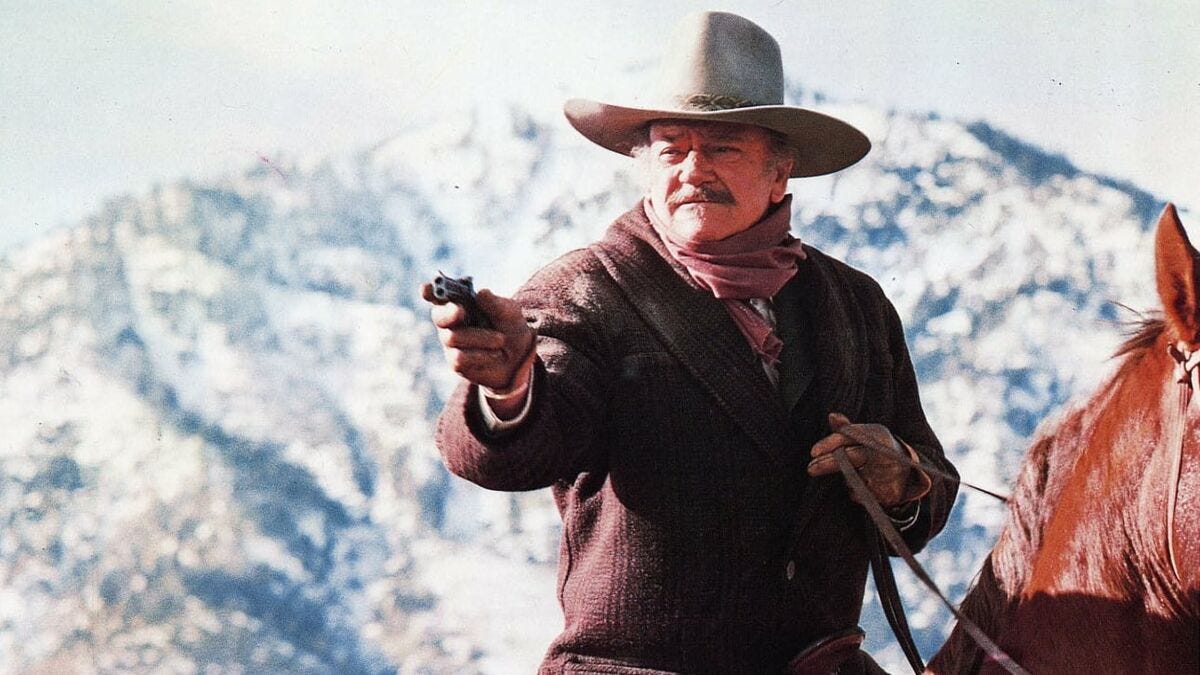
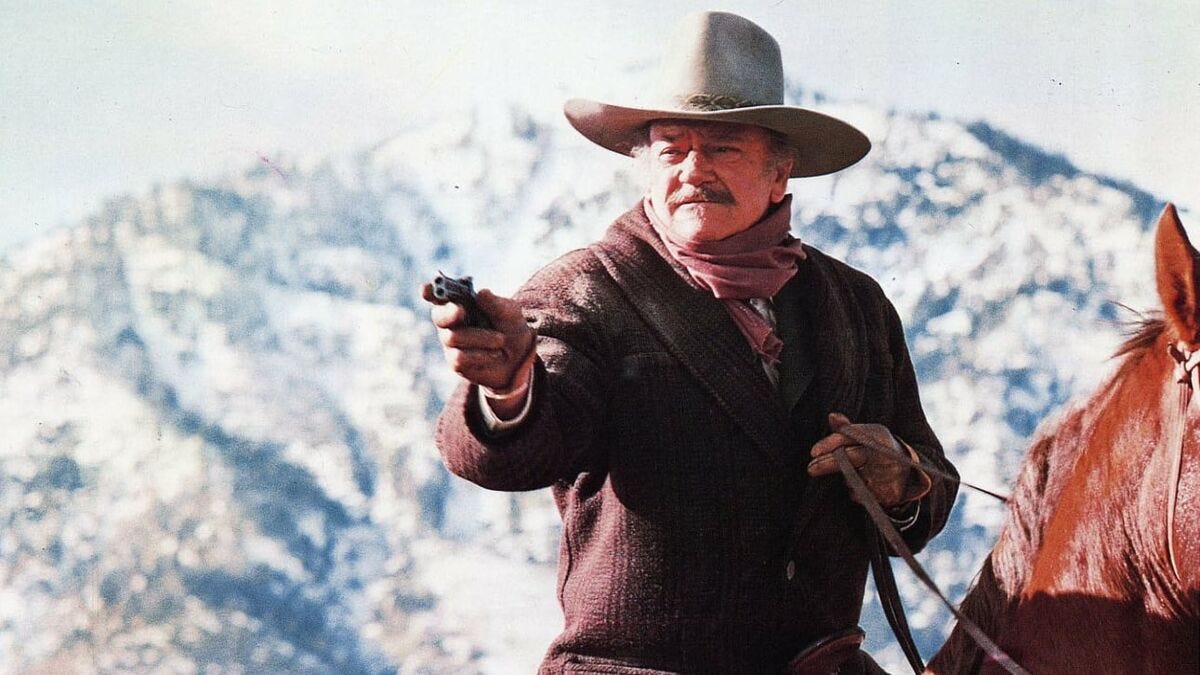
The last of the Westerns, in one respect. The final cinematic performance of John Wayne, the actor who for much of the 20th century was the living avatar of the Western on screen, works with The Shootist to take Glendon Swarthout’s novel and craft it with Don Siegel into a means of killing off his own cinematic legend. You could hardly imagine a film serving as a better epitaph for any career than this does for Wayne.
Siegel had form most recently for hard boiled pictures with Clint Eastwood, especially Dirty Harry, but he and Wayne—who at first was potentially deemed too unwell to take part but fought for what would become his final role—manage to corral a tremendous cast in support, including an aged James Stewart and older Lauren Bacall. While it lacks the artful grace of John Ford, it certainly makes up for it in acting gravitas.
What The Shootist does best is a sense of melancholy, of something truly ending. It isn’t just Wayne’s John Bernard Books dying on screen, it is his acting legend too. Siegel’s film successfully manages to remind us, at the beginning, of Wayne’s history on screen and by the end, mythologises the actor and his position in American cinema one final time.
No posts
Comments
Nothing yet. Say the first thing.
Sign in to join the conversation.