
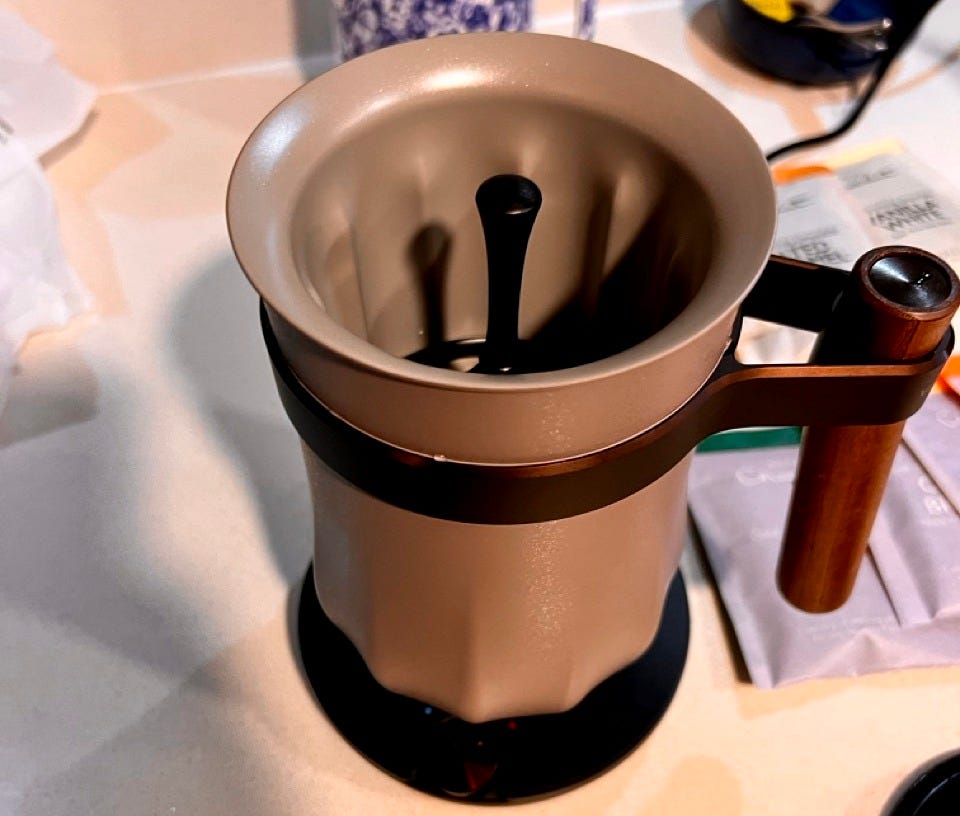
It has been quiet on AI with Breakfast the last few weeks - travel, war, and remote schooling have all taken their turn. I am not at a lovely Abu Dhabi cafe writing this; I am on my balcony, drinking a hot chocolate from my new gift, the Hotel Chocolat Velvetiser. Possibly the best invention in the world, and the reason I now have a two-hot-chocolates-a-day habit I need to stop.
The reason I have not been at a breakfast spot this month is that I changed my office setup, and the productivity gains are such that the idea of working on a single screen now feels faintly ridiculous. But let me start with the story.
For fifteen years I sat behind two monitors. Code on the left, browser on the right. Change something, check the result. Change something, check the result. The rhythm of building software has always been a two-beat loop - write, verify, write, verify. Even when AI arrived and started doing more of the writing, I kept the same setup. Maybe I had four windows instead of two, split across the same pair of screens. But the shape of the work had not really changed. I was still the one typing. The screens were still arranged around my hands.
A few weeks ago I changed the whole setup. Not because the setup was broken, but because I noticed something. I was feeling slow. I would have six or seven things running at once, agents working on different tasks, and the ones buried three windows deep would sit there waiting for input while I had no idea they had stalled. By the time I found them, minutes had passed. Multiply that by seven streams and you are haemorrhaging time in a way that does not show up on any productivity metric. So I rebuilt my desk around visibility. Everything laid out. Nothing hidden. Every running thread visible at a glance.
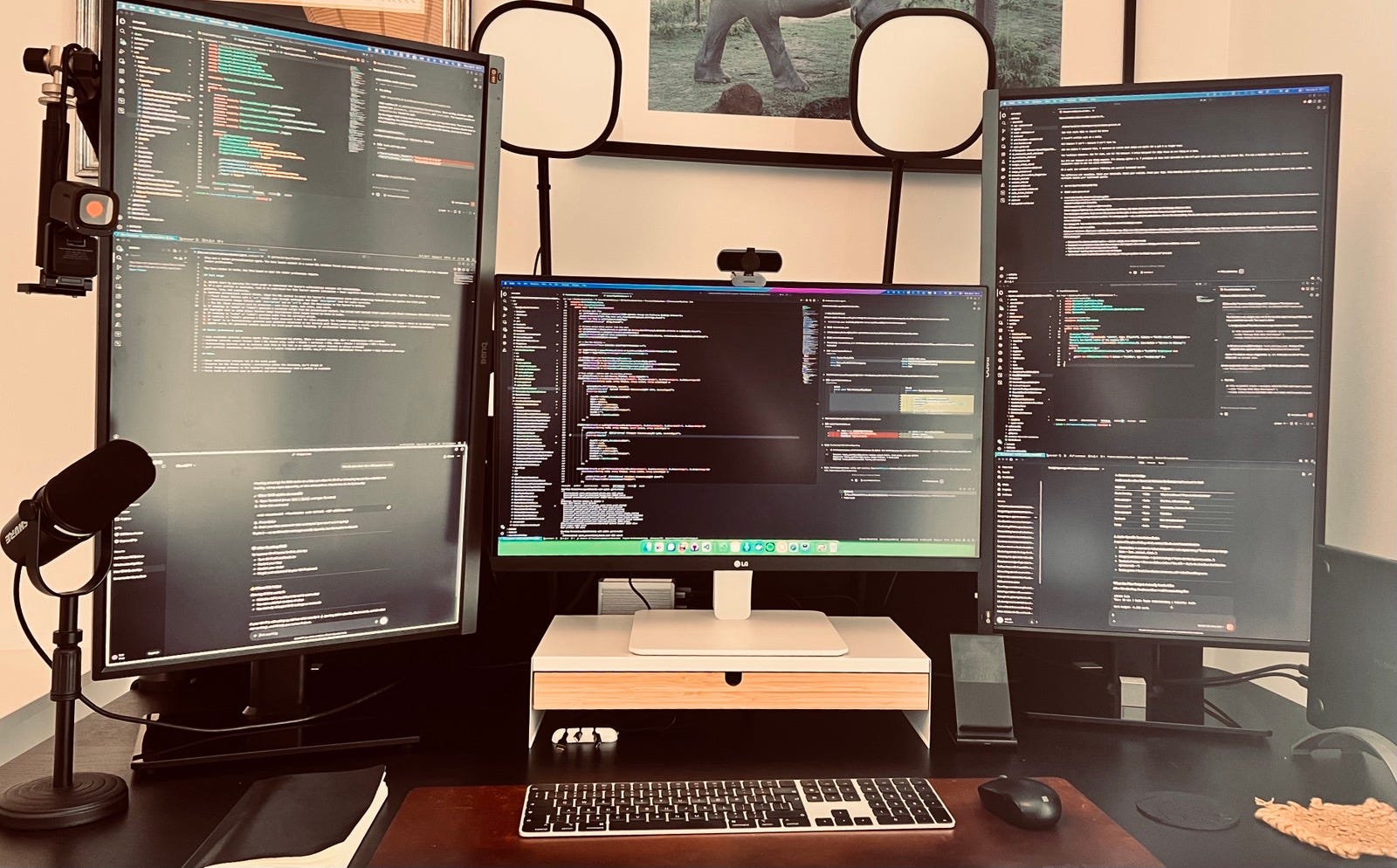
I call it the injured octopus. An octopus has eight arms. On a good day, I have maybe six or seven things going. On a realistic day, more like four or five. Hence injured. The point is not that you are doing eight things perfectly - it is that you have arms in all of them, and you can feel when one of them needs attention.
This is where things get interesting. The productivity gain is not what most people expect. It is not about doing seven times more work. It is about the interjection speed. When everything is visible, I catch a blocked agent in seconds rather than minutes. I spot a bad direction before it runs for twenty minutes down the wrong path. The compound effect of that - across four or five parallel streams, over a full day - is enormous. I am comfortably doing three to four times what I used to. When I am away from my desk with just a laptop, that drops dramatically.
If someone asks what I did today, the truthful answer might be: I oversaw the development of a healthcare feature, reviewed and redirected an AI building a finance specification, wrote the bones of this article, and shaped a learning platform’s onboarding flow. I made hundreds of small decisions across completely unrelated domains. I evaluated output, adjusted direction, caught errors, and kept five different contexts alive in my head simultaneously. That is a full day of work. But I did not write a single line of code. I did not draft a single document from scratch.
We do not have a word for this yet. “Managing” is too passive. “Orchestrating” sounds like a LinkedIn headline. “Supervising” implies you are watching someone else do your job. What I am actually doing is closer to conducting - holding the whole composition in your head, knowing what every section should be doing, and intervening at exactly the right moment to keep the thing coherent. But even that undersells it, because a conductor works within a single piece of music. I am conducting four different pieces in four different genres at the same time.
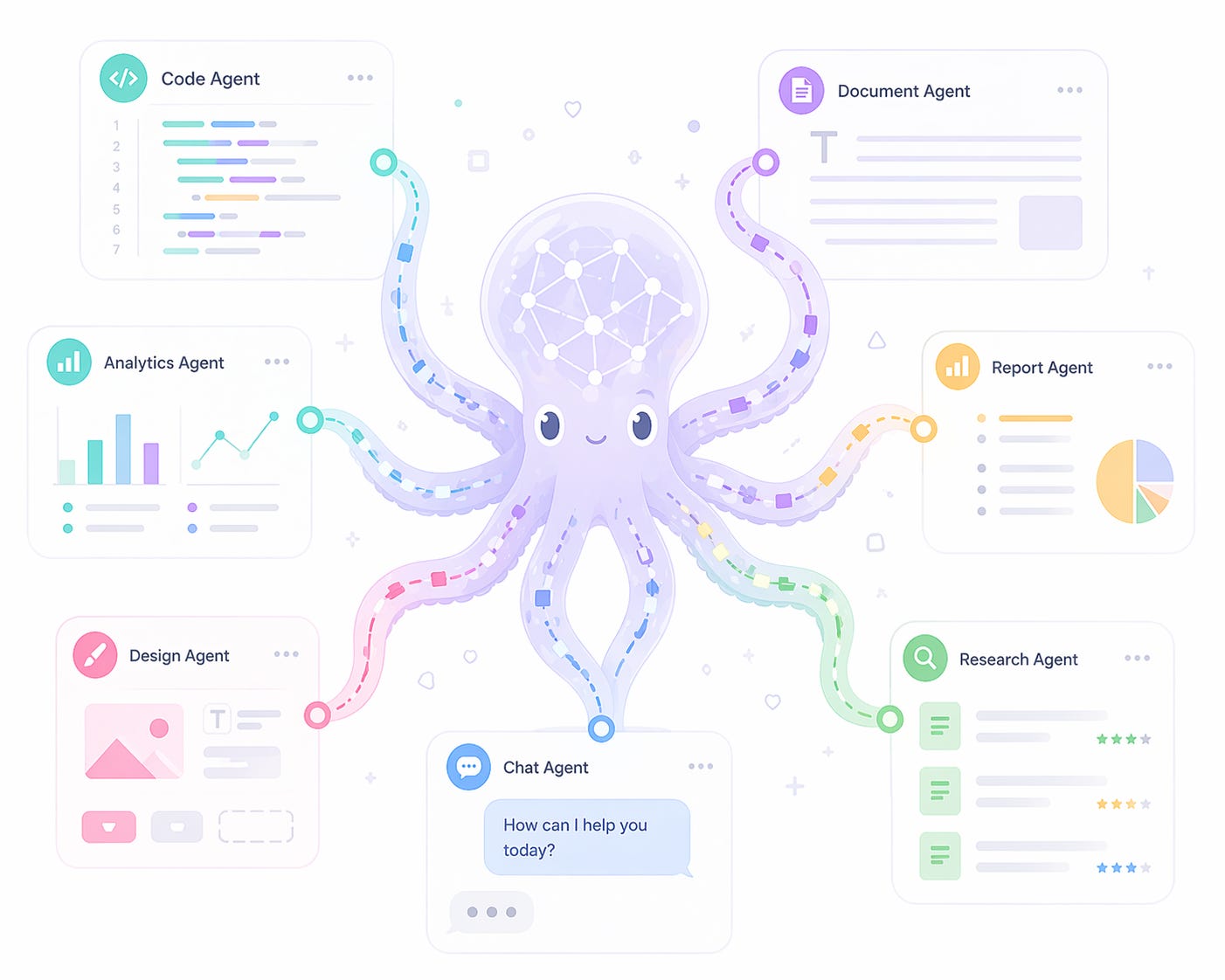
The mental cost of this is real. By the end of the day, I am more tired than I ever was writing code for eight hours straight. Not physically tired - cognitively drained. My brain has been holding three to five completely unrelated contexts simultaneously, and each one requires its own mental model, its own set of constraints, its own definition of “good.” Switching between a healthcare compliance problem and a creative writing task is not like switching between two similar codebases. It is like switching between two different languages. The grammar is different. The priorities are different. What counts as an error is different.
Is this sustainable? Honestly, I do not know yet. It is new. The tools are improving fast, and I suspect the exhaustion is partly because we are in the early days of a skill that humans have not had to develop before - at least not at this speed and scale. Pilots manage multiple instruments. Surgeons manage complex procedures with many variables. But they operate within a single domain.
This is multi-domain, multi-context, all day.
So who is already good at this? Not the roles you might expect. The people wired for this are the ones who have spent their careers switching between completely unrelated worlds. Agency founders and senior agency leads - the kind of people who start Monday morning in a healthcare client’s regulatory review, spend the afternoon redesigning an e-commerce checkout flow, and finish the day pitching a fintech startup. Every client is a different universe with different rules, and you carry all of them simultaneously. Portfolio managers watching companies across industries that have nothing in common except that they need attention. Partners at law firms running active matters across corporate M&A, employment disputes, and IP licensing - completely different bodies of law, different clients, different stakes.
The common thread is not multitasking. Plenty of people multitask. The thread is multi-context fluency.
multi-context fluency - the ability to hold one world in your head
This is the ability to hold one world in your head, set it down cleanly, pick up a completely different world, and operate competently in it within seconds. That is a specific skill. Not everyone has it. And the people who do have it often developed it in roles that nobody would naturally connect to AI.
I ran an agency for years. I did not know it at the time, but that entire period was training for exactly this moment. The constant context-switching that used to feel like a tax on my attention turns out to be the precise skill that makes AI orchestration work. The thing that made agency life exhausting is the thing that makes this productive.
If you are thinking about where AI orchestration fits in your organisation, do not start with your engineers. Start with the people who already live in five contexts before lunch. They might not know what a large language model is. They might never have opened a terminal. But they already have the cognitive architecture for this - the injured octopus arms, reaching into different worlds and knowing instinctively when something needs a squeeze.
The role of the knowledge worker is being quietly restructured. We went from “I write the code” to “I conduct the code” in what feels like no time at all.
The desk changed.
The screens changed.
The shape of the work changed.
The one thing that has not changed is that it still requires a human in the middle, holding the whole thing together - just with more arms than we are used to.
No posts
Comments
Nothing yet. Say the first thing.
Sign in to join the conversation.