
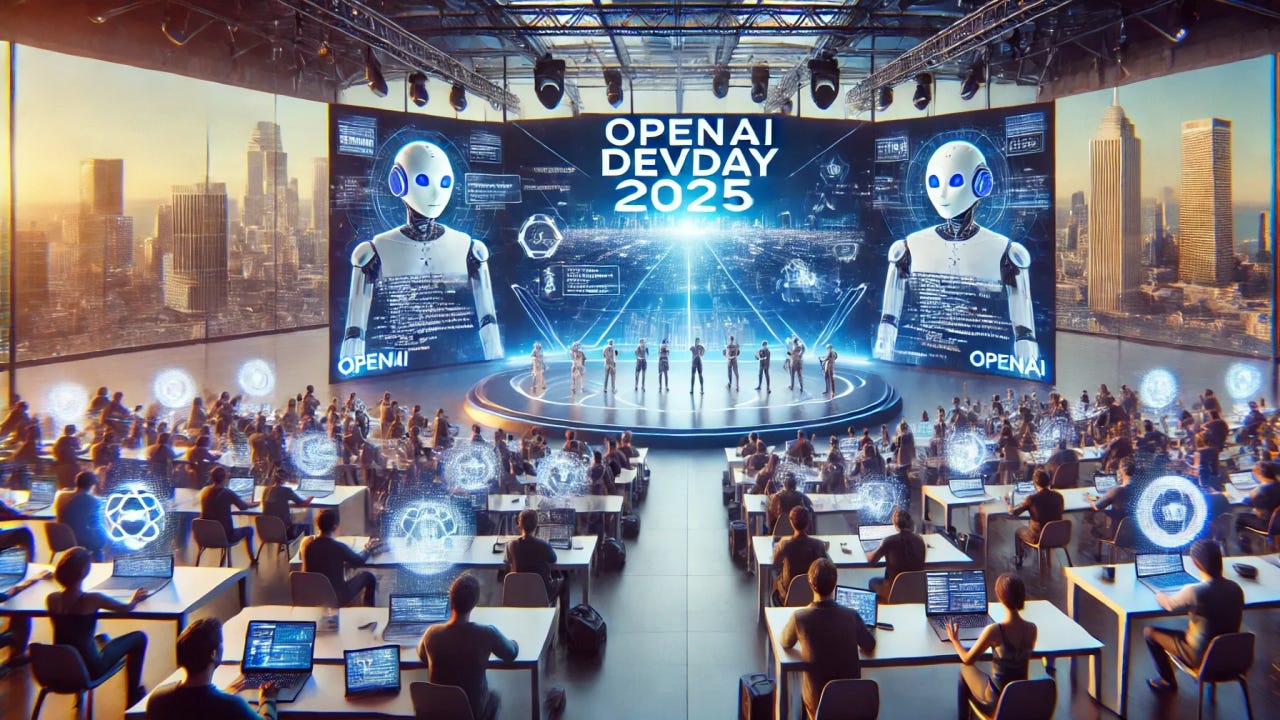
OpenAI’s Dev Day 2025 has set a new benchmark for the artificial intelligence industry, offering a clear vision for the future of generative AI and its applications across sectors. As AI adoption accelerates, understanding the latest advancements and their potential impact is critical for businesses aiming to stay ahead. This comprehensive review breaks down the event’s key announcements, technical innovations, and explores how organisations—especially those focused on automation, workflow optimisation, and AI-driven products—can capitalise on the new wave of capabilities.
1. Context: Why OpenAI Dev Day Matters
OpenAI Dev Day is more than a product showcase; it’s a pulse check on the direction of the AI industry. The 2025 edition brought together thousands of developers, business leaders, and researchers in person and virtually. The event addressed both technical and business audiences, emphasising OpenAI’s dual focus: pushing the boundaries of AI capability, while making advanced tools accessible and reliable for real-world deployment.
Key themes included:
Democratisation of AI: Lowering barriers for businesses of all sizes.
Responsible AI: Prioritising safety, compliance, and transparency.
Ecosystem Growth: Expanding partnerships and integrations for seamless adoption.
2. Major Announcements and Technical Deep-Dives
a. Next-Generation GPT Models
OpenAI unveiled its latest GPT models, featuring:
Advanced Reasoning: Improved multi-step logic, enhanced contextual understanding, and better factual accuracy.
Reduced Hallucinations: New training pipelines and real-time feedback loops have significantly minimised false or misleading outputs.
Expanded Context Window: Models now process and retain longer conversations and documents, supporting complex workflows and document analysis.
Specialised Model Variants: Options for code generation, legal analysis, and creative writing, allowing organisations to select the best fit for their use case.
Technical Note: Benchmarks presented at Dev Day showed up to a 30% improvement in code generation accuracy and a 25% decrease in factual errors compared to the previous generation.
b. Custom Model Fine-Tuning and Data Privacy
OpenAI has overhauled its fine-tuning platform:
No-Code Fine-Tuning: A new interface enables non-technical users to train models on proprietary datasets, reducing dependency on machine learning engineers.
Private Data Sandboxes: Data used for fine-tuning is now isolated, with enterprise-grade encryption and compliance with GDPR, HIPAA, and other global standards.
Automated Evaluation: Built-in tools for testing and validating model outputs against business KPIs.
Business Impact: Companies can now quickly create domain-specific AI solutions—such as industry-specific chatbots, internal knowledge assistants, or product recommendation engines—without sacrificing data security.
c. Multimodal API Expansion
A major leap forward:
Unified API for Text, Image, and Audio: Developers can now process and generate content across modalities with a single API call.
Image Understanding: New models recognise and interpret images, charts, and diagrams, enabling applications in document processing, visual QA, and accessibility.
Audio Processing: Speech-to-text and text-to-speech now support a wider range of languages and dialects, enhancing global reach.
Example Use Cases:
Automated document review (extracting data from PDFs, invoices, contracts)
Multilingual customer support bots
Video and audio content summarisation for media companies
d. Developer Tools and Ecosystem Growth
OpenAI SDKs: New SDKs for Python, JavaScript, and Swift, enabling rapid prototyping and integration with existing stacks.
Testing & Monitoring Dashboards: Real-time analytics for tracking usage, latency, and output quality.
Marketplace for Extensions: Launch of a marketplace where developers can share and monetise custom model extensions and plugins.
e. Security, Compliance, and Responsible AI
Expanded Compliance Certifications: SOC 2, ISO 27001, and new sector-specific certifications (finance, healthcare).
Audit Logs and Access Controls: Granular permissions and full traceability for enterprise deployments.
Bias and Safety Monitoring: Automated tools for detecting and mitigating bias in model outputs, with transparent reporting.
3. Real-World Business Outcomes
a. Accelerated Product Development
The new tools and APIs allow businesses to:
Reduce development cycles for AI-powered features from months to weeks.
Prototype, test, and iterate on new ideas with minimal infrastructure overhead.
Deploy AI-driven products to new markets faster, leveraging multilingual and multimodal capabilities.
Example: A SaaS company can now launch a global support chatbot, capable of handling text, images, and voice, in multiple languages, with a fraction of the previous development effort.
b. Enhanced Customer Experience
Personalisation: Fine-tuned models deliver more relevant, context-aware responses and recommendations.
24/7 Support: Multimodal bots can handle complex queries, escalate issues, and even process documents or images sent by customers.
Accessibility: Audio and image capabilities enable inclusive services for users with visual or hearing impairments.
c. Operational Efficiency
Automation of Repetitive Tasks: AI can now process unstructured data (such as emails, images, and audio) and trigger automated workflows, thereby reducing the manual workload.
Knowledge Management: Internal knowledge assistants help employees find information, summarise documents, and generate reports on demand.
Cost Savings: Improved API efficiency and scalability lower infrastructure costs, especially for companies running high-volume AI workloads.
d. Risk Reduction and Compliance
Data Privacy: Enhanced privacy controls and compliance features allow businesses in regulated industries to adopt AI with confidence.
Bias Mitigation: Built-in monitoring tools help organisations identify and address bias and safety issues before deployment.
Auditability: Full audit trails ensure transparency and accountability, supporting both internal governance and external regulatory requirements.
4. Strategic Business Benefits for Early Adopters
a. Competitive Differentiation
Early access to advanced AI features enables the creation of unique products and services.
Domain-specific fine-tuning means businesses can offer solutions that competitors using “off-the-shelf” models cannot match.
b. New Revenue Streams
The marketplace for extensions and plugins opens up opportunities for monetising proprietary AI solutions and integrations.
Multimodal capabilities allow businesses to expand into new verticals (e.g., media, healthcare, legal tech).
c. Scalability and Future-Proofing
OpenAI’s commitment to backward compatibility and ecosystem growth ensures that investments made today will remain relevant as the platform evolves.
Modular APIs and SDKs allow organisations to scale usage up or down as needed, optimising costs.
5. What This Means for Automation and AI-Driven Businesses
For companies like Voxstar, focused on automation, workflow optimisation, and AI product development, the OpenAI Dev Day 2025 announcements present several actionable opportunities:
Faster Time-to-Market: Leverage no-code fine-tuning and multimodal APIs to rapidly launch new features and products.
Improved Client Outcomes: Deliver more personalised, accurate, and accessible AI-driven solutions to clients across industries.
Operational Leverage: Automate internal processes, freeing up time for strategic initiatives and innovation.
Partnership Potential: Integrate OpenAI’s tools with existing platforms (e.g., workflow automation, business intelligence) to create end-to-end solutions for clients.
6. Conclusion and Next Steps
OpenAI Dev Day 2025 has redefined the art of the possible in AI. The advancements in model performance, customisation, multimodality, and compliance are not just technical milestones—they are business enablers. For organisations ready to embrace the next generation of AI, now is the time to evaluate, experiment, and integrate these tools into your strategic roadmap.
Action Points:
Assess current workflows and identify areas for AI-driven improvement.
Experiment with OpenAI’s new APIs and fine-tuning tools to prototype solutions.
Monitor industry best practices for responsible AI adoption and compliance.
Stay engaged with the OpenAI ecosystem for ongoing updates and new opportunities.
Voxstar will continue to track and implement the latest AI technologies, sharing insights and practical outcomes. For tailored advice or to discuss how these advancements can benefit your business, connect with us directly.
About Voxstar: Founded in 2009, Voxstar builds AI systems for end-to-end testing, automation, and workflow optimisation, serving clients across retail, automotive, news, and health sectors. For more information or to explore partnership opportunities, reach out via our social channels or Voxstar.com
#ArtificialIntelligence #MachineLearning #DeepLearning #NeuralNetworks #ComputerVision #AI #DataScience #NaturalLanguageProcessing #BigData #Robotics #Automation #IntelligentSystems #CognitiveComputing #SmartTechnology #Analytics #Innovation #Industry40 #FutureTech #QuantumComputing #Iot #blog #x #twitter #genedarocha #voxstar #wiredvibeapp #audiocaster.ai
@ArtificialIntelligence @MachineLearning @DeepLearning @NeuralNetworks @ComputerVision @AI @DataScience @NaturalLanguageProcessing @BigData @Robotics @Automation @IntelligentSystems @CognitiveComputing @SmartTechnology @Analytics @Innovation @Industry40 @FutureTech @QuantumComputing @Iot @blog @x @twitter @genedarocha @voxstar #audiocaster.ai
Comments
Nothing yet. Say the first thing.
Sign in to join the conversation.