
The biggest mistake founders and creators make is they think marketing techniques can work in isolation.
Just have a great “Funnel”
Run ads on social media
Create content consistently
You heard of those, right?
What they don’t tell you is, in marketing everything works in a sequence. They are inter-related.
You got a great product that actually helps people. You know all the stuff about fancy marketing tactics: SEO, RoAS, PPC, Quality Content…
But still, the big picture is missing from all of it.
You want to market your product, but you are not clear on the big picture.
I get the frustration, there are many different tools, techniques and skills that a starter can completely get overwhelmed and can’t connect the dots between them all.
The secret to great marketing, is to first lay down a strong foundation — a proper strategy — and then build and expand on that foundation.
Without having a solid strategy documented first, you are just throwing things at the wall hoping some of them sticks.
In this document, I combined 10 years of my experience working for fast-paced startups with the latest marketing frameworks, and wrote down a strategy framework you can follow, and get your foundation right before going into the details and starting your marketing process from the middle!
We will cover 4 main steps [with sub-steps] that can help you get absolute clarity on the big picture. Get you brand strategy in place. And confidently pick the best distribution strategy that fits your business and resources.
The secret to great marketing is targeting and communicating directly to your customers, not anybody else.
The more you know your customers, the easier it is for you to effectively communicate to them without wasting effort and resources.
Talking to everyone = Talking to no-one!
As an early-stage startup founder, or a creator, you don’t need to run million-dollar market research campaigns with fancy agencies.
You need to get 3 simple things right:
Who is your customer(s)?
What problems do they have that my product can solve?
Where do they live, and spend time on the internet?
Once you get those ☝ right, you can start producing content and run campaigns around it.
🧐Let’s dig a little to see how to do it.
What you need to know:
Demographic (age, location, gender, income, occupation, education, family status)
Psychographic (culture, values, interests, lifestyle, personality traits, attitude)
💡Note: At the end of this part i’ll give you a prompt to organize and run this all in one place with a simple copy-paste and put it in a sheet — don’t worry about it!.
Here is the cool part!
This is where most of the cool content ideas come from.
The first question, the root of it all is:
🪝What problems are they trying to solve? What are they hoping to achieve by using your product or service?
Usually it’s one (or more) of the 5 things they want to achieve:
Save Time (Do it in 15 minutes instead of 15 weeks)
Save Effort (Do it with just a copy-paste)
Save Money (Save $1000s by using my product)
Remove a Pain (No more back pain)
Improve — or move them closer to — their ideal Identity (most powerful)
Then break down the problems and list the top 10 problems or pains they have.
Then break down the problems and list the top 10 problems or pains they have.
Think of bringing your ideal customer from point A to B.
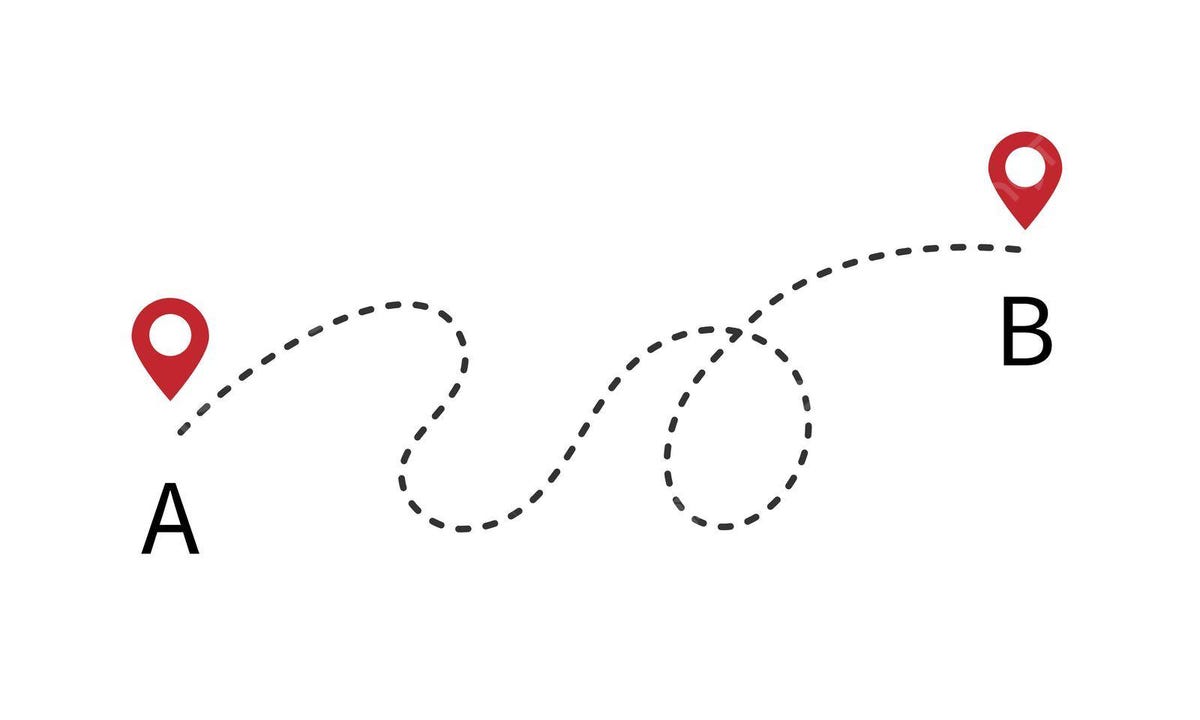
And see what problems they might face in that process.
#1 Answer The Public:
Go to answerthepublic.com → Search your product or business keywords
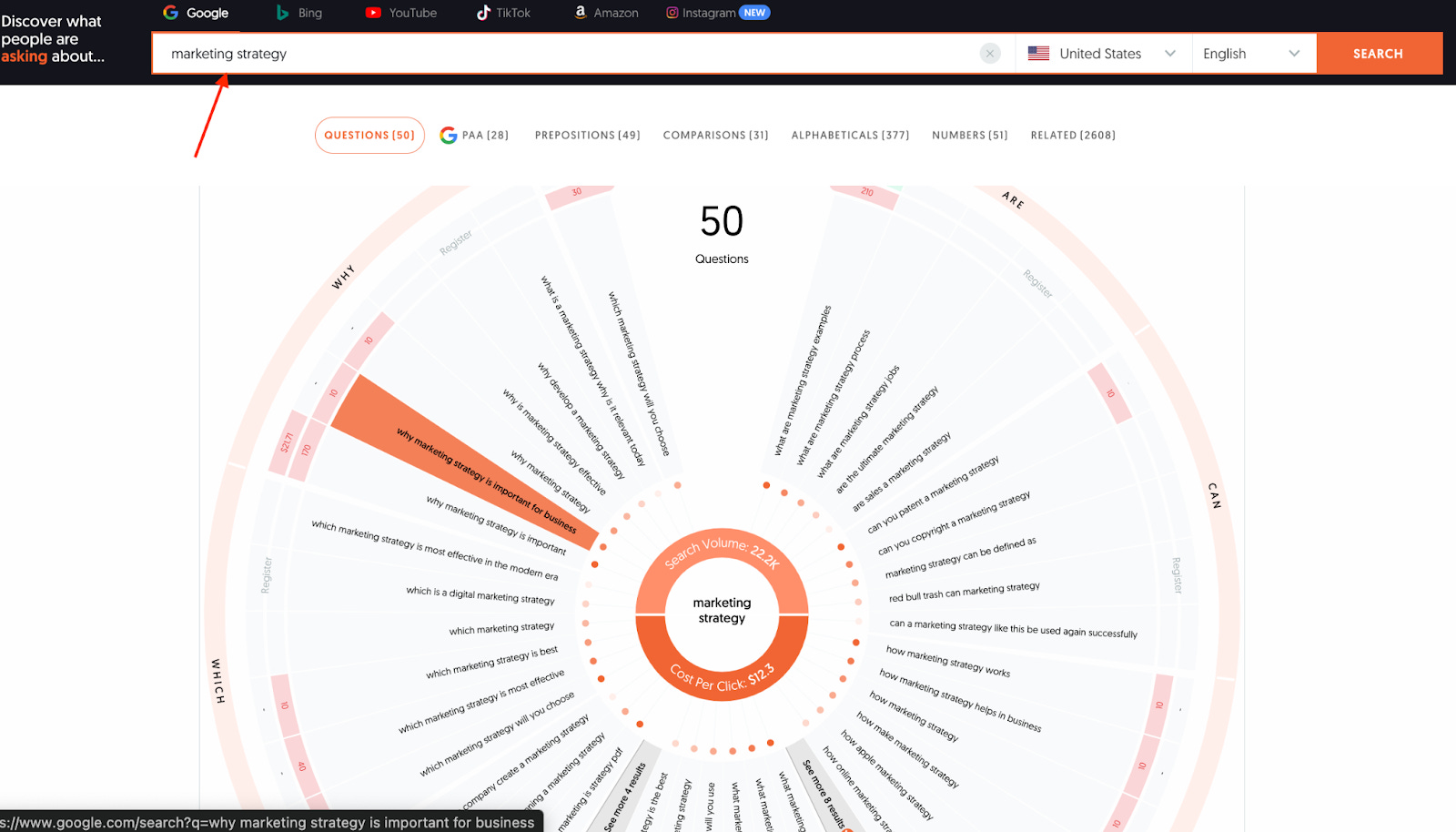
You will find 10s of new ideas, demands, questions and information about your market, customers and keywords people search.
💡Note: It’ll give you some cool sub-topics, content ideas and search data as well.
#2 Google Trends:
It’s amazing how simple it is and still people don’t use it to get data and relevant keywords. Just go to trends.google.com → Put your main business keywords in the search box.
See the demand over-time, plus Top or Rising trending keywords in your industry.
#3 Reddit:
Go to reddit.com → Then Reddit Answers:
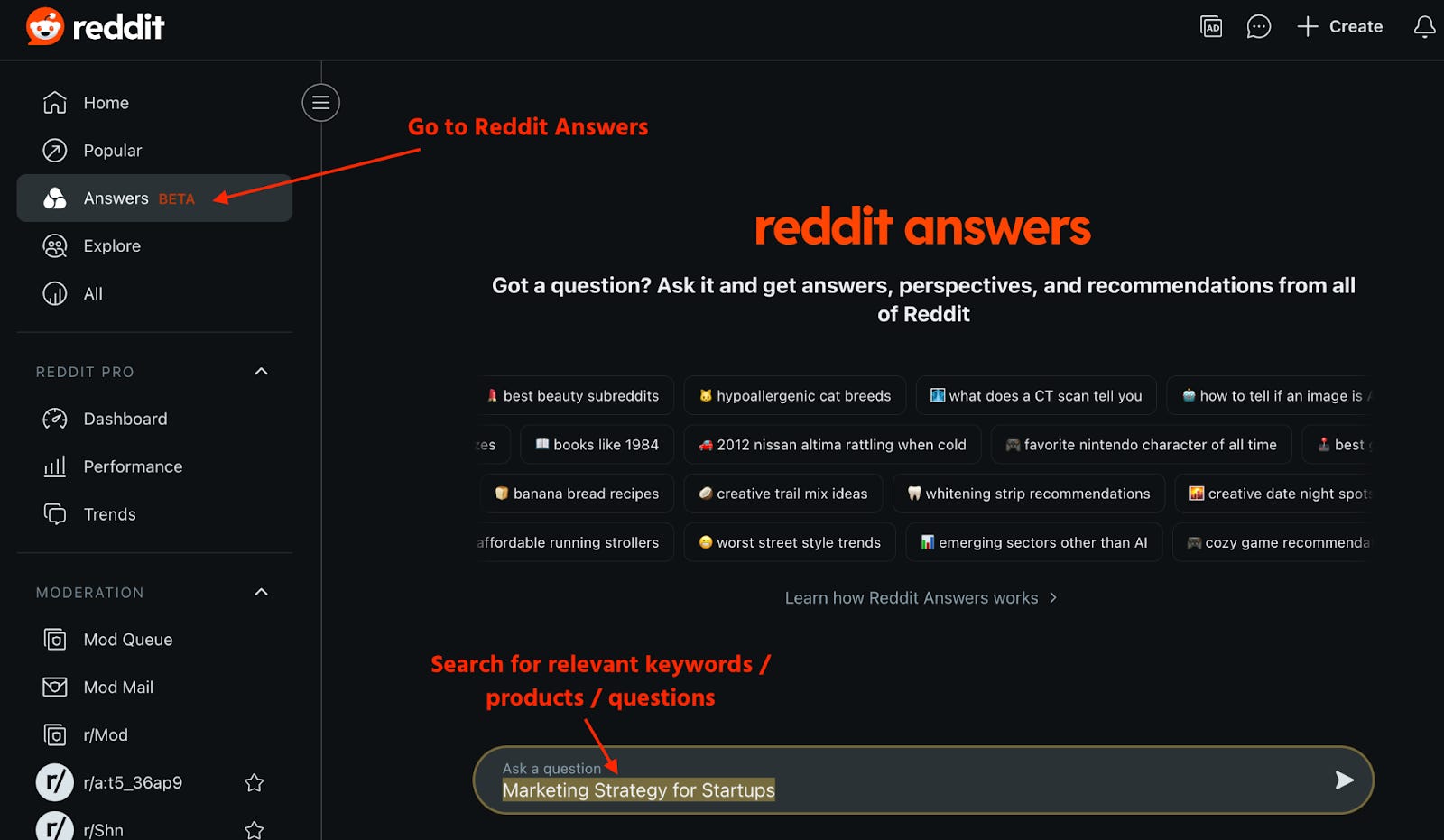
Search your product, or relevant keywords:
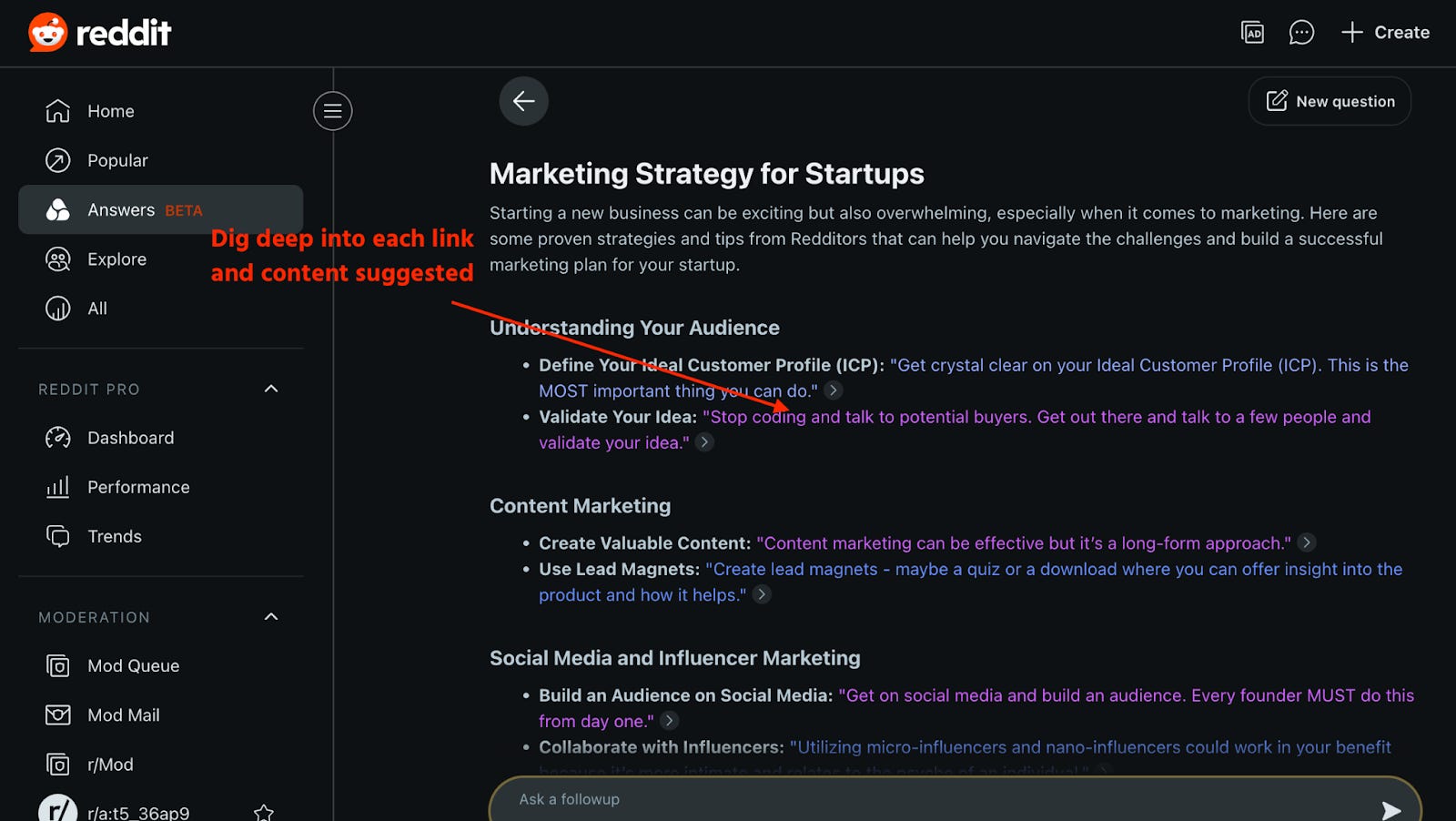
Dig deep into the links and answers → You will find some cool gems, customer problems and ideas there!
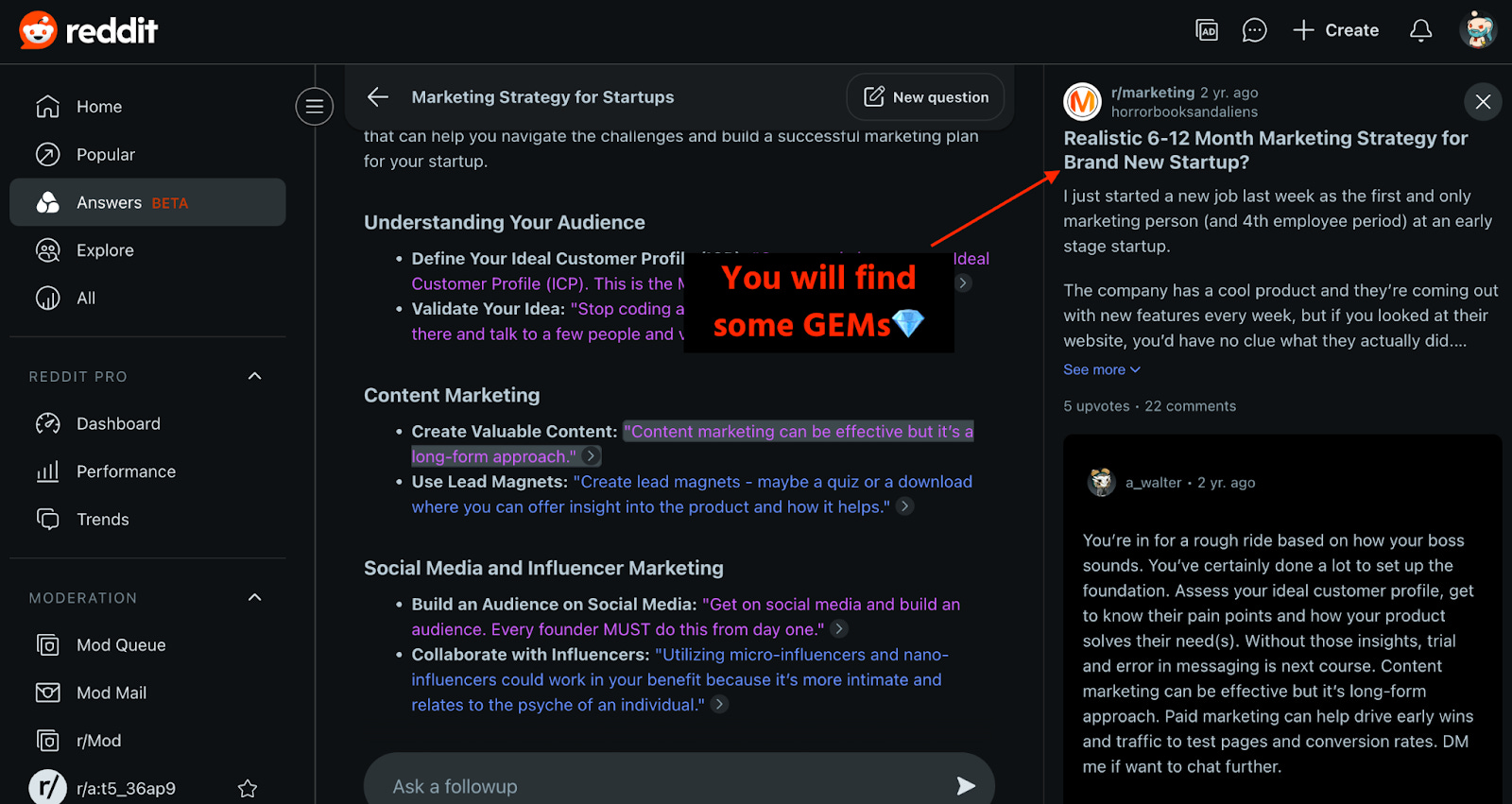
#4 Quora:
Go to quora.com → Search your product or keywords in the search box
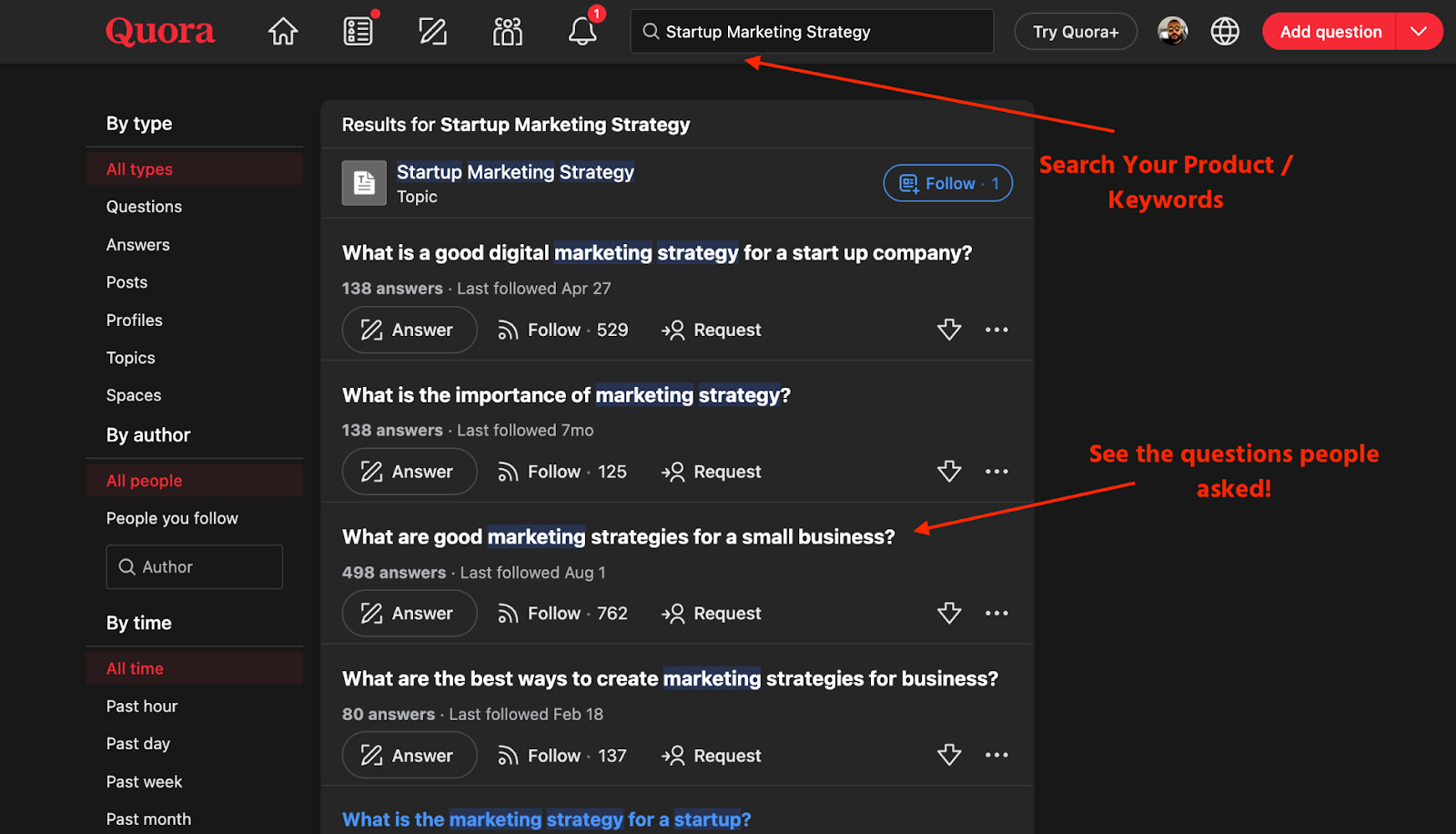
And find PLENTY of questions and problems related to your business.
Knowing your customers characteristics, and pain points are essential for communicating with them in the most clear, targeted way.
But if you don’t know where — on the internet — their attention is, you can’t reach out to them in the first place.
You need to get 3 things right:
The platforms, and websites they spend time on the most
Sub-channels: Accounts, influencers, podcasts, and communities they follow
How they research information, and purchase products or services
Platforms:
You need 2 lists:
General preferred platforms
Instagram
X
Telegram
Youtube
TikTok
Reddit
Facebook
…
Niche / specific websites, forums and communities (e.g. real estate agents communities and forums)
Sub-Channels:
Instagram accounts / influencers they follow
X accounts, and communities they follow
Sub-reddits
Youtube channels they subscribe to
Make the list as deep as possible. You will need it later, so you know exactly where to find your customers and how to communicate to them.
😎Bonus:
Here is a structured sheet I prepared for you that includes all the information in chapter #1 “Understanding Your Customers. Open it, duplicate and use it for your own research.
In order to make your life easier, I have just structured the whole section #1 as a prompt.
All you need to do is to copy and paste this prompt into your favorite AI Tool. And save the results.
➜ Click here to get the Understanding Your Customer Prompt
🤔What is a brand?
Forget about the fancy, fluffy quotes. Let’s keep it simple stupid.
The most simple brand definition out there is: 👌Intentional pairing of relevant things done consistently.
Therefore a brand is the audience’s inherent association of those paired things.
Examples:
Zappos: Excellent Customer Service + Reliability
Harley-Davidson: Freedom + Road Adventure
Gary Vee: Content + Day trading attention
Alex Hormozi: Business Growth + Proof + Operationalizing Hard Concepts
You can deliberately pair yourself with the associations you want. Therefore branding is definitely operational.
Building a brand isn’t about guesswork — it’s about intentional strategy.
After you go through the research step, it’s now time to define exactly how you want your audience to perceive you.
This Brand Framework simplifies this process into four key questions that help you reverse-engineer your success. Instead of aimlessly creating content or hoping your brand takes off, this exercise ensures that every action you take aligns with your long-term vision.
By answering these four questions, you’ll gain clarity on:
The ultimate goal you’re working toward
The reputation and positioning you need to achieve it
The actions required to reinforce that reputation
The skills and knowledge necessary to execute effectively
This isn’t just a thought exercise — it’s a roadmap. Follow it, and you’ll build a brand with purpose, consistency, and long-term impact.
Write down these 4 questions, and answer them one by one. Align every decision with the answers.
Your brand story isn’t just a before - and - after transformation — it’s a series of intentional decisions that shape how people see you. Great brands aren’t built on a single moment — they’re built on consistency, distinction, and the right audience connections over time.
This 3 step worksheet will help you craft a brand story that evolves and remains relevant.
The Catalyst (Why Your Brand Exists & Why It Matters)
The Core Differentiator (What Makes You Different? Why People Should Care)
The Proof (How You Reinforce Your Identity Over Time)
Let’s go through them 1 by 1.
Every brand starts because something needs to change. This isn’t always a struggle — sometimes it’s an opportunity no one else saw.
Example: Apple didn’t start because Steve Jobs wanted to build a tech empire — it started because he saw a need for a user-friendly personal computer that could bring technology into everyday life, in a way that was intuitive and aesthetically appealing.
Ask yourself these questions:
What needs to change?
What do you see that others didn’t?
Why do you feel the need to act?
A strong brand stands out, it doesn’t blend in. Blending in leads to being forgotten.
This doesn’t mean being controversial for controversy’s sake. It means having a core conviction that is different from the market and sharing that.
Example: Dove champions real beauty by promoting diversity and self-acceptance in its advertising, showing women of all shapes, sizes, and skin colors. This belief in breaking traditional beauty standards sets them apart in the cosmetics industry, appealing to a wide audience that feels underrepresented.
Ask yourself these questions:
What do I believe that others don’t?
What about my personality / brand stands out?
What do people compliment me on that I can lean into?
Why would the audience care about this?
A story isn’t what you say, it’s what you prove over and over again.
Strong brands don’t just have a past success story, they have an ongoing pattern of credibility.
Example: GaryVee didn’t just talk about content volume once — he’s proven it for 15+ years.
Ask yourself these questions:
How does every piece of content reinforce the associations I want people to make with me?
What case studies or examples can I share to establish credibility?
If someone hears my name, what’s the first thing I want them to think of?
As an example, Let’s look at my personal brand story, using this framework:
Catalyst:
I see a gap in the market where businesses invest in marketing (Both organic content and paid advertising), but harmony and proper targeting is lacking from it.
The main problem is lack of clarity in big picture marketing strategy.
Using AI can also make solving this problem easier, and make the process more efficient — less time consuming.
Core Differentiator:
Creating a proper marketing strategy should not be complex, vague and difficult.
With AI and the tools we have today, we can focus solely on reality and operationalize complex processes.
Proof:
Aside from 10 years of startup marketing experience, I make and curate simple marketing systems and frameworks, use AI in the process, and share them for free with my audience.
This is by far the best prompt I engineered!
It’s beautiful and functional. Whole branding strategy with 1 single prompt. Enjoy!
All you need to do is to copy and paste this prompt into your favorite AI Tool. And save the results.
➜ Click here to get the Brand Framework Prompt
💡Important Hint: Before executing this prompt, add your prior Customer Research Data file to ChatGPT, and say this: Use this data as the starting point to know a bit about my business and customers. Include this in processing the next prompts.
Everything you do in marketing is content. Whether it’s a billboard, a piece of video, an advertisement, a tweet or an article — it’s all content.
When we talk about content strategy, we usually refer to organic content. Content that you put on social media, your blog or other platforms, in order to attract attention, and engage with your audience.
The Waterfall Distribution Method — Originally popularized by GaryVee — is an effective, battle-tested approach to maximizing content output and expanding your brand’s reach.
With this strategy, one piece of content can fuel multiple platforms, making sure your content works harder and smarter for you.
This method has evolved into a repeatable system that transforms a single high-value content piece into weeks of purposeful distribution.
The waterfall content plan works in 4 steps:
Produce Your Pillar Content
Extract Micro-Content
Break Down Formats for Each Platform
Strategic Distribution Plan (Calendar)
Your pillar content is the foundation of your content strategy.
It should be high-value, long-form, and packed with insights.
Examples of Pillar Content:
A YouTube long-form video (30+ minutes with deep insights)
A high-value Twitter thread that breaks down a concept
A newsletter issue that teaches a framework
A long-form LinkedIn post sharing detailed strategy
A podcast episode featuring expert discussion
Key Question to Ask: If my audience only consumed one piece of my content per week, what would I want it to be?
Your pillar content should be evergreen or highly relevant to your niche so that repurposing it over time still provides value.
Once you’ve created your pillar content, the next step is to break it down into smaller, digestible pieces for distribution across multiple platforms.
How to Find Micro-Content:
Identify the most valuable 30-60 second clips from a long-form video or podcast
Pull out standout quotes that could be shared as tweets or LinkedIn posts
Summarize the key takeaways into a text-based format
Find controversial or contrarian takes that could spark engagement
Each platform has its own content style, audience behavior, and best practices. Your content should feel native to each platform while maintaining the core message.
Example Platform Breakdown:
YouTube Shorts, TikTok, Reels: 30-120 second clips pulled from your long-form video
Twitter/X: Break down insights into a thread (5-10 tweets max)
LinkedIn: Turn the core idea into a written post or a carousel
Instagram Stories: Share quick takeaways with engaging visuals
Email Newsletter: Package insights from the original content into an email sequence
To make this process efficient, systematize your workflow so that content is consistently distributed.
The Waterfall Process:
Post your pillar content first (YouTube, podcast, long-form post)
Within 24-48 hours, schedule micro-content across secondary platforms
3. Engage & iterate — monitor audience responses and double down on what’s working
Repurpose winners — take high-performing content and find ways to expand on it
Come up with Content Ideas, Plan for the first 30 Days with a single prompt!
All you need to do is to copy and paste this prompt into your favorite AI Tool. And save the results.
➜ Click here to get the Content Strategy Prompt
You got your whole strategy written down now.
Let’s get practical!
Don’t have any idea what to publish yet?
↳ Start with your customer problems (you already defined it in your research)
↳ Use this prompt, it will give you 30 days worth of content ideas — planned!
↳ Use your list of keywords and sub-keywords, expand on them
🤌Let’s first get something straight.
There are no 100% guaranteed ways to get viral content every single time.
However, there are 2 important things you need to do:
Have a system in place for finding best content formats (overall and niche)
Consistently post, test different content, keep what works and eliminate what not
Step #1: Go to Instagram → Explore → Search your business keyword(s):
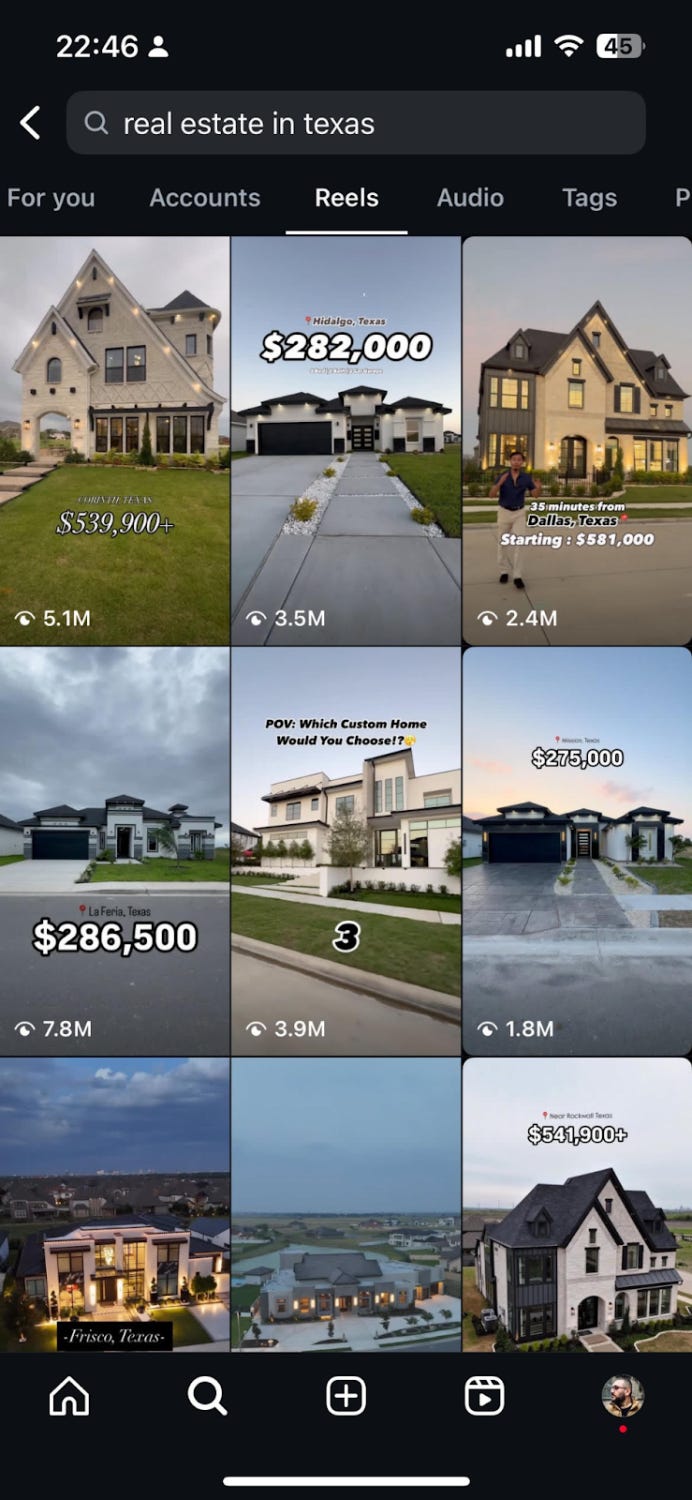
→ Go to reels tab → Find reels that are top performing → Save them 📋
Step #2: Go to viralfindr.com → Videos tab → Search your niche
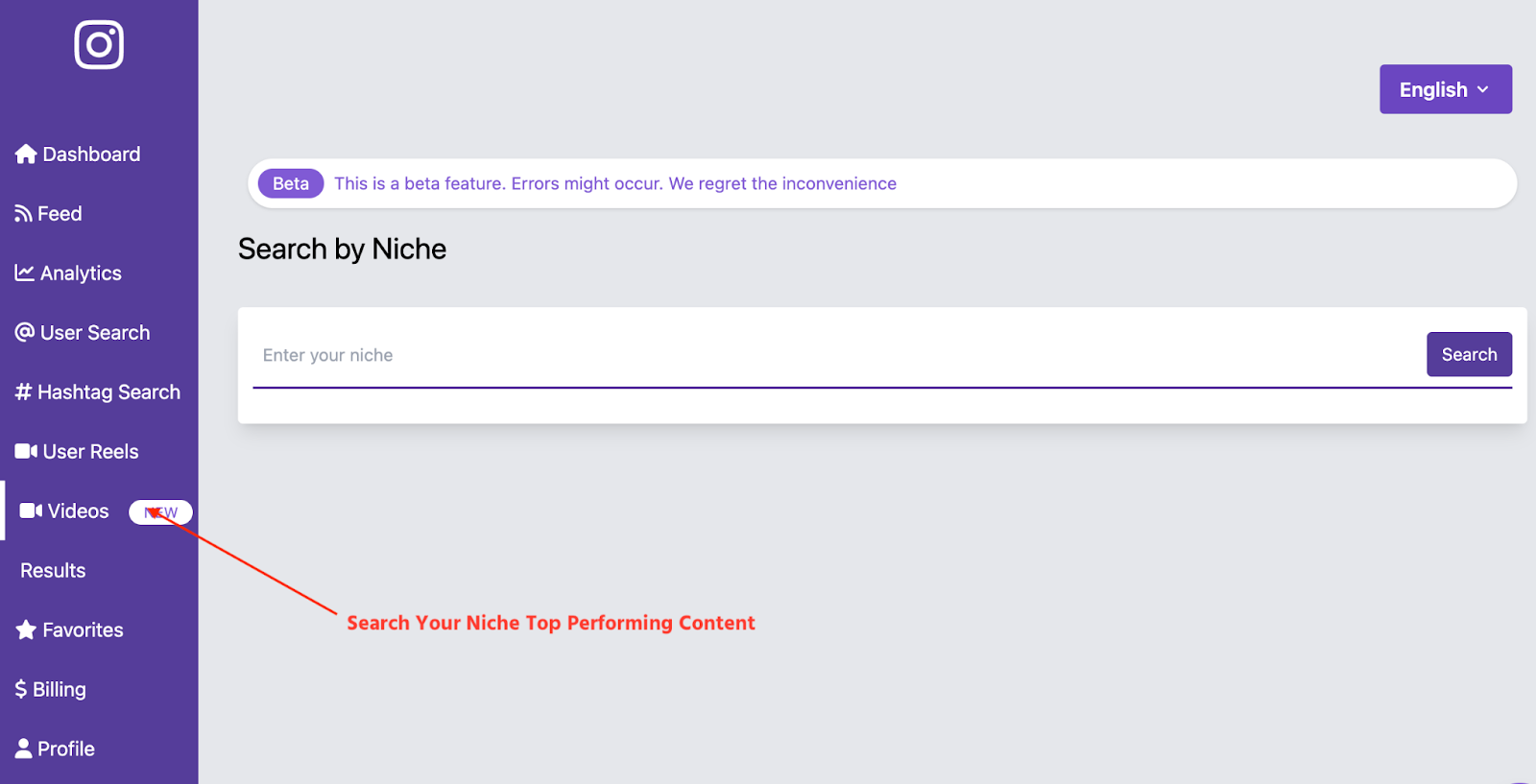
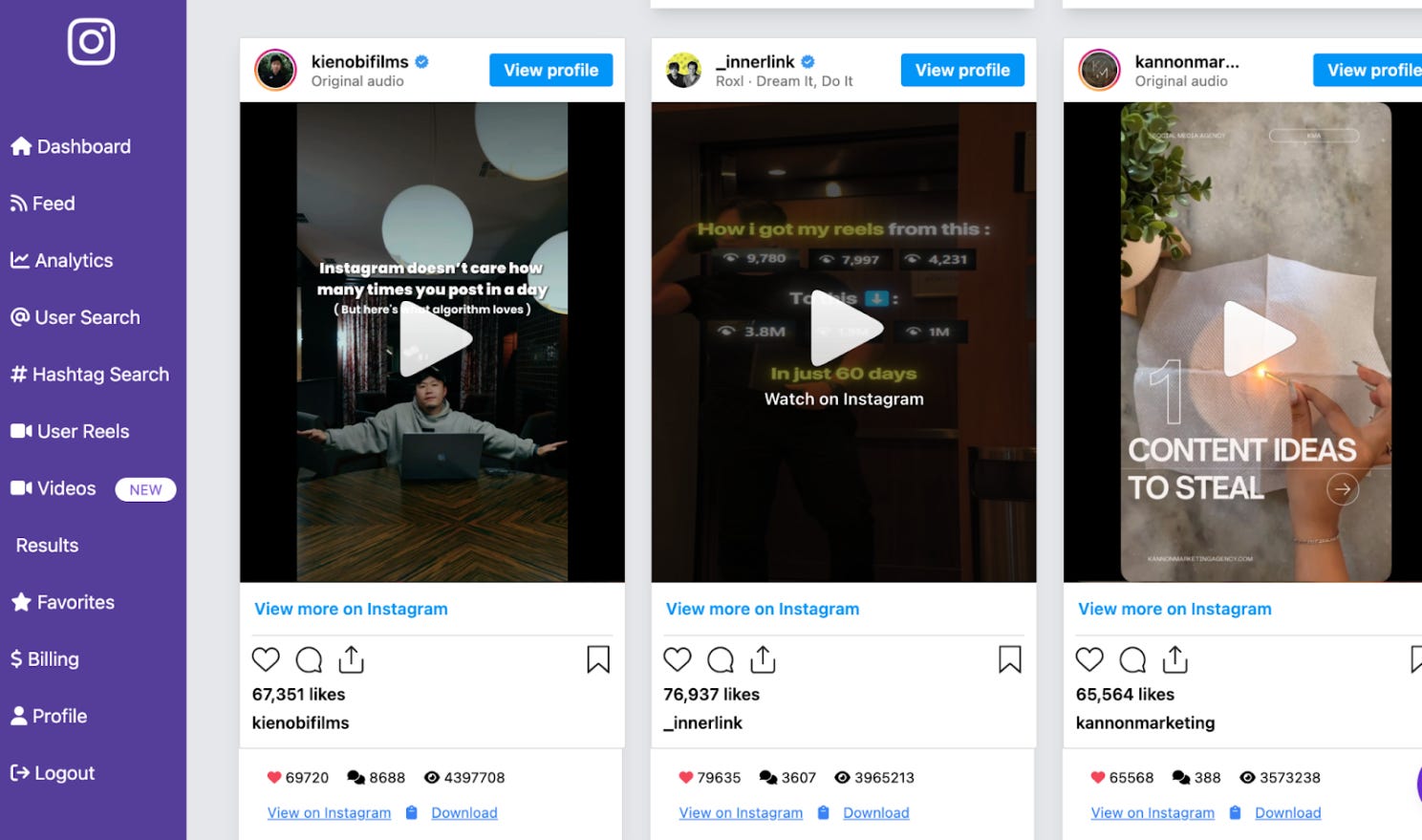
→ It will give you a list of top performing contents in your niche
Step #3: Go to meedro.com → Viral Library
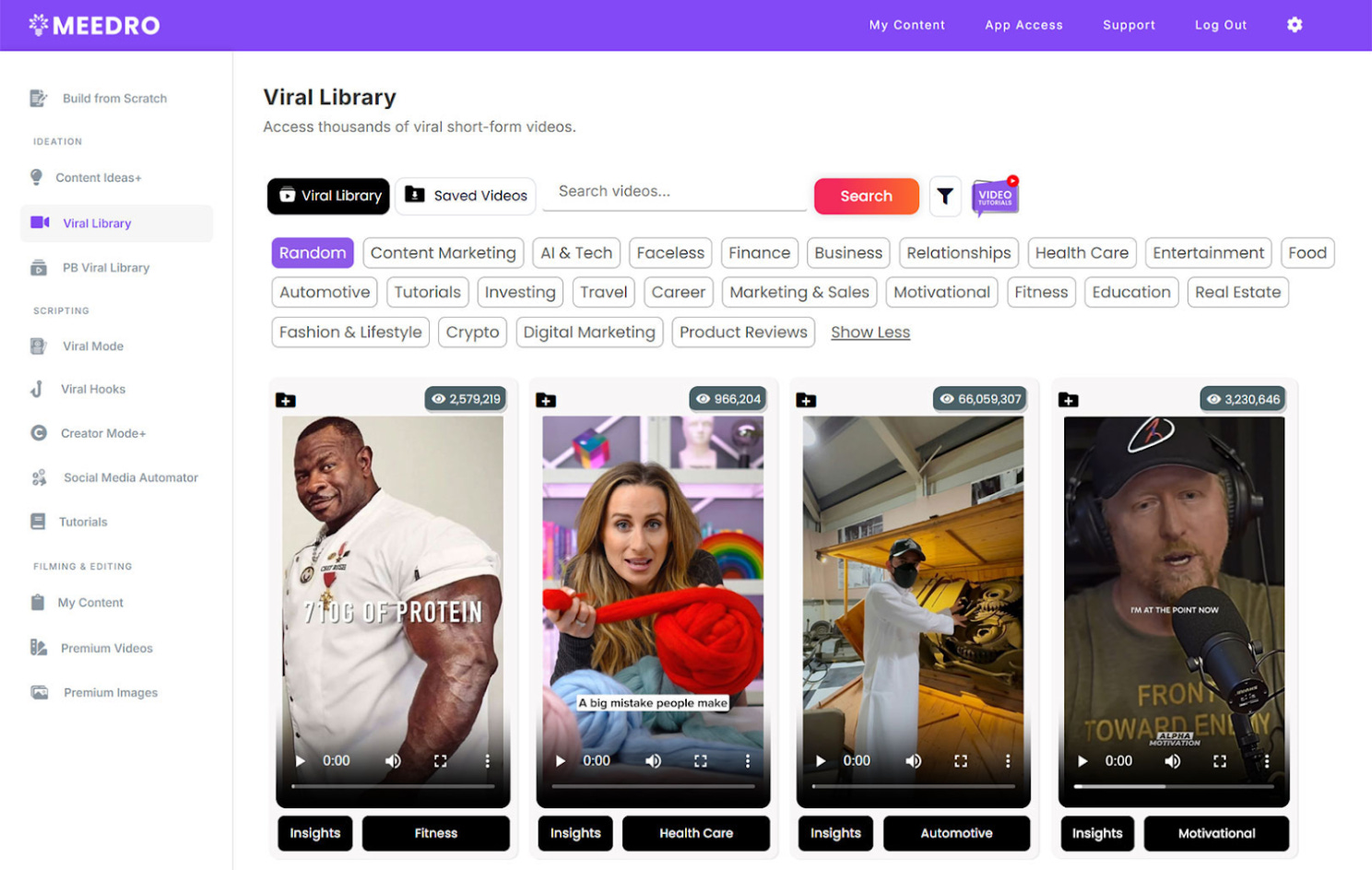
→ Repeat the same process → Save the top performing contents
💡Note: you can do bunch of other cool stuff in meedro, which i will discuss in another document.
These tools are best for finding short videos for Instagram, TikTok and Youtube. There are tools to find top performing content on other platforms such as X, Linkedin etc.
Step #4: Make a list of the top 20 top performing posts.
Step #5: Write down what are they about, exactly step by step →
What is the hook (the first frame and sentence / paragraph that grabs the attention)
What is the body content
What is the last Call to Action (CTA)
Let’s break down an example for you:
Step #6: Repurpose and re-create these viral formats, but with your own content ideas you gathered earlier.
#1 Article Prompt
→ Here is a General Long-form Article Prompt based on the MRUs copywriting model.
📝It’s best for writing powerful general articles including a story. If you give it enough context, overall structure or a pre-written draft, it will work astonishingly well!
Want more depth?
If you want me to:
✅ Research top 5 article formats in your niche market
✅ Break them down in formats
✅ Come up with 5 different prompts for each format with the best copywriting technique for each one
✅Come up with Prompts to turn articles into Social Media posts
✅Optimize all your copywriting tasks
DM me in on Linkedin now!
#2 The Offer Prompt
The difference between having a well-written offer and a generic once is night and day!
The Offer Prompt will:
Ask a few questions about your product
Analyze it against top 5 offer copywriting methods
Come up with 10 well-written, viral offers to use instantly for your products
→ Just click here, copy paste the highlighted prompt into ChatGPT, and you are good to go.
I also wanted to add Advertising Strategy as the 5th Step of this document. But I was afraid it’s gonna take too long to read.
So stay tuned!
Let me know what you want to see next? Advertising Strategies? Social Media? Funnels? Systems? Content Templates?
⌚If you don’t have time to read and execute the whole thing yourself Just leave me a ➡️ DM on Linkedin if you want me to do it for you.
Cheers, 😎Shayan.
No posts
Comments
Nothing yet. Say the first thing.
Sign in to join the conversation.