
Avid readers will recall we mentioned earlier in the year that we were thinking of replacing our gas boiler with an air source heat pump (ASHP), and after a lot of work from the team at Econic Energy, it is now installed! We have been living with it for a few weeks now, and so we thought we’d share our experiences.
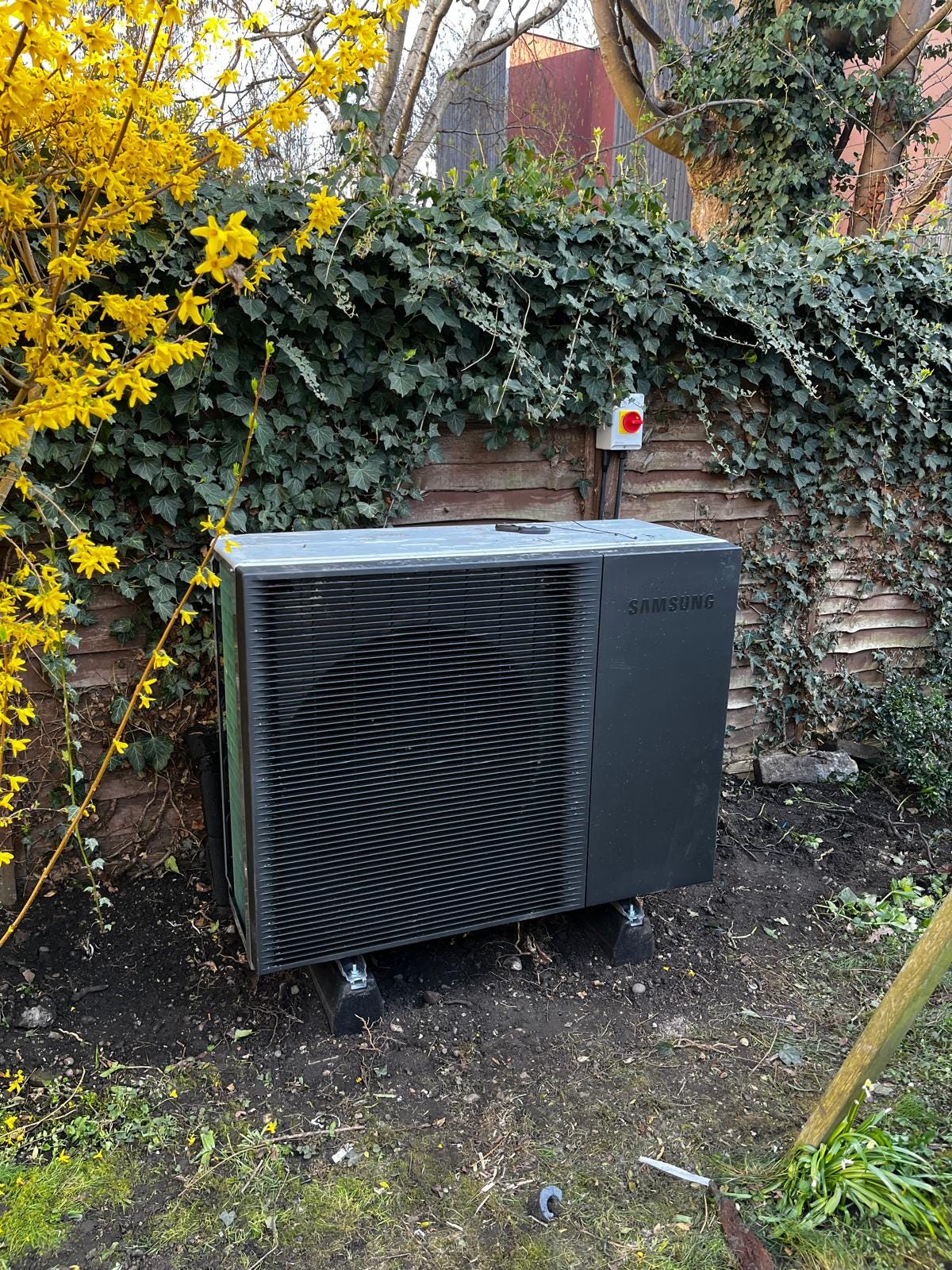
The main difference in how your home is heated with an ASHP is that the temperature of the water circulating in radiators is generally a lot lower. A typical water temperature for a condensing gas boiler is 65C, whereas for an ASHP it is 45C. For us, this meant that we had to upgrade some of our radiators to higher output models, but fortunately only three of them. Another consequence of this is that rooms will generally take longer to heat up, but in practice we didn’t really notice much difference. I have heard it said that heat pumps often result in a “comfortable” temperature at home, and I’d agree with this choice of word: with our old gas system there were times when we’d feel cold and then turn up the temperature, and then a while later feel too hot, and turn it down again. With the heat pump the temperature is a lot steadier, and well, more comfortable.
Another difference is that hot water is heated overnight and stored in a 250 litre tank, which took some getting used to compared to our old combi boiler, where hot water is on-demand. We were a bit worried that we’d be running out of hot water all the time, but this has only happened once, when we were getting used to it. And as a benefit, shorter showers do help to unblock the queue to the bathroom! It is possible to schedule more water heating cycles if necessary, and there is always an immersion heater that can be turned on if you’re in a real hurry.
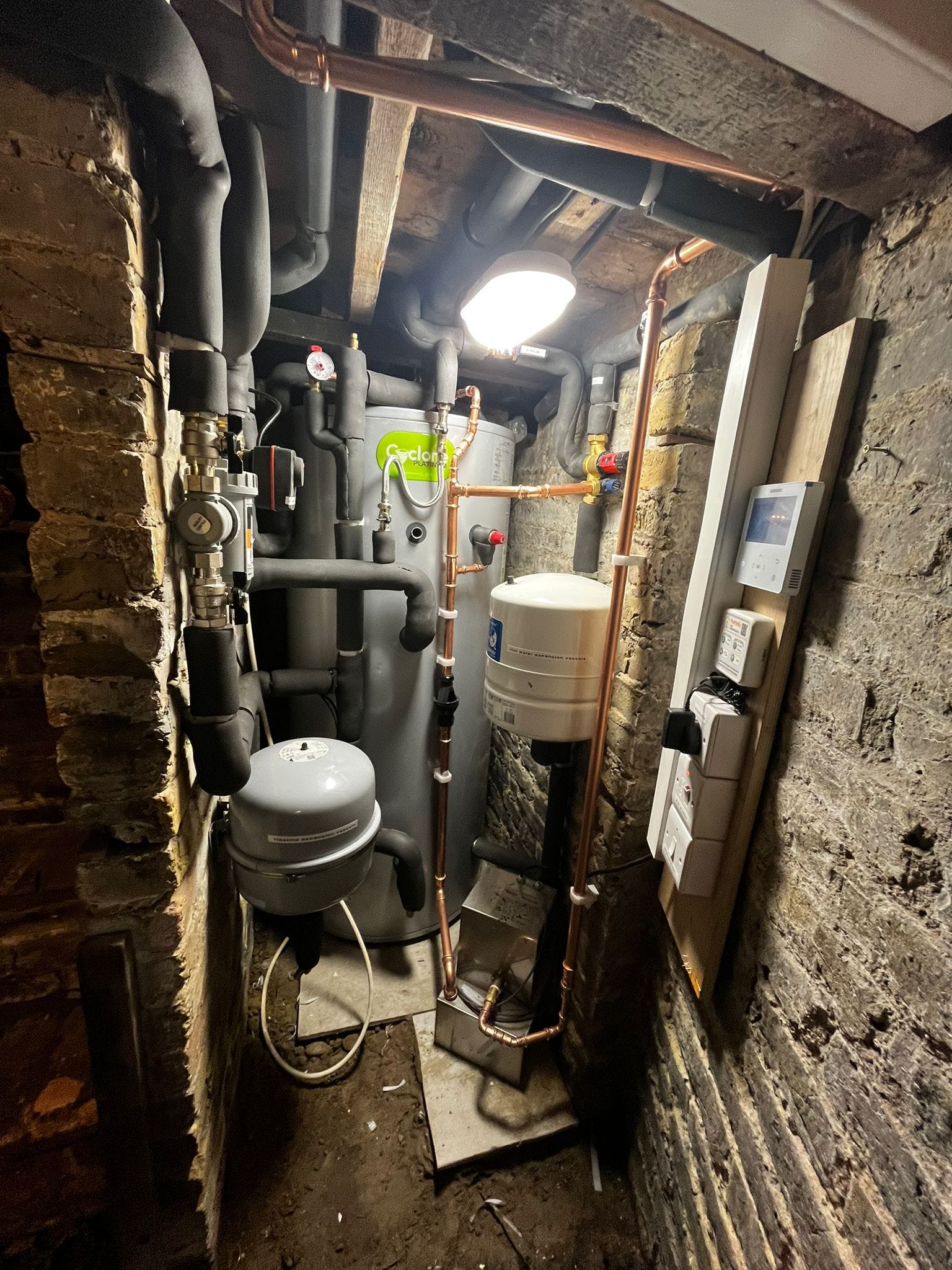
A gas boiler is around 80% efficient (for every unit of energy you put in, you get back 0.8 units of heat) but ASHPs are around 400% efficient - one unit of energy put in produces 4 units of heat. However, as the cost of electricity is about 4x that of gas, there isn’t much of a cost saving. This is where another neat bit of kit comes in: a storage battery. Flexible electricity tariffs allow us to charge up the battery overnight when electricity is cheap and draw down on it during the day, when electricity is more expensive. Estimating the cost savings is a bit tricky, but it should help bring down the running cost of the heat pump considerably.
But how does all this help reduce air pollution? In 2024 the top two sources of fine particulate pollution were road transport and domestic combustion, and so moving from burning fuel can help reduce air pollution. And reducing the reliance on natural gas in favour of renewable energy can improve energy resilience, a very topical issue.
And finally, the other important step to take is to reduce the heat loss from your property, and so the team at Warmdwell increased our loft insulation, insulated under the wooden floorboards downstairs and Sacha ordered some acrylic secondary double glazing to reduce the thermal loss of some old single-glazed windows.
We’re pretty happy with the end result so far: it took a lot of research and planning to find the right supplier and make sure what we got would do the job. Then eight days of multiple teams onsite at the same time installing the heat pump and insulation was quite stressful at times. Hopefully when winter comes around, we’ll have a warm home that is energy efficient as well as reducing our contribution to air pollution and climate change.
We’ll do an update in a year with some data on how it is working out!
No posts
Comments
Nothing yet. Say the first thing.
Sign in to join the conversation.