
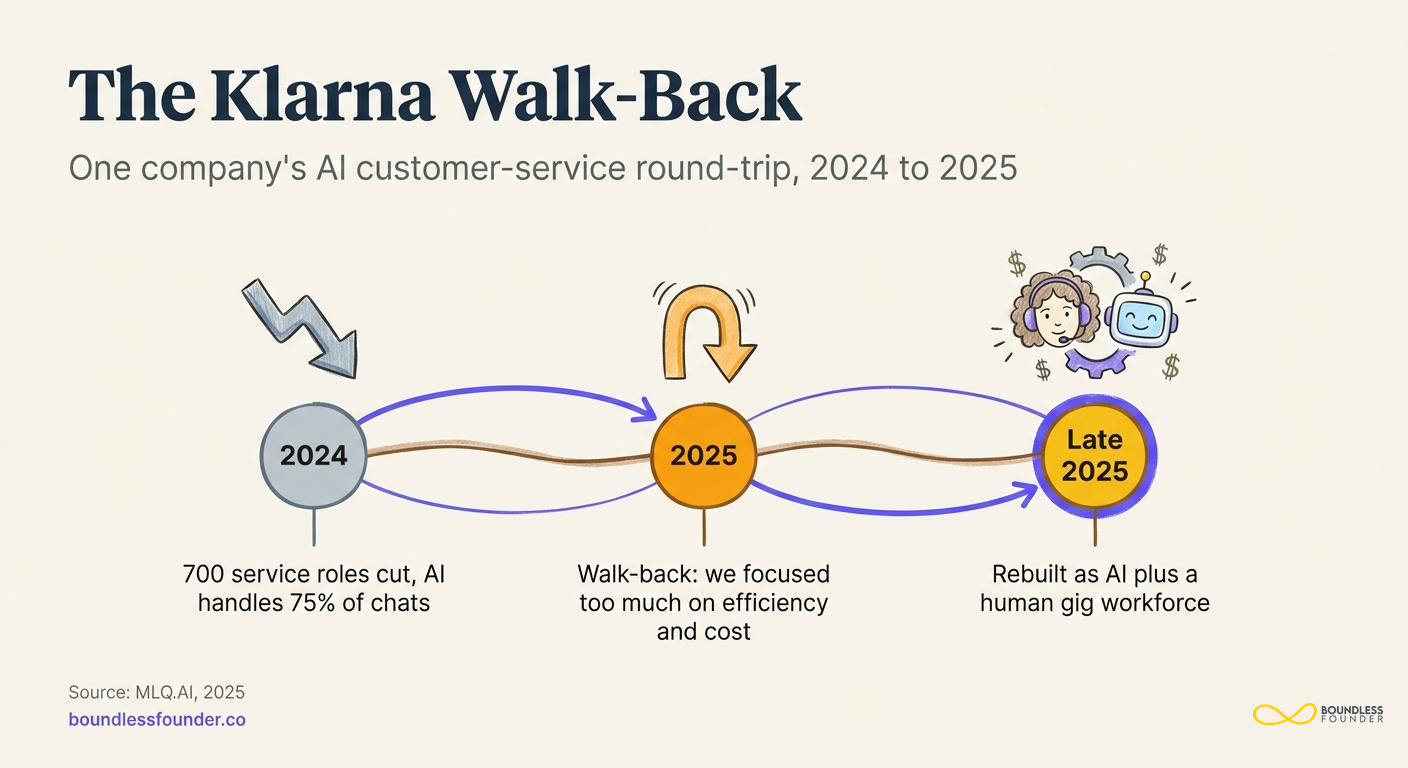
In early 2024, Klarna told the world it had replaced 700 customer service agents with an OpenAI-built assistant that was handling 75% of its chats — about 2.3 million conversations a month (source). It was the cleanest version of the AI-replacement story anyone had told publicly. By mid-2025, the CEO walked it back. The cost cuts had come at the price of quality. They started hiring humans again — but not the way they'd fired them. The new model was a blend of AI and an Uber-style gig workforce.
It's tempting to read this as AI failed. I don't think that's what happened. Klarna didn't fail at the technology. They failed at the frame. They tried to slot AI into a conventional org chart and got conventional-org results, just cheaper for a while. What they walked back to — humans and agents both writing into a shared system, with the company organized around the loop rather than the human-routing layer — is what an AI-native company would have built first.
That's the difference I want to plant here.
This is the first piece in a four-part series on the architecture of an AI-native startup. By AI-native, I don't mean a startup that uses Cursor seats or Claude subscriptions. I mean one whose company structure is itself shaped by what AI makes possible. Most of what's written about AI-native startups today is about productivity (10x engineers), economics (small teams, big revenue), or culture (token-maxx). I think those are downstream consequences of one structural difference. The next three pieces detail the system; this one plants the axis.
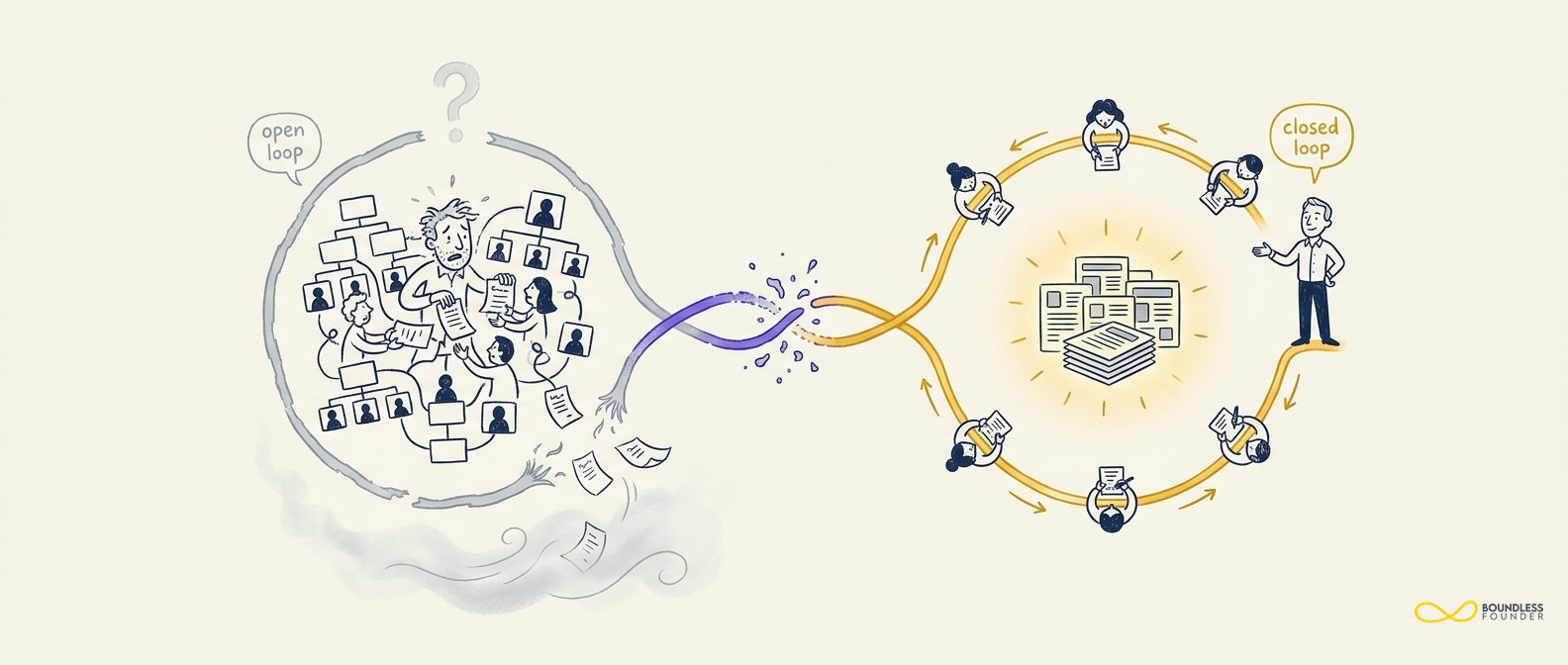
If you've ever taken a controls class, the difference between a conventional startup and an AI-native one is exactly the difference between an open-loop system and a closed-loop one.
Comments
Nothing yet. Say the first thing.
Sign in to join the conversation.