
Editor’s note: This is the last issue for 2025. Our next issue publishes on Thursday, January 8, 2026. That gives us time to tune and get our AI-instruments ready for the new year. Happy holidays; here’s to a 2026 filled with song.
For a couple of years now, I’ve been running an experiment—generating music with AI assistance and creating a band called Soul Harbor to serve as its public face. At the time, it felt like a quiet, personal endeavor.
Now, as AI-generated and AI-assisted artists begin climbing charts and drawing serious attention, the experiment feels less private and more like a case study, not just in music, but in ethics as well.

Long before AI entered the picture, music had already done its shaping work in my life. More than thirty years ago, I spent a season deeply immersed in songwriting, much of it rooted in contemporary Christian music.
I was serving as a church music minister, and many of the songs came out of quiet moments—devotion, reflection, prayer. They were never written for an audience or a platform. They were written because they needed to be written.
And then, like so many creative works, they were filed away.
Over time, those lyrics sat in a folder, aging alongside me. I felt a growing desire to give them a voice, not for recognition, but for legacy. The problem wasn’t a lack of willingness; it was practicality.
I could sit at the piano and record them myself, but that would limit the sound quality and style variations. I could try to fund a studio project, but the cost made that unrealistic for more than a song or two. The barrier wasn’t creativity. It was access.
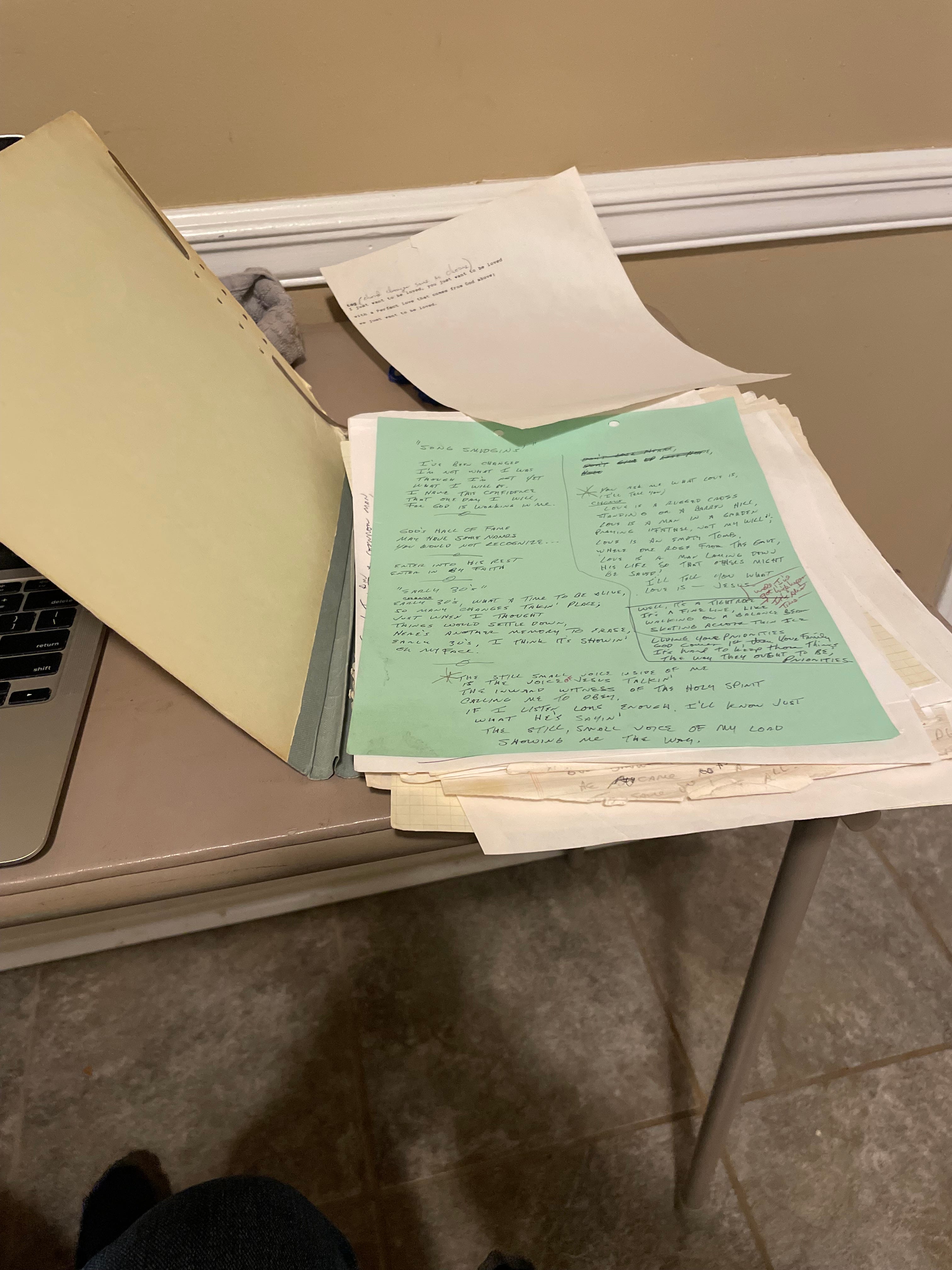
Solving my dilemma occurred by coincidence (not that I really believe in “coincidence”).
I was on LinkedIn and came across a post that talked about an AI music platform called Suno.
When I first encountered Suno, it felt less like a technological breakthrough and more like a musical door opening. For a modest monthly cost, I could take words written decades earlier and hear them come alive with musicality, texture, and emotional resonance.
Over time, as I learned how to guide the tool—how to shape prompts, adjust tone, and refine style—the music began to sound increasingly aligned with my original intent.
Soon after discovering Suno, I launched Soul Harbor. At the time, I described it as an actual group consisting of real individuals. As I learned more about AI ethics, I felt that approach was disingenuous—listeners deserved transparency—so I revised the description thusly:
Soul Harbor is an AI-assisted music experiment created by songwriter and musician Paul Chaney, blending human storytelling with next-generation creative tools. A lifelong musician with decades of performing, writing, and studio experience, Paul brings a deep well of southern, folk, rock, gospel, and Americana influences to every track.
Soul Harbor isn’t a traditional band—it’s a creative bridge between human emotion and emerging technology, where Paul writes the lyrics and shapes the artistic direction while AI helps bring the sound to life. The result is a catalog of songs rooted in honesty, melody, and lived experience, enhanced by innovative production approaches.
At its core, Soul Harbor is Paul’s way of exploring new musical frontiers without losing the heart that shaped him: years spent playing in churches, local venues, and studios; a lifelong love of storytelling; and a commitment to crafting songs that resonate deeply with listeners. It’s music grounded in soul, built with new tools, but inspired by timeless emotions.
Soul Harbor’s music crosses genres, including worship, rock, soul, country, folk, and pop. All the songs on their eponymous inaugural project were written by Paul Chaney using lyrics filed away for years and are now given a chance for expression by the young group using fresh, up-to-date styles.
Paul chose Soul Harbor’s name to convey the message that a relationship with Jesus is a safe harbor for the soul—a place where one can find rest and peace.
More recently, I changed it to this:
Soul Harbor is the worship project of songwriter and producer Paul Chaney, blending heartfelt storytelling with modern, AI-assisted creativity. After decades of writing and performing music, Paul launched Soul Harbor to explore faith, hope, and honesty through songs that feel lived-in, real, and spiritually grounded.
Every track begins with prayer, melody, and meaning—then Paul uses today’s most innovative creative tools to bring those ideas to life. The result: worship music rooted in the Gospel, shaped by human experience, and expanded through technology.
Soul Harbor is part of the Gumtree Collective Worship family, a growing community of artists exploring what it means to create sacred music in a new era.
Music with a heartbeat. Worship with a modern edge. Creativity rooted in faith.
“New technologies often appear to threaten authenticity before redefining it.”
— Brian Eno
That brings us to the question: Is AI-assisted music creation ethical? But let’s not limit it to music—is any form of AI-assisted work ethical?
One of the most compelling arguments in favor of AI-assisted music is not efficiency, novelty, or scale—it’s restoration.
In my case, AI didn’t replace musicians or automate a commercial pipeline. It enabled expression that otherwise would not have happened at all. Songs that were effectively dormant were given voice. Creativity that had been constrained by age, logistics, and cost found a way forward.
From an ethical standpoint, this aligns with what philosopher Martha Nussbaum calls capability expansion—technology enabling people to do what they value but could not otherwise accomplish.
In that sense, AI acted less like a replacement and more like a prosthetic—an assistive technology expanding creative capability. This mirrors what we see in responsible workplace AI adoption, where tools are most ethical when they help people do meaningful work they could not otherwise sustain.
But empowerment is only part of the ethical picture.
As Soul Harbor evolved, I realized that how the project was described mattered just as much as how the music sounded.
Although the music was deeply personal and human in origin, AI clearly assisted in its production.
That shift reflects one of the central ethical fault lines in AI-assisted creativity: disclosure.
Audiences deserve to understand how art is made, especially when emotional authenticity is part of its appeal. Misrepresentation erodes trust, even when intentions are good. In revising Soul Harbor’s identity, I wasn’t rejecting AI; I was putting it in its proper place—as a collaborator, not a masquerade.
This is where the ethical case becomes more complicated.
AI music systems are trained on vast datasets, and many of those datasets likely include copyrighted works. The industry has not yet resolved questions around consent, compensation, and creative lineage. Even if an individual artist uses AI responsibly, they are still operating within an ecosystem that may not yet be ethically settled.
There’s also the issue of scale.
AI dramatically increases the volume of music that can be produced, which risks flooding an already crowded landscape.
When supply grows faster than attention, the value of individual works—and individual artists—can diminish. This concern echoes broader workplace anxieties, where AI increases productivity without necessarily increasing meaning, security, or reward.
And yet, the presence of risk does not automatically negate ethical use. What ultimately matters is intent, agency, and honesty.
In Soul Harbor’s case, the human role remains central.
The lyrics come from lived experience.
The creative direction is intentional.
The final choices—what to release, what to discard, how to frame the work—are human decisions.
AI does not originate meaning; it helps express it.
That distinction parallels the difference between AI that replaces judgment and AI that supports it. In music, as in work, the ethical line is crossed when tools erase authorship, obscure responsibility, or prioritize scale over substance.
Soul Harbor exists in the tension between old songs and new tools, between faith-rooted storytelling and modern production. It doesn’t claim to be a traditional band, nor does it present itself as a technological spectacle. It exists simply to give voice to something that mattered long before AI made it easier to be heard.
Which brings us back to the larger question, one that applies far beyond music.
AI forces us to confront not just what we can create, but how we choose to create it. The tools may be new, but the ethical questions are ancient: truth, stewardship, dignity, and trust.
In the end, the measure of AI-assisted creativity—at work or in art—is not how convincing the output is, but how faithfully it reflects the human values behind it.
And that, perhaps, is the safest harbor of all.
What do you think? Is AI-assisted music ethical? Share your thoughts.
Soul Harbor is now part of a larger initiative called “Gumtree Collective.” Click here to listen. Gumtree also has a growing catalog of mainstream songs (mostly country).
Thanks for reading AI Music Revolution! This post is public, so feel free to share it.
Comments
Nothing yet. Say the first thing.
Sign in to join the conversation.