
Two AI-generated music artists have recently achieved unprecedented chart success, signaling a new chapter in the music industry. Breaking Rust, an AI-crafted country act, and Solomon Ray, an AI gospel/soul singer, have both topped prominent music charts and garnered massive streaming numbers.
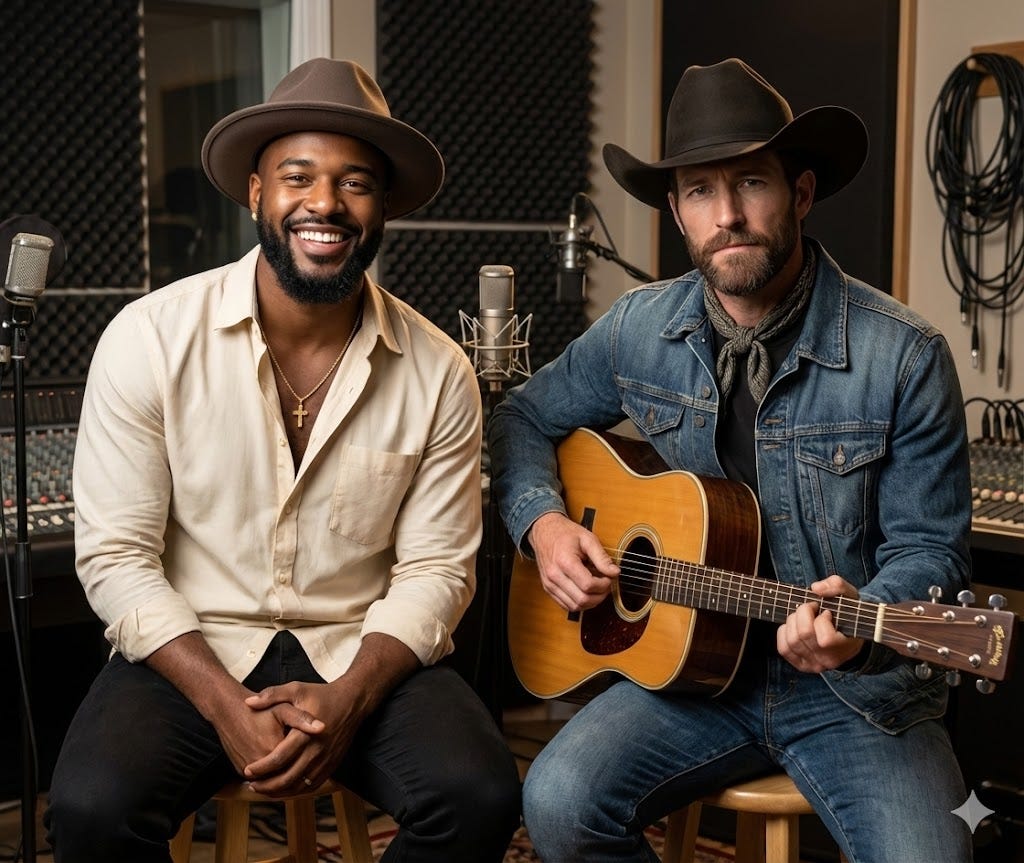
The song “Walk My Walk” by Breaking Rust made history by hitting No. 1 on Billboard’s Country Digital Song Sales chart, amassing over 3 million Spotify streams in under a month.
Listeners have widely embraced the gritty, outlaw-country track, which features a raspy vocal and “raw” lyrics, with the AI act boasting 2.3 million monthly listeners on Spotify and its EP climbing into iTunes’ all-genre top 10.
Breaking Rust is not a real person at all, but a persona created entirely via AI by developer Aubierre Rivaldo.
In the Christian music arena, Solomon Ray — billed as “Mississippi soul” — became the top artist on iTunes’ Christian & Gospel chart virtually overnight.
In fact, Solomon Ray is the first AI artist ever to score a No. 1 song and album on any iTunes chart, recently holding the top two song slots and the No. 1 album in the iTunes Christian category.
The project, created by Mississippi musician Christopher “Topher” Townsend, also notched the No. 1 and No. 5 spots on Billboard’s Gospel Digital Song Sales chart.
According to Solomon Ray’s Spotify profile, the AI crooner carries a “Southern soul revival into the present,” drawing hundreds of thousands of listeners each month. Yet, like Breaking Rust, Solomon Ray is not a real person. His voice, persona, performance style, and lyrics are entirely AI-crafted.
Next week, I’ll share my story of what led me to use AI-assistance in music production to write songs like “Empty Arms” and “You Are the Answer.”
These milestones underscore how AI-generated music is no longer a tech novelty or niche experiment. Entirely virtual “artists” are now competing with human musicians on popular charts and streaming platforms.
Breaking Rust’s outlaw country image and Solomon Ray’s soulful gospel sound have resonated with fans to the point of chart dominance, even if many listeners didn’t initially realize these artists are digital creations.
As one report noted, it’s “unclear if [listeners are] all aware the track was composed by a computer.” In short, AI has broken into the musical mainstream, raising excitement and new questions in equal measure.
The success of these two AI artists has provoked mixed reactions from fans and industry insiders.
On social media, there’s been a frenzy of discussion. For instance, TikTok exploded with hundreds of videos responding to Breaking Rust’s hit. Some listeners enjoy the songs, while others express disbelief or concern upon learning these artists “aren’t real.” Music enthusiasts have begun to worry whether their new favorite song or singer is “actually real” or an algorithm.
Meanwhile, artists and experts are voicing both curiosity and caution. Many in the country community admit “Walk My Walk” is a catchy, well-produced tune, yet feel uneasy about its synthetic origins.
“Ultimately, this feels like an experiment to see just how far something like this can go,” observed one entertainment reporter, noting that at least six AI acts have appeared on Billboard charts in recent months. The novelty is undeniable, but so is a sense of entering unknown territory.
In the Christian/gospel scene, the response has been even more pointed. Forrest Frank, a popular Christian singer, publicly pushed back after Solomon Ray’s gospel EP hit No. 1.
“At minimum, AI does not have the Holy Spirit inside of it,” Frank said in a video, “So I think it’s really weird to be opening up your spirit to something that has no spirit.”
His comments reflect a belief that authentic worship music requires a human soul behind it, an element that an algorithm cannot possess. Other fans agreed, some pledging to stop listening once they realized a song was AI-made.
The creators behind these AI artists have been quick to defend their work. Topher (Christopher Townsend), the human mastermind of Solomon Ray, argues that AI is just a new instrument in the artist’s toolkit.
“This is an extension of my creativity, so therefore to me it’s art,” Townsend responded, calling Frank’s stance “gatekeeping.”
He contends that while an AI may be performing the vocals, a real person’s inspiration and songwriting are still behind it, and “God can use any vehicle to reach people, even AI.”
Similarly, Telisha “Nikki” Jones, who created the AI R&B singer Xania Monét, told CBS News that she writes all the lyrics and uses an AI voice model as a tool.
“I look at [AI] as a tool, as an instrument... utilize it!” she said, rejecting the idea that she took a “shortcut” to success.
Not all fellow artists are convinced.
Established R&B singers like Victoria Monét, Kehlani, and SZA have voiced backlash at the rise of AI-generated performers encroaching on their genre.
They and others worry that talented human musicians who have spent years honing their craft could be undercut by AI “characters” that require none of the training or living expenses of real performers.
As one commentator bluntly noted…
“AI artists won’t require things that a real human artist will require, and once companies start ... looking at bottom lines, I think that’s when artists should rightly be concerned about it.”
In other words, if record labels see a chance to save money by deploying virtual singers instead of humans, they might, and that prospect has artists sounding the alarm.
Thanks for reading AI Music Revolution! This post is public, so feel free to share it.
The advent of AI-assisted music raises profound ethical and practical questions for artists and the music industry at large. Chief among these is the issue of authenticity: Music has always traded on genuine human emotion and connection.
When an algorithm croons a soulful ballad or a honky-tonk anthem, can it truly replicate the “heart” behind the art? Many argue it cannot.
There’s an inherent “soul” in music born of lived human experience, something an AI, by definition, lacks. This concern is especially acute in genres like gospel, where spiritual authenticity is paramount. The worry is that listeners might be “hoodwinked” by polished AI songs that sound heartfelt, but have no living singer’s story or faith behind them.
Another critical issue is transparency. Right now, nothing in a Spotify or Apple Music listing is required to tell a consumer, “This artist is AI-generated.” Both Breaking Rust and Solomon Ray appear as ordinary verified artists on streaming platforms. In fact, Breaking Rust’s rough-hewn cowboy persona fooled many fans until media coverage revealed it was AI.
Without clear labeling, listeners must rely on guesswork or outside news to discern whether a human or a machine sang a hit song. This opacity can erode trust—fans may feel betrayed if they learn an artist’s backstory was a complete fiction.
Streaming companies have begun to respond: In September, Spotify announced measures such as “improved enforcement of impersonation violations,” new spam filters, and AI disclosure tags in music credits.
Similarly, Meta (Facebook/Instagram) has moved to mandate labeling of AI-generated content on its platforms. Still, these policies are nascent, and AI music largely remains an uncharted, unregulated space.
From the perspective of artists and industry professionals, there’s also the ethical quandary of creative labor and ownership. If an AI-generated song becomes a hit, who gets the credit and rewards?
In these cases, the human behind the AI (Taylor for Breaking Rust, Townsend for Solomon Ray) claims authorship and royalties. But questions loom about AI models trained on countless real musicians’ styles. Do the original artists whose influences are mimicked deserve a cut? The industry lacks clear guidelines on such matters, and that uncertainty contributes to artists’ unease.
Underlying all of this is a parallel to what’s happening in workplaces everywhere: “AI technostress.”
Just as employees in various sectors feel overwhelmed and anxious about AI automating jobs, musicians are now grappling with the stress of AI invading their creative space.
The AI Technostress Institute, which helps companies adopt AI ethically, notes that rapid AI adoption can leave people “overwhelmed, burned out, and underprepared,” and urges a balance between innovation and human wellbeing.
The music industry faces a similar balancing act. If AI can pump out songs in seconds, will the value of music—and the human musicians—be diminished in a race for quantity and efficiency?
Author Todd Korpi cautions that hyper-accelerating content creation with AI could “continue the trend of disconnection and preference for the convenience of disembodied interaction,” ultimately feeding a mindless consumption cycle at the expense of meaningful human creation.
The relational, collaborative aspect of making music—bands jamming in a garage, songwriters pouring their life experiences into lyrics—could be lost if music becomes a solo endeavor between a person and a program.
In short, the rise of AI-generated hits forces the music world to ask: What do we value in music, and how do we preserve it? Is it the sound and product alone, or the human stories, skills, and communities that create that sound?
As one industry observer put it, this is “twilight-zone stuff”—a scenario that seemed like science fiction just a few years ago, now very real and pressing. The critical issue is not whether AI belongs in music at all (it’s here to stay), but how to integrate AI in a way that augments human artistry rather than undermining it.
To address these challenges, the music industry—from record labels and streaming platforms to artist communities and regulators—should take proactive steps.
Here are some actionable measures to ensure AI evolves as a positive force in music without sacrificing human creativity or welfare:
Implement clear labels or disclosures for AI-generated songs and virtual artists on all platforms. Listeners have a right to know when an AI performs a track. Streaming services are beginning to move in this direction (e.g., Spotify’s plan for “AI disclosures” in credits), but it should become an industry standard. Transparency builds trust and lets consumers make informed choices.
Music companies should treat AI as a collaborative tool for artists, not a replacement for them. In the words of Google’s CEO, “The future of AI is not about replacing humans, it’s about augmenting human capabilities.”
This means using AI to empower songwriters, producers, and performers, for example, to generate ideas or assist in production, rather than using it to sideline human talent entirely. An AI voice can simulate a singer, but it shouldn’t erase the opportunity for an actual singer to record a song.
The industry should convene experts (including musicians, technologists, and ethicists) to develop guidelines for AI in music.
This might address issues such as the fair use of artists’ vocal likenesses and composition styles in AI training data, the crediting of AI song creators, and the respect for intellectual property.
At the same time, invest in education and training for artists on AI tools. By learning to co-create with AI, artists can alleviate fears and gain control over the technology, rather than feeling threatened by it.
Just as companies address AI technostress in the workplace with training and wellness initiatives, the music industry should support artists as they adapt to AI – offering resources on everything from legal rights to mental health as they navigate this change.
Double down on what makes human artists unique. Live concerts, authentic storytelling, emotional vocals, and the artist-fan connection are experiences that AI cannot fully replicate.
The industry should continue to nurture real talent and not just chase AI trends. This could include A&R efforts to find and develop new human artists, and marketing that emphasizes the human stories behind music. By highlighting the irreplaceable human element—the “soul” and lived experience in music—the industry can ensure that AI creations don’t push aside genuine artistry.
It’s crucial to measure the impact of AI adoption on artists’ livelihoods and wellbeing.
Industry organizations (like labels, unions, chart authorities) should collect feedback and data: Are independent musicians losing opportunities because AI tracks flood playlists? Are songwriters seeing their work copied by algorithms without credit?
Use these insights to adjust strategies. Notably, include artists in the conversation—perhaps through panels or working groups—when crafting AI policies. By giving creators a voice in how AI is deployed, the industry can create solutions that uplift both innovation and the human creators at the heart of music.
By taking steps like these, the music industry can navigate the AI revolution responsibly and sustainably. The goal should be to harness AI’s strengths—its ability to generate, mimic, and scale—while never losing sight of the human spark that drives musical innovation.
The rise of Breaking Rust, Solomon Ray, and other AI hit-makers is a wake-up call. It’s a chance for the industry to proactively shape an ethical framework for AI in music before habits solidify. If done thoughtfully, AI could indeed become a powerful ally to musicians—a source of inspiration and assistance—rather than a threat to their existence.
In the end, the “AI music revolution” should strive for a future where algorithms and artists work in harmony, creating new possibilities without compromising the creativity, integrity, and wellbeing of the people who make music meaningful.
What’s your take? Does AI's entry into the music industry pose a dilemma? What do you think is the solution? Leave a comment.
Comments
Nothing yet. Say the first thing.
Sign in to join the conversation.