
Every year, on the day I cover cancer in my dental school immunology course, I bring in a representative from the National Marrow Donor Program (nmdp). We talk about blood cancers (leukemia, lymphoma, myeloma) and about the one thing that can turn a diagnosis into a future: a matching donor.
It’s become a tradition, and every year, something similar happens. Out of the eighty dental students in the room, about twenty-five walk out having registered as potential marrow donors. The whole ask includes a cheek swab, a quick survey and contact information. That’s it.
Thanks for reading Science Crosstalk: where science and communication collide! Subscribe for free to receive new posts and support my work.
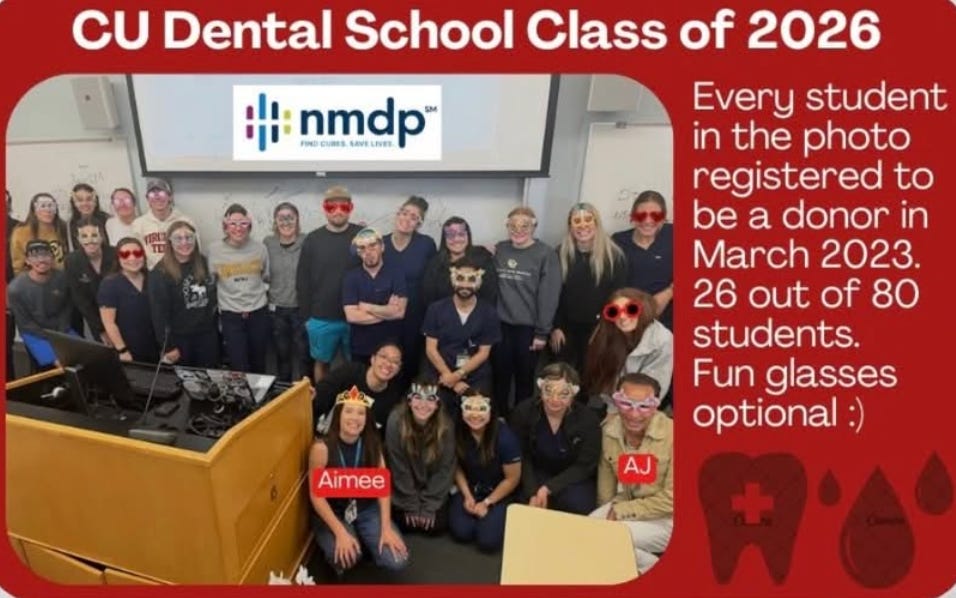
^ ^ ^ To read the full instagram story go to @funsizeimmuninja August 10, 2026 ^ ^ ^
Most of those students who register as donors will never get “the call.” The odds of any one person being a match for another is a long shot. But there’s a chance and for the patient on the other end of that call, it can be the only thing standing between them and a second chance at life.
Blood cancer doesn’t wait for a convenient time
Here’s the part that’s easy to forget when you’re swabbing your cheek in a lecture hall: the call doesn’t come on your schedule. It comes on the patients. It might come during finals or in the middle of starting a new job. It could come mid-move to a new city, mid-wedding-planning, or a month before graduation. There’s no good time for someone else’s cancer to become your emergency but that’s exactly the deal you sign up for when you join the registry. Not a guarantee you’ll be needed, just a promise that if you are, you’ll show up.
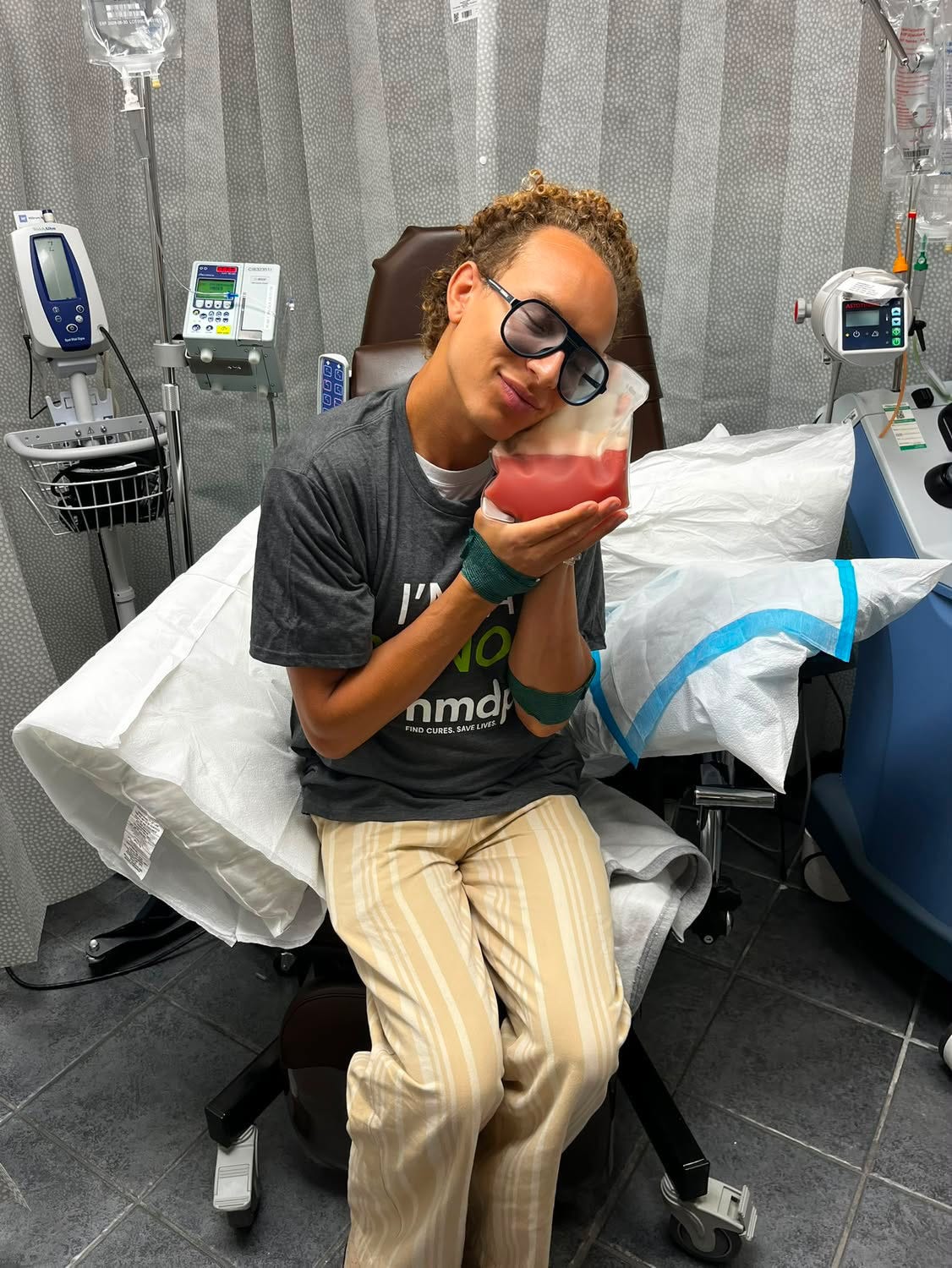
That’s what happened to one of my former students. AJ registered in my classroom 3 years ago, back when he was still a first-year dental student worrying about coursework, upcoming boards, and clinical rotations. Years later - exactly one month before graduating from dental school - he got the call and said “YES!”
Why this particular kind of generosity is so rare — and so needed
Matching for bone marrow and stem cell donation is far more specific than matching for a blood transfusion. It depends on human leukocyte antigen (HLA) typing, which are highly polymorphic (many forms) and inherited, which means patients are most likely to match with someone who shares their ethnic and genetic background. Patients from mixed-race backgrounds, and from Black, Hispanic, Asian, and Native American communities, often have the hardest time finding a match, simply because those groups are underrepresented on the registry.
That’s part of why NMDP keeps showing up in classrooms like mine. Every registrant, regardless of background, adds to the pool of possible matches. Some registrants will be the only match a particular patient ever finds. That’s where AJ came in. During one of the most chaotic times of his life, he cleared his calendar and flew across the country to donate a life-saving sample. I can honestly say I consider AJ to be a hero!
What joining the nmdp registry actually involves
A cheek swab, done in a few minutes, either at an in-person drive (like my classroom) or a kit mailed to your home
Updating your contact information so NMDP can reach you if you’re ever identified as a match
Saying yes (or no — it’s always your choice) if that call ever comes
If you are matched, donation itself is usually done one of two ways: through a blood draw called PBSC (peripheral blood stem cell) donation, which is non-surgical and kind of like a lengthy blood draw, or, less commonly now, through a marrow donation from the back of the pelvic bone, done under anesthesia. Neither costs the donor anything financially as NMDP covers travel and expenses. Most donors are back to normal activities within a few days to a couple of weeks.
The registry costs you nothing. For the person waiting on a match, it can mean everything.
The ask
I’ll keep bringing NMDP reps into my classroom every year, and I’ll keep watching a quarter of the room walk out registered. But the registry needs more than dental students in Colorado.
If you’re between 18 and 40 (the age range NMDP prioritizes, since younger donors tend to produce better outcomes for patients), healthy, and willing, you can request a swab kit at nmdp.org. It takes less time than reading this article did.
You may never get the call. But if you do, you’ll be exactly the person someone else in need has been waiting for.
Learn more or join the registry at nmdp.org
Thanks for reading Science Crosstalk: where science and communication collide! Subscribe for free to receive new posts and support my work.
Comments
Nothing yet. Say the first thing.
Sign in to join the conversation.