
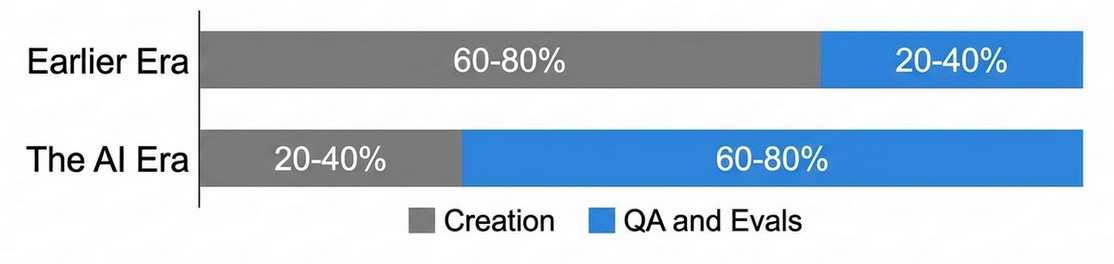
As we start using AI agents to do our work for us, more and more of our effort shifts towards (or, more accurately, should shift towards) verifying whether the AI produced the correct output or got a wrong but convincing answer by hallucinating some step in the process.
In such cases, the verification itself can become quite a task, and some people complain that the verification can end up taking more time and effort than doing the thing by yourself in the first place.
You can simplify the job of verification by designing the AI task and output in such a way that, instead of just showing the final result, it shows all the sources.
Hamel Husain has a great article explaining this technique and how it can help.
Here’s an example. Imagine an AI Data Agent which can answer questions like these:
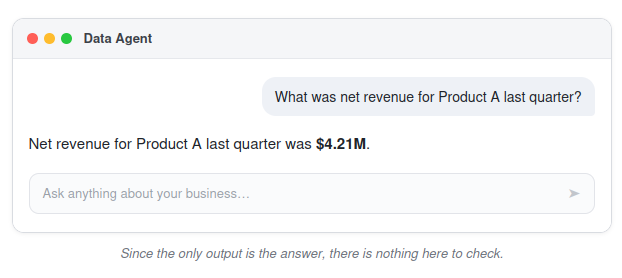
To check whether this answer is correct, the user would have to re-do the same calculation manually. Not helpful. Here’s a much better output:
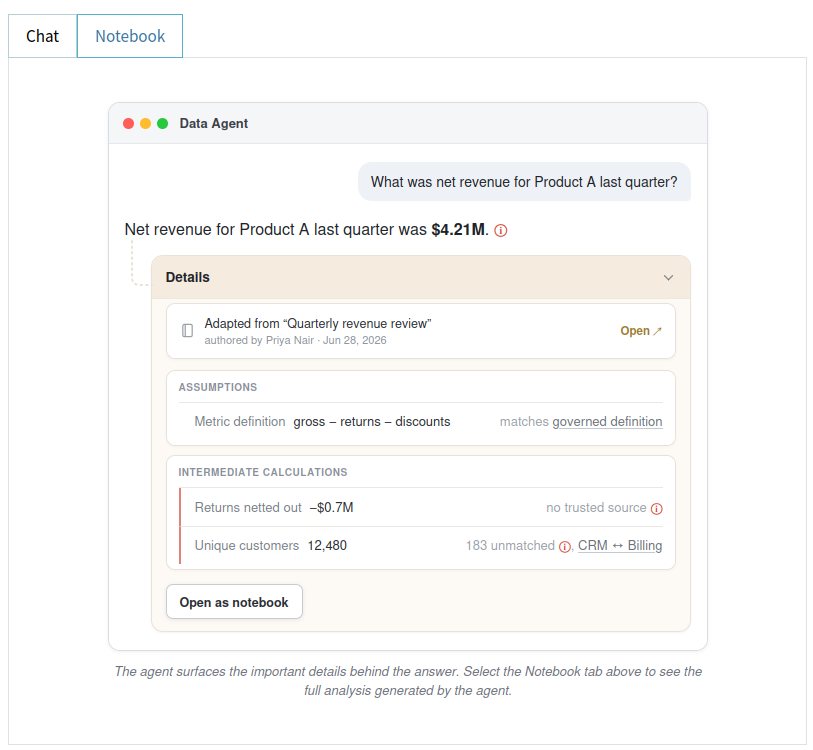
In this case, the earlier concise output is in the “Chat” tab, but there is a more detailed “Notebook” tab which gives the sources of data, the methodology used, and the intermediate results. If the user is a subject matter expert, they would find it much easier to spot problems in this case, or at least have a higher level of confidence in the answer.
Here’s another example, of a session planner for a school PE instructor:
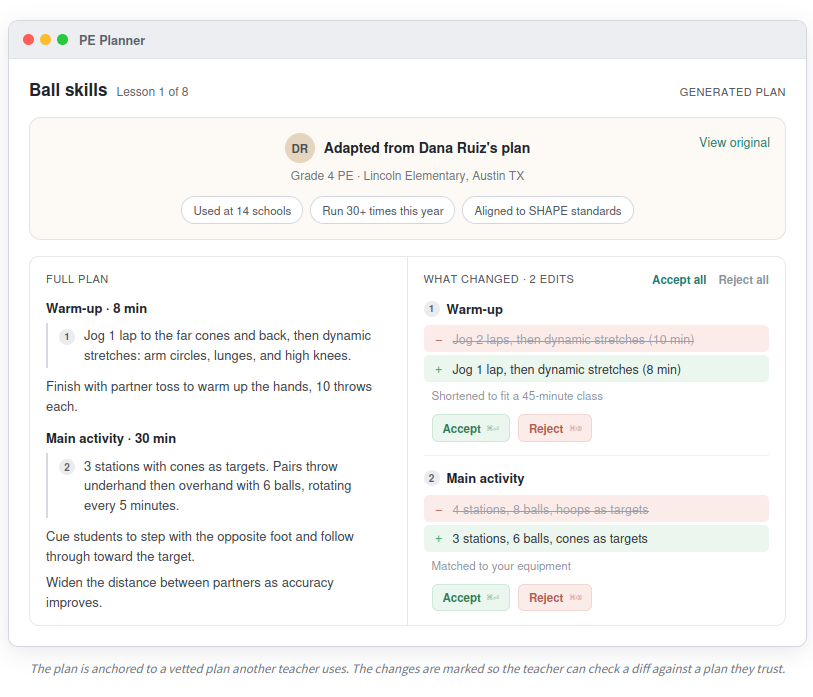
Instead of just giving a plan, this output shows what the plan was based on and how this plan was tweaked and why. So if the teacher already knows Dana Ruiz, they’ll have much higher confidence in this plan, and will also know which parts to look at more carefully.
Read the whole post, because it has a lot more detail. But here’s the key idea:
Below are questions that can guide your product’s design for verification:
What does the user actually need to check?
What trusted thing can they compare it against?
Are there signals or heuristics that experts use to aid in verification?
What smaller units can they accept, edit, or reject?
A common thread across these examples is provenance. The fastest way to make an output checkable is to show where each part came from, with links to see more detail. Additionally, you can use progressive disclosure so these sources don’t overwhelm the user.
No posts
Comments
Nothing yet. Say the first thing.
Sign in to join the conversation.