
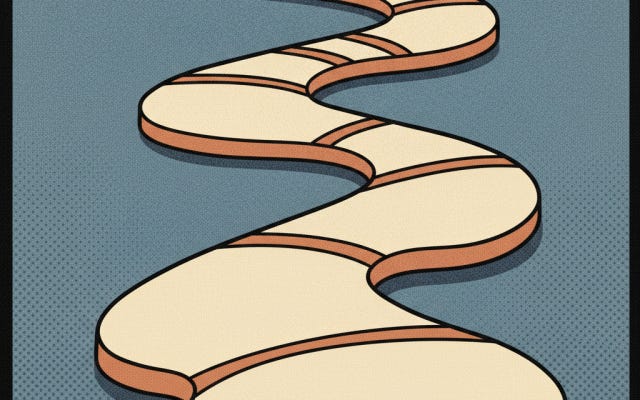
Claude Design serves as a rapid prototyping tool that transforms ideas into interactive prototypes quickly. The piece advocates moving beyond isolated UI screens to designing complete user flows, showing how the tool can support end-to-end journey design rather than just individual interface mockups.
Why it matters: Prototyping tools that stop at single screens miss the connective tissue of real product experiences. Understanding how to push AI tools toward complete flows helps designers evaluate whether these tools genuinely accelerate their work or merely produce disconnected artifacts.
UX Planet · Medium · Read more
Revisiting the 1999 film The Matrix on its 25th anniversary, this piece argues that beneath the action and philosophy, the movie captured enduring truths about artificial intelligence. Drawing on a decade of building AI products, the author identifies five ideas about how autonomous systems behave, what they optimize for, and their effect on people.
Why it matters: Framing AI through a cultural touchstone offers designers a memorable lens for thinking about system incentives, optimization, and human impact. The reflection encourages practitioners to consider the broader consequences of autonomous systems they build, not just their features, connecting abstract AI behavior to real product decisions.
AI for UX Substack · Substack · Read more
Anthropic’s announcement that Claude models will embed an invisible statistical watermark in generated text is explained for product designers. The piece outlines what the watermarking means, how it functions, and the implications it carries for teams building products that rely on AI-generated content.
Why it matters: Content provenance and AI detection are becoming practical concerns for products that generate or accept AI text. Knowing how watermarking works helps designers think through transparency, disclosure, and trust considerations that increasingly shape user-facing AI features.
UX Planet · Medium · Read more
A practitioner shares hands-on experience using the Figma AI Agent as a primary workflow tool, noting it handles roughly 60% of design-system connection tasks and supports custom skills that audit for missing components. The post invites others to compare it against Claude Design and discuss post-Config 2026 features.
Why it matters: Real practitioner accounts reveal what AI design agents actually deliver versus marketing claims. The candid 60% figure and design-system integration notes offer a grounded benchmark for teams weighing whether to adopt Figma’s agent in daily UX work.
newest submissions : UXDesign · Web · Read more
Drawing on experience designing Privileged Access Management products, the author argues that AI in UX discourse ignores what happens when AI mediation layers gain access to systems that can cause real damage. The shift from direct manipulation to intent-based mediation introduces two actors and new design challenges.
Why it matters: Most AI-UX conversation centers on generative interfaces, but this raises a neglected question: designing safe interactions when AI intermediaries hold consequential power. Practitioners working on high-stakes systems will find a framework for handling trust, verification, and accountability in agent-mediated workflows.
Stories by Tina Singh · Medium · Read more
Applying design critique to AI-generated interfaces is proposed as a method for improving output quality. Positioning critique as an integral step in the design process, the piece adapts this traditional practice to systematically evaluate and refine UI produced by tools like Claude Design.
Why it matters: AI can generate interfaces fast, but quality still depends on human judgment. Treating critique as a deliberate step gives designers a repeatable way to elevate AI output rather than accepting first drafts, preserving craft standards in an accelerated workflow.
UX Planet · Medium · Read more
A “local first, system later” model is proposed to relieve design system bottlenecks. Rather than requiring custodians to fix every component, designers build locally while design system teams govern what eventually enters the shared system, balancing consistency with speed and reducing the gatekeeper dynamic.
Why it matters: Design systems frequently stall teams when custodians must approve every change. This governance rethink offers a workflow that keeps velocity high while protecting system quality, a tension every design-system-dependent organization navigates.
Design Systems Collective · Medium · Read more

AI can interpret component visuals but not component intent, and a destructive button can look identical to a primary CTA. The piece argues that design systems must encode semantic meaning so AI tools understand purpose and behavior, not just appearance, when working with components.
Why it matters: As AI increasingly assembles interfaces from design systems, semantic gaps produce dangerous mistakes. Documenting component intent becomes essential infrastructure, positioning design system teams to make their libraries genuinely machine-readable and safe for AI-assisted assembly.
Design Systems Collective · Medium · Read more
Claude Design Animations is highlighted as an underrated AI motion tool, with the author sharing 10 videos created in two days including marketing campaigns, product launches, animated infographics, and visual explanations. Despite no motion graphics background, they produced polished animated content rapidly within Claude’s environment.
Why it matters: Motion design has been slower to feel AI’s impact than static work. This walkthrough signals that animation is now accessible to non-specialists, expanding what individual designers can produce and prompting questions about motion craft when the barrier to entry drops sharply.
AI blew my mind · Substack · Read more
A practitioner reflects on integrating AI across the UX/UI workflow, from research and user flows to wireframes, UX copy, and shipping code. The core argument is that AI acts as an assistant that speeds up exploration, freeing designers to focus on problem-solving and judgment, while human designers retain responsibility for whether an experience truly serves users.
Why it matters: Reframing the tired “will AI replace designers?” question into “how does AI free up thinking time?” offers a healthier mental model for adoption. The reminder that AI cannot judge whether an experience is right underscores where designers should concentrate their irreplaceable value amid automation.
Muzli - Design Inspiration · Medium · Read more
From Tokens to Agents: The Rise of Design Systems That Think
Stories by Tina Singh · Medium · 08/06/26
Designing AI agents to resist prompt injection
OpenAI News · Web · 03/11/26
How to run a local LLM on your Mac: a step by step guide for designers, Claude prompt included
Into Design Systems + AI · Substack · 08/12/26
Agentic Design Systems - Part 2
Human AI Studio · Substack · 07/21/26
Moving Beyond UX: The Rise of the Agentic Experience (AX) Designer
Web Designer Depot · Web · 06/23/26
Comments
Nothing yet. Say the first thing.
Sign in to join the conversation.