
In The Briefing this week:
👀 What caught our eye: Gartner’s new spend data undercuts the “AI means fewer staff” story
💭 Thought for the week: AI can buy a small team time - but only people can do what the sector is actually for
⭐ Interesting News and Funding Calls
🌐 From Across the Network
This newsletter is supported by Whitelabel.ai - helping nonprofits cut through AI noise with practical tools built for mission-driven teams.
From the network: Hunger Free Colorado is going live with Whitelabel, using its operational AI layer to manage distribution and SNAP access across an ecosystem of 1500 smaller food banks. Case study coming soon to network readers or find out more at whitelabel.ai
1) 👀 What Caught Our Eye: the more AI-mature an organization is, the less likely it is to be cutting people
The story we’re always told is that AI is a substitution play: same output, fewer staff. New spend data points the other way - the organizations furthest along with AI are spending more on it and pointing it at growth, not headcount.
Gartner’s 2026 CMO Spend Survey, fielded January to March among 401 marketing leaders across North America, the UK and Europe, found that organizations with mature AI capabilities allocate 21.3% of their budget to AI, against a survey average of 15.3% - and they direct a far larger share of spend toward innovation rather than efficiency or cost control: 34.2% versus 27.2% for the average org. In other words, the further along you are, the more you’re using AI to do new things, not to do the same things cheaper.
The same survey found labor’s share of budget rising - from 21.9% in 2025 to 24.5% in 2026 - and named a shortage of skilled people, not a shortage of technology, as the single most-cited barrier to getting value from AI. Maturity and investing in people are moving together, not in opposite directions.
One caveat: this is a survey of corporate marketing departments, most at companies above $1bn in revenue. It is not a study of nonprofits, and the budgets bear no resemblance to ours. But the pattern is revealing - the orgs that get good at this reach for more ambition, not fewer staff.
Why it matters for nonprofits. If there is ever a sector with more to do than hands to do it, it’s ours. A maturity curve that leads to “what could we finally take on?” rather than “who can we let go?” is the version of AI adoption worth fighting for - and now there’s data underneath it.
What to do this week. Pull up your own AI spend, however small, and ask which column it’s in: efficiency or innovation. If everything you’re doing with AI is about trimming cost, you’re running the immature playbook. Name one thing your mission can’t currently reach, and point a small experiment at that instead.
2) 💭 Thought for the Week: AI can buy the time - but only people can do what the sector is actually for
This week, three foundation presidents - of McKnight, Freedom Together, and MacArthur - wrote about what a year of funding “everyday acts of courage” taught them. The scenes are worth thinking about: a Minneapolis pastor organizing thousands of volunteers to bring groceries to immigrants too afraid to leave home; an Oregon wildfire survivor running weekly Peace Meals; Buddhist monks finishing a 2,300-mile walk for peace. Their Courage Project made small, flexible grants — $10,000 to $50,000, $2.5 million across all 50 states - not to institutions but to neighbors. Their conclusion: the most effective civic leadership is coming from ordinary people doing slow, relational, deeply human work.
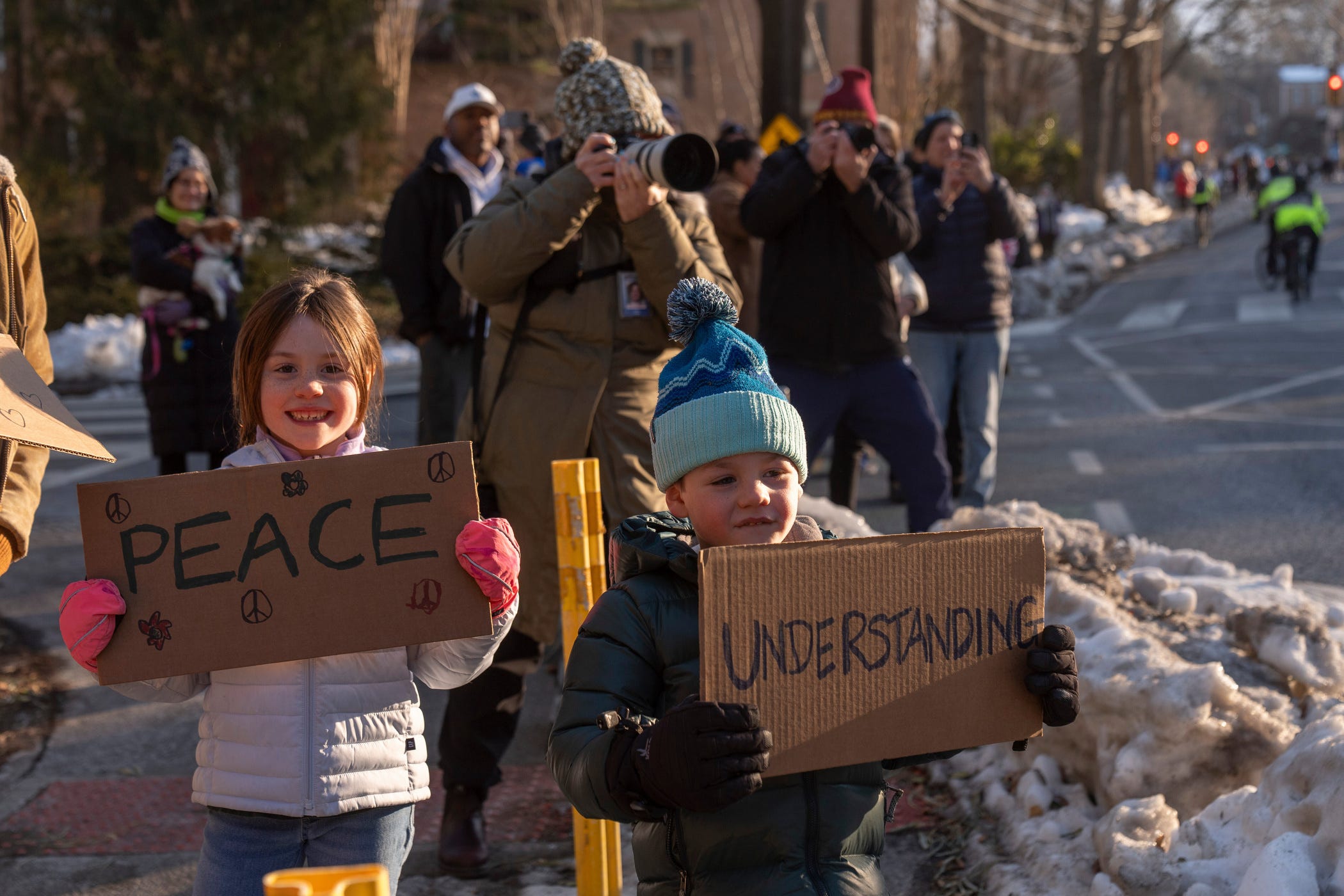
It is worth reading that in the same week this newsletter spends a section urging you to get good at AI, because the two stories pull in opposite directions. AI is sold as scale: more reach, more output, more people processed per hour. The Courage Project is about the opposite - proximity, presence, showing up. And the thing it names as the engine of civic repair, trust, is precisely what does not scale and cannot be automated.
With institutional trust at historic lows - just 22% of Americans say they trust the federal government to do the right thing - the rarest asset in this sector is the relationship between a person in need and a person they believe. That asset is built in hours that look, on an efficiency dashboard, like waste: the home visit that didn’t strictly need to happen, the volunteer who stayed late to listen. AI is very good at finding and eliminating exactly that kind of “waste.” Point it at the wrong target and you optimize the soul out of the work - an organization that processes more people and reaches fewer.
This is the risk of an AI-mature sector I don’t hear discussed enough: not that the tools fail, but that they succeed at the wrong things. Funders reward what’s measurable and scalable; AI makes the measurable cheaper to chase. The relational, hard-to-count work is the first thing a pure scale logic defunds, because it photographs badly in an impact report. The Courage Project stands out precisely because it funds the invisible.
The counterargument isn’t empty: relational reach can be extended by good technology - a well-built tool helps a tiny team answer more people, faster, after hours, in their own language.
The Thing that caught our eye this week was data that said mature organizations use AI to do more, not to cut; this reading tells us what the “more” should be. Let AI take the grant report, the donor spreadsheet, the duplicate data entry - drudgery that was never anyone’s reason for joining this sector - so the humans are freed to do the proximate, un-scalable work that rebuilds trust. Use the machine to protect the relationship, not replace it.
Lessons for nonprofit leaders:
Sort every AI use case into two piles: “frees a human for relationship” or “replaces a human relationship.” Lean into the first; move slowly on the second.
Protect the unmeasurable. Before AI optimizes a workflow, ask what relational value the “inefficient” version was quietly producing.
Watch the funder incentive. If your reporting rewards only what scales, you’ll quietly defund your own proximity. Name that risk to your board.
Spend the reclaimed hour on people, not throughput. The time AI buys back is the point — what you do with it is the mission.
3) ⭐ Interesting News and Funding Calls
OpenAI Foundation — 2026 People-First AI Fund closes July 15 at 11:59 PM PT — now under two weeks out. $50M in unrestricted grants for US 501(c)(3) standalones with $500K–$10M budgets, priority on the $1–8M band. If you’re a fit and haven’t started, this is the week - let us know, we can help!
Free forum — “Work Smarter: How Nonprofits Are Innovating with AI,” Tuesday, July 21, 2 p.m. EDT. A one-hour online session with nonprofit and foundation staff on the front lines of AI adoption — how they vet tools, weigh environmental costs, and keep the work human-centered. Covers grant-winning, donor-data management, workload, and even AI avatars as fundraisers. Useful whether you’re just exploring or already experimenting; all registrants get the recording and transcript. Register free.
4) 🌐 From Across the Network
Have an event, case study, gathering or interesting insight you would like to share with the network? Drop us a note by replying to this email.
We’re a network of non-profit leaders interested in how AI is impacting our sector and driving mission. You’re receiving this email because you expressed an interest in the network. If you think this was a mistake, you can unsubscribe using the link below.
Thanks for reading! Subscribe for free to receive new posts and support my work.
Comments
Nothing yet. Say the first thing.
Sign in to join the conversation.