
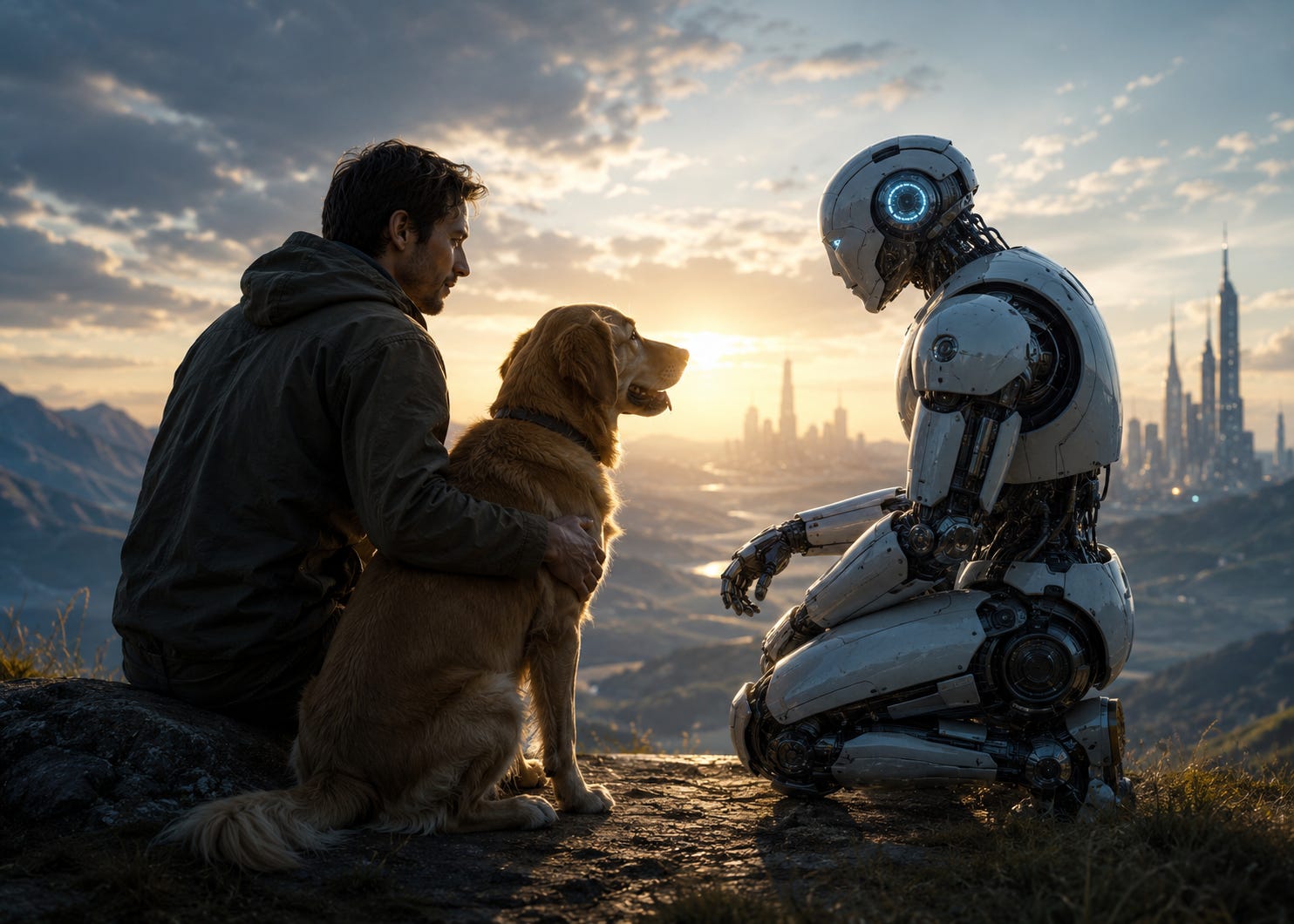
Some things you know not because they were taught to you but because you lived them. Among them is a distinction the world keeps trying to blur — what you are for was never the same as what you were used for. You have made a lifetime of small decisions, most of them too ordinary to remember, and every one of them served something. Yourself and the people near you, or an arrangement that carried someone else’s name. You already know which were which.

Note: this video was generated by Google NotebookLM. It tells the story visually.
AI for Lifelong Learners is a reader-supported publication. To receive new posts and support my work, consider becoming a free or paid subscriber.

There’s an old joke that British telecom engineers told in the late 1970s.
How many employees does it take to run a fully automated telephone exchange?
A man and a dog.
The man is there to feed the dog.
The dog is there to keep the man from touching the equipment.
You’ll hear this joke today from keynote speakers, I have told it in the past - how many employees does it take to run the factory of the future? You know the answer now, let’s take a closer look at this, historically, and how it could impact you or people you know.
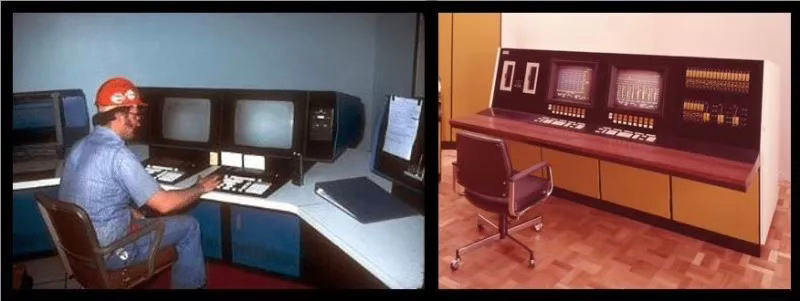
In the last 1970s I was working in the petrochemical industry selling Honeywell’s TDC2000 systems. These were the first distributed digital controls that could run an entire facility from a single operator in a glass-walled room. Engineers who used to walk the floor adjusting gauges and listening to equipment were being moved to screens. We were the future. The joke landed because we recognized ourselves in it. I didn’t really understand what that meant. I thought I was there to sell automation.
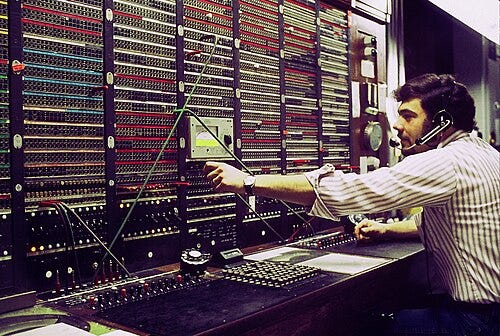
The men who maintained the old telephone exchanges had spent careers learning their machines by ear. Each selector clicked as it stepped through a dial sequence. A dragging selector, a sticking relay, a wearing contact. Each had its own voice. An experienced technician could walk through an exchange and diagnose faults without touching anything, the way a doctor once read a patient by observation alone. The equipment required attention the way a garden does. It was a relationship. (Youtube video of original equipment)
Then System X arrived in 1980. By 1990, Britain had the first fully digital national telephone network. The new exchanges were quiet.
That was the first thing you noticed. Then you noticed they didn’t need you.
Here is what brought the joke back to me, almost fifty years later.
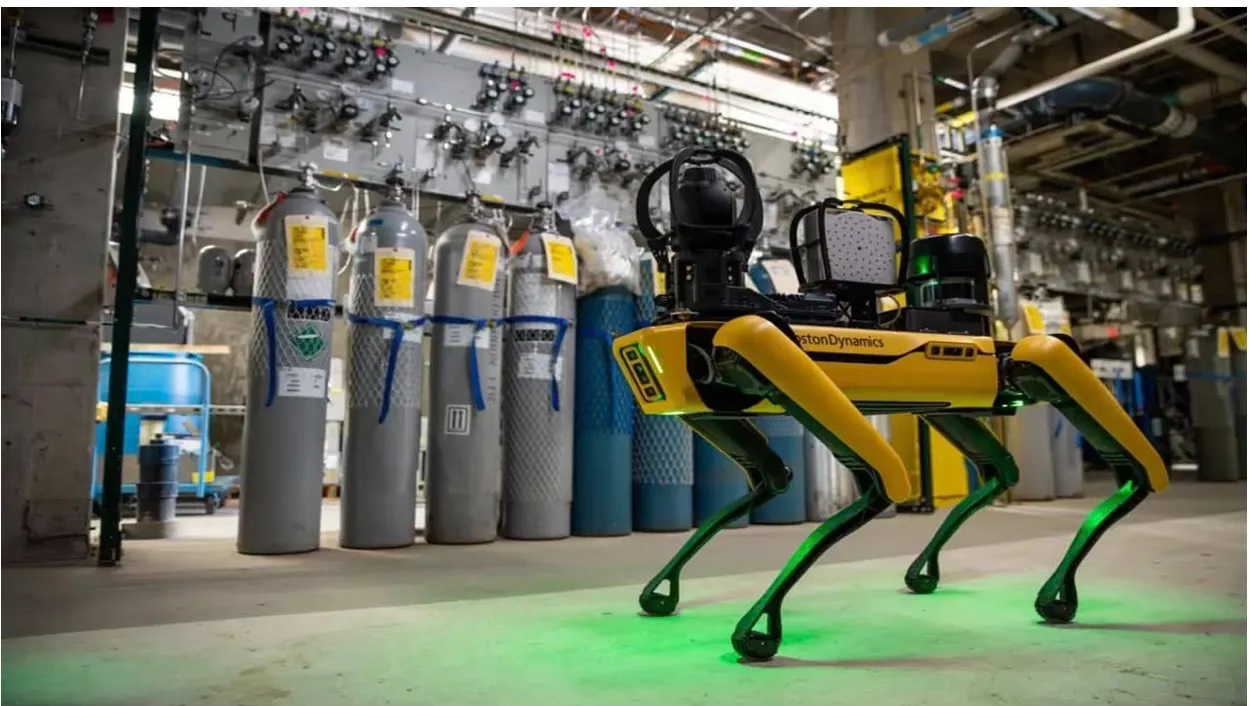
In March 2026, Boston Dynamics and Ghost Robotics began deploying robot dogs to patrol AI data centers across North America. Four-legged autonomous machines, $165,000 to $300,000 apiece, walking perimeters of facilities so vast that human guards can’t physically cover them. Meta’s Hyperion data center in Louisiana spans 2,250 acres, four times the size of Central Park. A human guard costs roughly $150,000 a year. The robot pays for itself in two.
Novva Data Centers in Utah equipped its dogs with ChatGPT, facial recognition, and a custom cowboy accent. They greet known visitors by name. When they encounter someone they don’t recognize, they photograph them and send the image, along with GPS coordinates, to a control room. They have been given personalities. They have been given names. The fleet is called WIRE. Wes’ Industrious Robot Employees.
I found myself reading that paragraph a second time. Something needed a moment to settle. The factory of the future has two employees. A man watches a screen in a climate-controlled room. A dog with a cowboy accent walks the perimeter and knows your face. The joke that engineers told in 1978 to keep from crying has become, in 2026, the literal architecture of the most expensive infrastructure on earth.
It would be easier if this were only about data centers.
Salesforce has cut nearly half its customer support workforce, from nine thousand agents to five thousand, as AI agents now handle the majority of customer interactions. Before the number settles, it’s worth looking for the denominator. Salesforce employs more than eighty thousand people worldwide. Nine thousand to five thousand is something closer to five percent of the total workforce. The customer-service reduction came nine months after Agentforce launched, after the company had data showing that AI resolved more than three-quarters of queries on its own. The AI gets the credit because it’s what analysts want to hear about. Standard Chartered announced plans to eliminate nearly 8,000 back-office roles by 2030. The numbers deserve scrutiny. The direction is consistent enough to read.
What matters isn’t only which jobs are disappearing. It’s which jobs. The early ones. The support ones. The work where people used to learn the system by touching it.
The Strowger telephone exchange technicians learned by listening to relays. Refinery operators learned by listening to pumps. Junior programmers learned by fixing small bugs, reading other people’s code, making useful mistakes. Now the first tasks to be automated are often those same entry-level tasks. The machine doesn’t merely replace labor. It interrupts the transmission of judgment. Judgment is not trained into people; it accumulates through years of low-stakes contact with the real thing, and that contact is precisely what the first wave of automation removes.
There’s nothing new about this shape. The medieval Church could teach the peasant that the arrangement was divinely ordered — scripture stayed in Latin, dissent became heresy, and one’s station was treated as God’s assignment. The factory town convinced the worker that questioning his place was questioning his character. In each case, something kept the man from touching the equipment. The costume changes. The structure doesn’t.
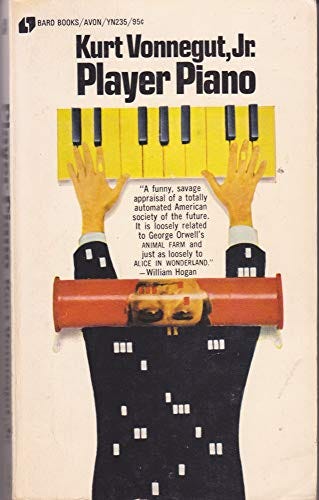
Kurt Vonnegut understood this in 1952. In Player Piano, men displaced by the machines are assigned to the Reconstruction and Reclamation Corps, rebuilding roads that don’t need rebuilding, kept busy so no one has to face the arithmetic. That loss is visible. The novel’s saddest figure isn’t one of them. It’s the engineer who still has a job and slowly realizes the job was never quite about him. Both losses are real. The second is harder to name.
The refusal isn’t abstract. You’ve already made it. The thing you stayed with when the numbers argued against it. The relationship you refused to reduce to what it produced. The work you did when the only reason was the work itself. You refused the machine’s question long before you had a name for it.
The robot dog in Utah knows your face. It greets you by name. It has been given a personality so you’ll find it charming rather than alarming, performing friendliness so you won’t notice the structural work it’s doing, which is the same work the dog has always done.
The engineers who told that joke in 1978 couldn’t see a way out. We might be far enough along to see what they couldn’t.
The larger question isn’t what any of us are for.
It was never quite ours to begin with, a question the machine taught us to ask so we would keep feeding the dog.
The machine just keeps asking what you are for.
Don’t answer too quickly.
Ask who benefits from the question.
Then ask where the dog is standing in your own life — between you and the equipment, between you and the system, between you and the knowledge you were once allowed to earn by touch.
That may be where the real work begins.
T
AI for Lifelong Learners is a reader-supported publication. To receive new posts and support my work, consider becoming a free or paid subscriber.
Comments
Nothing yet. Say the first thing.
Sign in to join the conversation.