
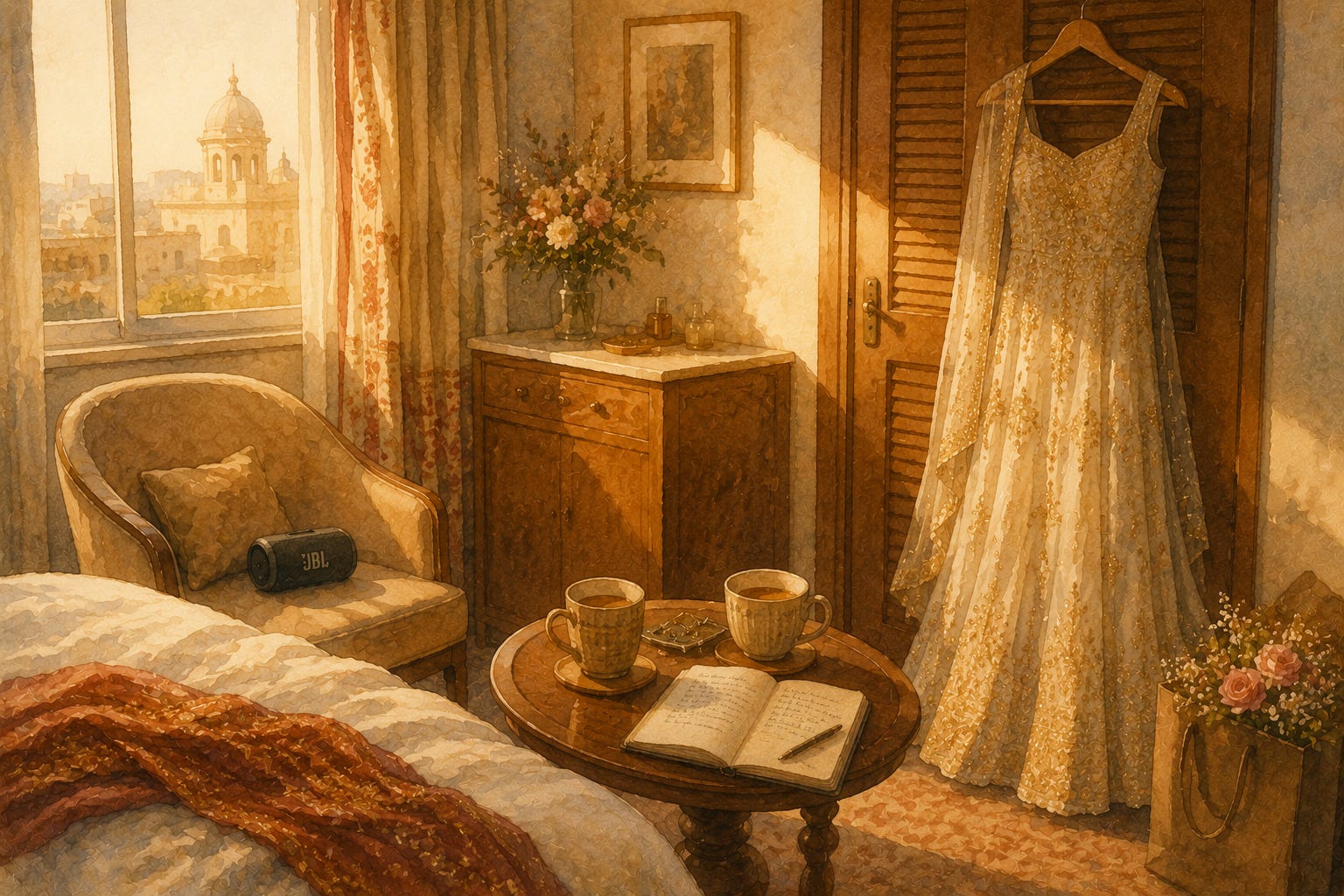
Last summer, my friend Maya called me. She was upset.
Her older sister was getting married. The wedding was in two weeks. Maya and her sister had a complicated relationship — the kind where they love each other but don’t talk about it, where they argued through their teenage years and still sometimes now, where they cover real feelings with sarcasm.
Maya wanted to give her sister something at the wedding. She didn’t want to give a speech (their family had decided no speeches — too much pressure). She didn’t want to give a card. She wanted to give something that would say I love you and I always have in a way that wouldn’t feel embarrassing for either of them in front of two hundred people.
She asked me if I could help her make a song.
We sat down on her living room floor on a Thursday night. She had a notebook. I had my laptop. We spent the first hour writing down things — the names of their three childhood dogs, the year their dad bought them matching bicycles, the song their grandmother used to sing while she made parathas, the specific phrase her sister always says when something is too embarrassing to say properly: anyway, moving on.
The AI was easy. The remembering was the hard part. Maya cried twice and laughed about six times that evening. I made the tea. She wrote.
By the end we had a song — three verses, a chorus, about three minutes long — that referenced thirty-one specific things only the two of them would understand. Anyone else listening to the song would hear a sweet song about a sister. Maya’s sister would hear a private map of their entire childhood, laid out for her.
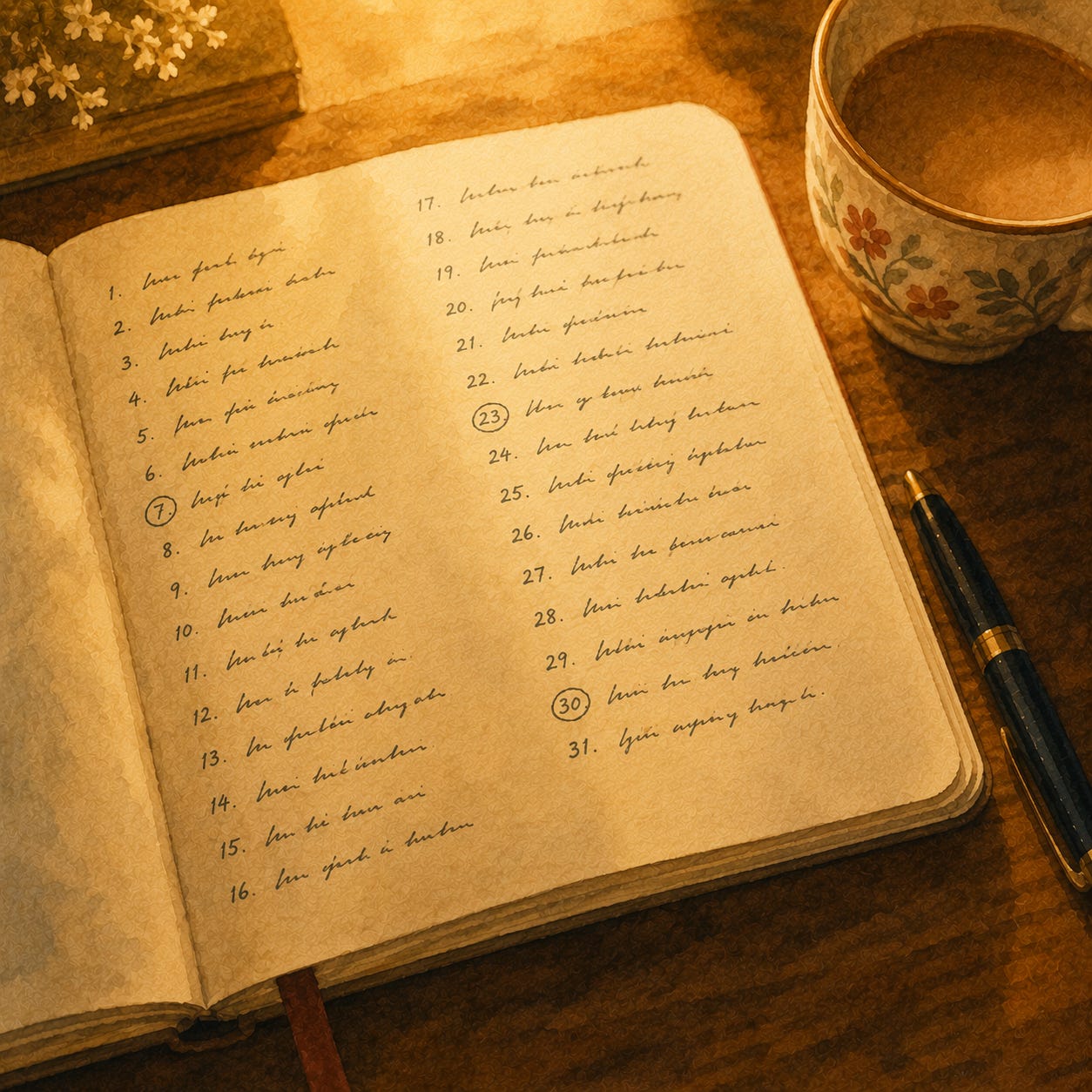
Maya was scared to play it.
She said:
What if she doesn’t get it? What if it embarrasses her? What if it’s too much?
I said: it’s going to be too much. That’s the point.
She played it at the wedding the morning of, in her sister’s hotel room, before the makeup and the photographer and the cousins arrived. Just the two of them. Her sister listened to the whole song without saying anything. When it was over, she didn’t speak for almost a minute. Then she said: anyway, moving on. And then she laughed, and Maya laughed, and they hugged for a long time, and Maya’s sister got married three hours later with red eyes.
I want to tell you what I noticed about this whole thing.
Thanks for reading AI for Fun! This post is public so feel free to share it.
What Maya gave her sister was not a song. The song was the container. What Maya gave her sister was a specific, hand-collected catalog of their childhood, organized by someone who had been paying attention the whole time. The AI helped her shape that into something that could be played at a wedding. But everything that made the song work was Maya — the thirty-one things, the order she put them in, the fact that she remembered the parathas-song, the courage to play it.
This is what I think we keep getting wrong about AI in this corner. The story is not Maya made a song with AI. The story is Maya finally said to her sister what she’d never been able to say. The AI was a tool for the second sentence, not the first.
Every wedding song, every birthday card, every bedtime story we make this way is doing this — using a tool to clear the path for the thing we’ve been trying to say. Most of us have been trying to say things to people we love for a long time, and the gap between meaning to and doing has been the place where most of those things have died.
The technology doesn’t say the thing for you. It clears the path. The thing is still yours.
If there’s someone in your life you’ve been meaning to tell something to — at a wedding, at a birthday, at a hospital bed, on a Tuesday for no reason — try this. Sit down on a Thursday night. Write the things. Use the tool to shape them. Show up with the shape.
The rest is you.
I’m really glad you’re here.
— Tapan
PS — If you’ve ever used AI to say something to someone you love that you couldn’t say any other way, write me about it. The replies are why this newsletter exists.
Comments
Nothing yet. Say the first thing.
Sign in to join the conversation.