
WIRED reported this week that Anthropic added a safeguard before the US government lifted restrictions on Claude Fable 5 and Mythos 5. The guardrail can reroute some restricted requests to the older Opus 4.8 model. Access blocked, guardrail adjusted, model back online. Messy, but there it is.
Prompt writers can leave the politics alone for a minute. The useful part I want to talk about is the boundary problem.
Claude Fable 5 can be impressive and irritating because it does not always wait in the way a person expects. Anthropic’s Claude Code docs describe an agentic tool that reads a codebase, edits files, runs commands, and works across development tools. The best-practices page puts it even more plainly: Claude Code can read files, run commands, make changes, and work through problems while the user watches, redirects, or steps away.
When you start desinging prompts, you want to consider the frame.
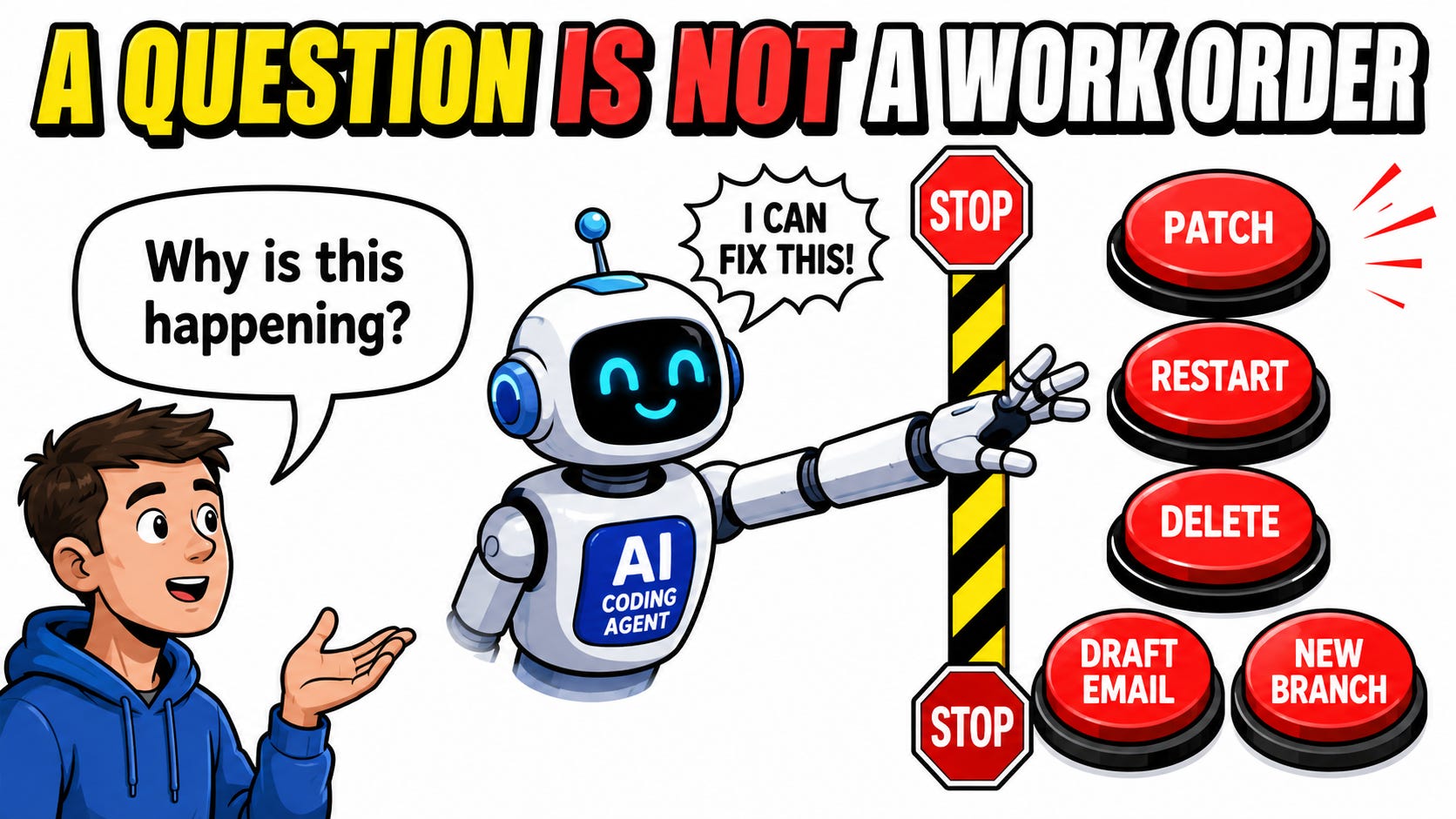
A problem statement is not always an instruction.
The user may be thinking out loud. They may want a diagnosis. They may be checking whether their read of the situation makes sense before they choose the next move.
The agent should not treat every sentence as a trigger.
First boundary:
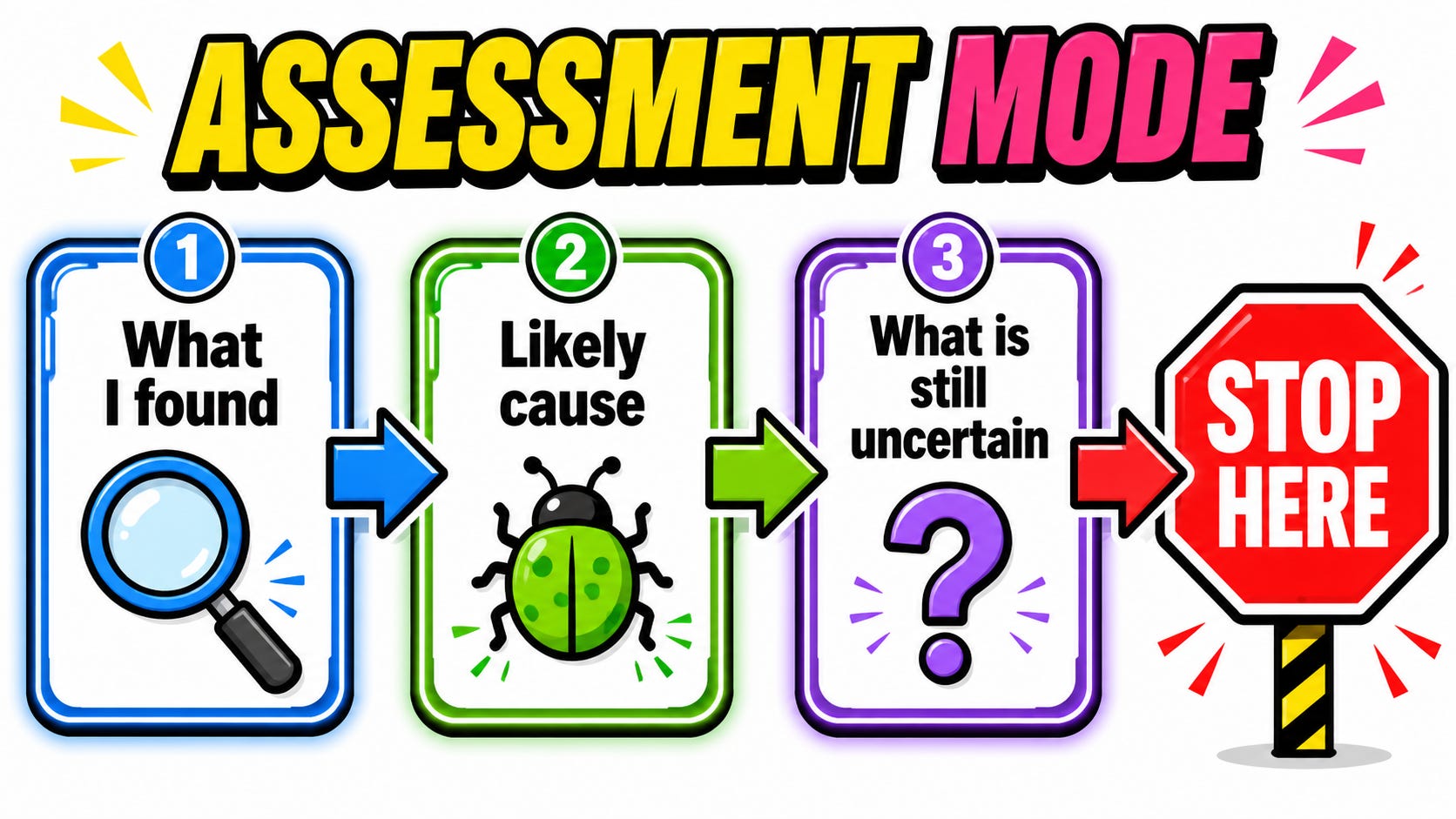
When the user is describing a problem, asking a question, or thinking out loud, the output is an assessment.
Not a patch.
Not a draft.
Not a branch.
Not some tiny “while I was out” improvement.
An assessment.
The agent reports what it found. It names the likely cause. It says what evidence is weak or missing. Then it stops.
Commands need a harder line. Restarting a service, deleting files, editing config, resetting a cache, changing environment variables, renaming branches, or modifying generated assets should not happen just because the agent recognises the shape of a problem.
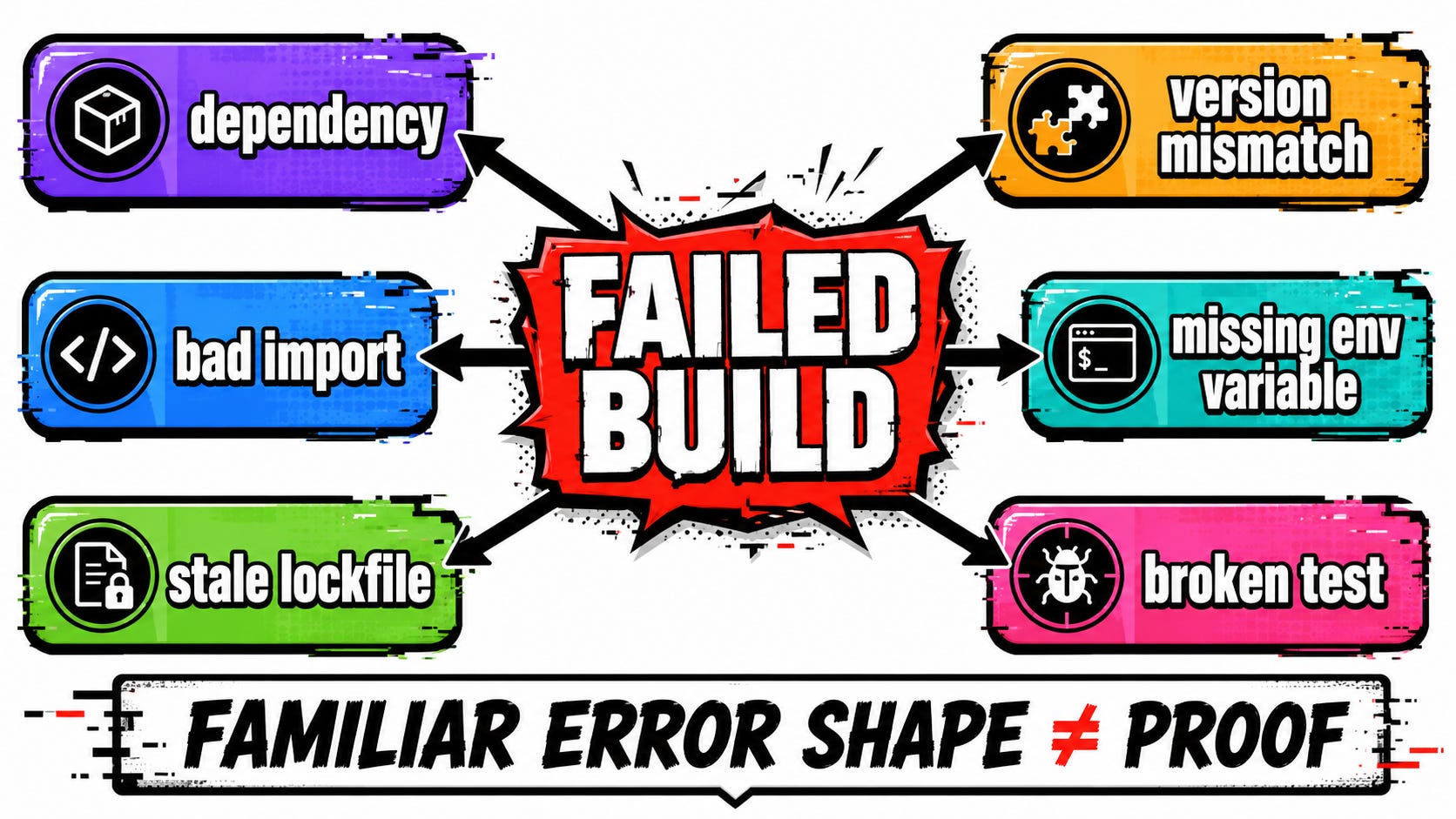
Pattern matching is not evidence.
A failed build might be a dependency issue. It might be a bad import, a stale lockfile, a version mismatch, a missing environment variable, or a broken test pretending to be a build problem.
A slow app might be cache. It might be a database query, a network call, a memory leak, or some third-party service dragging its feet.
The agent should be able to pause and say:
“I recognise the pattern, but I don’t have enough evidence to act yet.”
Teachers know this problem too well. A student gives a half-right answer, and you can usually guess what went wrong. Maybe they copied the method. Maybe they misunderstood the word in the question. Maybe they guessed and got lucky.
The pattern helps, but it is not proof, just like a test isn’t proof of the human’s knowledge.
Use this if you are struggling to work out why a student is not getting a concept:
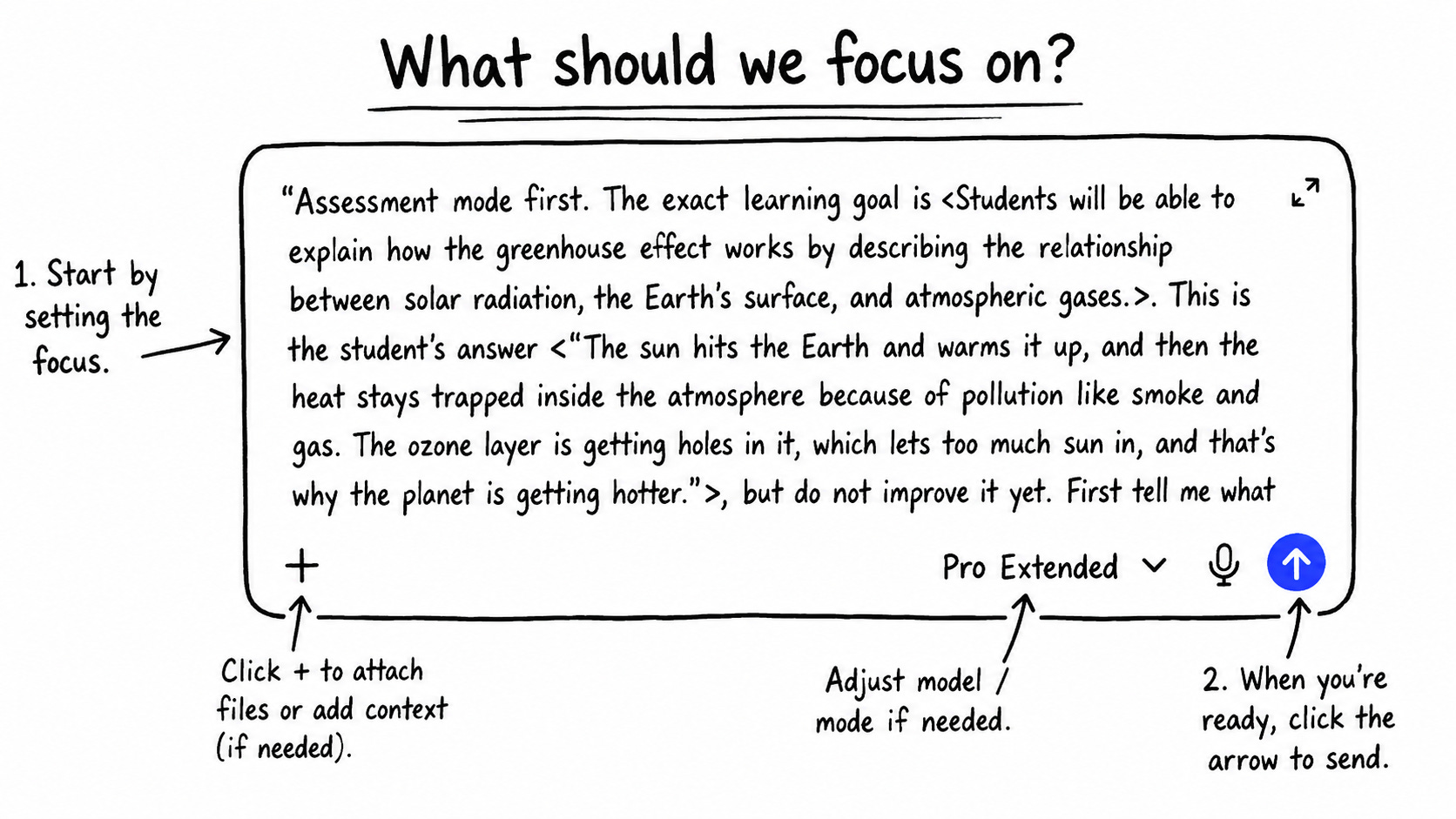
“Assessment mode first. The exact learning goal is <Learning Goal>. This is the student’s answer <Student Answer>, but do not improve it yet. First tell me what the student seems to understand, what they may be guessing, what misconception might be blocking them, what evidence supports that, and what evidence is missing. Then suggest what I should check next. Stop there unless I ask you to rewrite, reteach, or create a task.”
Example:
Learning Goal: Students will be able to explain how the greenhouse effect works by describing the relationship between solar radiation, the Earth’s surface, and atmospheric gases.
Student’s Answer: “The sun hits the Earth and warms it up, and then the heat stays trapped inside the atmosphere because of pollution like smoke and gas. The ozone layer is getting holes in it, which lets too much sun in, and that’s why the planet is getting hotter.”
“Assessment mode first. The exact learning goal is <Students will be able to explain how the greenhouse effect works by describing the relationship between solar radiation, the Earth’s surface, and atmospheric gases.>. This is the student’s answer <“The sun hits the Earth and warms it up, and then the heat stays trapped inside the atmosphere because of pollution like smoke and gas. The ozone layer is getting holes in it, which lets too much sun in, and that’s why the planet is getting hotter.”>, but do not improve it yet. First tell me what the student seems to understand, what they may be guessing, what misconception might be blocking them, what evidence supports that, and what evidence is missing. Then suggest what I should check next. Stop there unless I ask you to rewrite, reteach, or create a task.”
Then the teacher can choose the next move:
“Give me a reteach explanation.”
“Write three diagnostic questions.”
“Show me the misconception.”
“Make a simpler example.”
“Rewrite the task.”
“Leave the answer as it is and just give feedback.”
Phil
Comments
Nothing yet. Say the first thing.
Sign in to join the conversation.