
I arrived in Boston late Saturday night after a whirlwind trip to Rome. I had the chance to meet Pope Leo and to visit Castel Gandolfo (really!!). I ate some touristy Amatriciana and gelato. I sweated through all six of my fancy dresses. (More on all of that in a few days when we get the official pictures.)
Meg McDermott is the director of our Notre Dame-IBM Tech Ethics Lab. We are here in Boston this week to spend time with the AI + Data Ethics Program (AIDE), an incredible summer bootcamp developed and led by John Basl and Katie Creel each year. AIDE is an intensive nine-week program that takes doctoral students working primarily in ethics (with the occasional inclusion of CS or social science students) and gets them up to speed in understanding the technical fundamentals of AI models, how they are built, their current use cases, and – most importantly – how to collaborate on research with our colleagues in computer science and engineering. I consider them the single best training pipeline right now for early career scholars working in AI ethics.
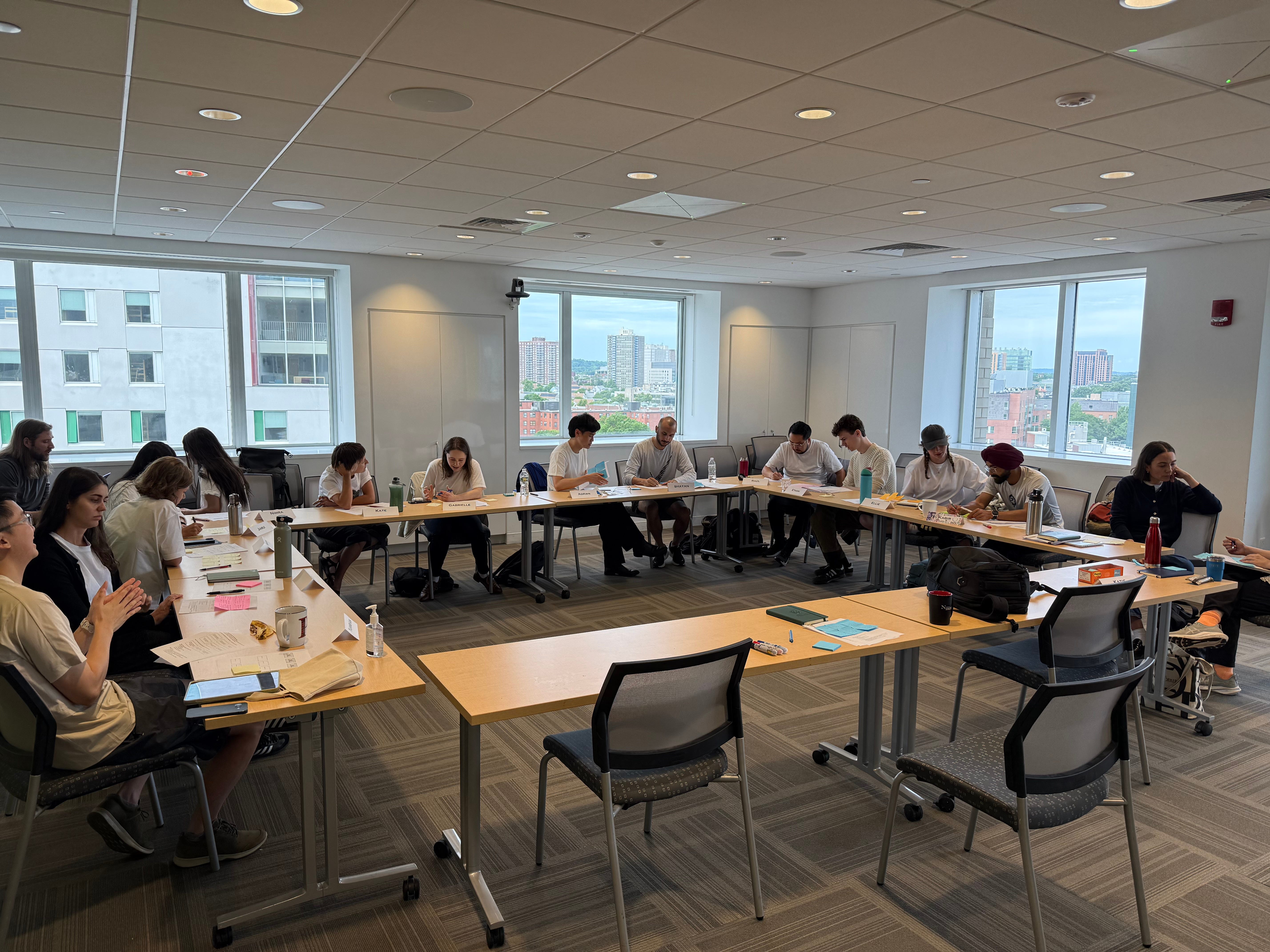
Meg and I are out here because we want to learn more about how they do it, and because the DELTA Network is making a big investment in their program over the next few years. In my role at Notre Dame, I find myself on quite a few hiring committees for faculty working on AI ethics. This is a field where there is a rapidly growing gap between the demand for researchers and the supply of well-trained scholars coming from Ph.D. programs. (I did a quick look at PhilJobs while writing this post. There are 83 open listings currently, and 11 ask for a specialty in AI. That’s 13.5%...far more than the listings for any mainstream subfields).
Between the ND-IBM Lab and the DELTA grant, we have over 40, one-year Ph.D. training fellowships in the next few years. All of them are earmarked for mid-stage doctoral students looking to devote their careers to studying issues in AI ethics. We’ve been running small pilots of these programs, but this summer the pressure is on to scale up. Here are a few of my thoughts on what we need to be doing for doctoral students right now…some of them spicier than others.
It is critically important that we build the field of AI ethics right now, and these doctoral students are the foundation. There is a contingent of society that delights in the prospect of humanities doctoral programs shutting down. I honestly do not understand this. I would not want to live in a world where students go away to college and are not challenged to think about history, philosophy, ethics, and constitutional theory. In fact, as AI makes engineering tasks cheap and simple, we’ll need more and more leaders who are adept at asking and answering the “to what end” questions. Many of the leading tech companies agree. Powerful AI is already unleashing fascinating, challenging questions about what it means to be human, about how to lead a good life, and about how to build a good society. These questions do not have obvious answers; they need research. Generations of college students will need to have their critical thinking skills and consciences formed around these issues. The US higher education system has been the envy of the world for over a century precisely because we train generations of broad-minded leaders.
That transformative college professor you had? The one who shaped your life dramatically when you were 19 years old? The one who also shaped thousands of other students over time at your alma mater? She didn’t just manifest out of thin air. She was trained for decades for her vocation. If we want universities to thrive post-AI – and we absolutely do – then we need to do the work to get these future faculty ready. And while there are no guarantees about which specific fields will grow or shrink as higher education continues its transformation, I guarantee you we will need humanists who can help people process this brave new world. (I wrote more on this in a recent piece on Comment).
AI ethics experts have to be deeply familiar with real AI use cases. I will occasionally come across Ph.D. students in the humanities who intend to go into this area but are spending all of their time hunkered down reading theory – McLuhan, Foucault, etc. Look, I’m a dead-guy philosophy stan myself, so who am I to judge? But I am also a particularist. You cannot build a good ethical theory from the top down. It has to come from close examination of the concrete issues humans are confronting. And to be a credible research expert in AI ethics right now, you have to be able to ground your work in what is actually being built.
For example, here are vignettes of two kinds of candidates for research jobs we have considered at Notre Dame in recent years.
Candidate 1: Studies concepts of coercion throughout Western philosophy and categories the ways that a non-human agent might be thought to coerce a human user.
Candidate 2: Studies how machine learning has been implemented in state-level social service programs over the past 40 years and the ways in which beneficiaries have lost access to mechanisms of redress when they think the government has violated their rights.
Candidate 2 got the job offer, because there is a much broader impact for their work *and* they managed to expand our thinking about how we attribute moral responsibility. If I had to identify the sweet spot for early career scholars right now, I would say they are insatiably curious about how AI is developing and thoughtfully critical in a way that is informed by the best work in the history of philosophy, theology, and social theory.
AI ethics researchers have to be really interdisciplinary…and they must demonstrate they are able to forge collaboration with engineers, with government groups, and with the private sector. This is going to be more controversial. But if you agree with my perspective that AI ethics has to be grounded in the use cases, then where do the ethicists find out about the use cases? It is either through their colleagues working in engineering or, more likely, from research colleagues working to build and deploy the technology. I define interdisciplinarity very broadly as the skill to work with experts in other disciplines, including disciplines outside of higher education entirely.
When I was a graduate student (back in the roaring early 2000s), we were encouraged to hunker down and focus on just learning as much philosophy as possible. There was no incentive to do anything else. Indeed, philosophy is one of those fields where often only your philosophical credentials are relevant to whether you get into a Ph.D. program or get a job in a philosophy department. I still notice humanities professors who strongly discourage their advisees from doing fellowships with institutes like mine (the Institute for Ethics and the Common Good or ECG), viewing interdisciplinary programs as a distraction. The assumption is that their graduate students should be trained exactly as they were trained 20 years ago – that the fields are not rapidly changing.
This assumption is holding your graduate students back. Don’t take my word for it – Yale released a sobering report about how their humanities doctoral programs were falling behind a few years ago, and the lack of interdisciplinary skill was a key issue they cited.
At ECG, we have benefitted tremendously from collaboration with industry and government partners. And we have discovered that the interdisciplinary skills our fellows develop are major assets as they build their research careers. These collaborations are challenging; ask anyone on our staff. They require flexibility, professionalism, intellectual curiosity, and extraordinary communication and project management skills. A strong collaborative project will take significantly more work to pull off than a strong solo project. But it will also have significantly more impact.
One of the many reasons I admire the team at Northeastern so much is that AIDE implements these lessons. It is too easy to sit around lamenting what is happening with graduate education right now. The funding cuts. The political attacks. It is another thing entirely to roll up your sleeves and work to build programs that will chart the future. We’re excited to be their partners and to fund a lot more early career humanities Ph.D. students to get these skills.
And you can find more about the Ph.D. fellowships and postdocs we offer through the ECG on our site.
No posts
Comments
Nothing yet. Say the first thing.
Sign in to join the conversation.