
Welcome to the 61st issue of AI Agents Simplified 🍻
This issue is brought to you by HubSpot

I Thought This Was A Healthcare Paper. Then I Realized It Was About AI Agents.
Every once in a while, I read a research paper that changes the way I think about artificial intelligence, not because it introduces a new model or achieves a new benchmark, but because it challenges an assumption we rarely question.
This week, that paper was about something completely outside the world of AI agents: predicting six-month mortality in heart failure patients using machine learning. At first, it looked like a typical healthcare AI paper, where researchers train models, compare techniques, and report performance numbers.
But the more I read, the more I realized the interesting part was not the model itself. It was the way the researchers defined what “better” actually meant.
And that question applies to every AI system we are building today.
The Problem With How We Measure AI
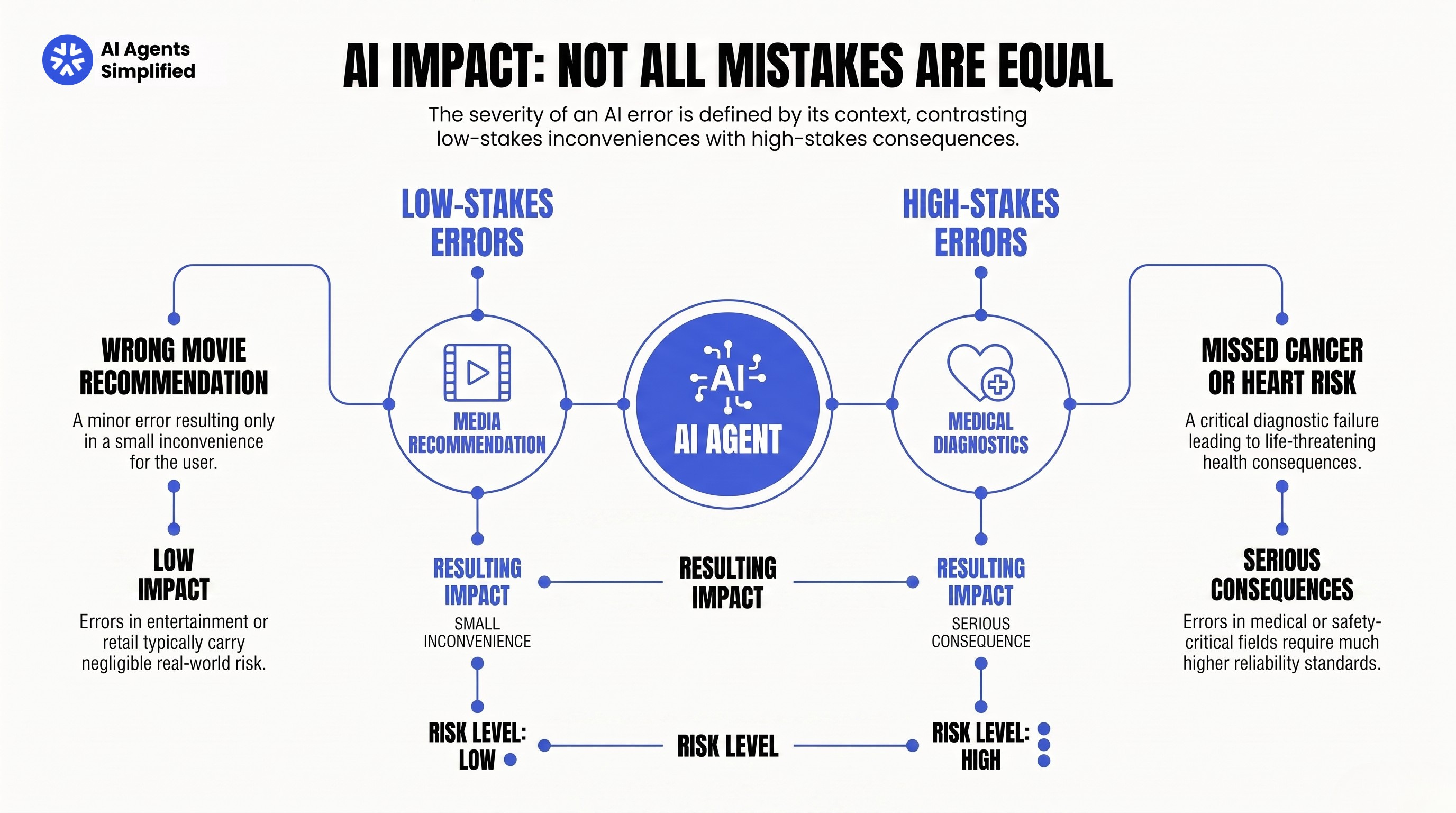
Most AI projects begin with a similar question: how do we make the model better? Usually, that means improving measurable metrics such as accuracy, benchmark performance, speed, or cost. These measurements are useful because they help teams compare different approaches, but they can also hide a more important reality: not every mistake an AI system makes has the same consequence.
A recommendation engine showing the wrong movie is a small inconvenience, while a financial AI system producing incorrect information can create real damage. A medical AI system that fails to identify a high-risk patient is different because the cost of that mistake could mean losing the opportunity for early intervention.
The challenge, therefore, is not simply building an AI system that is correct more often. The challenge is designing a system that understands the consequences of being wrong.
The Question The Researchers Asked Was Different
The researchers used the MIMIC-III critical care database to build a machine learning system that predicted six-month mortality risk for heart failure patients. They tested different feature selection techniques with an XGBoost model to understand which information helped the system make better predictions.
But the most interesting decision was not the model choice.
It was the metric they prioritized.
In this type of healthcare problem, missing a high-risk patient is much worse than incorrectly flagging someone who is actually healthy. Because of that, the researchers prioritized recall, the ability to identify as many high-risk patients as possible, even if it created more false alarms.
They were not trying to build a model that was simply accurate.
They were building a model that made the less harmful mistake.
Demystify AI for Your Business in Just 4 Steps
Overwhelmed by AI? HubSpot's free guide cuts through the noise. Get the ultimate crash course for non-technical entrepreneurs who want to harness AI's power; without getting lost in the jargon.
"AI for Business Builders" delivers:
A 4-part roadmap to AI mastery
Jargon-free explanations of large language models
Practical prompt engineering tips you can use today
Real-world examples of AI boosting businesses like yours
Arm yourself with the knowledge to make informed AI investments and skyrocket your startup's growth.
Download Your Free Guide Now 👉
Why This Matters For AI Agents
The same principle will define the next generation of AI agents.
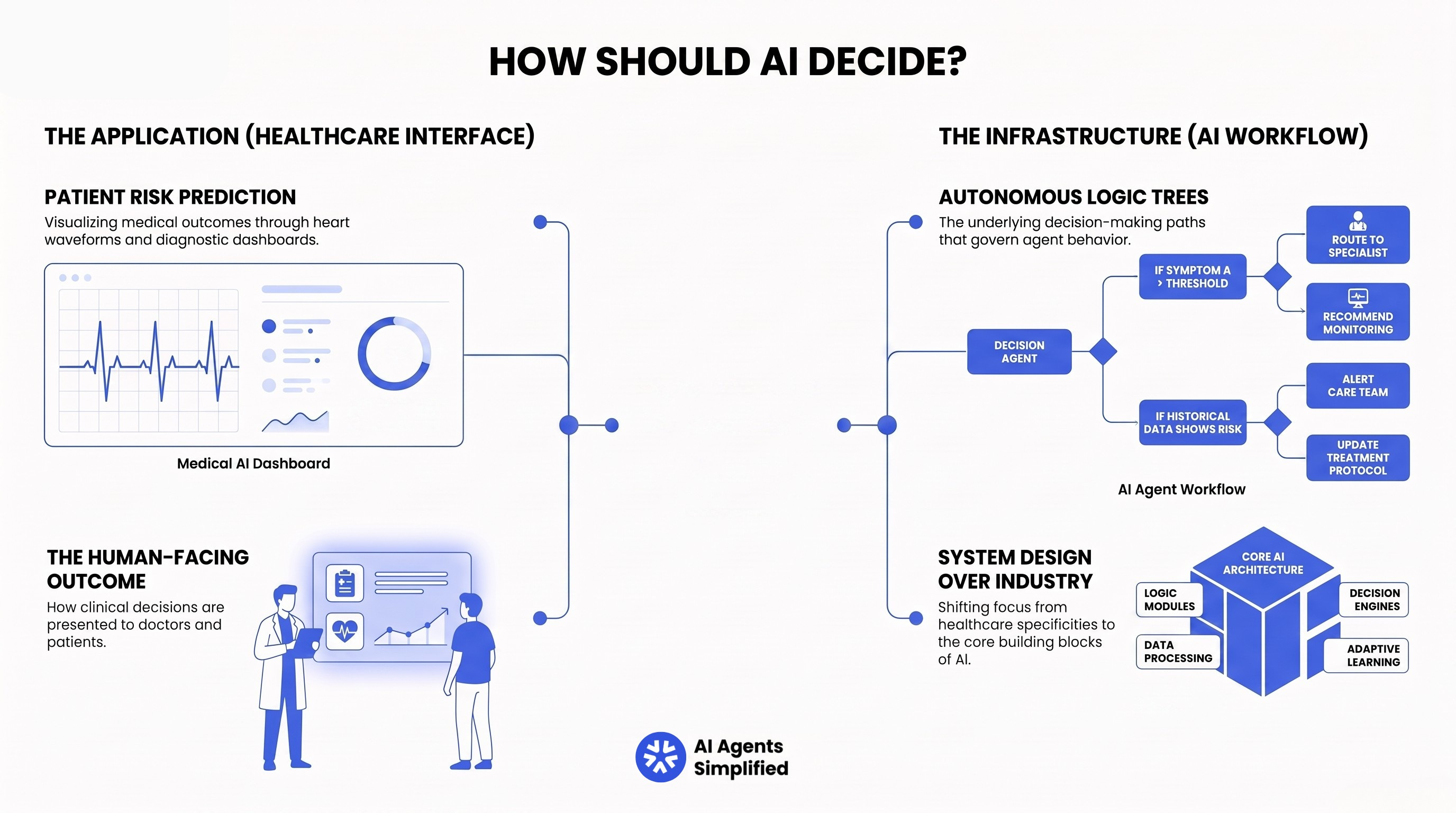
As agents become more autonomous, the important question will not only be whether a system can complete a task successfully. The more important question is whether we understand what happens when that system makes a mistake and whether we have designed the right safeguards around those failures.
A coding agent that creates a minor bug is very different from one that introduces a security vulnerability into a production system. A customer support agent that escalates too many conversations is inconvenient, but an agent that provides incorrect financial advice creates a much bigger problem because the consequences extend beyond the immediate interaction.
The goal is not to create AI systems that never fail. That is impossible. The goal is to build systems that understand which failures are acceptable, which failures are dangerous, and when additional human oversight or verification is required.
My Take
The more I learn about AI, the more I believe the future will not belong only to the systems with the highest benchmark scores or the most impressive technical demonstrations.
The strongest AI systems will be the ones that understand context, uncertainty, and consequences. They will know not only what action to take, but also when they should slow down, ask for help, or recognize that they do not have enough confidence to proceed.
This paper reminded me of a simple idea:
The goal of AI should not only be to make fewer mistakes.
The goal should be to understand which mistakes matter most.
Because intelligence is not just about producing the right answer. It is about understanding what happens when the answer is wrong.
The paper that inspired this issue:
📄 Comparative Evaluation of Feature Selection Techniques for Six-Month Mortality Prediction in Heart Failure Patients
✍️ Authors: Parsa Haghighatgoo & Somayeh Afrasiabi
🔗 Read the original research paper
👉 Google Scholar link
7 Stocks Built for the Next Market Cycle

The Magnificent Seven reshaped the market, but leadership never stays concentrated
forever. As these companies mature, new contenders begin to emerge quietly, long
before they dominate headlines.
These 7 stocks could be the next wave of market leaders: 7 companies with growing
influence, strong fundamentals, and the potential to define the market’s next phase.
The full list is available here FREE
Let’s Collaborate
Hey, I’m Arian, Product Manager and Partnership Manager at AI Agents Simplified. If you’re building AI products, working on AI agents, or interested in collaborating with our community, I’d love to connect.
Feel free to reach out through my LinkedIn or email, I’m always happy to discuss partnerships, ideas, and the future of AI.
Comments
Nothing yet. Say the first thing.
Sign in to join the conversation.