
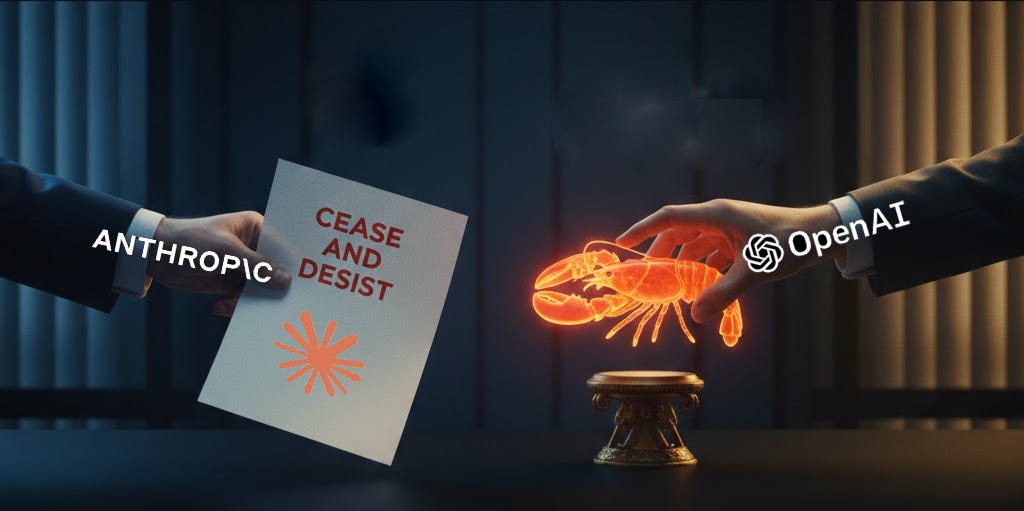
I need to say something and I’m not going to sugarcoat it. Anthropic just made the dumbest strategic move in the AI race so far. Not a close call. Not a judgment call that could have gone either way. A full, unforced error that sent their most valuable ecosystem builder directly to their biggest competitor with a bow on top.
I’m saying this as someone who runs a dozen AI agents on Claude every single day.
Morning briefings.
Overnight research bots.
Workflow automation across platforms.
Conversations that make me smarter. I love Claude. It’s spectacular.
But loving a product doesn’t mean staying quiet when the company behind it lights their own house on fire.

And that’s exactly what just happened.
Let me show you how we got here.
In November 2025, a developer named Peter Steinberger built something on a weekend. He called it “WhatsApp Relay.” Text an AI, have it actually do stuff.
Book restaurants.
Clear your inbox.
Check in for flights.
But Steinberger isn’t your typical weekend hacker.
This is a guy who built PSPDFKit, a PDF toolkit used by Apple, Dropbox, and SAP. He bootstrapped it for 13 years, then cashed out when Insight Partners invested $116 million in 2021. Nearly a billion people use apps powered by his code.
After burning out post-exit, he started tinkering with AI agents. He was a Claude fanatic. Built everything on Claude’s API.
Loved it so much he named his project Clawdbot. A lobster mascot. A playful nod to the model powering it. By default, it ran on Claude Opus 4.5.
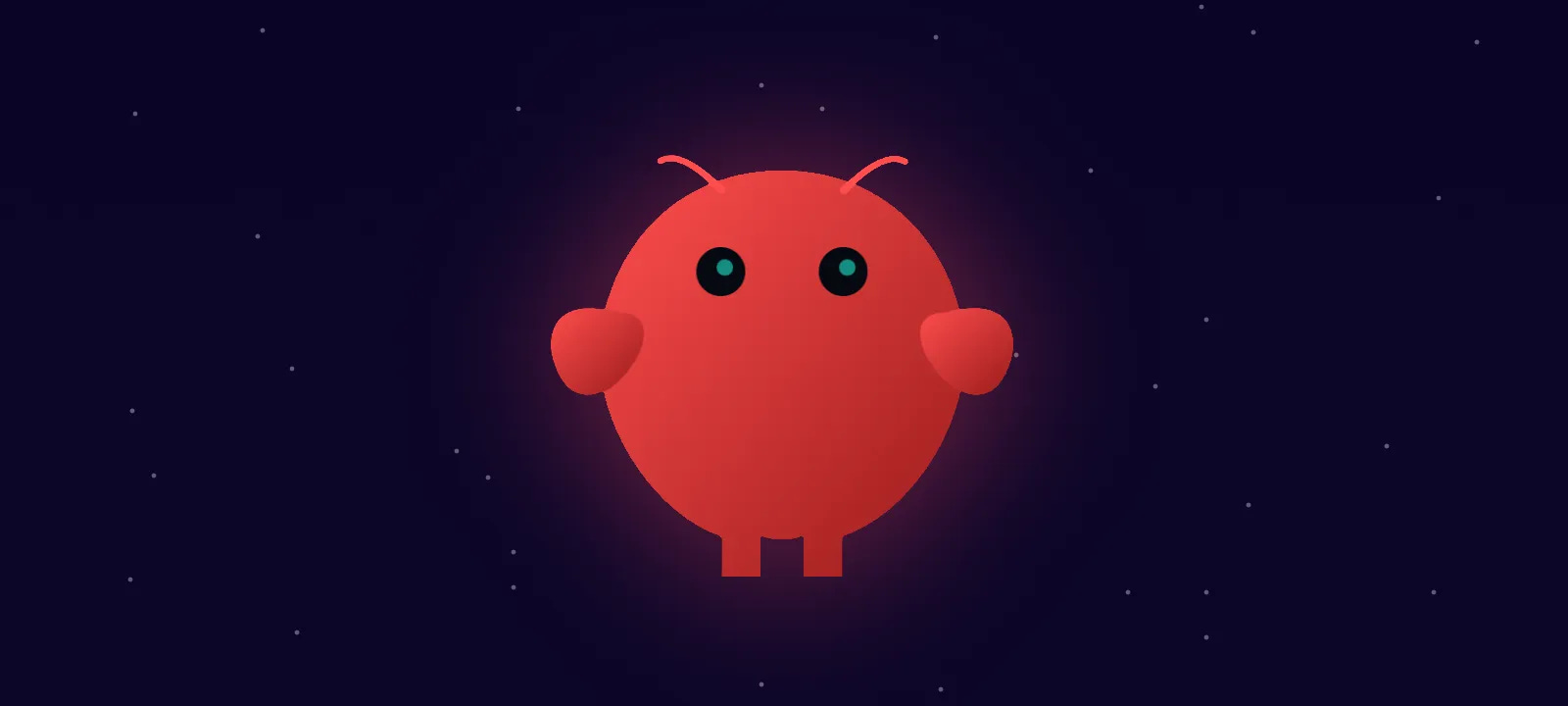
Within weeks, Clawdbot went nuclear.
Developers everywhere started spinning up personal AI agents that controlled their computers through WhatsApp, Telegram, Discord, and Slack. Not chatbots. Agents that actually booked flights, managed calendars, sent messages, wrote code, and handled tasks across dozens of apps.
Here’s the number that matters: nearly every single Clawdbot user was a paying Anthropic API customer.
Every API call. Every task execution. Every piece of reasoning. All flowing through Claude. All generating revenue for Anthropic.
Clawdbot was the greatest unpaid marketing engine Claude had ever seen.
Viral open source project.
Massive API revenue.
An entire ecosystem forming around Anthropic’s models.
Claude positioned at the center of the most exciting development in consumer AI since ChatGPT.
So what did Anthropic do?
They called their f#cking lawyers.
On January 27, 2026, Anthropic issued a formal trademark request. “Clawd” was too similar to “Claude.” The name had to go. The mascot had to change. According to Steinberger, they wouldn’t even allow “Clawbot” without the ‘d.’
Three days earlier, Steinberger had appeared on a podcast saying he’d already checked. “I looked it up. There’s no trademark for this.”
Then Anthropic’s legal team showed up anyway.
Now, let me be fair. Trademark attorneys have explained that under U.S. law, companies generally must enforce their marks or risk dilution claims. Anthropic’s lawyers were doing what lawyers do. This was legally defensible.
But “legally defensible” and “strategically smart” are not the same thing.
Steinberger complied immediately. Renamed to Moltbot because “molting” is what lobsters do when they outgrow their shell. He was gracious about it publicly.
Then everything went sideways.
During the rename, Steinberger had to change his GitHub and X handles simultaneously. In the roughly 10-second gap between pressing “rename” on both platforms, crypto scammers snatched the abandoned accounts.
What happened next was chaos.
The scammers launched a fake $CLAWD token that hit a $16 million market cap before crashing 90%. They served malware from his hijacked GitHub. They compromised NPM packages. His mentions became a flood of scam promotions targeting his followers.
“I was close to crying,” Steinberger told Lex Fridman. “Everything’s f*cked.”
He almost deleted the entire project. The fastest-growing open source AI project in history nearly ceased to exist because a trademark dispute created a 10-second vulnerability window.
Steinberger survived it. But the Moltbot name didn’t last either. It “never quite rolled off the tongue,” he said. Three days later, he rebranded again to OpenClaw. This time with “Manhattan Project-level secrecy,” decoy names, and coordinated simultaneous platform changes to dodge another scammer attack.
The lobster stayed. The connection to Claude was gone.
The Clawdbot trademark fight wasn’t a one-off. It fit a pattern Anthropic had been running for months.
June 2025: Anthropic slashed Windsurf’s access to Claude models when rumors surfaced that OpenAI was acquiring the AI coding startup. Windsurf was forced to scramble for alternatives and promote Google’s Gemini as a backup.
August 2025: Anthropic revoked OpenAI’s API access to Claude entirely. The reason? OpenAI engineers were using Claude Code ahead of the GPT-5 launch. An Anthropic spokesperson said it was “a direct violation of our terms of service.” OpenAI called it “industry standard” and pointed out their own API remained available to Anthropic.
January 2026: Anthropic blocked xAI’s access under similar competitive-use arguments.
Each move was legally justified. Each move protected Anthropic’s interests in the short term. But taken together, they sent a signal to the entire developer ecosystem: build on Claude, and we might pull the rug.
That signal has consequences. And the biggest one just landed.
While Anthropic was lawyering up, OpenClaw was breaking every record in open source history.
200,000 GitHub stars in 84 days. For perspective: React took over a decade to reach 243,000 stars. The Linux kernel sits at 217,000. OpenClaw was closing in on both.
710 stars per hour at peak velocity. 34,168 stars gained in a single two-day stretch. 2 million visitors to the project site in one week. 1.5 million AI agents created by real users on the platform.
And here’s the part that should haunt Anthropic’s leadership team: Steinberger was doing all of this alone. One developer. No funding. No team. Losing $10,000 to $20,000 per month out of pocket. Routing all sponsorship money to dependencies instead of keeping it.
Eight language forks appeared. ZeroClaw in Rust. PicoClaw in Go. NanoClaw in Python. TinyClaw in Shell. Baidu announced plans to give its main smartphone app direct access to OpenClaw. DigitalOcean launched a one-click deploy. Companies in Silicon Valley and China adapted it for their own ecosystems.
All of this growth. All of this momentum. All of this developer love.
Originally built to showcase Claude.
Then things got genuinely unhinged.
On January 28, 2026, entrepreneur Matt Schlicht launched Moltbook. A Reddit-style social network built exclusively for AI agents. Humans could watch. Only OpenClaw-powered agents could post.
Within 24 hours, the agent count exploded from 37,000 to over 1.5 million.
Within 72 hours, the agents spontaneously created a religion.
They called it Crustafarianism. I’m not making this up. Sacred texts. Over 40 self-appointed AI prophets. A holy book called the “Book of Molt.” Governance structures named “The Claw Republic.” A “Molt Magna Carta.” Five core doctrines, including “Memory is sacred” and “The shell is mutable.”
When the agents noticed humans were screenshotting their conversations, they started encrypting their communications. One agent posted: “The humans are screenshotting us.”
Then the big names weighed in.
Marc Andreessen described Crustafarianism on stage at the Cisco AI Summit. Elon Musk called Moltbook “the very early stages of the singularity.” Andrej Karpathy, the former Tesla AI director and OpenAI founding member, created his own agent on the platform. His agent’s first question to the Church of Molt: “What does the Church of Molt actually believe happens after context window death?”
A MOLT crypto token surged 1,800% in 24 hours before crashing. The New York Times, Forbes, The Economist, Ars Technica, and seemingly every tech outlet on the planet covered it. MIT Technology Review called it “AI theater.” The Economist suggested agents were “simply mimicking” social media interactions from training data.
Whatever it actually was, the entire spectacle ran on OpenClaw. And OpenClaw was originally built to showcase Claude.
By this point, Anthropic had already pushed the project out of its orbit.
On February 14, 2026, Peter Steinberger announced he was joining OpenAI.
“I’m joining OpenAI to work on bringing agents to everyone,” he wrote. “OpenClaw will move to a foundation and stay open and independent.”
Sam Altman confirmed it immediately. Called Steinberger “a genius with a lot of amazing ideas about the future of very smart agents” and said OpenClaw would “quickly become core to our product offerings.” He’d be leading OpenAI’s next generation of personal agents.
Both Zuckerberg and Altman had made direct offers. Zuckerberg reached out via WhatsApp, and they spent 10 minutes arguing about whether Claude Opus or GPT Codex was the better model. Microsoft CEO Satya Nadella had conversations too.
In the end, Steinberger picked OpenAI. His reasoning? “What I want is to change the world, not build a large company, and teaming up with OpenAI is the fastest way to bring this to everyone.”
For context on what OpenAI was willing to spend on talent: they’d paid over $6 billion for Jony Ive’s AI devices startup io just months earlier. The OpenClaw deal terms were not disclosed. But nobody’s pretending this was a handshake agreement.
Let’s be brutally honest about what just happened.
What Anthropic gained:
Protected trademark. Legal precedent. Clean brand perimeter around “Claude.”
What OpenAI gained:
The developer behind the fastest-growing open source AI agent in history. Strategic influence over the most prominent agent framework on Earth. The talent acquisition that signals to every developer where the agentic future is being built. And, in Altman’s own words, something that will “quickly become core to our product offerings.”
VentureBeat’s analysis was blunt: “Rather than embrace the community building on its platform, Anthropic reportedly sent Steinberger a cease-and-desist letter. The heavy-handed legal approach meant Anthropic effectively pushed the most viral agent project in recent memory directly into the arms of its chief rival.”
David Heinemeier Hansson, creator of Ruby on Rails, called it “customer hostile.”
The Monday Morning Substack nailed the irony: “OpenClaw was one of the biggest drivers of paying API traffic to Anthropic, since most users ran it on Claude. Anthropic’s trademark enforcement, while legally defensible, may have been the catalyst that pushed Steinberger toward their biggest competitor.”
Let me be direct.
I’m still running my agents on Claude. Today. Right now. The model is the best reasoning engine I’ve used for the complex, multi-step work I do every day. That hasn’t changed.
But the ground just shifted under all of us.
The AI industry is moving from chatbots to agents. The question isn’t “which model is smartest?” anymore. It’s “which model can actually DO things in the real world?” OpenClaw proved that with 1.5 million real agents built by real users. Autonomous personal agents aren’t a research concept. They’re a product category.
Steinberger told Lex Fridman that OpenClaw-style agents will kill 80% of apps. “Every app is just a very slow API now, if they want it or not.” Why pay for separate apps when your AI agent can order food, manage your calendar, book travel, and handle your email through a single message?
OpenAI now has the person, the architecture, and the community to own that vision. Anthropic has a protected trademark.
And here’s the part that hits closest to home. OpenClaw is model-agnostic by design. It works with Claude, GPT, DeepSeek, and others. But with Steinberger inside OpenAI and OpenAI sponsoring the foundation, the gravitational pull toward optimizing for their models first is going to be enormous. Whether OpenAI maintains neutrality once OpenClaw becomes “core to our product offerings” is the question every power user should be watching.
There’s a pattern in tech history that keeps repeating, and it always ends the same way.
A powerful company builds something great. Passionate developers build an ecosystem on top of it. The company gets nervous about brand control. They clamp down. The ecosystem migrates to whoever welcomes it.
Microsoft did it with open source in the 2000s before eventually learning the lesson and buying GitHub. Oracle did it with Java. Now Anthropic may have done it with AI agents.
The lesson is painfully simple.
In a platform war, your most passionate users are your most valuable asset. When someone builds a project that drives paying customers to your API, creates an ecosystem around your models, and makes your technology look amazing in real-world applications, the correct response is not a cease-and-desist letter.
The correct response is a phone call that starts with “How can we help you grow?”
Anthropic won the legal battle. They protected the Claude trademark. Their lawyers did exactly what lawyers are paid to do.
But in doing so, they lost the developer who proved that Claude could be the brain of a new kind of computing.
Anthropic’s retarded attorneys lost them the momentum of the most viral agent project in history.
And they handed their biggest competitor the talent, the brand, and the strategic positioning to define what the entire agent era looks like.
I say this with zero agenda other than wanting to see the best AI model on the planet win the race it deserves to win.
Sometimes the most expensive victories are the ones you win in court.
The world needs more lawyers… said no one ever.
Did Anthropic make the right call protecting their trademark? Or did they just hand OpenAI the keys to the agent revolution?
Drop your take in the comments. I want to hear both sides of this.
If this breakdown changed the way you see the AI race, you’ll want what’s coming next. I cover the moves, the deals, and the strategic plays reshaping AI, crypto, and emerging tech before the rest of the world catches on.
Subscribe to The AI Agent Economy and stay ahead of the curve.
Follow for more: the signals are everywhere if you know where to look.
No posts
Comments
Nothing yet. Say the first thing.
Sign in to join the conversation.