
This piece, written in 1898, demonstrates that politics is much like what it was 128 years ago. Independence Day, however, is celebrated far differently, with so much pomp and circumstance and solemnity.
And another thing I found curious— in 1898, the author wouldn’t have had voting rights, yet she had definite opinions on patriotism and felt that women weren’t without responsibilities as American citizens.
In this great land of ours, there are not a few men, older and younger, who are so indifferent to the country’s welfare that they hold aloof from politics and lightly prize the freeman’s birthright, the ballot. They explain that bribery and corruption have invaded legislative halls, that primary meetings are the resorts of the vulgar, that gentlemen stand aloof from elections.
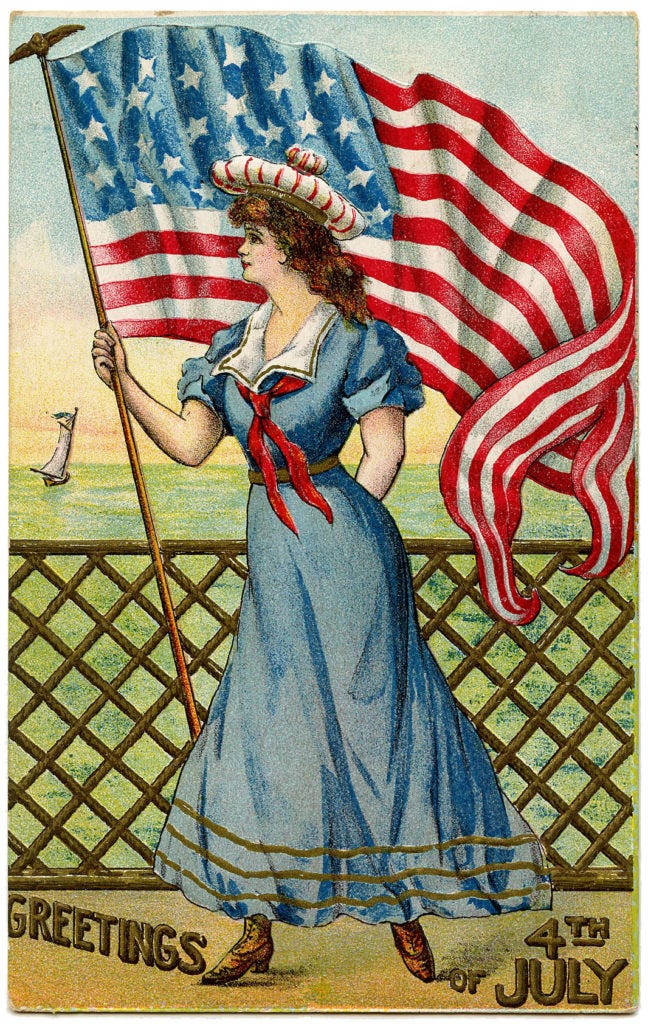
So charging their generation and their period, whether falsely or truly, with a great shame and sin, they do nought to improve matters, but simply play the coward’s part, and refuse to take a personal interest in the ruling of their own America.
Cynical, hostile, and indifferent, it is all one; they are practically enemies to the land which calls them her sons. A share in her government is the birthright of every man born into a free country, and if he despise his birthright and shirk its obligations, he is to be pitied and condemned.
The Fourth of July used to be so kept by our people that it was an important educator in patriotism. Early in the morning we were awakened by the thunder of cannon from fort and fleet, or from the village green, then the children, rushing to the windows, saw everywhere the red, white, and blue of our flag, floating from roof and spire. There was a sense of music in the air, jubilant, ecstatic, throbbing and pulsating, in drum beat and bugle call.
By and by there was the parade, soldiers marching behind their banners, cavalry in stately procession riding down the street, and then came the fathers of the town, the ministers and elders and deacons, the city magnates, people of dignity and position, and the trade representatives, and by and by the Sunday-school children in white frocks and ribbon sashes, or in white trousers, and jackets with brass buttons, according--as they were girls or boys.
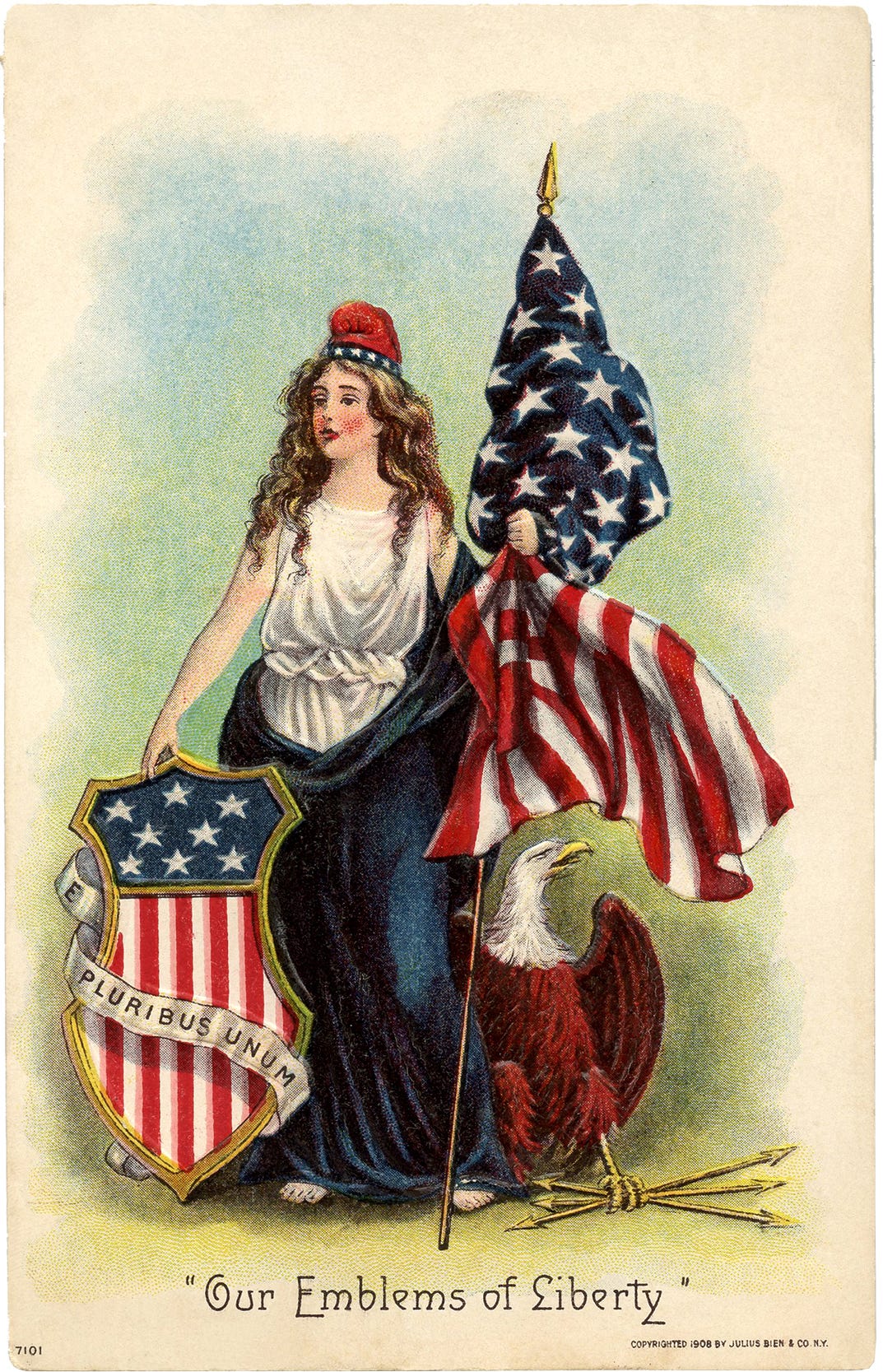
The Declaration of Independence was read, and everybody listened and absorbed its lofty sentiments.
Do our children still know the names of the signers of that immortal document, do they yet admire the bold screed of John Hancock, and the clear chirography [handwriting] of Samuel Adams and sympathize with the spirit of Charles Carroll to add “of Carrollton” after his name? We studied those names as we did our alphabet. Patriotism was part of our education. Not less were we taught to look upon America as God’s hallowed ark of freedom, the asylum for the oppressed of every land and nation.
“God save the Commonwealth!” we were taught to add to our prayers. “God bless our native land! Firm may she ever stand!”
Let our flag stream from the schoolhouse and flutter from the ships and wave over our heads as we walk through our streets. Only a bit of bunting? Yes, but it means liberty, obedience to law, protection to the weak, freedom of conscience, and equal rights for all men. Only a bit of bunting? Yes, but it means what men would gladly die for it; it is the flag of our country. God bless and save it! Every American woman should be familiarly acquainted with the history of her own country, its constitution and form of government. She should know that the stability and permanency of a republic depend upon the intellectual, moral and religious character of the people; upon this broad principle she must act, and endeavor to induce everybody to act, over whom she exercises influence.
-Margaret Elizabeth Sangster
Happy 250th birthday, America. You’re still the best….”God bless and save it!”
I’m the co-author of A Housewife Writes and author of Two Years as an Amish Schoolteacher, available on Amazon. (affiliate link) I love history and learning about the lives of our grandmothers who loved their families and managed their households. I share their stories and wisdom that are still meaningful as well keeping a modern home in the spirit of past times.
Comments
Nothing yet. Say the first thing.
Sign in to join the conversation.