
It’s incredible to realize that people have had the luxury of modern air conditioning for only a small snippet of history, given how much we depend on it. Without it, we weak souls living in America in the 21st century nearly cease to function. But somehow, people managed to survive summer in the old days without air conditioning.
Hot is hot, even if you are acclimated to the heat. In the U.S., the population of the southern states was significantly lower before the invention of air conditioning, with good reason. But even so, they survived--year after year.
A while ago, we had a power outage that lasted 4 days. A neighbor told us this is a frequent thing and to expect it regularly. This experience got me wondering how past generations coped without air conditioning, so I started digging into old homemaking books. The most interesting thing to me is that there wasn’t much fuss and advice on the subject. I was a little disappointed, actually.

Undoubtedly, people in the past took summer more in stride than we do and so were better acclimated to all the seasons and didn’t think it was necessary to share advice. I remember once giving an Amish friend a heads-up that the weather the following week was going to be especially hot. The news had been full of heat advisories and warnings. However, she gave me a blank look, as if to say, “Of course it will. It’s summer.” Yet, she was the one living without electricity and all the amenities like fans and air-conditioners.
Anyway, much of this will be obvious, I’m sure, but here’s what I found in the material I have.
Soaking your feet in water. I remember reading about an Amish woman who did this while peeling potatoes on her porch and tried it. Even if your water isn’t icy cold, it does a fantastic job of cooling your whole body off. Add some Epsom salts and you can have a little foot soak.
Sponge baths. We actually did this before when we were without electricity and decided it was life-changing and morale-boosting. This was something my farm-raised, Depression-era grandma grew up doing, and I’m sure, everyone else. When visiting her as a kid and on nights when we didn’t have a bath, we’d have to wash down our arms, legs, and face in the bathroom sink. Highly recommend this way to cool down! And it uses very little water for those that had to haul water.
Wet sheets. They often hung dripping wet sheets across doorways and windows, so the water would cool any nighttime breeze that swept through.
No window screens. “The best writers on ventilation do not approve their use whether of wire or mosquito netting, because they don’t allow air enough to pass through their meshes to properly supply the rooms.” (1884)
I have noticed this. Most of the time, the breeze that comes through a screen is nowhere near as strong as the breeze that comes through an open door. And depending on the angle, there are some windows that never seem to let a breeze through. The writer instead advocated for awnings on windows, something you don’t see much these days.
Even if it’s true, going without screens means giving the local wildlife an open door to your home—not an insignificant problem, in my mind. She addressed that and claimed that flies coming in through open windows were an overrated problem. “Where there is food, there are flies,” she claimed, and if food is properly covered, there won’t be flies. Where can I get her brand of flies?
Transoms. Transoms are those little windows above a door. I think you can only find them in old houses with high ceilings, but their purpose was to let heat (that rises) escape from a room. (And all this time we thought they were just a way for Sylvestor to sneak up on Tweety...) Nice in theory, but not easy to implement today. I’ve never seen functional transoms over windows or doors in new home construction.
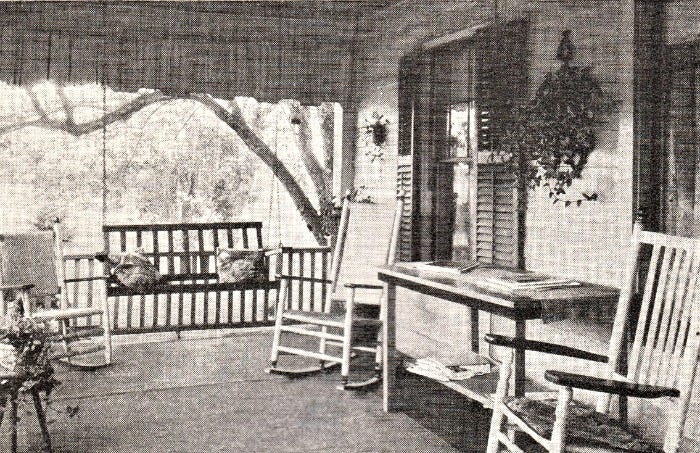
This was the subject that got the most attention when talking about summer living—piazzas. I think most of us would call them patios these days. People turned covered outdoor areas into living spaces in the summer and used plants and screens to add even more shade. Instead of trying to stay out of nature, they went out into it and spent as little time as possible indoors.
The difference in temperature between full sun and shade, especially with a breeze, is significant. Shady areas outside, with even a sporadic breeze would feel much more comfortable than a stuffy house.
Besides living areas, piazzas became dining rooms, modified kitchens, and even sleeping areas. Sometimes they slept on cots, covered by wet bedding. I read several comments that piazza (summer) living was slower paced, with lowered expectations on productivity, something we disregard completely today.
I know this list is just a small sampling of the strategies they would have used to cope with summer heat, but it was interesting to me and I hope to come across more.
Regarding the following piece on advice for homemaking in July: I did an incomplete cut-and-paste that didn’t include the introduction and date it was written but only realized it much later. However, I thought it was interesting enough to include with this post. It reiterates the idea of a slower-paced life in the summer. I think it was written in the 1910s but will update it when I track it down again.
Meal Planning
Make a change in your table to meet hot weather conditions. More fruit, more fresh vegetables, more fish, more salads. Less meat, less cake, and fewer heavy puddings. An ideal summer lunch for grown-ups is composed of three components. An adequate and well-balanced salad with sandwiches or rolls, fresh berries or fruit, and a cool drink, for which use fruit juices freely. You will find that even your masculines will occasionally hail with delight a substantial ice-cold salad--flaked fish, fresh peas, string-beans, diced potato, surrounded by crisp lettuce and dressed with French, mayonnaise, or boiled dressing--instead of the conventional hot meal.

Housekeeping
Many of June’s duties are equally imperative in July. Woolen garments hanging in closets should be shaken and aired at intervals during the entire summer. Sweaters, mufflers, golf hose and all such accessories worn only occasionally, should receive this occasional inspection. [I examine my golf hose more frequently, however. One can’t be too careful when it comes to one’s golf hose...] I do not approve of the plan, adopted by some, of airing the house in the early morning and then shutting all doors and windows during the heat of the day. The air is cool, but dead. Rather, keep windows and doors on the street and dusty sides closed. Close the blinds on the sunny side, turning swivels so that the breeze may enter the house.
Linen Care
A new set of sheets, four pillowcases, and six towels each year. This was the old rule given to young housekeepers in order to “keep the stock good.” Midwinter and midsummer are the times to make such replenishments. Unfold all napkins, when purchased in advance of need, and roll over a pasteboard tube. Otherwise the sharp creases in the linen wear through, even when laid away. Fold napkins in common use sometimes in threes or fours to equalize wear, as they always break first in the folds. Cotton dress goods are also marked down at this time. Purchase now if you make some of your small people’s clothes.
Slowing Down
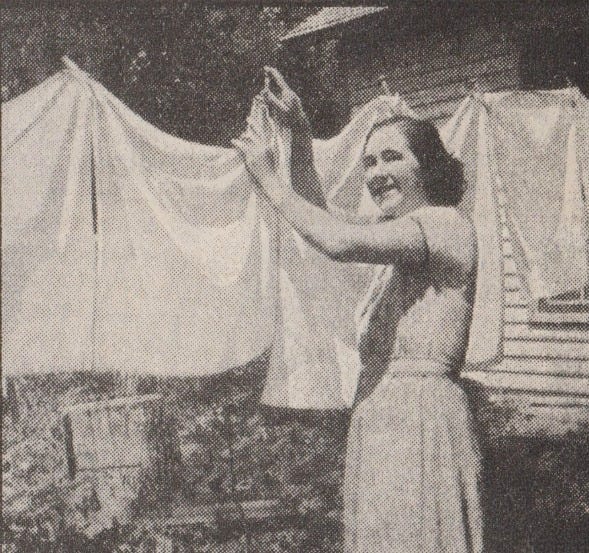
Sew and “kitch” out of doors whenever you can! Neglect your house all your conscience will allow! Systematically plan to dispense with all unnecessary labor, and liberally construe the adjective “unnecessary.” In hot weather much of our cooking is unnecessary and much of our ironing is unnecessary. Too much elaboration in the making of children’s--and also grown ups’--summer clothes is unnecessary. Choose the “better part,” which is an unruffled temper, calm nerves, and a sense of leisure for present enjoyment for yourself and family. Give of your true self, unwearied to husband, children, and friends.
Gardening and Preserving
Conserve the surplus berries. Sweets concocted from the products of the July garden are canned currant, gooseberry, and raspberry, and jams and conserves, either separately or in combination. Try currant and raspberry, equal parts, either canned with a moderate amount of sugar to taste. Or, make into a jam with their weight of sugar. Take a housewifely pride in having a well-filled preserve and canned-vegetable closet and get as good a start as possible in July. Try vegetable combinations--diced carrots mixed with peas and processed are delicious; string beans and carrots are good and very attractive.
I’m the co-author of A Housewife Writes and author of Two Years as an Amish Schoolteacher, available on Amazon. (affiliate link) I love history and learning about the lives of our grandmothers who loved their families and managed their households. I share their stories and wisdom that are still meaningful as well as ways of keeping a modern home in the spirit of past times.
Comments
Nothing yet. Say the first thing.
Sign in to join the conversation.