
2025 has challenged the containers of our narrative work, perhaps more than ever before. While the majority of our work happens outside of social media, we took an intentional pause on our content production at the beginning of the year to discuss the political contradictions of this tool—which, five years ago, became an exponential point of growth for A Growing Culture’s visibility and network.
Tech-oligarch’s ongoing weaponisation of algorithms seems to be increasingly shrinking opportunities for narrative work in platforms like X and Meta, and we recognise how saturated these spaces can feel. We are constantly reflecting on what our role there is, navigating the tension between ceasing to produce content on Instagram and using it as a tool for narrative change.
We have spent some time building an infrastructure to house the narrative work that we share on social media outside of platforms and the short-lived exposure that is tied to compromised algorithms. This “wiki” of A Growing Culture’s work will allow everyone, everywhere to easily access our work without having to engage with hegemonic platforms.
The concerns and questions that arise in these spaces do inform our storytelling outputs. The funding crisis that thousands of NGOs in the U.S. and across the world suffered after the USAID freeze earlier this year inspired our critiques to imperialism through social media posts, the exploration of USAIDs colonial legacies and the He Who Feeds You Controls You series—a deep dive into pan-African visions of liberation and the history and current opportunities for South-to-South cooperation.
In the spirit of reaching beyond the frontiers of our digital work, we hosted the workshop “Where Does Our Table Begin?” at the London Climate Action Week. Through guided reflections and learning materials, we analysed power and consolidation in three core spaces of our food systems: the field, the shop, and the table. It was incredibly enriching to meet in-person with long-time collaborators and allies to share with a community interested in learning more about how the fight for food sovereignty is deeply embedded in their everyday lives. Dismantling the fictional borders between the movement and urban spaces is a challenge that excites us, and we’re actively working towards a model of place-based, participatory learning away from our screens and through shared dialogue in the coming year.
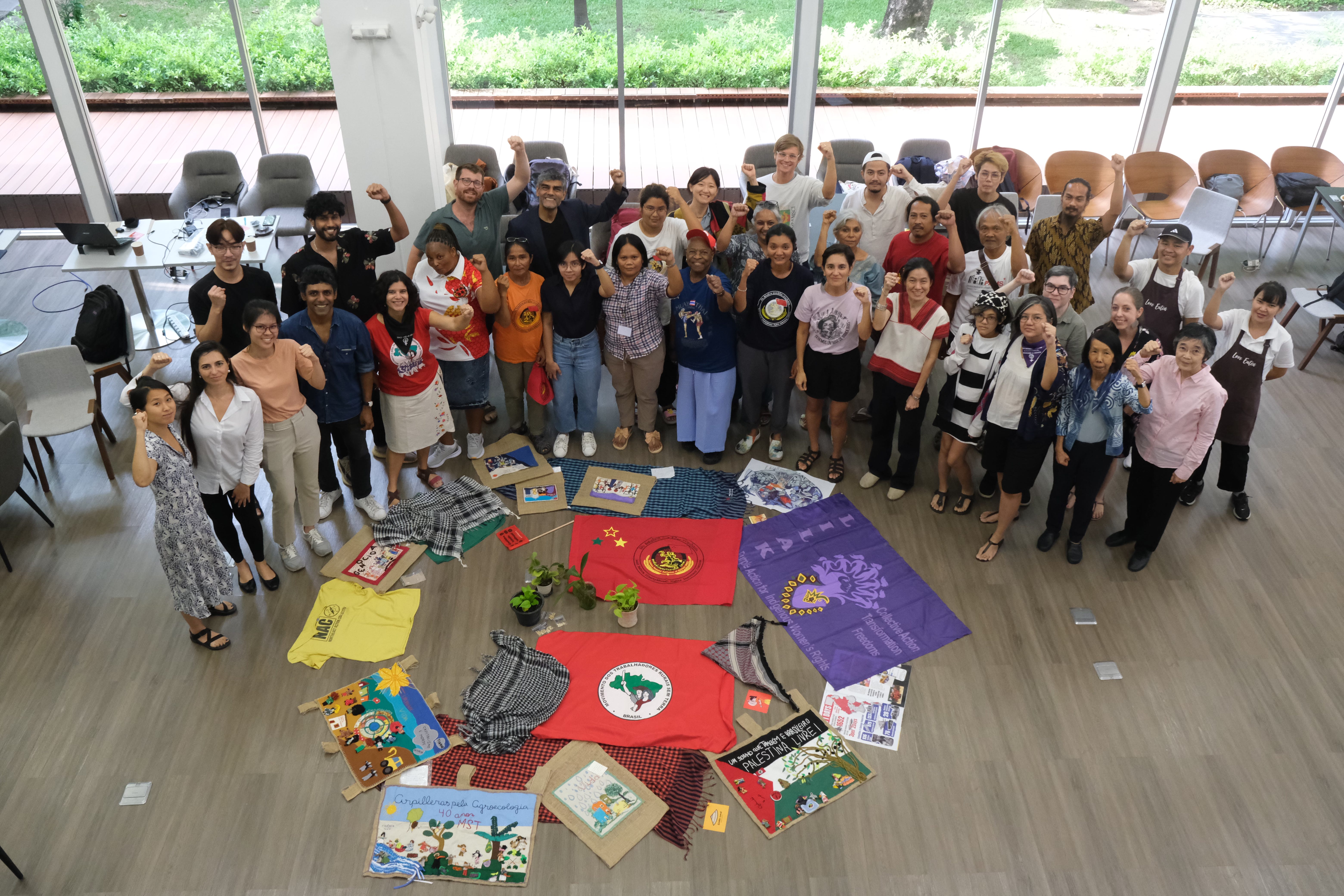
While addressing the threats of a hyper-surveilled, corporate-controlled world is deeply relevant now, highlighting the work of those who confront empire in all its forms remains just as crucial for us. Through our project Care and Resistance, built alongside Focus on the Global South, and Raj Patel, five social movements from around the world came together to explore how care work is at the heart of their resistance. Abahlali baseMjondolo in South Africa, LILAK in the Philippines, West Street Recovery in the United States, the Landless Workers’ Movement (MST) in Brazil, and the Southern Peasants’ Federation of Thailand shared with us their stories, strategies, and visions from movements on the frontlines of resistance against capitalism, imperialism, patriarchy, and the climate crisis. Read and watch it all here.
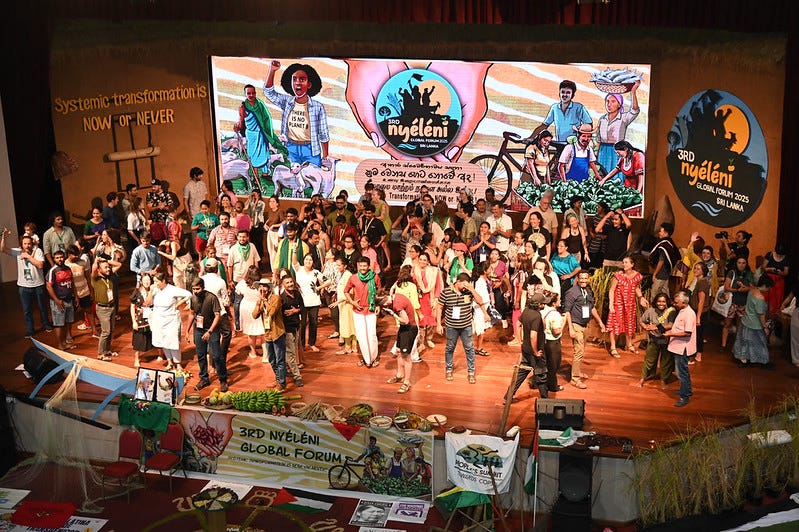
This year also marked a profound deepening of our engagement with the Nyéléni process, the global movement space for food sovereignty that has shaped so much of the political grounding of our work. As regional and continental consultations unfolded ahead of the 3rd Nyéléni Global Forum in Kandy, Sri Lanka, AGC supported the collective efforts to strengthen the movement’s communications, and helped articulate and amplify the shared narratives and key messages emerging from the process. For AGC, contributing to this communications effort reaffirmed our long-held conviction that transforming food systems requires seizing control over the narratives that shape it. The Kandy Declaration and Common Political Action Agenda echoed this understanding by recognising grassroots feminist popular communication as a strategic front for systemic transformation. The process reminded us that sovereignty is not only about control over what we grow, but also about reclaiming power over our stories — stories of who we are, why we resist, and the worlds we dream of. Read more about the outcomes from the 3rd Nyeleni Forum here.
After years in the making, our short documentary series “Liberation Agriculture” finally launched this year. In collaboration with Regenerosity, this project gave us the opportunity to highlight incredible communities and the lands they steward across the US. A video project takes a lot: not just resources and time, but also the willingness of the communities to open themselves up to be filmed and edited into a story. We learned a lot through this process of what it means to co-develop a film with the people who are in it. You can now watch four of the eight films featured in this series and learn from the stories of the Sicangu Oyate in South Dakota, Naylor Farm in Iowa, RegeNErate Nebraska and Jubilee Justice in Virginia. We are very excited to share the rest with you soon.
We also devoted an entire Substack series looking into works of fiction as vessels for reimagination. Starting with Star Wars’ “Andor”, we drew parallels between the show’s storylines and real-world liberation struggles. Then, we tapped into speculative fiction and its fundamental role in worldbuilding, “Who benefits from creativity that only replicates colonial rules?.” Non-fiction stories also had space in Offshoot, from our first guest-writers collaboration series with Shado Mag about the impacts of fossil fuels on global health, to our conversation with Nancy Matmusmoto on her latest book “Reaping What She Sows”.
For 2026, we hope to continue opening space for new voices and stories from across the world for the long-awaited expansion of our editorial mycelium. One of our first steps towards this vision in 2026 is our support of ‘Para el Alma’, a book written by AGC team member Alejandra Bautista, that brings together mothers of children killed by state violence, weaving their stories, memories, and grief through food, community ecologies and collective memory. We aspire to continue learning and growing in the process of amplifying and producing printed publications and other short-form resources like zines and toolkits across our programs, revisiting some of the narrative work that we’ve launched in the past.
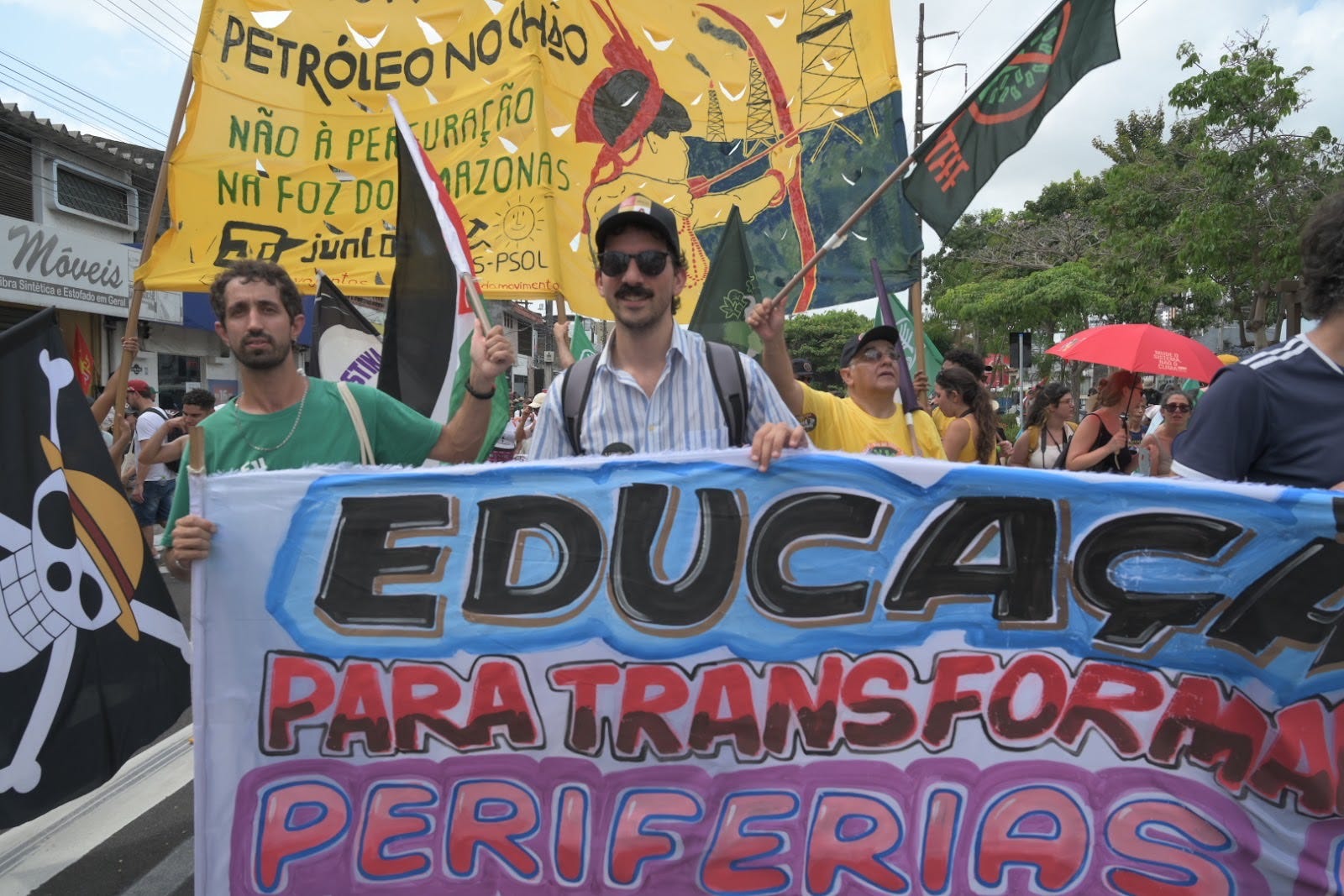
As with every year, we challenged institutional spaces framed for change, like the UN Food Systems Summit or COP 30, and its push for false solutions. However, this year we also decided to be on the ground alongside the many social movements from all over the world that gathered to uplift grassroots voices and shout that true solutions are only possible through systemic change. At the People’s Summit, we collaborated with the World Forum of Fisher Peoples, strengthening and harvesting the ripple effects of a relationship started in 2024 with the Block Corporate Salmon Campaign. We joined over 70,000 people who took over the streets of Belém in the Global Climate March and felt the power of people coming together in the fight for justice.
We also witnessed firsthand the corporate circus that surrounds high-level international gatherings such as COP. Different companies and organisations like TED and Ikea spent thousands of dollars to host spaces (many with dubious names like Goals House, Nature House, etc) with attractive panels and plenty of shmoozing opportunities. It was a lesson in narrative bubbles. Depending on which bubble you were in, the narrative underpinning of your worlds could be vastly different. Different universes even. For example, in Agrizone, the official agriculture space of COP30 sponsored by major multinational corporations, we witnessed how an uninformed audience can fall into the trap of believing BigAg is the only solution to feeding the world. Big, shiny and attractive, words like regenerative and sustainable were abound.
Our role has always been, and will continue to be, smashing through the illusions of these myths peddled by the powerful. In the words of our comrade Raj Patel, “The COPs will continue to disappoint us. But social movements don’t organise for COPs—they organise because survival demands it and that organising is the only thing that has ever shifted the needle.”
We are closing this year by supporting the Global Action Week Against UPOV with the website STOPUPOV.ORG, which hopes to gather momentum against the [UPOV] treaty that seeks to commodify seeds worldwide. This project also comes at the heels of a larger Seed campaign we hope to birth into fruition next year, with a platform dedicated to gathering and growing stories from the heart of the communities that have always lived intimately with seeds. We believe stories can take root and spread and grow to become the foundations of our interconnectedness. Our hope is that this effort meets the pulse of storytelling that is already emerging from the ground, from communities that continue to break free from the clutches of Industrial Agriculture. These stories teach us to survive this repressive system by being irrepressibly alive, together.
Our strategic capacity for the communications of the food sovereignty movement will continue growing in 2026, expanding beyond the digital spheres in which our work lives. We hope you continue following our works on all fronts. As always, thank you for reading.
We have over 16,600 people in our Substack community, and 119 of you have decided to become paid subscribers. Upgrading to paid isn’t just about supporting this newsletter, but also resourcing all of our other work to resource movements around the world. If you have found value in these words and ideas, and you are in a position to become a paid subscriber or to donate directly to our organisation, we would be so grateful for your support.
No posts
Comments
Nothing yet. Say the first thing.
Sign in to join the conversation.