
As Attorney General of California, home to Silicon Valley and the birthplace of social media, I’m keenly aware of both the promises and pitfalls of social media. I appreciate the opportunities social media platforms give us to connect with loved ones, express ourselves, access information, and create jobs in the Golden State. At the same time, we have to be wary and vocal about the enormously detrimental and dangerous impact it’s proven to have on our young people.
The truth is, our children are facing a public health crisis and we all need to talk more about it.
Everyone should know about the relationship between excessive time spent on social media and depression, anxiety, body-image issues, susceptibility to addiction, and more in young people. In fact, adolescents who spend more than three hours a day on social media face double the risk of poor mental health, including depression and anxiety.
Everyone should hear the tragic, all-too-common stories of real children and families who’ve been torn apart as a result of the harmful impacts of social media. I’ve had the opportunity to hear these heartbreaking stories and talk to parents like Victoria Hinks, whose 16-year-old daughter Alexandra took her own life last year after being served an endless stream of dark and toxic social media content that hurt her mental health.
Children, teens, and families must be made aware of the dangers social media poses to them before they even log on.
That’s why I cosponsored Assemblymember Rebecca Bauer-Kahan’s Assembly Bill 56, which gives California a new tool to protect our children. Recently signed into law by Governor Gavin Newsom, AB 56 will require social media platforms to display a warning label the first time a child or teen logs on for the day, then again after three hours of cumulative use, and every subsequent hour.
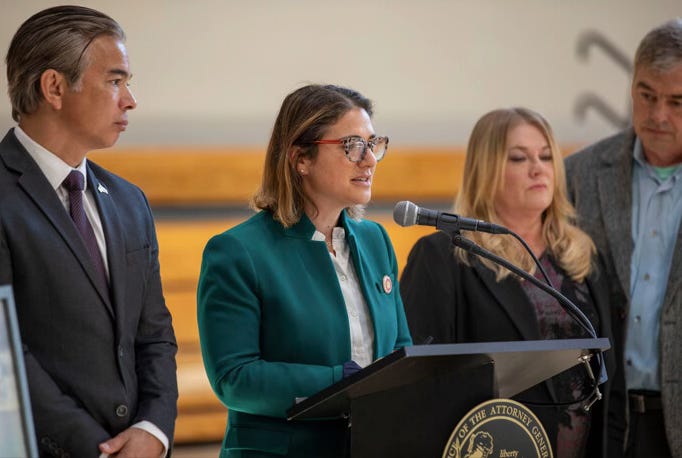
Announcing the introduction of AB 56 alongside Assemblymember Rebecca Bauer-Kahan and the Hinks family.
While AB 56 is a step in the right direction to providing more transparency about the harms of social media, we know that warnings are not enough, so at California DOJ, we’re also fighting these harms on multiple fronts.
Last year, we cosponsored a landmark law to protect youth from social media addiction. SB 976, The Protecting Our Kids from Social Media Addiction Act, resets the social media defaults for young users to provide a less addictive experience — limiting companies’ ability to use algorithmic feeds to keep children scrolling, minimizing notifications designed to draw young people away from their real lives and onto their screens, hiding “likes” and other engagement metrics, and much more.
It’s no surprise then that the platforms who have spent years actively cultivating social media addiction among children and teens to boost corporate profits challenged this law in court.
My office is proud to lead the defense of the Protecting Our Kids from Social Media Addiction Act, and recently secured a ruling allowing much of this law to go into effect.
As my office continues defending California’s nation-leading legislation in court, we’re also in active litigation against Meta and TikTok to hold these mega corporations accountable for harms to youth mental health.
Our lawsuits seek to force Meta and TikTok to pay for the harm they’ve caused and make substantive changes to the functionality and algorithms of the social media platforms themselves.
I am grateful that California does not stand alone in our commitment to protecting our children online. I recently had the opportunity to participate in a roundtable held by Secretary Hillary Clinton and Pinterest CEO Bill Ready that focused on how we can create a thriving digital future for our children. Together, experts and stakeholders from government, industry, non-profits, and research institutions from around the world came together to figure out how we can better tackle an issue that defies borders and politics. We touched upon legislation, litigation, policy, design, business, and innovation. It was an enlightening and inspiring conversation that I left full of hope and new ideas.
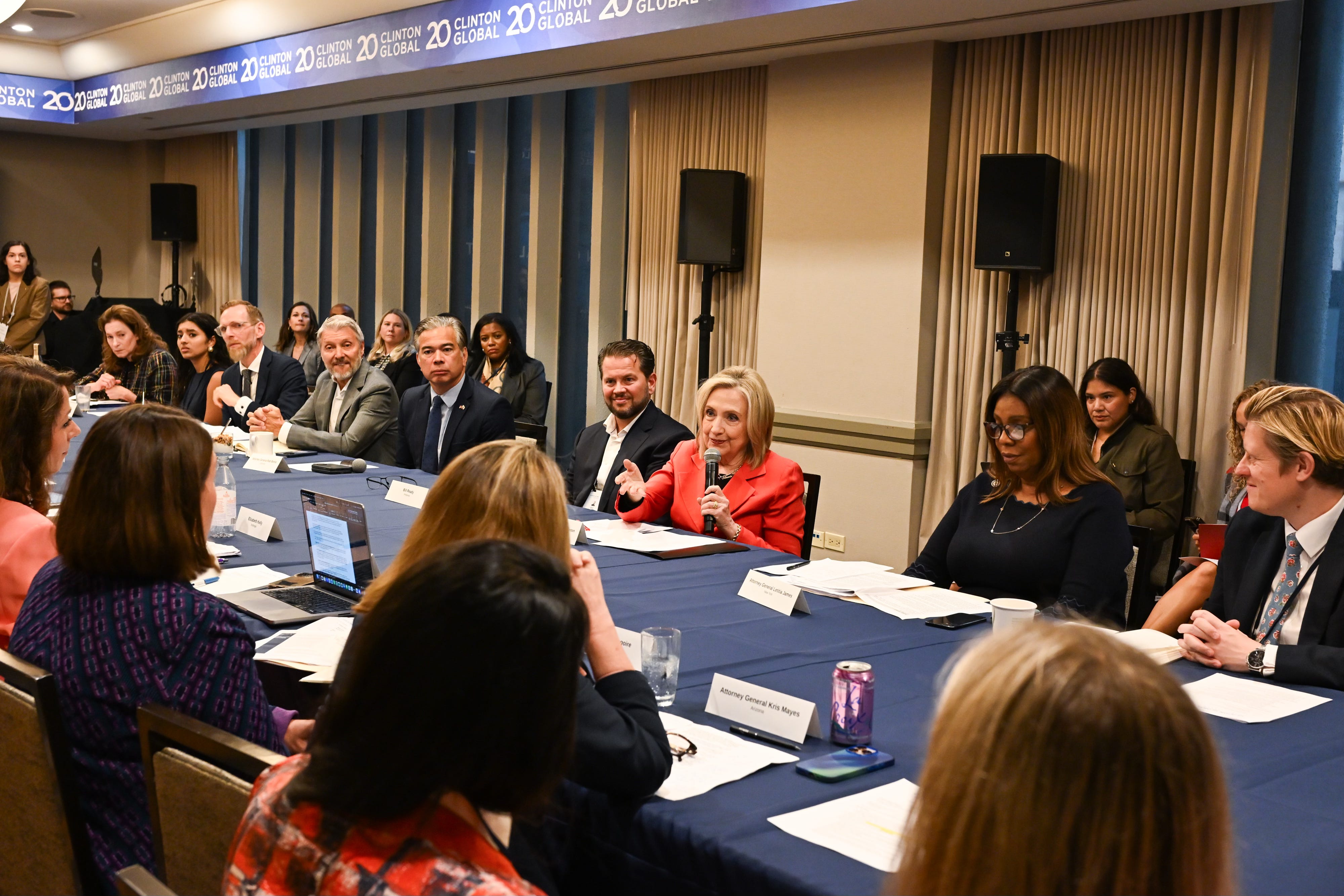
Discussing ways to protect our children online with leaders and policymakers.
For too long, social media companies have been allowed to chase infinite profit while protecting our kids online has been an afterthought. After something goes wrong. After we realize the crisis we’re in. After we see that our kids are glued to their screens all day and all night. But now, people across the world are waking up, demanding that protecting kids, designing with kids in mind is at the forefront of the conversation.
That does not mean forsaking profit. Being pro-consumer, pro-child safety is not anti-business, just as seatbelts didn’t put a dent in car sales. California’s proof. We are the fourth largest economy in the world and we have some of the strongest consumer protections on the books.
California is proof that we can protect our people and safeguard our children while also supporting innovation and a vibrant economy.
No posts
Comments
Nothing yet. Say the first thing.
Sign in to join the conversation.