

Product managers are pivotal to the success of any product, balancing the demands of business objectives, customer needs, and technological feasibility. To navigate this multifaceted role, PMs use multiple product management frameworks that provide structured methodologies to streamline decision-making and execution across various stages of product development. This article explores some key frameworks used in the conceptualization, design, development, and post-launch stages of the product lifecycle.
Product management frameworks offer several benefits, as they:
simplify complex processes by breaking them into manageable steps.
provide tools to analyze data and make informed choices.
can be customized to suit specific industries or products.
facilitate cross-functional teamwork by providing a common language and methodology.
Below, we explore how some of these frameworks apply to different stages of product development.
At the conceptualization stage, frameworks help identify market opportunities, understand customer needs, and define a clear value proposition.
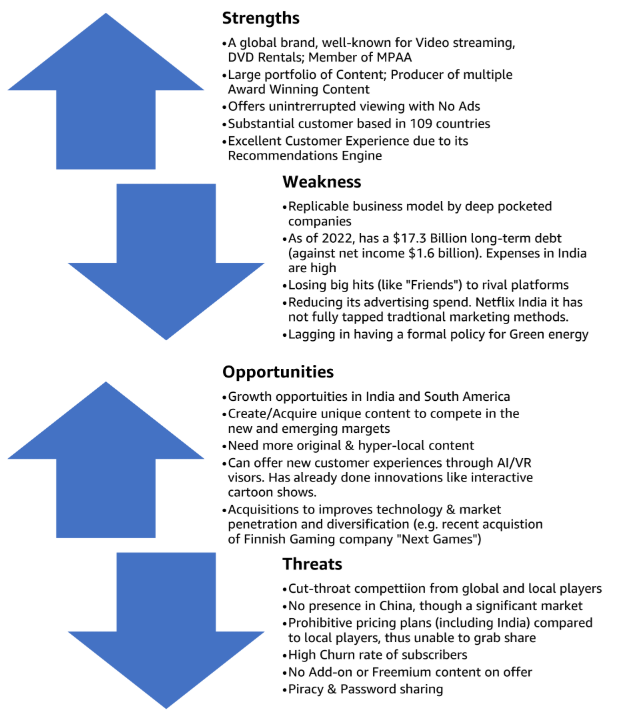
SWOT (Strengths, Weaknesses, Opportunities, Threats) is a strategic tool for assessing internal and external factors that could impact a product’s success. It provides a comprehensive view of both opportunities and risks, helping teams prioritize initiatives effectively.
Example Use Case: A company launching a new app might use SWOT to evaluate its competitive advantages (e.g., strong brand) and external threats (e.g., market saturation).
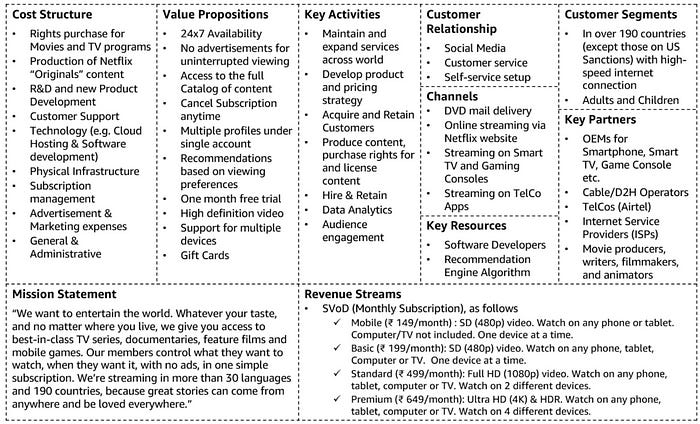
Business Model Canvas is a visual framework comprising nine building blocks that outline key aspects of a business model, such as value proposition, customer segments, channels, and revenue streams. It helps align the product strategy with broader business goals while identifying gaps in the business model.
Example Use Case: A startup could use this tool to map out how their product delivers value to specific customer segments.
Personas are fictional representations of target customers based on demographic, psychographic, and behavioral data. They enable teams to design products tailored to user needs by fostering empathy for the end-user.
Example Use Case: A B2C company might create personas to guide marketing strategies or prioritize features.

In this stage, frameworks focus on iterative development, collaboration, and user-centric design.
A development methodology emphasizing iterative progress through collaboration and customer feedback. Agile ensures flexibility in adapting to changing requirements while maintaining high delivery speed.
Example Use Case: Teams use Agile sprints to develop minimum viable products (MVPs) for early testing.
User Story mapping is a visual technique that organizes user stories into a sequence representing the user journey. It helps prioritize features by focusing on user needs and aligning them with business goals.
Example Use Case: A SaaS company might use story mapping to identify essential features for an upcoming release.
This is a problem-solving methodology emphasizing empathy, ideation, prototyping, and testing. Design Thinking fosters innovation by centering on human needs and iterative feedback loops.
Example Use Case: Teams use this approach to prototype solutions for complex user problems before full-scale development.
The post-launch phase focuses on market analysis, growth strategies, and continuous improvement.
This framework helps in analyzing the competitive forces in an industry — supplier power, buyer power, threat of substitutes, threat of new entrants, and industry rivalry. It assists in assessing themarket dynamics to inform pricing strategies or identify potential threats.
Example Use Case: An e-commerce platform might evaluate buyer power to adjust its pricing model.

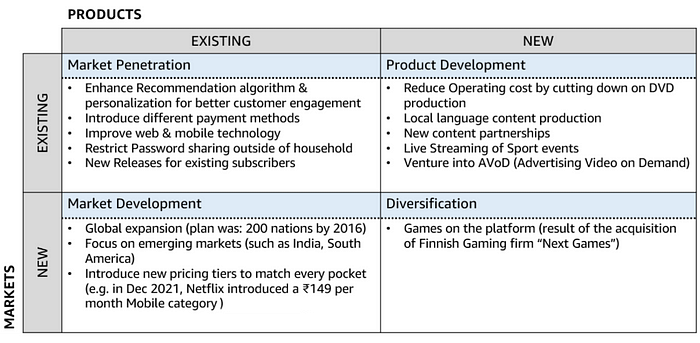
Ansoff Matrix is a strategic tool for exploring growth opportunities through market penetration, market development, product development, or diversification. The matrix helps balance risk while pursuing growth strategies.
Example Use Case: A company expanding into new geographies might use this framework to evaluate risks versus potential rewards.
This is a methodology emphasizing rapid experimentation with MVPs and iterative learning from customer feedback. Lean Startup minimizes waste by focusing on validated learning rather than assumptions.
Example Use Case: Startups often use this approach to refine their products based on real-world user data.
Product management frameworks are invaluable tools that provide structure and clarity throughout the product lifecycle. By leveraging these frameworks at appropriate stages — conceptualization (SWOT Analysis, Business Model Canvas), design (Agile Frameworks, Design Thinking), or post-launch (Porter’s Five Forces) — product managers can ensure their products meet customer needs while achieving business objectives. These tools not only enhance efficiency but also foster innovation by enabling teams to focus on what truly matters.

Comments
Nothing yet. Say the first thing.
Sign in to join the conversation.