
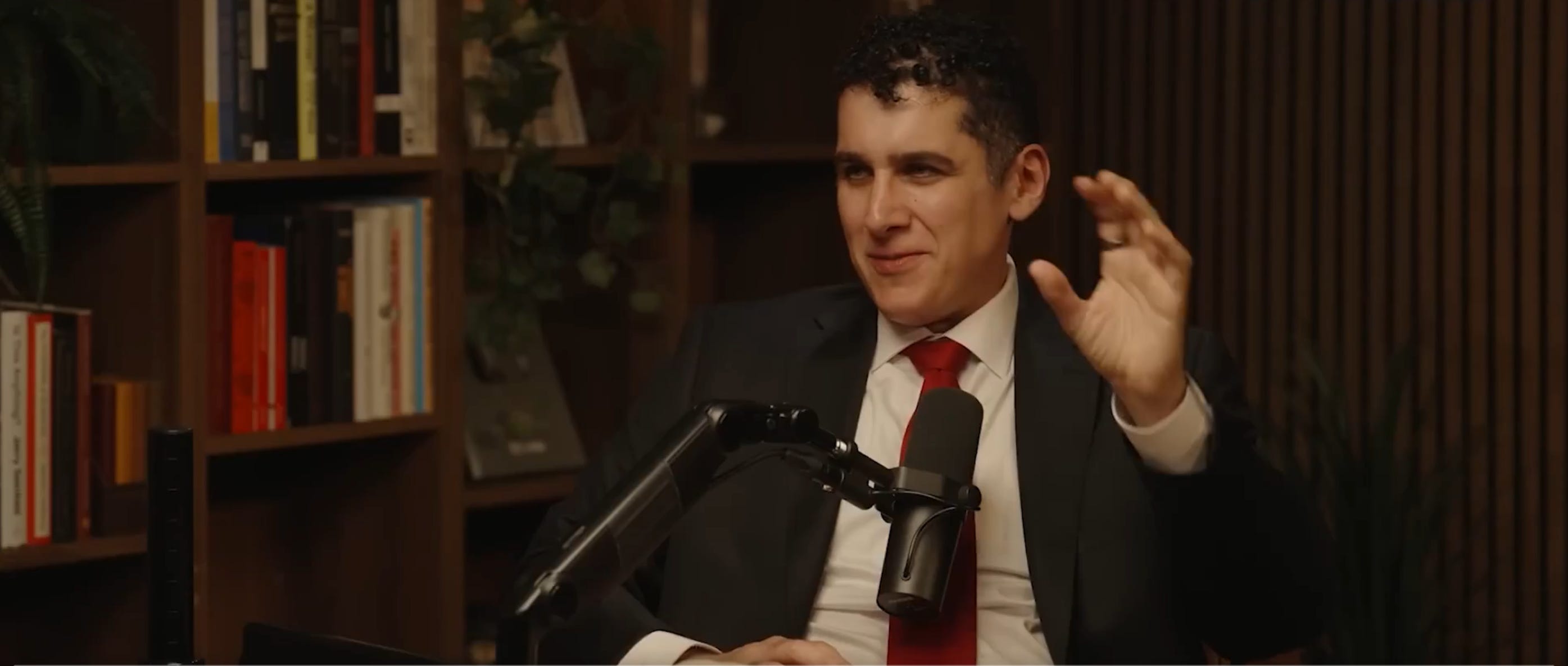
Richard Hanania is having a moment. His book, Kakistocracy: Why Populism Ends in Disaster, is now out and drawing mostly positive reviews. It earned him a profile in The Atlantic. I haven’t read his new book and I don’t know if I will. But it’s an interesting argument he raises, one I think is worth debating.
Longtime readers know I have something of a love-hate mentality when it comes to Hanania. Sometimes, he has something useful to say. Other times, he’s so far off the mark. That’s what makes him an interesting voice in the discourse - he keeps you on your toes, constantly forcing you to assess arguments and priors. I often give him a hard time, but there’s utility in someone like Hanania.
I’m not a populist myself, and I share Hanania’s view that the people shouldn’t be in charge of governance, which seems to be the premise behind Kakistocracy:

Richard Hanania@RichardHanania
One reason populism is a bad idea: gatekeepers are almost always correct. No sane person can deny this. You can come up with a list of things elites get wrong, but the list of things they get right relative to populists and the mass public is much longer.

2:54 PM · Jul 6, 2026 · 9.32K Views
18 Replies · 13 Reposts · 180 Likes
Before going further, for anyone who may not know, kakistocracy (not to be confused with khakistocracy), is a government run by the worst people a society has to offer, the least qualified. Like many forms of government, it’s a theoretical more than practical concept, but it does exist in shades. In my view, the U.S. has been something of a kakistocracy for some time, even pre-Donald Trump.
Hanania’s thesis seems to zero in on Trump, MAGA, and the broader right-wing populist movement, however. There’s validity to the argument. The Trump presidency does seem to court lots of people who really have no business in positions of power to a degree unseen in previous administrations, even as many, the Obama administration specifically, were all kakistocracies to one extent or another.
The appeal of the Trump administration for many was that we finally had outsiders, some fresh eyes and faces at the helm of the country. As we’re finding out, the thought of an outsider is better than the reality of it. Not everyone is a good fit for every job and government is no different. Even if one believes outsiders are at some point necessary, they have to bring a steady hand, a steady mentality to the table. That part of the qualifications list doesn’t change. Moreover, the fact that government exists to serve the people (a questionable assertion, but set that aside for now) doesn’t mean that the people themselves can provide good governance. Government itself is an implication that people cannot govern themselves.
Let me get to the point. Here’s the problem I have with Hanania’s argument: exactly what does he intend to do about it? Since I didn’t read his book, I can’t comment on any solutions he might’ve offered. But I’ve heard enough of his thoughts over the years to have a good sense of what he’d propose and what I notice most of all is what he doesn’t say, which is what I’m about to say.
If you don’t want stupid people to have a say in politics, as Hanania does, then you must restrict franchise. There’s literally no other way. Mass democracy breeds populism, which lays groundwork for tyranny. Unless you want to argue in favor of restricting franchise, railing against populism is a moot point. The only way to stop the worst, least-qualified people from ever coming close to participating in politics is to restrict political rights.
This, of course, is a non-starter in the U.S., which guarantees the right to vote for all, the right to run for office for all. We accept as a given that this is a good thing, a sacrosanct American value. Without rendering a moral judgment, it clearly comes with trade-offs most Americans, liberal or conservative, Left or Right, seem to acknowledge, namely that ignorant, stupid, uneducated people get to have a say in governing affairs.
Liberals, however, hold an irreconcilable stance. On one hand, they lament the fact people they regard as dumber than them getting to vote. On the other hand, they don’t believe voting rights should ever be curtailed. In fact, they believe voting rights should be expanded. This despite the fact even many within the left-wing coalition are less educated than them, with plenty of stupidity to go around on their side. But since mass democracy turns elections not into an exercise in governance, but power struggles, liberals want voting rights expanded because it ensures they’ll get more voters.
Based on his past commentary plus what I can suss out from his new book, Hanania appears to endorse the alternative: mass democracy, but access to information is restricted by gatekeepers. Managed democracy. Aside from the fact a managed democracy is no democracy at all, the problem with this is that it misdiagnoses the illness. The problem isn’t bad information, troublesome as it is. It’s that most people have no clue how to process information to make a political decision. Education doesn’t make people smarter. If anything, education, in practice, reinforces people’s worst proclivities because it provides an intellectual foundation for them.
The only way to influence people to make better choices is to impose tangible costs. Voting isn’t about “making your voice heard.” We already have free speech for that. Voting is about deciding which direction to go in, which plan formulated by policymakers is to be executed. To do that, voters need to have a clear understanding of the benefits and trade-offs of each candidate, of each policy to be decided on. People have to know what they might gain from their vote, what they might lose from it. It cannot be intangible, either. It must be real, not something which could be true in a strictly theoretical sense. When the time to govern has come, the time for philosophy has passed.
I asked this question once before and I’ll ask it again: if you had to face the fact you could lose everything, your job, wealth, property, as a result of voting for the wrong candidate or policy, wouldn’t you vote differently than you do currently? Better yet, would you even want to vote at all? The point isn’t that this would be a good thing. The point is that politics is a serious matter and voters must feel the weight of responsibility for democracy to function as intended. It cannot be driven entirely by vibes, a “your side-my side” affair. Otherwise, you get things like city residents voting for Democrats for decades despite their obvious, entrenched failures.
In a democracy, to truly be an informed voter, a person must be politically engaged at a very deep level. Most people have neither the time nor the interest for it. We all know this. We see it all around us, in our daily lives. I don’t even want to call it apathy, because that implies people should care but don’t. The reality is that politics and governance isn’t for anyone. That’s been true throughout history.
I once quoted a woman who goes by the psedonym “Aella” who came to a profound realization concerning democracy:
2. Democracy is an insane invention. It feels sort of default or obvious now, and I sort of assumed that... people in the past all kinda wanted something like democracy but were oppressed by their monarchs, but this is not the case. Much of the time, calls for democracy were radical, even among the suffering unrepresented lower classes. If you went back in time and said “every man should have the right to vote” people would go ‘whoah there are you insane? that would absolutely destroy civilization!’
People like Richard Hanania would prefer you forget, but the U.S. didn’t enter statehood following the Revolution as a mass democracy. That came nearly a half-century later. None of the Founders were liberal democrats and they most certainly didn’t believe in mass democracy nor universal suffrage. Yes, they were worried about government becoming too powerful. But like most of their time, they were what we’d consider today to be aristocrats, believing that governance was something most people couldn’t be trusted with. That doesn’t make them authoritarians, either. If anything, they might agree on some level with Hanania.
As long as America remains a mass democracy, politics will trend towards keeping one faction in power over another. Mass democracy is, in practice, an organized power struggle, leaving no time for solving any real problems. If it seems like nothing ever gets fixed, well, there you go. Our leaders may be of poor quality, but they’re the product of a dysfunctional system called mass democracy, not the cause of it.
Experts, along with other forms of elite gatekeepers, are simply not sufficient for keeping things orderly in mass democracy. Hanania says:
Richard Hanania@RichardHanania
Ideally, you'd trust the experts when they're right about things and not when they're wrong. But if you have to choose between always trusting experts or always doubting them, choose always trusting them. You'll be right more often than you're wrong, as I tell @coldxman
10:28 PM · Jul 14, 2026 · 22.2K Views
27 Replies · 13 Reposts · 363 Likes
To start, who’s in charge here? As someone who likely believes in separation of powers, Hanania probably views gatekeepers as a check on authority. The problem is, this is an informal relationship. It’s an indirect way to ensure leaders, the people with authority, cannot pull a fast one on us. It sounds nice in theory.
In practice? Who are we supposed to defer to? The gatekeepers? Or the people with actual political authority? If we cannot trust authority, what’s the point? And if we should trust the gatekeepers over authority, if they’re the ones who get to tell us what to think, then doesn’t that imply the gatekeepers are the ones who are actually in charge?
Separation of powers can work if formalized. It cannot work on an informal basis. By the way, we already have the system in place that Hanania proposes. It hasn’t worked very well. Doubling down on failure rarely leads to success. More importantly, and this is something Hanania probably would never concede, but the biggest problem with elite gatekeepers is that there exists no accountability for them.
Think about it - Hanania says to trust the elite gatekeepers because they’ll be right more times than they’re wrong. But this isn’t how authority works. This isn’t how responsibility works. You don’t get to insist on having legitimacy, being trusted because you get things more right than you get things wrongs.
Nobody’s perfect, no, and expecting perfection is entirely unreasonable. The point is that for gatekeeping to work, either as part of a formal or informal arrangement, there must be a way to hold gatekeepers accountable for their failures. There exists no such way. They can’t be fired, voted out of office, none of that. Nor do I think gatekeepers would ever agree to be held accountable, more importantly. There’s no greater freedom than a lack of accountability, after all.
There’s a lot of wishful thinking one must engage in to think this sort of indirect, mass democratic gatekeeping can actually function:

Conversations with Coleman@ConvoswColeman
.@RichardHanania says institutions like ‘The New York Times’ and Harvard—while far from perfect—are far more reliable sources of knowledge than the podcast circuit. “If ‘The New York Times’ really gets facts wrong, they will correct it. Most of the big podcasters out
6:13 PM · Jul 14, 2026 · 200K Views
118 Replies · 29 Reposts · 350 Likes
Again - where’s the accountability? More important, people’s attention spans are short. It matters little that The New York Times and Harvard will correct their mistakes, because by the time they do, the seed has been planted and the public has been programmed. There’s plenty of data out there showing just how poorly informed, especially the college-educated, actually are, in turn proving these corrections by elite gatekeepers to be entirely meaningless. In the business of politics and public opinion, you have to get it right the first time.
Everywhere you turn, the demon inherent in mass democracy emerges. Only a committed, engaged body politic even cares about hearing corrections. Only such a committed, engaged body politic has both the interest and attention span necessary to seek out the right information. Hanania seems to think most voters in a mass democracy are like him. But they’re not. They have other concerns. It makes you wonder: is he the one who’s detached?
Hanania’s bottom line seems to be that mass democracy can work as long as certain controls and safeguards are in place, with elites in control. The reality is, mass democracy itself is the problem, and no amount of controls and safeguards maintained by elites will make it tenable. If anything, all those controls and safeguards ultimately end up restricting democracy, restricting political participation, leading to elite rule. You’ve got to ask: why bother with mass democracy if a small group of people atop the hierarchy end up calling all the shots, anyway?
I’ve said this before, but Hanania cannot afford to oppose universal suffrage. For one, that’d make him the enemy of the establishment he so badly aspires to be part of. If he wants to be a gatekeeper, a member of the political mainstream, he cannot oppose mass democracy. He must ascribe to their religion, the state religion, and anything he says must conform to that dogmatic framework.
Does this make him intellectually dishonest? Not entirely, as you’ll see in a second. Inconsistent, definitely. What it surely also means is he’s been compromised. Because he desires to be a gatekeeper himself in defense of a thoroughly unaccountable regime, this means that even if his argument has merit, he himself cannot be allowed to be any kind of gatekeeper. It means that for whatever his traits, he lacks the integrity necessary to be the sort of elite necessary for a healthy, functional republic.
In fact, as I once said, you cannot be any kind of leader without being able to command respect:
Think about the people you admire and respect in your life: why do you admire and respect them? Is it because of their accomplishments? Their credentials? Or because they lead their lives in a certain way, treat others a certain way, and believe in putting others before self? Not all aristocrats are like this, of course, but you’re never going to become one unless you can convince people you hold such values.
Put another way: why are military veterans so often viewed as having the traits necessary to become political leaders? That’s because the soldier is popularly viewed as being brave and virtuous. Obviously, this isn’t universally true, but don’t overthink it. The profession of arms has been viewed through its existence as a task requiring brave and virtuous individuals to carry out. The medical profession is also highly respected, but there’s comparatively less demand for a doctor to become politicians. That’s because doctors are respected for their expertise, not virtue.
Remember: Hanania wants respect because he knows much, despite the fact he himself isn’t a credentialed professional like a doctor. Like doctors, however, the kind of respect you get from simply being smart and knowledgeable means your credibility hinges on never being wrong. Hanania is wrong on much. Why should we ever trust him with being our democratic gatekeeper?
In addition to commanding respect, I think the most important thing for leaders, experts, gatekeepers, anyone who wants the responsibility of running the show, is to understand what it even means to be responsible in the first place. It means you can’t blame anyone else. You especially cannot blame those below you, you cannot blame “dumb” voters.
They must also understand the nature of authority and power, to understand the difference, and realize that in politics, you’re not asking anyone to do anything. You’re telling them. Great leaders understand this. They embrace it. They don’t shy away from it, pretending it’s something it’s not. If they’re people of virtue, the understanding humbles them and guides their actions. If they’re not people of virtue, they either fail to live up to their responsibilities, or they become tyrants.
Again, I can be very hard on Hanania because he gets it so badly wrong when it does. But he also gets much right and I think he does make an effort to be intellectually honest. For example, in Kakistocracy, he does include a chapter on how and why right-wing populism can actually be successful. I agree with Hanania that not only has Trump and MAGA been more failure than success, but also that populism in general doesn’t work, and it especially doesn’t work in such a developed country like the U.S.
I don’t think he offers much in the way of solutions, however, largely because of his commitment to mass democracy, universal suffrage, etc. Until he’s willing to question his own priors on those, Hanania is, whether he realizes it or not, demanding a return to the status quo ante-Trump. That worked so well, didn’t it?
What are your thoughts on Hanania and his ideas? Share your thoughts in the comments.
Max Remington writes about armed conflict and prepping. Follow him on Twitter at @AgentMax90.
If you liked this post from We're Not At the End, But You Can See It From Here, why not share? If you’re a first-time visitor, please consider subscribing!
No posts
Comments
Nothing yet. Say the first thing.
Sign in to join the conversation.