
We are the first generation to treat information like a buffet we’re required to finish. But I’m not talking about “brain rot” or cat videos. I’m talking about the high-signal, well-curated, “good” stuff: the Substacks, the long-form essays, and the deep-dive threads.
Every day, as soon as I wake up, I am bombarded with notifications, emails, and Slack messages. We’ve reached a point of mental bloating. We’re eating organic, high-quality information, but we’re still eating too much of it.
Often I get a kind of brain fog because of so much information coming to me. We humans are not evolved to deal with this, and I’m saying this in spite of not using much Instagram or short-form videos. If you think I am talking about reels or cat videos here, no—that’s not my point. Everyone knows that it causes “brain rot.” I have also uninstalled news apps from my phone.
I’m talking about highly curated newsletters and well-written posts on X. My inbox is bombarded with Substack, and most of it is good stuff. I have too many good blogs to read, but too little time to go through them.
The goal of an information diet isn’t just to “read less.” The goal is to reclaim headspace. When your mind isn’t constantly processing someone else’s thoughts, you finally have the room to think clearly and act clearly. You move from a state of constant reaction to a state of deep focus. It’s about being more in the present - actually living your life instead of just reading about how others are living theirs.
Oliver Burkeman has a take on this that changed my perspective. He writes:
“I’m going to take a wild guess here and say that you, like me, have a large pile (or digital equivalent) of books or articles you’ve been meaning to get around to reading... It’s the archetypal ‘first-world problem’, I know. But one worth reflecting on – because it’s a microcosm of a broader mistake that makes it more stressful than it needs to be to build a fulfilling and productive life: the problem of Too Many Needles.”
The solution is to treat your “to read” pile as a river, instead of a bucket.
Think of it as a stream that flows past you, and from which you pluck a few choice items, here and there. A bucket demands that you empty it; a river just exists. After all, you presumably don’t feel overwhelmed by all the unread books in the British Library—not because there aren’t an overwhelming number of them, but because it never occurred to you that it might be your job to get through them all.
The answer to this overload isn’t binary. It’s not black and white; it’s shades of grey. You don’t want to be overloaded 24/7, yet you still want to be exposed to serendipity. To find that balance, I’ve had to build a foundation of habits:
Notification Zero: I turn off notifications for all apps. I only keep them on for the essentials like banking and utilities.
Default DND: I keep my phone on Do Not Disturb by default. I have added a few contacts as favorites who can call me directly. Other calls get disconnected automatically; I had to do this to survive the spam calls, and it just works.
Schedule Distraction Time: Instead of just scheduling focus time on my calendar, I schedule distraction time. I check X and Substack only thrice a day, usually post-afternoon for 1–2 hours max.
The Email Batch: I open email just twice a day (11am and 4pm). If Gmail is too overwhelming, try “Simplify Gmail.” I personally use Hey; it keeps me sane.
I’ve realized that the iPhone is designed for addiction. Lately, I’ve started leaning back into the physical world to reclaim my attention:
The Light Phone: On weekends and late evenings, I use a “dumb phone.” By design, you don’t want to use it that much.
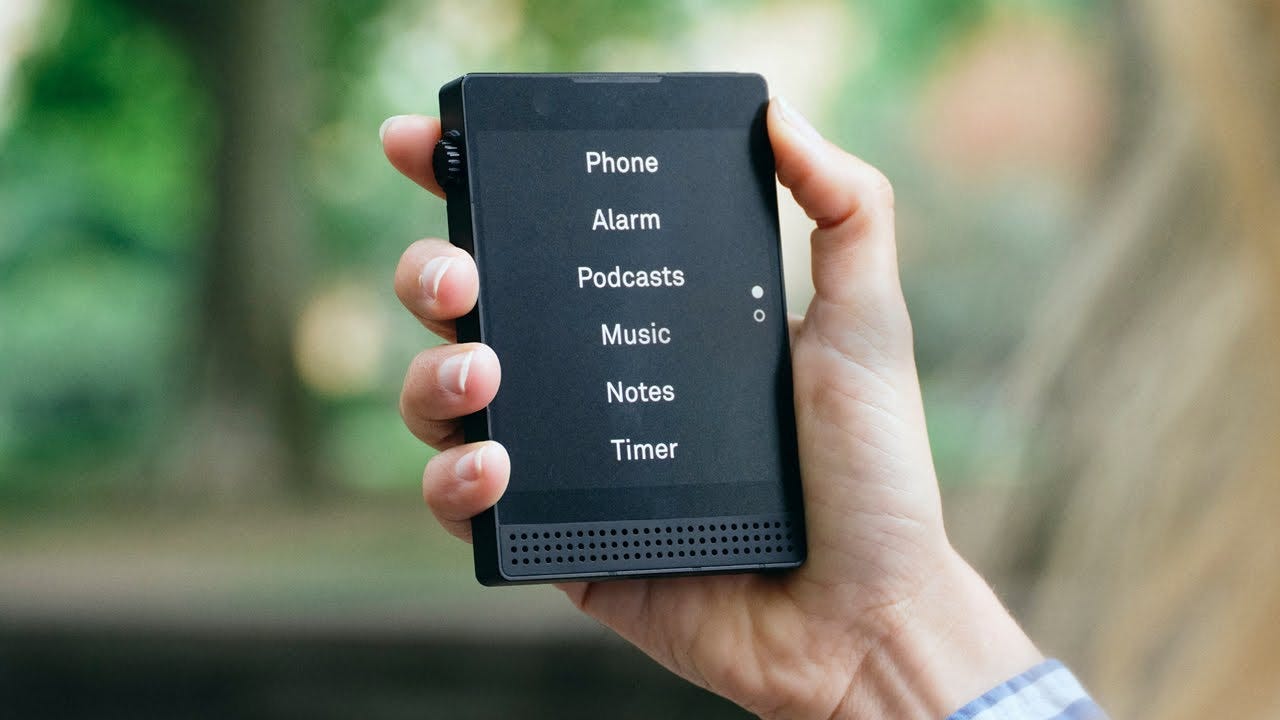
The 10pm Rule: Post-10pm, I keep my phone in another room and switch to my Light Phone. Then, I read. I usually have 2–3 books going in parallel (currently: Five Invitations to Dying, Reflections on a Mountain Lake, and Slow Productivity).
Physical over Digital: I’ve been using a physical wall calendar and a notebook much more lately instead of Google Calendar or Notion. Although I love Obsidian (I’m a big fan of the “files over apps“ philosophy), physical tools keep me grounded.
It is tempting to say “just get rid of X” or “avoid your phone entirely.” But that isn’t prudent. Serendipity has played a huge role in my life.
I treat a platform like X like a cocktail party. Daniel Vassallo once described it as a place where you follow various people doing unconventional things, jump into conversations, and give serendipity a chance. You don’t live at the party, but you visit it to run into random people.
In the past, I have actually landed 7-figure clients from X. So, while I keep tight controls on these platforms, I make sure I stay exposed to those serendipitous events that only the internet can provide.
We just need to make sure we’re the ones visiting the river, rather than letting the river drown us.
- Shivam
Comments
Nothing yet. Say the first thing.
Sign in to join the conversation.