
Hi, I’m Menno, and this is my first piece for Agartha. I’ve been fascinated by climate tech and Solarpunk for fifteen years, and I’m excited to share what the data tells us about solar energy in 2026.
This blog’s soundtrack is by a South African indie-pop band, and it takes me straight back to a trip to Kenya, where I first saw solar bring power to rural villages.
Press play, make yourself a drink, and let me show you how far solar has come.
This essay covers a lot of ground. Here’s the index:
Chapter 1: Introduction
Chapter 2: Why Solar Panels Are Special
Chapter 3: Deploying Solar in 2026
Chapter 4: The Bigger Picture in Charts
Chapter 5: Electrifying the Other 79%
Chapter 6: The Solarpunk Future Is a Choice
Chapter 1: Introduction
I first heard the term Solarpunk in the winter of 2011, during a dark period in my life. I had just dropped out of college due to health issues, and I felt lost.
Soul-searching, I spent countless hours watching documentaries, trying to figure out how the world worked and where I fit into it. That trail led me deep into the metacrisis. Doom and gloom, even then.
Somewhere in that spiral, I stumbled upon a word I’d never seen before: Solarpunk.
The hopeful, optimistic vision of a regenerative society in harmony with nature was just what I needed. A world where human flourishing, renewable energy, ecological farming, and electric automobiles are the norm. The philosophy clicked. The art was beautiful. I felt aligned.
I’ve been tracking humanity’s progress towards that vision ever since. It even became my profession. After completing a master’s degree in Sustainable Business and Innovation, specializing in electric mobility, I landed a data analyst job on this topic for the Dutch government.
These days I’m putting the Solarpunk ethos into practice. A few years ago I bought some land in rural South-West France (shout-out to our BUY LAND t-shirt 😉). As I’m developing this acre for the next century, I’m building with passivhaus principles, permaculture design, and an electrical system ready for solar and bi-directional EV batteries.
It’s 2026 now, a quarter of the way into the 21st century.
How far along are we towards building the Solarpunk future?
In our previous article we described Agartha’s flavor of Solarpunk, rooted in four pillars: ethical technology, planetary regeneration, loving communities, and spiritual growth.
This three-part essay is about the progress we’re actually making towards that future.
The technologies I’ll cover have quietly slipped out of the news cycle. Ever since ChatGPT launched, AI has dominated the media’s attention. Meanwhile, solar photovoltaics, batteries, and electric vehicles have been riding exponential adoption curves. Together they amount to a full infrastructure upgrade for society, and AI’s rapid improvements are making them better still.
I’m writing about solar first, because electricity is the base layer everything else runs on. Even the AI companies racing to build data centers are bottlenecked by the energy to switch them on.
Chapter 2: Why Solar Panels Are Special
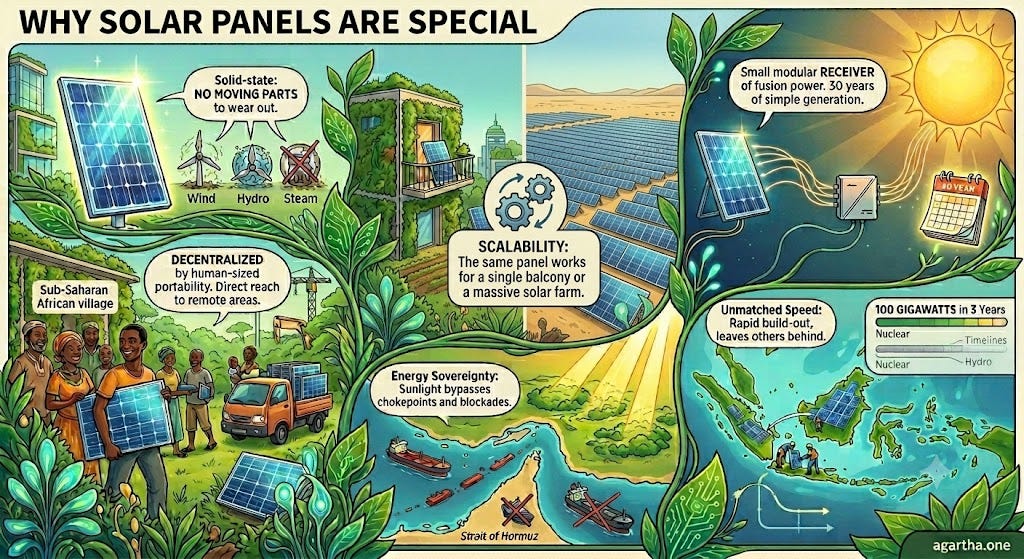
Solar photovoltaics stand apart from every other electricity generation technology, for a handful of reasons:
No moving parts. Wind, hydro, nuclear, gas, and coal all spin a turbine, and everything that spins eventually wears out. Solar is the only practical solid-state technology to produce electricity.
One product, every scale. The panel on a balcony in Berlin and the panel in a gigawatt solar farm in India are effectively the same product. When the entire world buys one standardized product, Wright’s Law goes to work and the price falls off a cliff.
The nuclear reactor comes free. When you think about it, a solar panel is a small modular receiver of nuclear energy. Hook it to an inverter and it simply generates electricity for thirty years.
It’s human-sized. One person can carry a panel, and a pick-up truck can deliver a whole installation. No need for cranes or heavy machinery. No other power source can reach a remote Sub-Saharan African village this way. The technology decentralizes itself.
Nobody can blockade the sun. Roughly a fifth of the world’s oil squeezes through the Strait of Hormuz, and the war in Iran reminds us what that means for prices everywhere. Sunlight doesn’t ship through a chokepoint, instead it creates energy sovereignty by default.
Deployment speed. Indonesia just pledged to build 100 gigawatts of solar pv within three years. Try that with wind, nuclear, hydro, or gas.
Those are my reasons to be excited about solar, and why its adoption keeps compounding.
None of this is hindsight, by the way. Data-driven thinkers like Peter Diamandis, Ray Kurzweil, Ramez Naam, Auke Hoekstra, and Tony Seba called these exponential trends 10-15 years ago, forecasting continued price declines and adoption. They were dismissed as radicals by many. But their models were right.
What they had in common was the data: reports from institutions like the IEA and BloombergNEF as well as think tanks like Ember and Our World in Data. Publications that cut through the noise of social media highlights and whatever political leaders happen to be saying.
The data tells us what is actually happening.
And the charts all say the same thing: Solarpunk tech is winning.
Or as William Gibson put it: “The future is already here, it’s just not evenly distributed.”
I can’t think of a better one-line summary of where the electrification of society, a cornerstone of the Solarpunk movement, stands in 2026.
Let me show you the places where the future has already arrived.
Enjoying the read so far? The easiest way to support this work is by wearing it. Our Solarpunk art t-shirts carry Agartha’s vision on 100% cotton, with a philosophy behind each design ☀️
Explore our designs in the Merch Shop →
Chapter 3: Deploying Solar in 2026
We’ve all heard that solar panels have become significantly cheaper over the decades. But the scale of it is hard to overstate.
In 2007, the year the iPhone launched, a solar panel cost $5 per watt. Today it’s $0.26.
That’s a 95% decline, within recent memory.
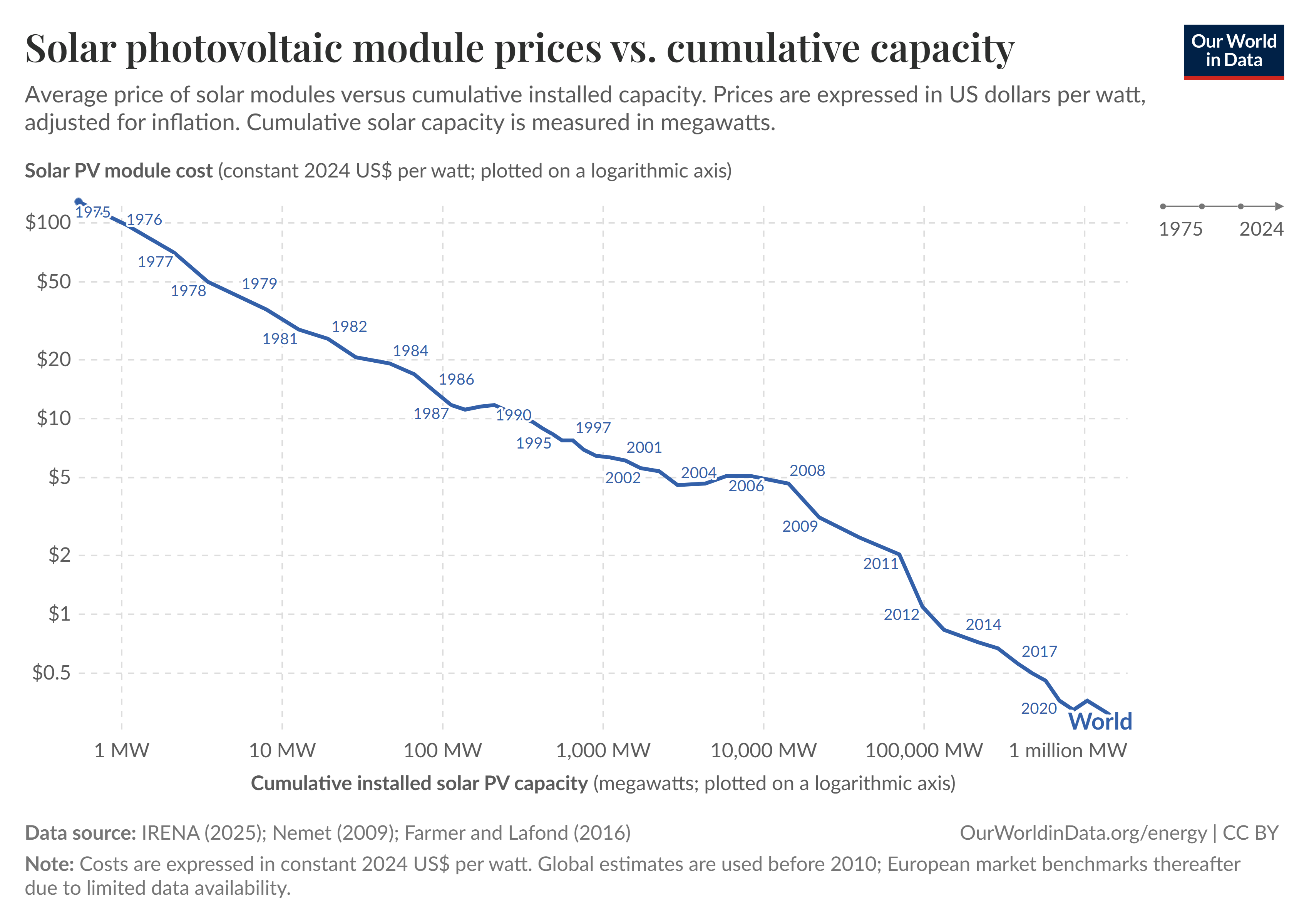
The driver behind this price curve is Wright’s Law: for every doubling of cumulative production, solar panel costs fall by around 20%. More demand funds better factories, better factories cut prices, lower prices unlock more demand. This flywheel has been running since 1975 and shows no sign of stopping soon.
Building a new solar farm is now cheaper than building a new gas plant, and that’s before the gas plant has bought any gas. Sunlight is free and arrives reliably without the need for shipping fuels across the world. Another benefit: utility-scale solar projects can guarantee electricity at a low fixed price for two decades, which no fuel-burning power plant can promise.
Here’s what such a rapid price decline means today:
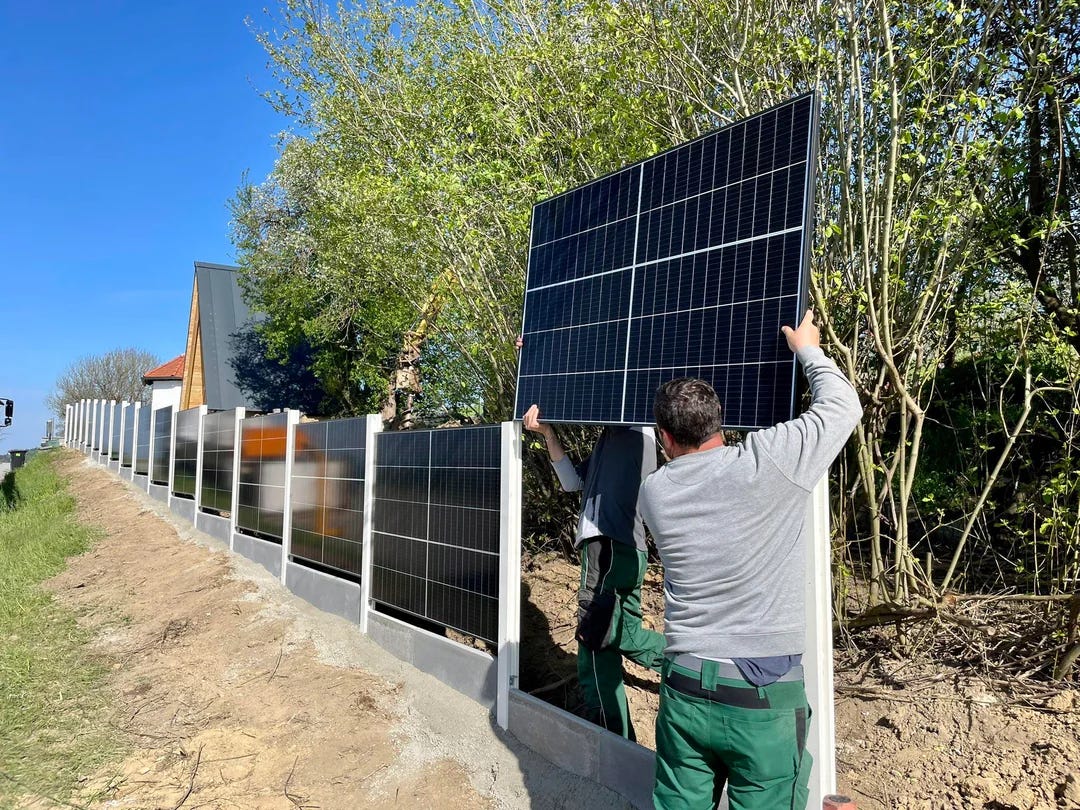
In Germany, people are using bifacial solar panels as a building material, particularly to build fences. They’re often cheaper than timber, which doesn’t generate electricity.
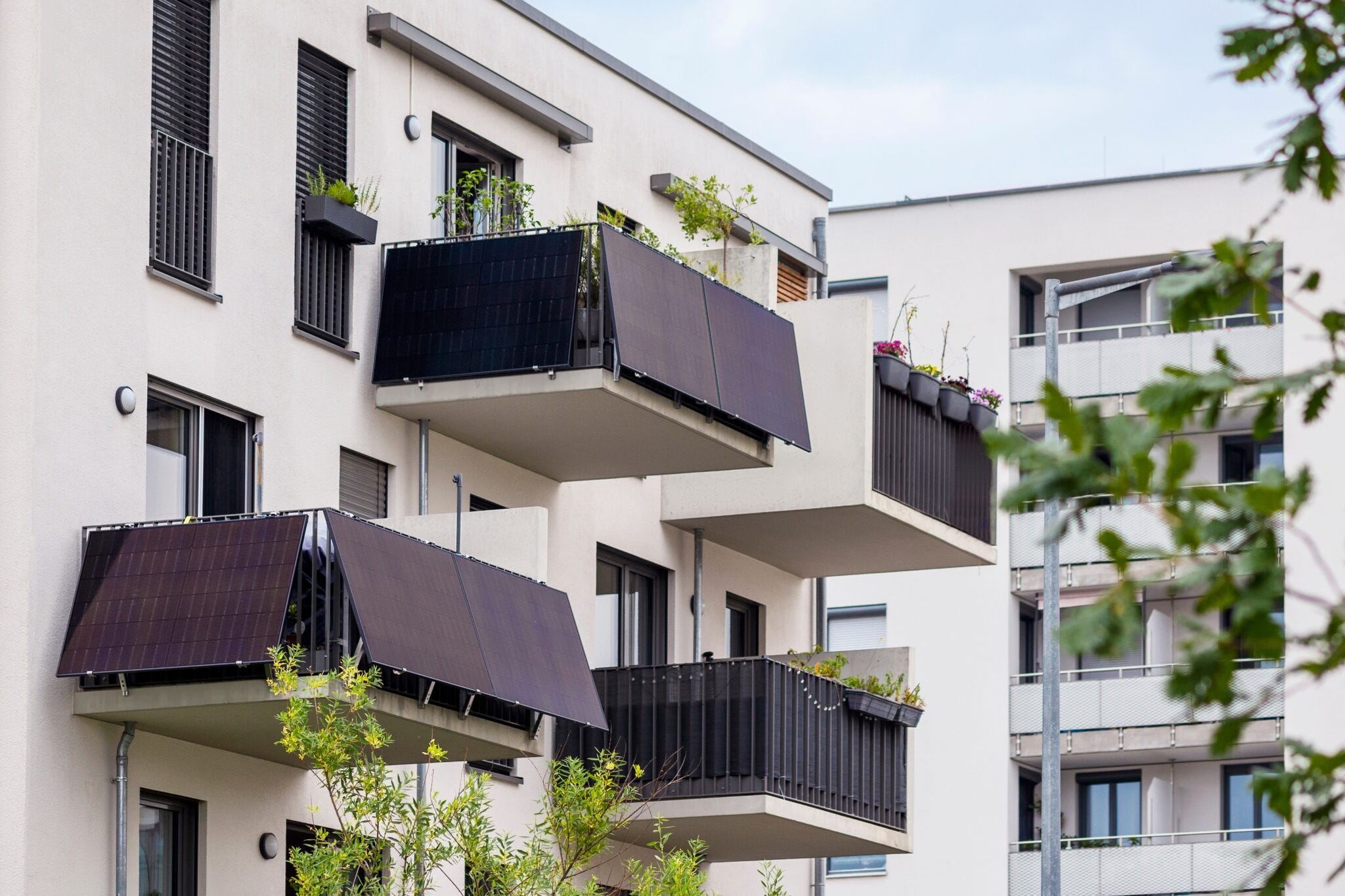
Balcony solar is also taking off, with over a million systems registered in Germany and supermarkets like Lidl selling plug-and-play kits for a few hundred euros. No electrician needed.
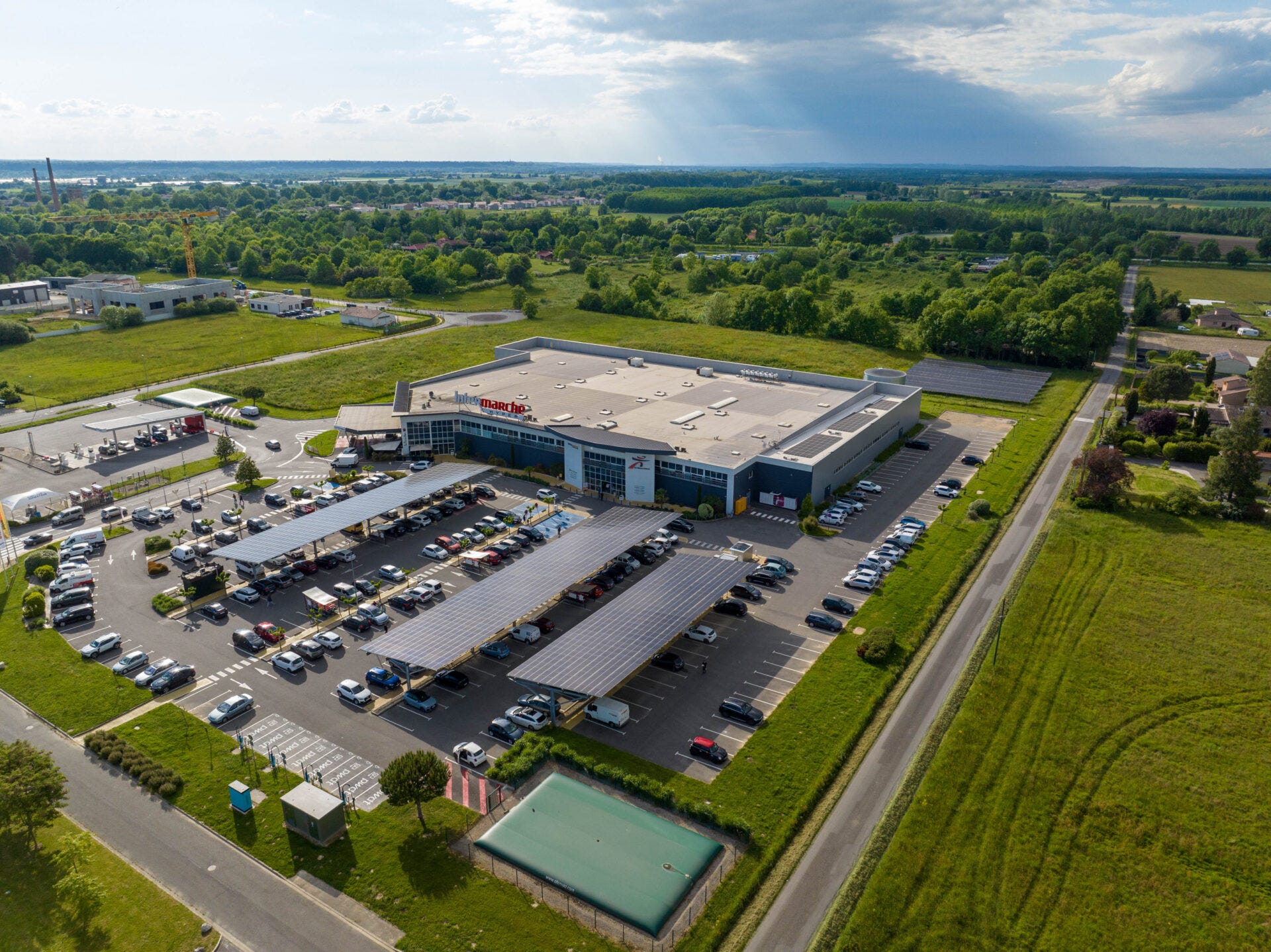
In France, every public parking lot with roughly 80+ spots must shade at least half their surface, with solar canopies as the default choice. Pretty much every supermarket qualifies.
It’s a policy that stacks wins: electricity from land already sacrificed to the car, and the shade keeps cars cool while taking the edge off the urban heat island. This mandate is now spreading to other countries.
Then there’s the rise of agrivoltaics, crops growing between and under solar panels. The system shades the soil, cuts evaporation, and shields against hail. Harvests under the panels can beat the open field in dry and hot years.

And it’s not just land.
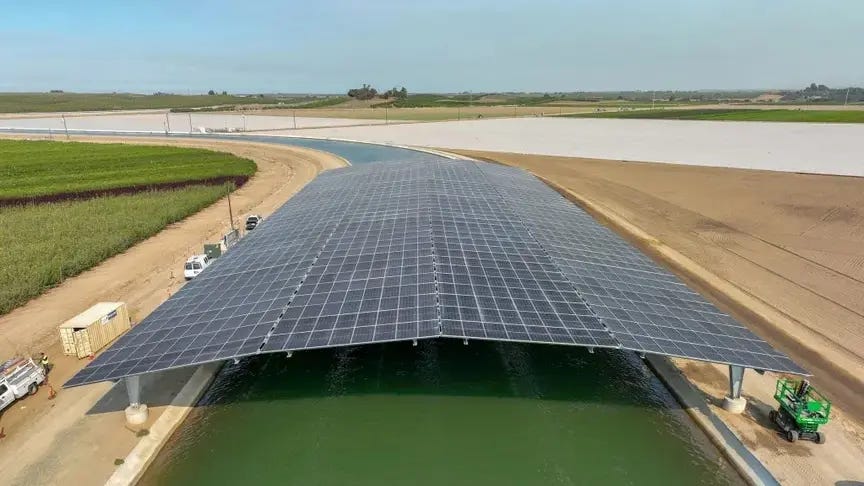
Solar panels are now cheap enough to be used in or above bodies of water, drastically reducing evaporation. It is no surprise that a drought-prone region like California has started to cover canals with solar canopies.
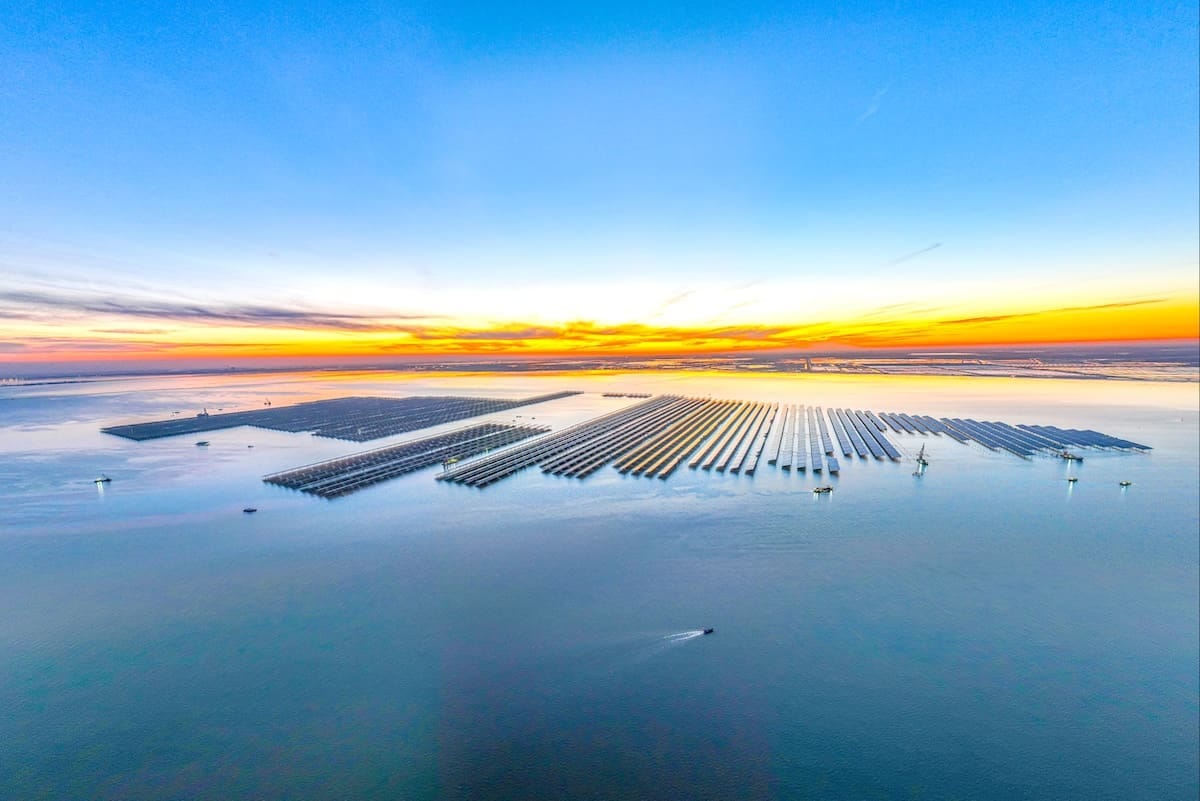
Floating utility-scale solar farms are now also commercially viable. China recently completed a gigawatt-scale offshore installation near Dongying.
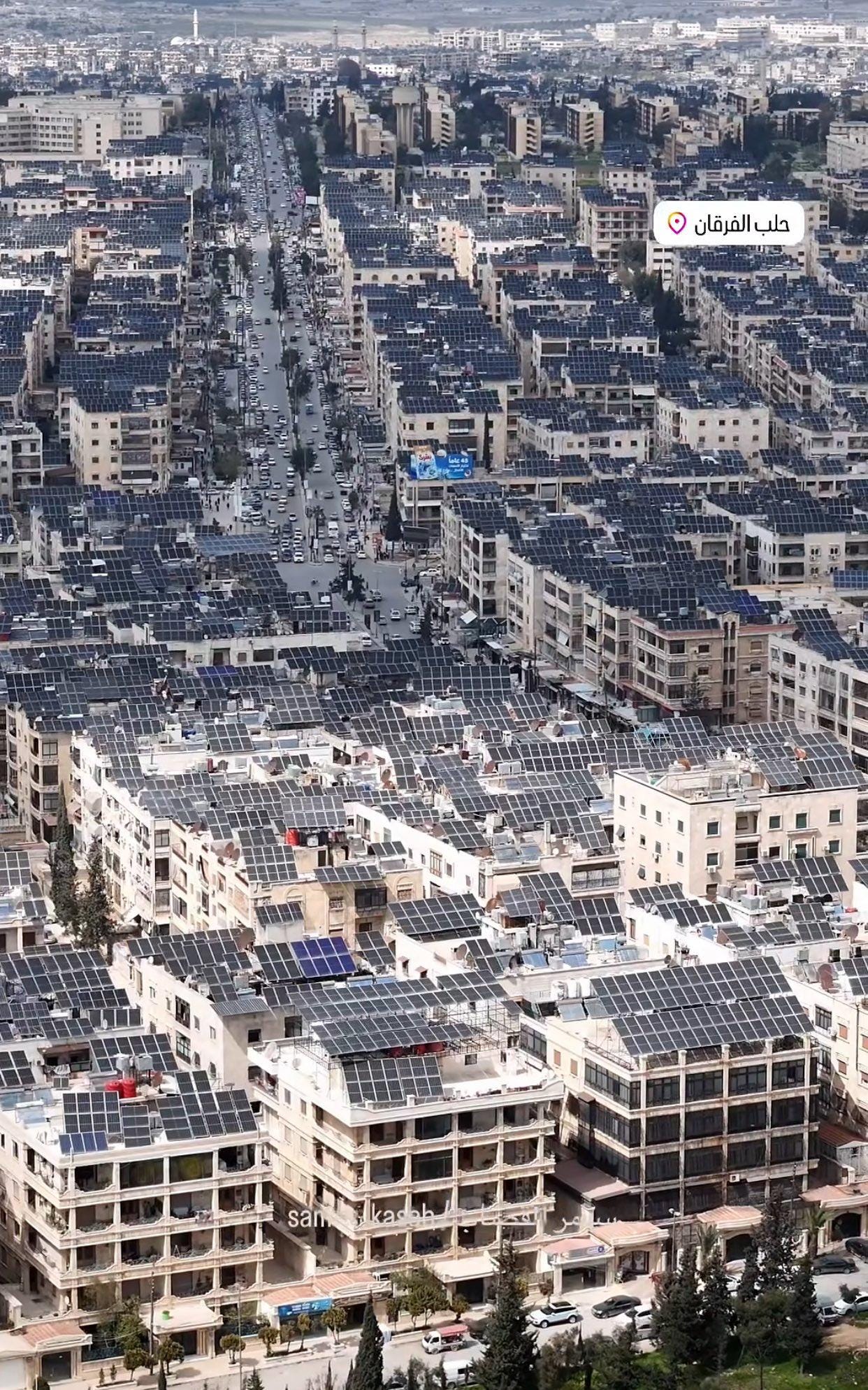
For my last and perhaps most striking example, I want to bring you to Aleppo, Syria.
This is a city rebuilding from fourteen years of war, where the grid is still in pieces and a $500 system means lights at night and charged phones in the morning.
Solar panels now cover nearly every roof.
If you’re liking the tour so far, consider subscribing to support our work. And get future pieces like this straight to your inbox ☀️
Chapter 4: The Bigger Picture in Charts
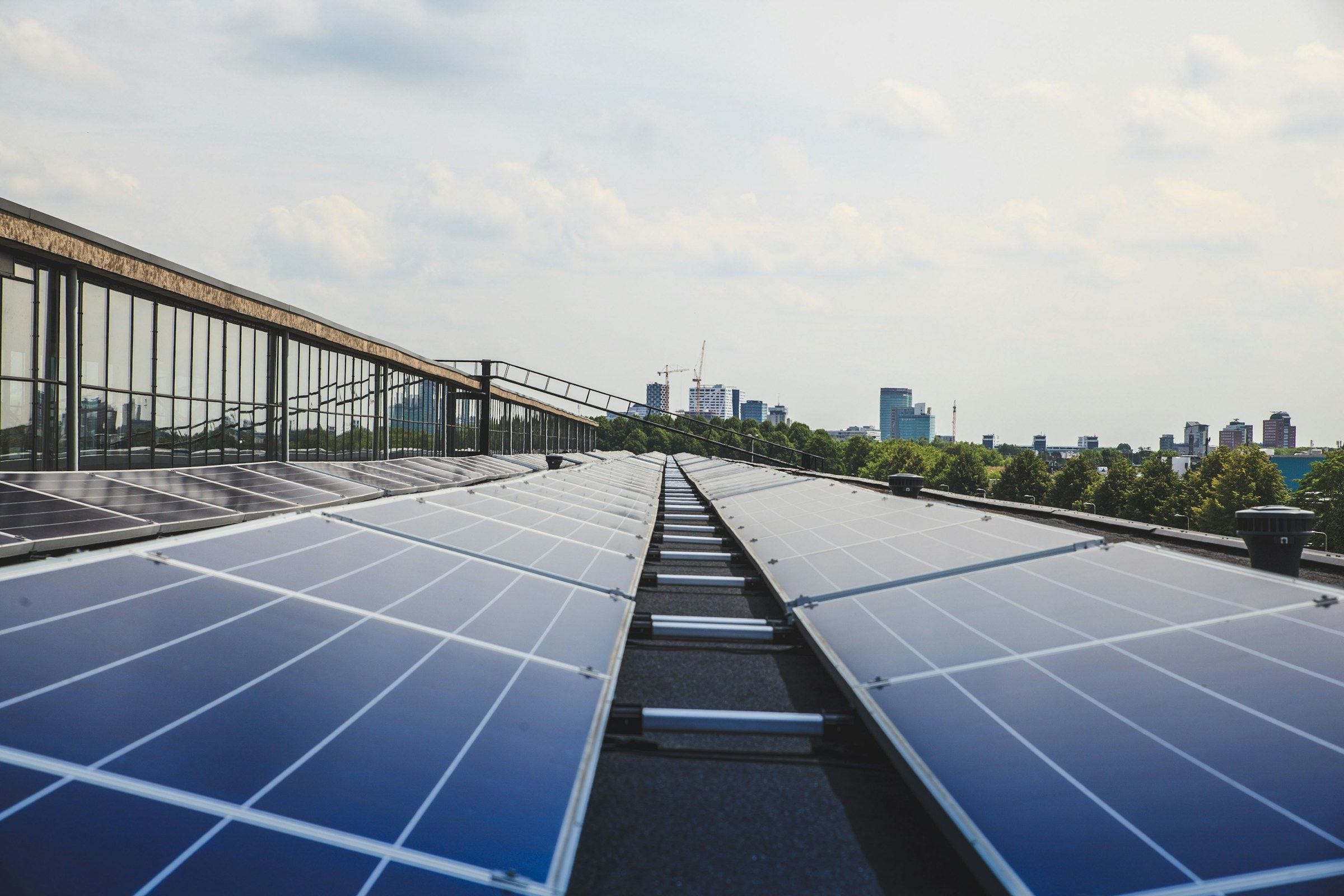
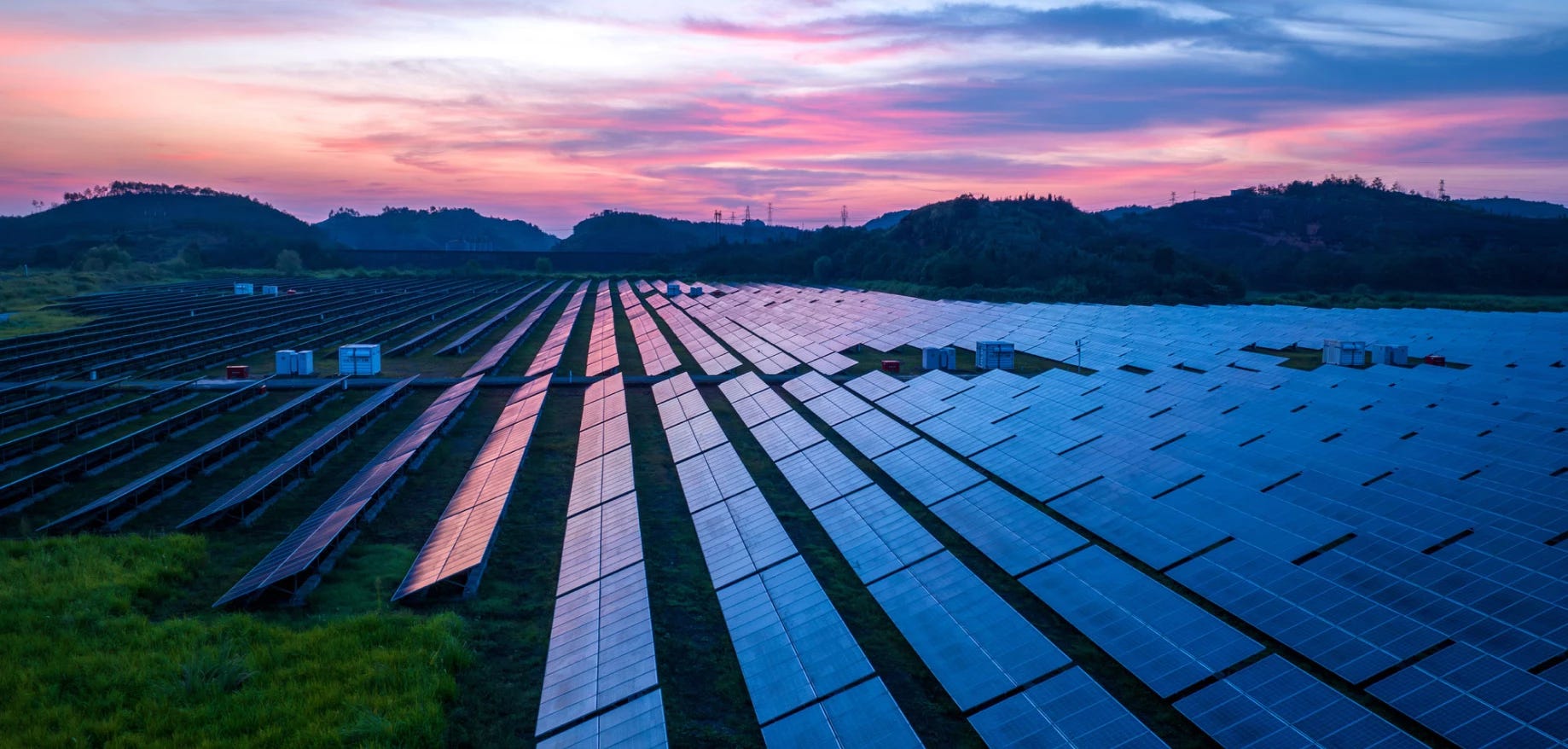
Solar’s cost decline turns almost any surface into a power plant.
Interesting developments and initiatives, but how is solar doing on a global level?
Research by Ember shows solar reached roughly 9% of global electricity generation in 2025, more than a doubling in just four years.
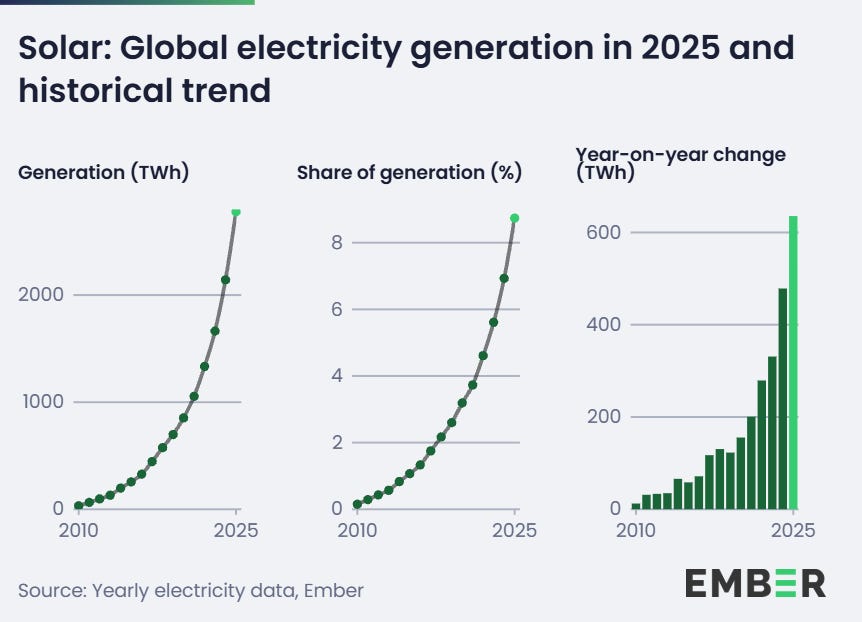
If the annual growth rate of 25-30% holds for the next five years, and global electricity demand continues to rise by 2.8% per year, solar panels could supply roughly a quarter of the world's electricity by 2030.
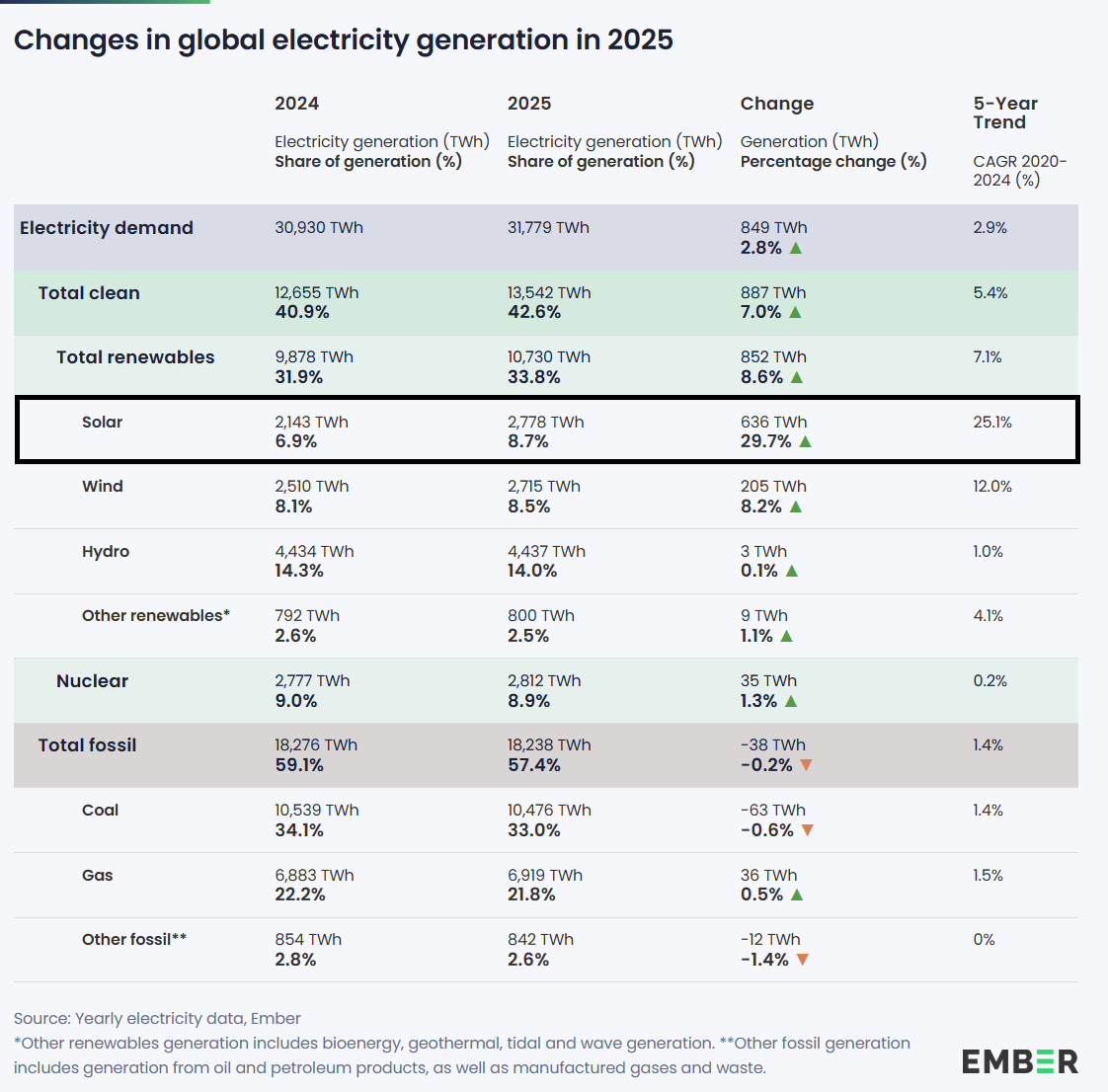
Hold on. That quick math would imply a 3x increase in solar generation over the next five years. That sounds way too optimistic!
The forecasters at the International Energy Agency thought so too.
Every single year, for over two decades.
Each colored line in the chart below is an IEA World Energy Outlook forecast for newly installed solar capacity, going back to 2002. The black line is reality. Note that the vertical axis is logarithmic (every gridline is 10x). This means that the black line is a steep exponential in disguise. What looks like steady progress is roughly thousandfold growth in two decades.
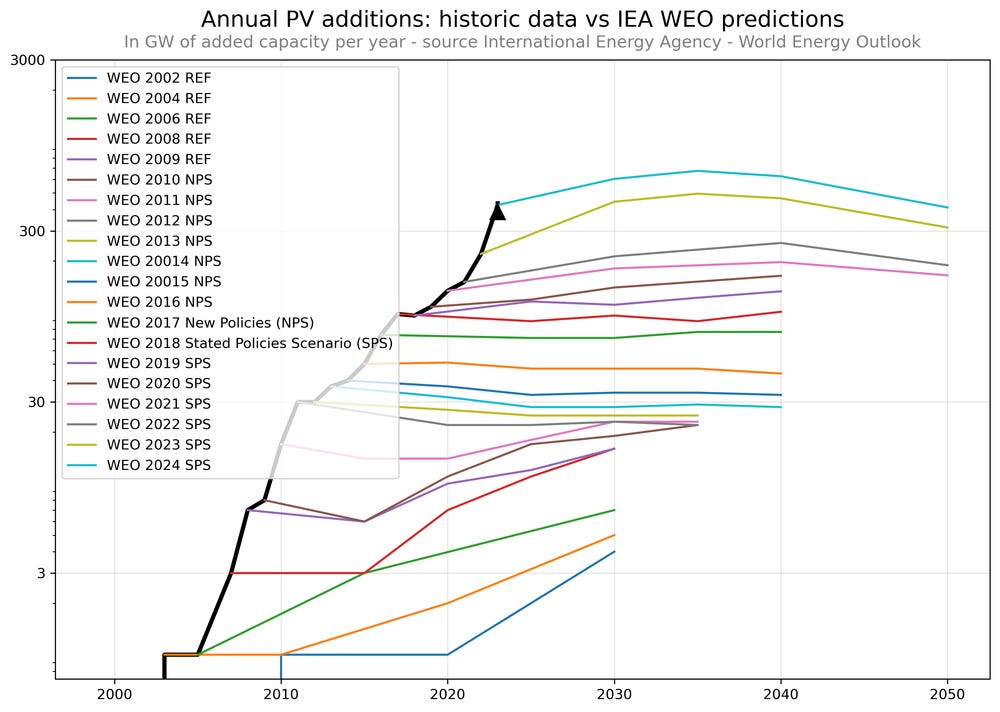
And here’s the detail I find most baffling: even the newest forecasts, which finally match the present, still predict that the curve flattens out soon. Twenty years of evidence says otherwise.
To be clear, the IEA’s data is excellent. What’s broken is the recurring assumption that the exponential ends next year. It’s been “next year” since 2002. The world keeps missing the memo.
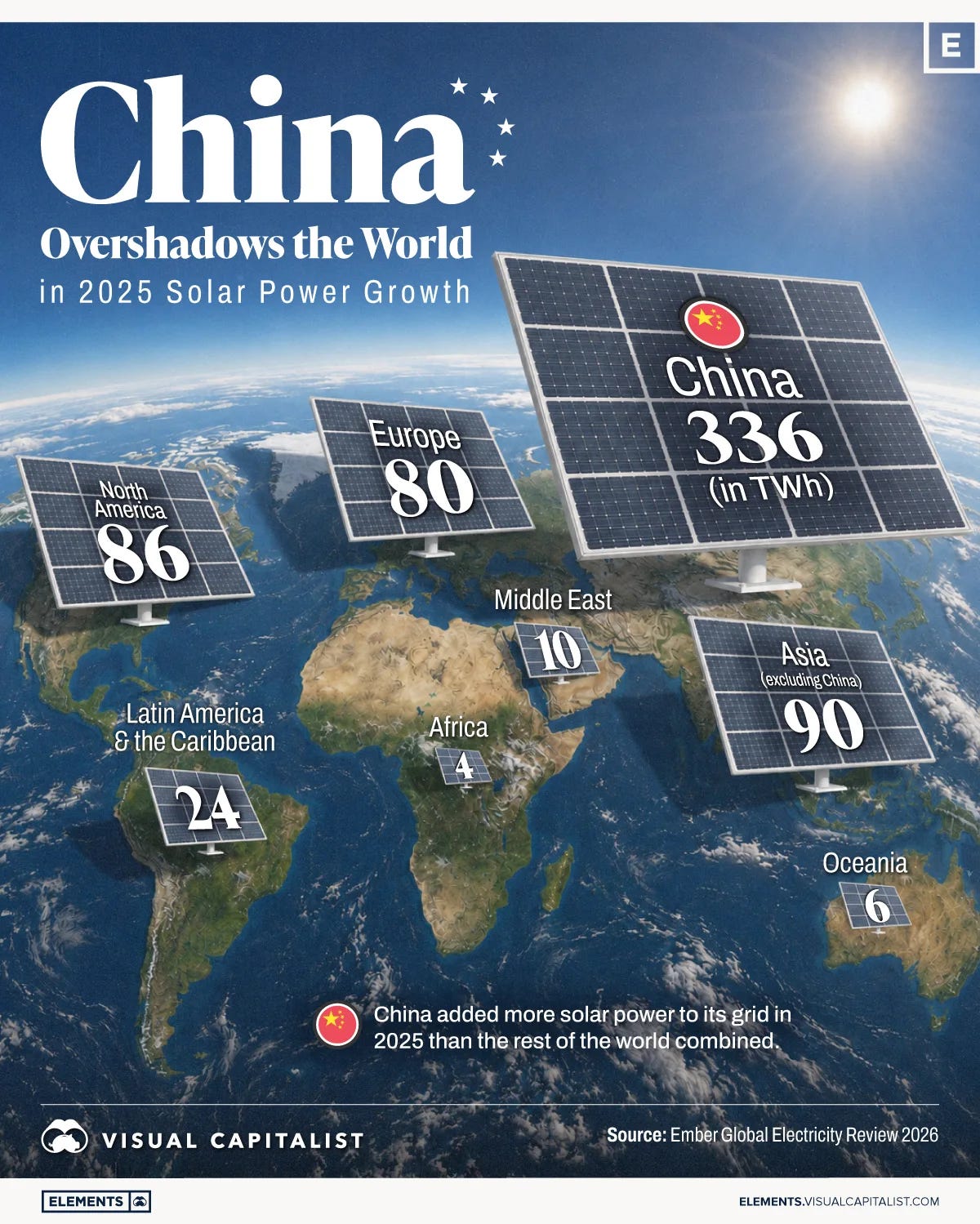
And the growth of solar deployment is indeed unevenly distributed, true to Gibson’s famous quote.
One country added more than all the others combined. China brought 336 TWh of new solar online in 2025, with the next-closest region managing barely a quarter as much. Little wonder, perhaps, from the country that manufactures around 85% of the world’s panels.
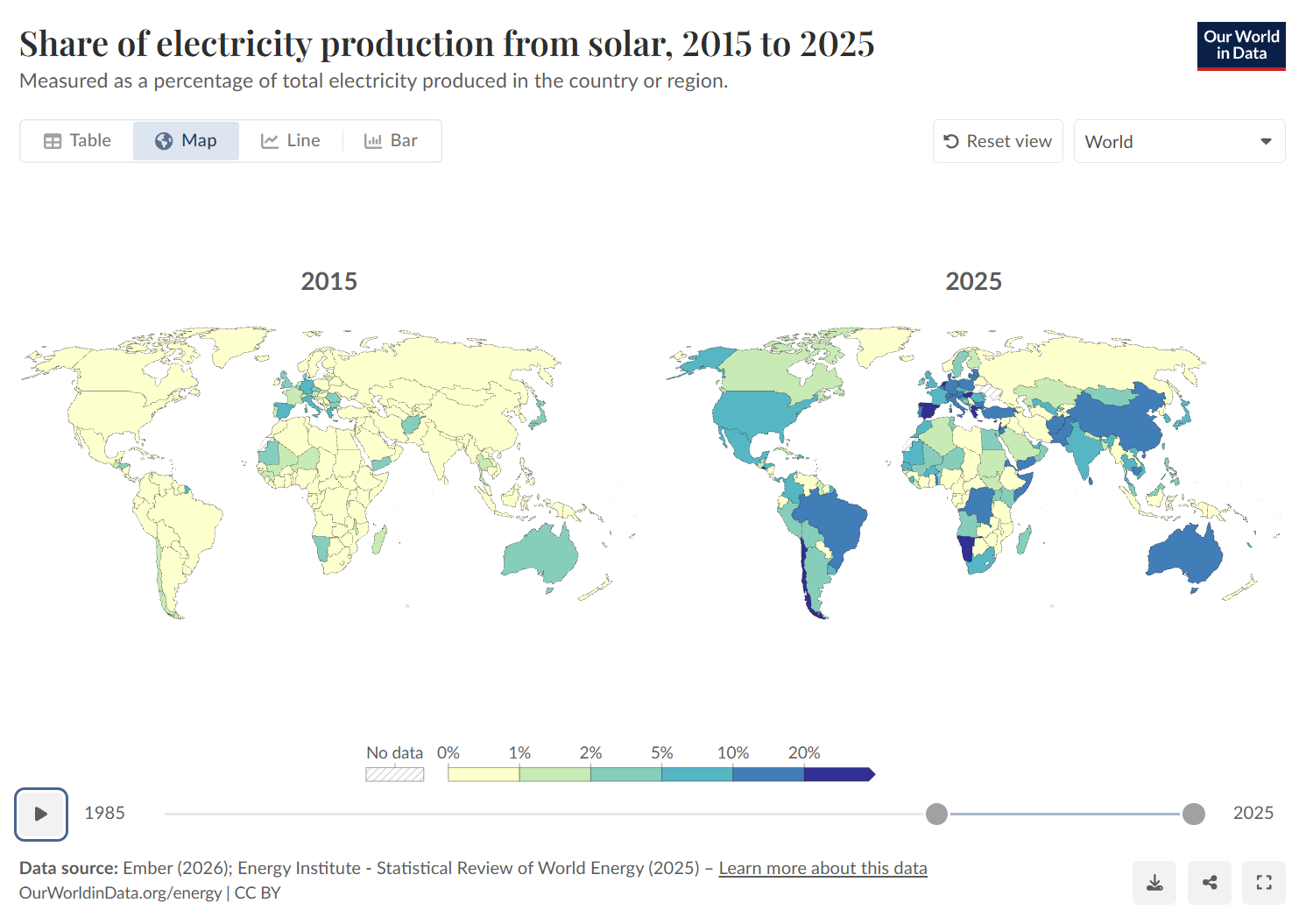
Zooming out, the map below puts 2015 next to 2025, showcasing the share of solar in each country’s electricity mix. Notable leading countries include Namibia, Somalia, Chile, El Salvador, Brasil, Spain, the Netherlands, Greece, Australia, China, Pakistan and Afghanistan. Globally, there has been about a tenfold growth during this time period.
Now imagine the change in the 2035 map.
Chapter 5: Electrifying the Other 79%
One last zoom-out before we close, because everything I’ve covered is about electricity, and electricity is only 21% of the world’s total energy consumption.
The other 79% still combusts: engines, boilers, furnaces, stoves. And burning is spectacularly wasteful as most of the energy in the fuel escapes as heat.
A petrol car is, energetically speaking, a heater that happens to move (more on that in Part 3 of this essay series).
Electric alternatives skip the burn entirely and beat it on efficiency by a factor of three or more.
Yes, that’s solar, the thin pink sliver in the chart below. Sobering, until you remember that this chart counts all the primary energy - all fuel burned, including the waste heat. Electricity doesn’t have to replace the entire mountain. It deletes most of it on contact.
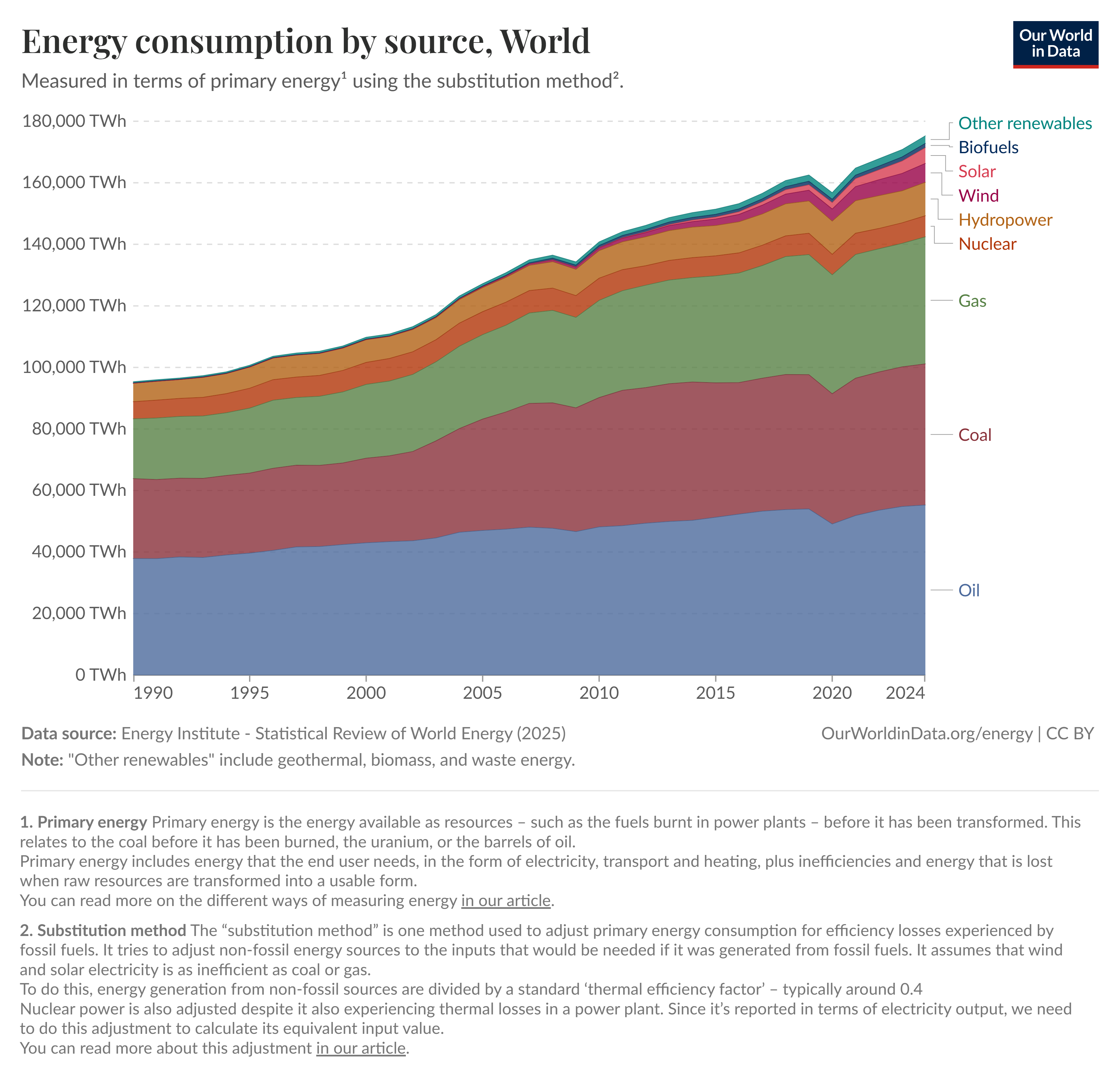
Michael Liebreich recently worked out the counterintuitive consequence of electrification. Since each unit of electricity replaces three or more units of fuel, the 21% figure will barely move in the early years of this transition, even as it accelerates. Don’t focus on the percentage. Look at the solar panels and the electric cars on the road.
Widescale electrification of society has a natural sequence. The Electrification Staircase Michael co-authored shows passenger cars and building heat are commercial today in most places, while ocean shipping and aviation can wait their turn.
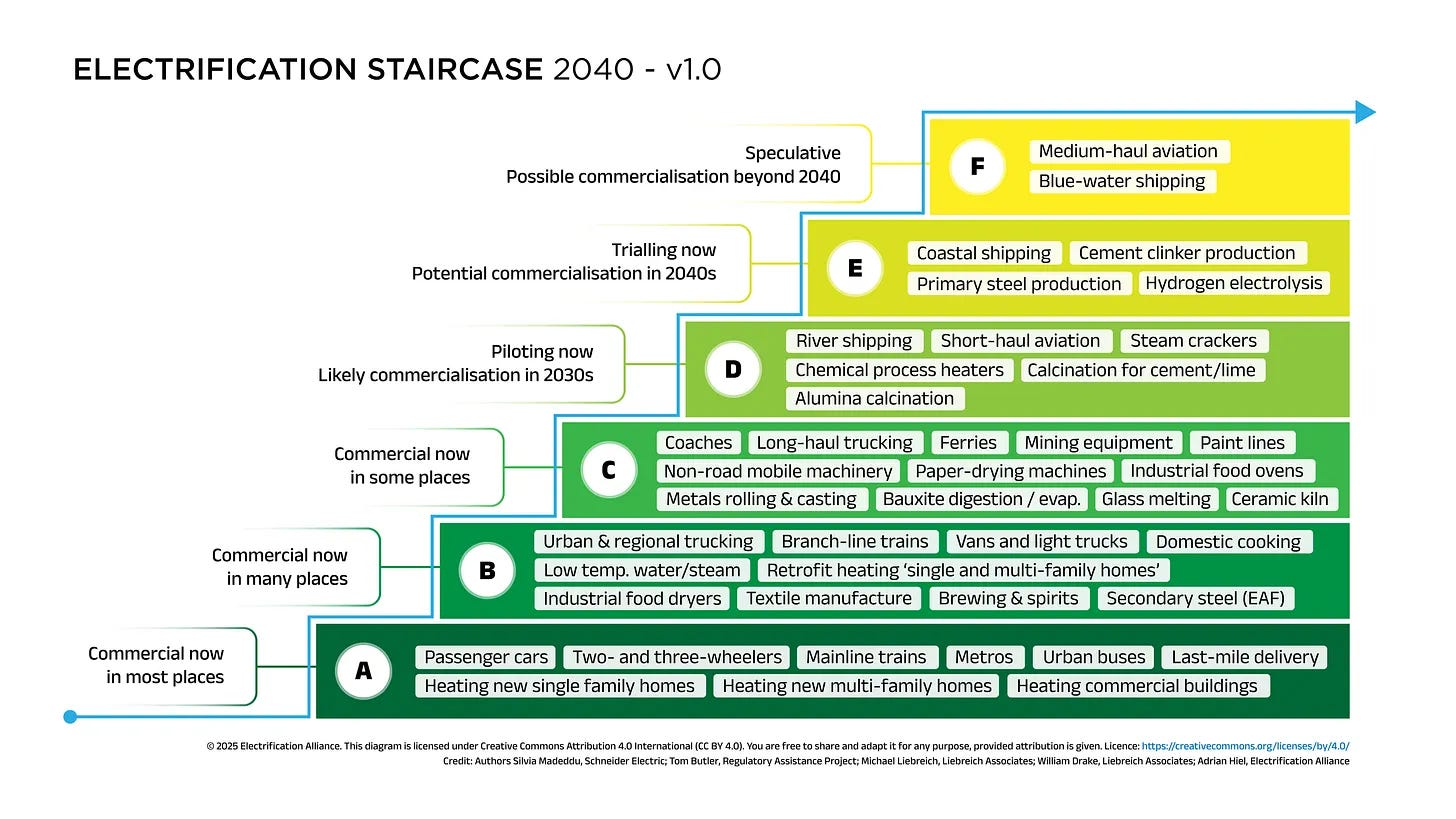
Even the famously cautious IEA is leaning in: a commentary published this week argues the closure of the Strait of Hormuz makes the case for electrification stronger than ever, with EU electric car sales up around 30% and heat pump sales up 17% in early 2026. Nobody can blockade the sun. Europe just got the memo.
So what’s holding rapid electrification back?
It’s no longer cost or technology, it’s queues. Grids were built for a world of few large power plants, not millions of small ones. They’re congested, and new utility-scale projects can wait years for a connection in most industrialized countries. The high-voltage lines that would relieve the congestion take a decade or more to permit, several times longer than they take to build.
The transition’s main bottleneck has shifted from the price of hardware to the speed of paperwork.
The good news: unlike physics, paperwork is something we can simply decide to fix.
Chapter 6: The Solarpunk Future Is a Choice
Fifteen years ago, I sat lost in front of documentaries about everything going wrong, and a word on my screen handed me a future worth building towards. I had no way of knowing then whether Solarpunk was a real trajectory or just beautiful art.
Now I do. It is real.
The panels on Aleppo’s rooftops. Solar fences in Germany. Twenty years of broken forecasts. Plug-and-play kits at your local supermarket. This is what the beginning of that future looks like. Not evenly distributed, but measurable, and compounding at 25% a year.
What separates countries on this trajectory isn’t engineering anymore. It’s a decision.
Of course, solar has an obvious limitation. Every evening, the cheapest energy source in history clocks out. What happens after sunset is its own story of collapsing prices and broken forecasts, and it’s the subject of Part 2: Batteries 🔋
Subscribe to Agartha.One’s Substack for more articles like this.
If this piece resonated, you know what to do: share this with someone who’s feeling stuck, overwhelmed by doom and nihilism - as I was back in 2011.
The Solarpunk movement spreads through igniting that internal spark and vision of a brighter future.
The sun gives freely. Let’s use it ☀️
Thank you so much for reading!
Agartha is a creative studio on a mission to create a Solarpunk cultural movement.
If you’ve read this far, you’re probably part of it already.
Support our work by subscribing here on Substack. It’s free and really helps us to write more stories like this.
Follow the journey on Instagram and X, or wear our Solarpunk art via the Merch Store.
Our podcast is almost here: subscribe on YouTube to catch the first episode.
Comments
Nothing yet. Say the first thing.
Sign in to join the conversation.