
(NOTE: A voiceover of this essay is avaliable for paid subscribers.)
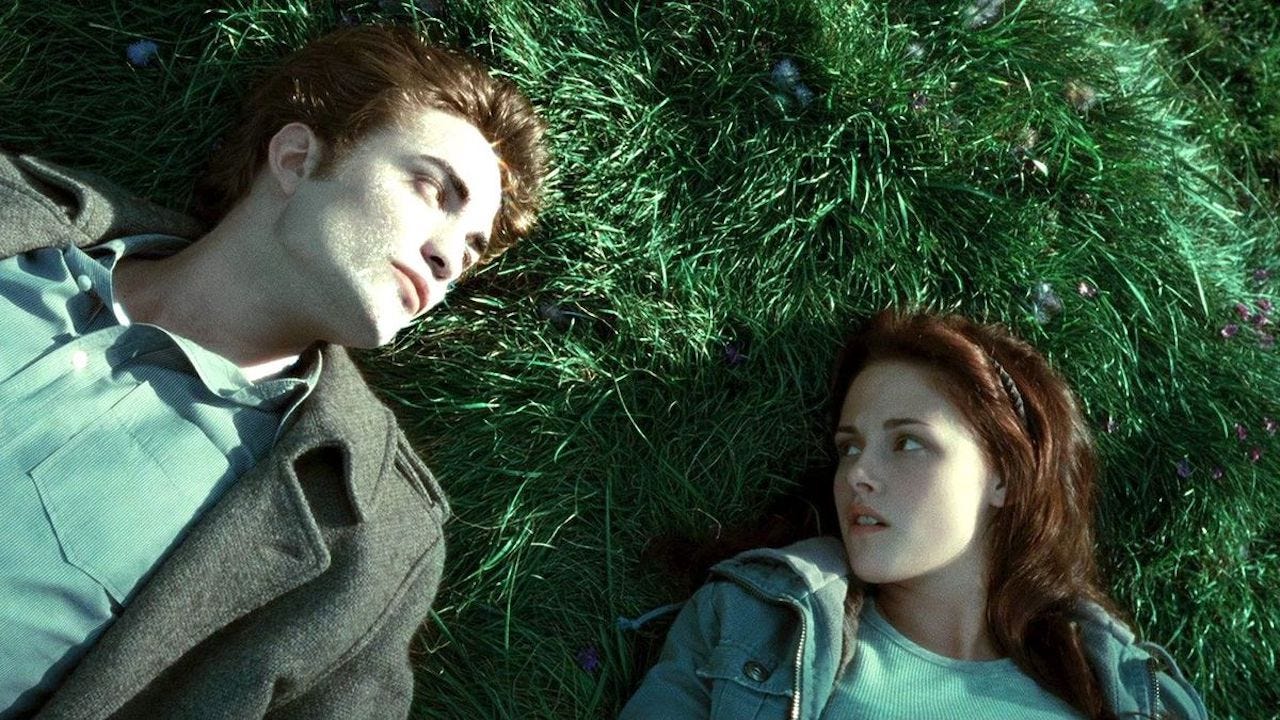
“Hold tight, spider monkey.”
Edward leaps to a tree.
*Strange breathiness from Bella.*
“Do you trust me?”
“In theory.”
“Then close your eyes.”
Robert Pattinson wakes up in a cold sweat.
It’s March, 2026.
He rings up his agent at 3:00am. Pattison asks about Robert Eggers, begging for another erudite drama; he hangs up and says a prayer to his lord and savior, Christopher Nolan. He flips through his IMDb page and checks his bank account, then peacefully drifts off.
*
The Twilight saga is indisputably funny. We are blessed by its beloved camp and cringe (Pattinson’s regret at the mortifying role notwithstanding.)
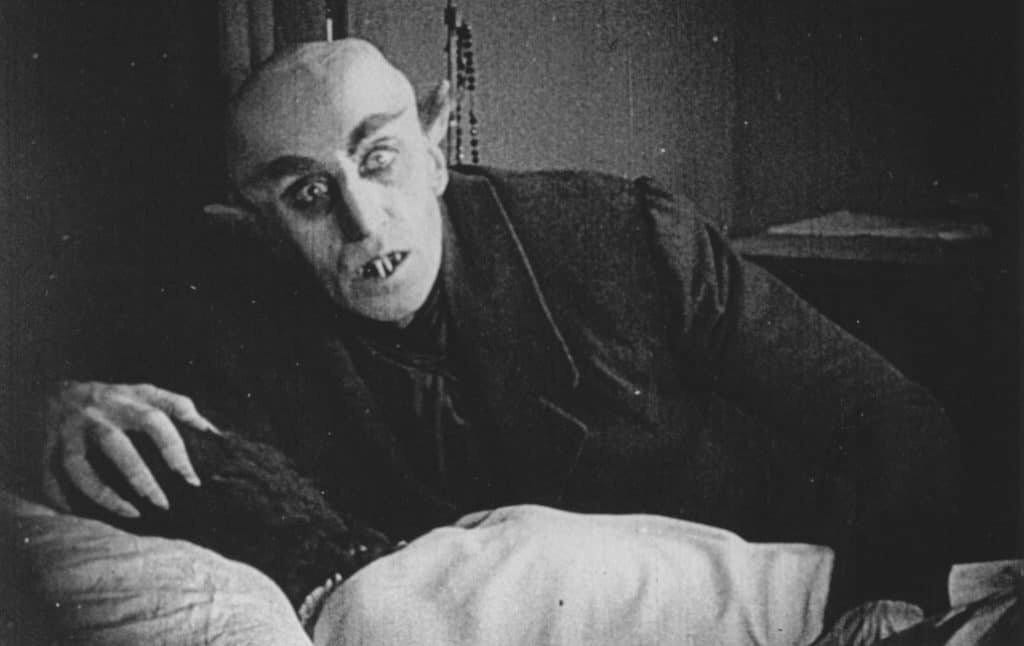
The premise begs a surprisingly difficult question: if you could become a vampire, would you?1 At least one person I accosted with this question answered quickly: “Yes.”
However, the philosophically interesting question is not “Would you?”2 but rather, “How do you decide rationally?” If you have the opportunity to become a vampire, choosing not to is still a choice. And this choice is surprisingly difficult to answer in a rational manner.
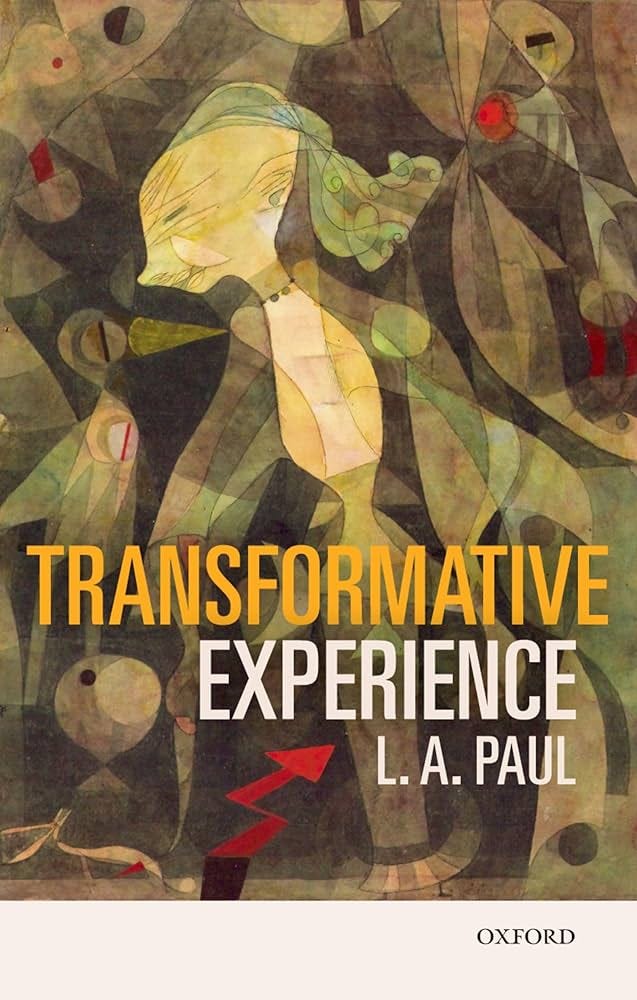
This thought experiment is how L.A. Paul begins Transformative Experiences, a work about how we should rationally decide between big life decisions that will change us in ways we can’t predict.3
Say many of your family and friends have all willingly become Cullen-like ethical vampires. They only drink the blood of animals, resist the temptation of feasting on humans, and only convert humans to the undead when they consent.
Your loved ones claim to enjoy their undead status and say they would do it again without regret. They look forward to immortality. Likewise, they say they don’t care about their predisposition against sunlight, the paleness of their skin (or, as Bella says, “It’s like diamonds... you’re beautiful”), and find fighting the temptation of human flesh easy. So, without being overbearing, your loved ones encourage you to be a vampire.
It’s a big choice—you can’t take it back.
How do you rationally proceed?
To begin, pretend there are no ethical/religious/legal objections to becoming a vampire. You’re not abandoning any responsibilities by doing it, you’re not violating a religious injunction, it’s not illegal, etc. Say also that there’s no scientific evidence whether becoming a vampire generally makes the converts happier.
So, you want to make the decision based on your subjective well-being. In other words, do you want to become a vampire or not? Will it make you happier?
Here’s the problem. What you’re like (and what you like) will change in unpredictable ways when you choose.
Say you’re afraid of immortality on this earth. Living for centuries as an undead person gives you the heebie-jeebies. So that’s a potential reason not to become a vampire.
However, as a vampire, your fear of immortality might change so that you no longer fear immortality. In fact, it’s possible that you’ll change to enjoy immortality by nature of becoming a vampire. Here’s the problem: you only gain access to this bit of information after doing it in the first place.
Or say you’re a prolific chef, and you use garlic in every dish. You don’t want to give up garlic. In this case, maybe your tastes will change as a vampire so that you don’t care about garlic—but perhaps they won’t, and you’ll constantly bemoan the lack of garlic in your dishes of plain, raw blood.
Again the problem remains: you don’t know until you try, but you can’t take it back. Becoming a vampire is unlike anything you’ve ever done—so you’re especially ignorant.
So, if you don’t know how your subjective preferences will change, but you’re trying to make the decision based on subjective preferences, you’re stuck. How can you make a rational decision based on your subjective preferences when your subjective preferences will change in unpredictable ways? The kicker to this puzzle is, of course, it doesn’t just apply to fantastical examples.
We face these kinds of impenetrable decisions several times in the course of our lives.
For example, take having children. Say you have a difficult time imagining devoting so much time and energy to your possible offspring. You think having kids might lower your well-being because it’s extremely difficult and induces all kinds of suffering and risk of hardships.
However, once you have kids, those hardships might pale in comparison to the joy of having a son or daughter. These menial tasks might even take on a tinge of joyful toil. Or, they might not.
Your preferences, what you want, will change in unpredictable ways when you have kids. It’s similiar to becoming a vampire. How can you rationally decide, based on such limited information, whether to have kids?
Grandparents and parents will almost always recommend that their childless friends have kids. They even say that their well-being went up after having kids—their lives filled with joy! However, good evidence exists that these folks usually misremember their well-being before having children. Objective reporting suggests that people’s well-being tends to lower after having kids. So, such well-meaning recommendations are biased and suspect.
In sum, how do we decide whether to get married, have kids, move to a different country, convert to a different religion, and become vampires when all these processes change what we’re like in unpredictable ways?
L.A. Paul argues that we should say yes to these questions if “we want to discover the kind of person we will become.” This gives us a rationally consistent basis to choose. It’s still a somewhat existential way of choosing, but she argues that it is perfectly rational nevertheless.
We should want to have kids because we want to discover the kind of person we’ll become when we have kids—though it’s unpredictable, this sense of adventure into our selfhood still makes it worth doing.
Or, if we don’t want to discover the person we will become, we say no to these questions and let the opportunities slip us by.
Throughout the book, L.A. Paul consistently brackets questions of legality and morality. She says things like, “Assuming becoming a vampire is not immoral or illegal…” This allows her to focus on the individual desires and subjective preferences of the person in question.
While I like her conclusion, I think there’s still a superceding ethical reason to choose—but not in a strictly deontological way (i.e., you have a moral duty to have children). Instead, I think we should say yes to these big life choices when we will admire the kind of person we will become—irrespective of whether our subject wellbeing is higher.
This test of admirability keeps the reasoning existential—it’s subject to my life circumstances and can’t be applied universally—but it also keeps the criterion of rationality.
Our two criteria for making these decisions aren’t necessarily in conflict. One could choose to become a vampire because they will admire themselves more as a vampire and because they want to discover the kind of person they will become as a vampire.
How have you proceeded rationally in such cases? Are L.A. Paul, I, or both of us incorrect?
Thanks for reading.
Soli Deo Gloria
Or werewolf—I see you, Jacob stans!
I presume this limited question would be more a testament to someone’s individual psychology.
Paul, Laurie Ann. Transformative Experience. Oxford University Press, 2014.
No posts
Comments
Nothing yet. Say the first thing.
Sign in to join the conversation.