

NOTE: A voiceover is available for paid subscribers.
Talk about sex and gender is in a bad state. Good faith conversations are scarce and any debate seems to neatly stretch over the so-called culture war front lines. While the Bible provides a magnificent, attractive view of gender, the masterpiece sits drowned in the swamp of bad-faith talking points.
So, I want to slow down and offer a layered metaphor to convey the profundity and elegance of the biblical vision for gender.
First, a couple of obligatory comments.
There are two polarities in the gender discussion: essentialism and structuralism.
Technically, gender is the outward expression of sex. Definitionally. Native American men grew their hair long. Women in the 21st century wear jeans. Scotsmen wear skirts (kilts). Gender is socially structured.
On the other hand, “sex” is definitionally essentialist, as humans are biologically binary in sex. In other words, gender is constructed socially. Sex is scientifically black and white. This is the definitional divide.
The cultural debate is about how these two concepts, sex and gender, ought to relate.
Essentialists say that life, culture, and policy should reflect these essential, natural kind differences, whereas structuralists say they should shift to reflect sameness, flexibility, and liberation. Here’s a sample of questions rolling around in the tumult:
Do gender expression and personal, felt identity supersede sex?
Is biological sex just a ten-thousand-year-old excuse for oppressive gender division?
Should gender roles and expression somehow reflect natural sex differences?
Should we try to eradicate biological sex differences through a transhumanist vision and technology?
I don’t plan to answer these questions directly. Instead, I hope to present an aesthetic portrait of biblical gender so we can contemplate the wondrous and cosmically skillful techniques of Yahweh as the deliberative craftsman of human identity. But I hope the vision is attractive to all, not just Christians.
Each human is a painting, and God is their Artist.
Gender is two kinds of paint used in the hands of the skillful craftsman, like oil and watercolor. The different paint bases inform creative direction, generating tendencies in stroke and composition, but don’t make the Artist unable to paint nearly two identical pieces of art.
Despite each artistic piece’s (person’s) diversity, each canvas is a self-portrait; each of us is of God, an image of him.
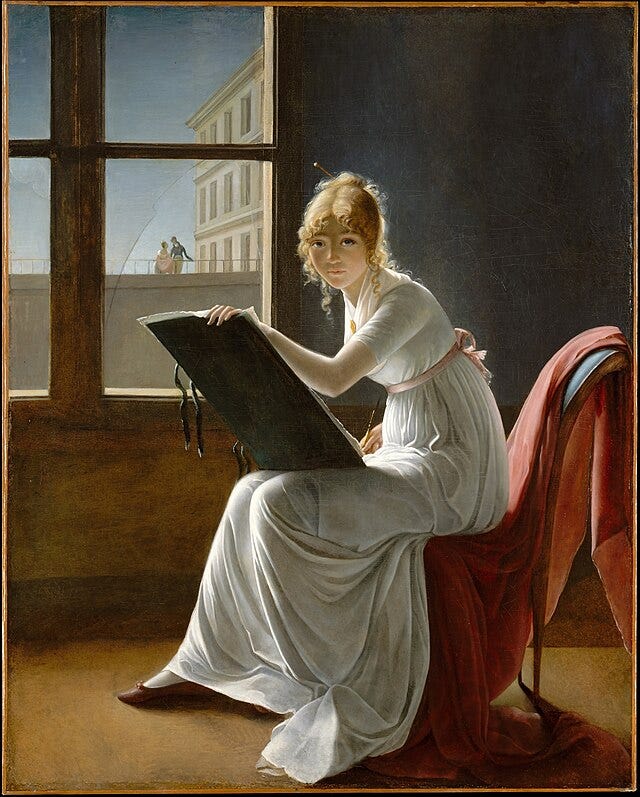
The Artist uses similar techniques throughout his process of painting each human. And the Artist limits himself through various methods and means, in this metaphor, by different paints and palettes. But each canvas has the same the same subject matter: himself.1
Oil colors naturally lead to certain emphases, as do watercolors. In this way, gender is a matter of emphasis rather than strict rules. But there’s also an essentialism in the analogy—a natural kind difference between them (a self-imposed restriction by the Artist himself). More overlap than difference presents itself though. After all, he is one Artist.
This, I think, provides a good metaphor for the conversation around gender. It highlights the beauty of the feminine and masculine, accounts for the biblical talk of essential distinction and empirical data about biological distinction, elevates both genders as divinely equal, allows for the fact of minimal differences between male and female individuals, and identifies the same in what matters most, namely, the part about imaging the God who creates.
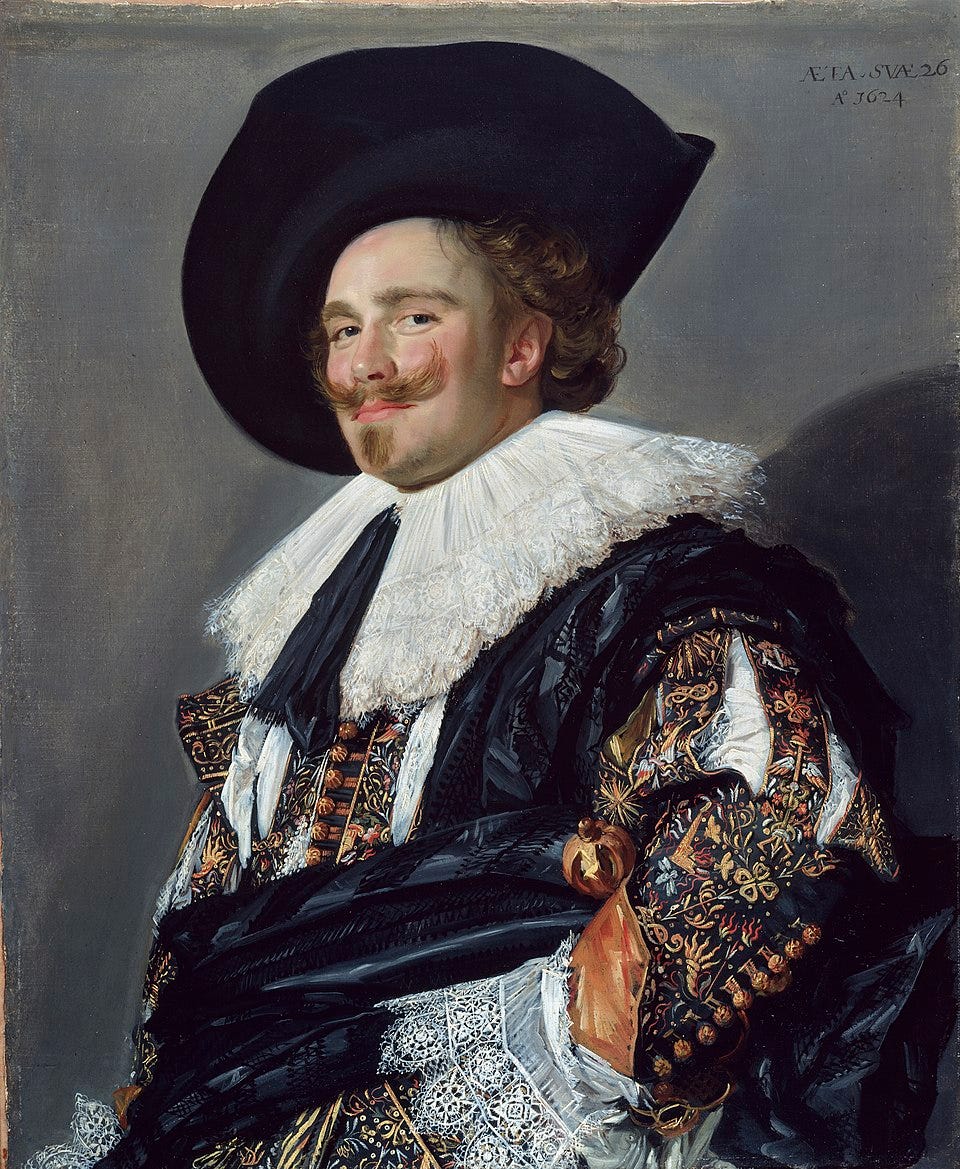
A few consequences flow from this metaphor. First, the essential difference (oil versus watercolors) allows for careful summarizing, emphasizing, and categorization between men and women. It also might, occasionally, meet the threshold for emphasizing or defining role differences. For example, women will always be mothers, while men will be fathers. Out of the essential sameness, divine, eternal nature and dignity also flow, with all the meta-ethical force of the imago dei.
And it leaves room for immense overlap in each canvas’ expression of the divine. While watercolors and oils are used in different ways, they can be used to create remarkably similar paintings (which corresponds to similar personalities, goals, desires, and outward expressions, let’s say.)
Indeed, biblically, women often break out of the tropes and emphases of their gender. In one memorable story, Jael is (probably) sexually abused by a powerful Canaanite king when she offers him hospitality. When he’s asleep, she takes a tent peg (no doubt an R-rated double entendre) and, if you’ll excuse the crassness, pegs him in the head and kills him. This fulfills a prophecy made by an Israelite prophetess named Deborah.2
So, this metaphor makes room for the different emphases inherent to sex (higher testosterone, higher estrogen, greater “absolute strength” for men, etc.) and honors those as part of the creative process of God’s artistry.
This image, then, elevates femininity and masculinity to an aesthetic good at the core of human nature.
At the same time, it removes the ability for people to ascribe essentialism to the kind of person each individual is.
In other words, this metaphor removes the ability for someone to say to a woman, “You shouldn’t be ambitious; it’s not ladylike.” Or to a man, “Toughen up and quit crying. You’re being too girly.” That kind of talk is anti-biblical. Virtue is never gendered in the Bible—not once.
(This section presents a rather internal debate among Christians. You’ve been warned.)
What about the idea of black and white gender roles? Should women preach? Should they be elders? Or what about the egalitarian versus complementarian interpretations of marital roles?
Let’s take a detour here, because I think it’s instructive of how such a grounding metaphor is compatible with, and even supports, egalitarianism. Complementarianism holds that wives have a different role in marriage than men, and men are meant to be an authoritative “headship” over their wives. Egalitarianism says these role differences aren’t set in stone in the Bible.
I argued in an undergrad paper for an egalitarian interpretation of the Ephesians 5:21-33 household codes (a set of ethical norms for domestic life). I still hold this view.
My contention was that Paul is addressing husbands and wives as a matter of emphasis—addressing how feminine and masculine tendencies usually fail and ways to overcome these failures.
First, surely Paul isn’t saying for men to love their wives while wives shouldn’t love their husbands. All believers are supposed to love everyone—even their enemies (insert boomer joke about disliking your spouse here). Since Paul just said for all believers to submit to one another, surely Paul isn’t saying husbands shouldn’t submit to their wives.3
Christians should all love and submit to one another—including their spouses.
Here’s where I landed on why Paul says what he says next.
Tendency-wise, women can domineer in marriages over their husbands (revealed in the biblical trope of women offering temptation after being tempted themselves.) So, Paul says to wives, “You also [submit] to your husbands in everything as to the Lord.”
Men can tend to abuse their strength in marriage (revealed in the biblical trope of men’s foolish abuse of strength, objectification, and exploitation of women.) So, Paul says to husbands, “Love your wife in everything.”
In other words, these are emphases addressed to each gender—they are warnings and wisdom on how they might overcome these pitfalls.
Of course, the historical context involves competing Hellenist house codes. Romans and Greeks employed household codes in their ethics. They were, in a technical historical sense, patriarchal. It’s where the word patriarch comes from. A lone male was the head of the household, over wive(s), children, and slaves, and might broadly do as he pleased. The freeman Roman patriarch submitted them all.
Instead of tossing out this poisoned social construct, Paul rewrites the codes into something unrecognizable, one of mutual love and submission. Wives choose to submit, husbands don’t make them. Children are elevated in status and responsibility. Fathers serve their family by love and self-sacrifice.
Now, the masculine-feminine duality persists in Paul’s eternal picture—so the distinction is theologically significant. Here’s my interpretation. Insofar as wives submit to their husbands and insofar as husbands love their wives, they actively live out a parable (as my dad says) of God’s love for his people and the church’s submission to him. Good! This fits the painting metaphor, again, without drawing too-strict boundaries around gender differences in the day-to-day or in personal expressions of the divine in our unique individuality.
What about other ecclesiological roles? Deacons and the gift of preaching are decently straightforward to me. Is the person, male or female, qualified? If yes, then either ought to hold the office and be allowed to preach. What about “overseers” or “elders” and preaching in an authoritative role? I still tend toward thinking women can hold these. But for complicated reasons I won’t attend to now, this is a less defensible position biblically. I don’t want to get bogged down here. Already, I fear this has sidetracked too much in Christian debates. If so, I apologize. I hope the vision is attractive to everyone—Christian and non-Christian alike.
Let’s touch base at modernity before wrapping up.
Share this post if you don’t know what complementarian and egalitarianism means!
I debated writing this section. I hope it provides clarity rather than stirs up dissension. Indeed, the vision of an artistically informed, gendered humanity isn’t neutral regarding modern debates. I’ll attempt to quickly do here what Christopher Watkin proposes as a method of cultural critique in Biblical Critical Theory, which is to make a nuanced claim between two opposite poles of a position in the culture.
Hyper-progressives downplay the essential differences between men and women. Women create life. To provide a simplified (and slightly arbitrary and based) example, the male pregnant emoji is nonsensical (is that too politicized?). Progressives reject anything essential; they don’t believe that, given proper techniques, oil and watercolors tend toward different paintings. I believe they’re wrong about this. Such a view often downplays the way the paintings of life can be beautiful and valued in different ways.
In a free and equal society, I think social roles will naturally develop around “feminine” and “masculine” traits.
Hyper-conservatives downplay the fact that individual male and female humans are exceptionally overlapping in almost every way. The evidence on this is unparalleled. Behaviorally, some superficial activities are correlated to sex (women read more books, for example). You cannot predict very accurately whether an individual is male or female by narrowing in on individual psychological traits. Either way, our identity shouldn’t center around our gender; it should center around goodness and virtue. Gender is no excuse to sin, for men or women. For Christians, just because there are natural differences between the sexes, both theological and in tendencies, you can’t straightforwardly consign people to black and white roles.
In a free and equal society, women and men will break out of “feminine” and “masculine” traits and find non-traditional roles all the time, almost constantly, and they are not superior or inferior for doing so.
Both of these facts can hold true. And they make great sense in light of the painting metaphor.

Each individual is a canvas upon which God paints a self-portrait, using either oil paints or watercolors. And each canvas presents a unique, but unified, image of the Creator. Two individual paintings may be quite similar, though made of different bases, or quite different, owing to the difference in base of paint or owing to other variances. When the differences between paints show up in different paintings, and these distinctions are due to the different paints, we can appreciate them. However, if the painting isn’t typical of that base (a watercolor that looks more like an oil painting), we celebrate and appreciate its aesthetic beauty as well. And every painting is beautiful.
Hopefully this essay can be a break from the slogging debates or politicized talking points. Let’s marvel at the grandeur of gender in the Bible. Such a vision of gender as different paint bases has consequences in our lives, undoubtedly. But the most important consequence is that men and women are breathtakingly beautiful, inherently dignified images of God.
What does this metaphor miss? What truths does it not account for? All metaphors break down somewhere.
Thanks for reading.
Soli Deo Gloria
I’m aware there’s a strangeness to gendering God as him. I only do it because the Bible does it. Undoubtedly, feminists will get off here already; I can only say the defense of such a gendered pronoun for God is beyond the scope of this essay.
Thematically, the feminine is used to subvert the masculine in the Old Testament. The “helper” word used in Genesis 2:18 is ezer and refers to God on most occasions; “powerful rescuer” might be a better translation.
Though commentators argue precisely this.
No posts
Comments
Nothing yet. Say the first thing.
Sign in to join the conversation.