
(NOTE: A voiceover of this essay is available for paid subscribers.)
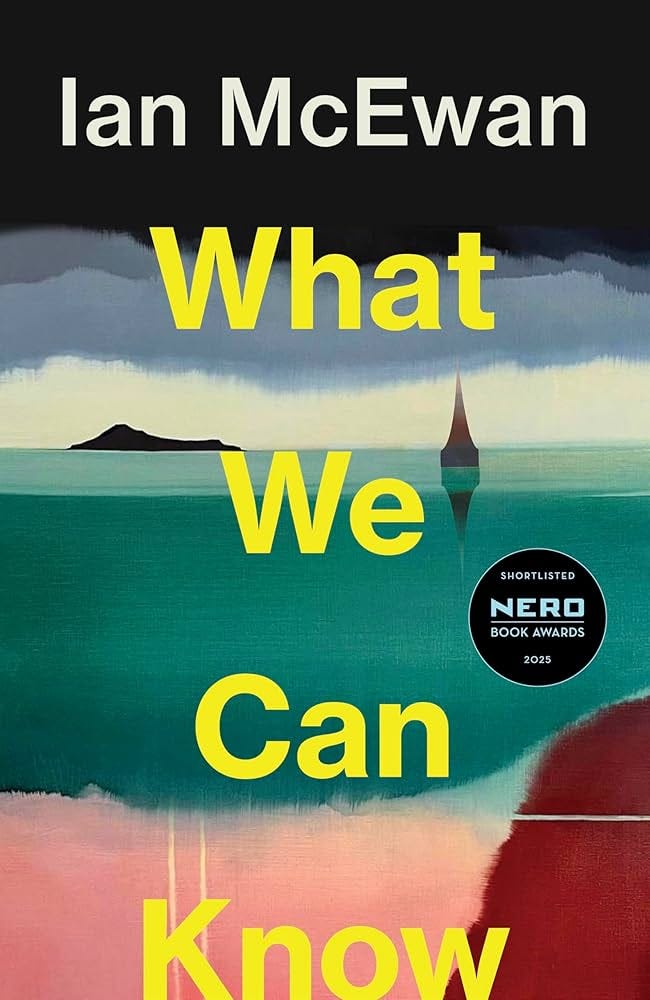
What We Can Know by Ian McEwan is set over 100 years in the future after drastic climate change caused by nuclear war, global cooling, and global warming. The result: the US is an archipelago and Great Britain is a swath of swampy islands. Although raw materials are scarce, medical technology exists, universities persist, and most nations have established a status quo. The novel is neither fully dystopian nor naively optimistic; which is cool, but the science fiction side is merely the background.
The protagonist, Thomas Metcalfe, is an idealistic academic historian living in 2119, doggedly studying the 2000s-2030s. He is obsessed with studying and finding a legendary missing poem. The famed poet, Blundy, wrote the lost masterpiece for his wife Vivien’s birthday. Blundy read the manuscript aloud in 2014 to a group of friends, then the only copy disappeared. In the following decades, the poem gained mythical status for inspiring climate change activism, despite its elusiveness. As the novel progresses, Vivien herself comes into focus as the lead protagonist.
What We Can Know centers around memory, history, deceit, adultery and betrayal. It’s a smart, modern, literary novel; which is to say it’s challenging and inches a little close to pretentiousness. But I thoroughly enjoyed it, and it inspired several questions of life and meaning.
I’ve found that “postmodern” works have incisive and often true things to say about human nature, psychology, and character. They’re often written beautifully. In particular, I find postmodern thinkers do an excellent job of describing how someone could be so kind in one moment and so cruel the next. This sounds to me like a biblical picture of human nature. What We Can Know is no different (if it’s even fair to cast it as postmodern). But, of course, what postmodernism misses is a compelling, positive vision for human life and flourishing. They cannot reconstruct after they deconstruct.
In this vein, What We Can Know’s plot heavily turns on adultery. Chiefly, the poet (Blundy) and his wife (Vivien) are both serial cheaters and live in an implied open relationship. I want to hone in on Vivien. Blundy is less interesting; he’s the archetype of Picasso. A serial womanizer who draws high-brow, younger ladies into trysts by his engaging intellectual conversation and artistic fame and fortune. Vivien, however, is more complicated. And McEwan rightly shifts to focus on her story. (Spoilers ahead.)
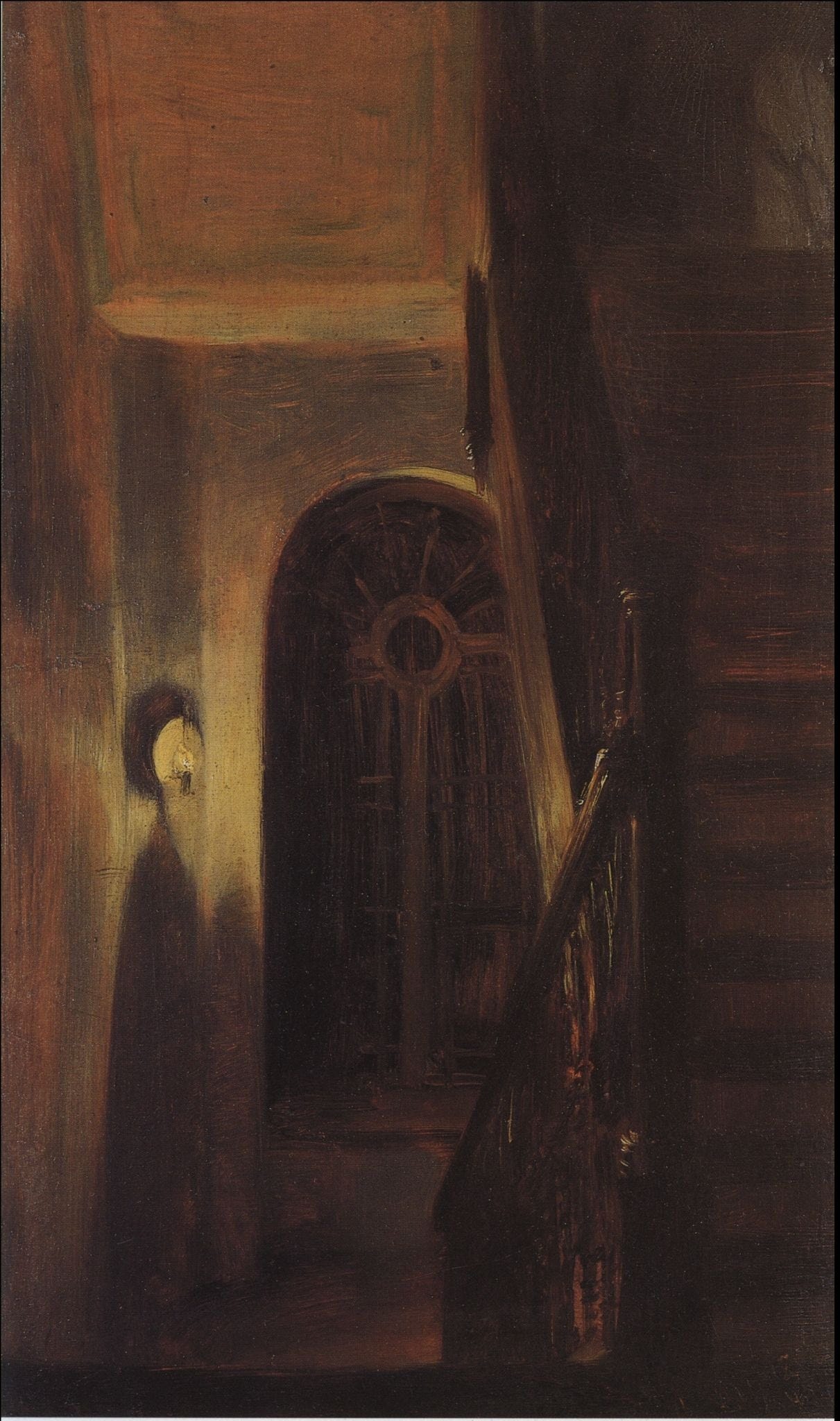
Vivien lives with immense guilt. As a young, single mother in college, she did something unspeakably horrible. A party was hosted at her house, she got blackout drunk, forgot about her baby, and the infant died in its sleep on its stomach—drowning in its own throw-up. It’s a truly heart-clenching calamity.
Many years later, Vivien reveals this dark secret to her first husband, Percy. There’s a touching scene where Percy provides a gentle acceptance, reassurance, and love in spite of her engulfing shame. But then another horror: Percy, her gracious, kind husband, completely forgets about the momentous conversation.
After some months, they receive news: Percy has aggressive, early-onset Alzheimer’s. In what follows, Vivien is forced to care for Percy, who becomes increasingly dependent. The 40-something-year-old man craps all over the bed at night. He wakes up at 3am wanting breakfast. He forgets who people are. He hits his nephew. It’s an intimate and devastating account of caring for a disabled adult. Vivien can’t bring herself to take him to a care home and suffers mostly in isolation.
Eventually, she starts cheating on her demented husband with the aforementioned poet, Blundy. They hit it off well and spend as many nights together as they can. Blundy and Vivien see a future together after Percy inevitably dies. Importantly, by the way, Vivien really, truly, deeply loves Percy. (Although she does cheat on Percy with someone else even before he suffers from Alzheimer’s.) Blundy offers to help put Percy in a care home. But this never comes to fruition.
The coming twist is only revealed at the end of the spiraling tale: Blundy, with Vivien’s implied consent, murders Percy and makes it appear like a nasty fall. Shortly after, Blundy and Vivien marry.
The magic of the book is making the reader sympathize with Vivien by unpacking her psyche and inner thoughts via her journal (found by the historian, Thomas). McEwan makes Vivien’s actions seem realistic, rather than like a caricatured villain or monster.
Horrors upon horrors. Of course, such horrors are replete in the scathingly realistic Old Testament stories of the Bible (rape, incest, child sacrifice, murder, and adultery abound). You could leave it at a platitude: “Welp, that’s sin nature for you.”
However, I was struck repeatedly with this question: What is Vivien missing? With such a plausible, concrete story about being complicit in her husband’s murder with her adulterer, even though she loved him, I wondered about a possible world where Vivien did not cheat or murder Percy and cared for him even in the immense difficulties of his disease. Many other stories about moral failings force this question on the audience. A Marriage Story starring Adam Driver and Scarlett Johansson comes to mind.

Here’s what is missing: Christ.
Vivien lacks any anchoring story aside from her own preferences, feelings of love, poetic retellings, artistic reframing, seeing beauty in the broken, and centering around her own sense of developing self. But these are not anchoring at all. They say nothing, on their own, about whether to cheat on your spouse or even murder them.
What fills the role of this anchor? It can’t be abstract (could be intellectualized away). It can’t be an appreciation of beauty in brokenness (aesthetic value could be rewoven into adulterous love). It can’t be feelings of love (these change in unpredictable ways). It can’t be about constructing a sense of self (she does this anyway in a thoughtful, honest manner).
Instead, this anchor must be historical (real), an example (inspiring), truthful (coherent), eternal (timeless), symbolic (meaningful) and personal (psychological). In other words, Vivien missed Christ.
Vivien possesses many qualities: thoughtfulness, creativity, sincerity, and even grit. However, Vivien does not belong to anything transcendent. She had no example of a sacrifice to fill the day-to-day activity of cleaning up after the defecation of her muted adult husband. She could not look to a savior who loved her, suffered, and sacrificed for her.
When she rested on her love toward Percy, she failed to stay faithful to him—and even failed to prevent his murder. Of course she did! Percy became rude, dumb, ungrateful, and even dangerous. A reader could point to her lack of character. However, vices notwithstanding, Vivien outwardly and inwardly seems like a decent human. But she glaringly lacks any meta-story, no pattern of meaning.
Only Christ can bear the weight of such immense sacrifice like caring for a middle-aged spouse with Alzheimer’s; only Christus Exemplar could have drawn Vivien to faithfulness and profound self-sacrificial love. If I were put in Vivien’s shoes, I seriously doubt my character could carry me through such faithfulness. It would be down to the power of the Holy Spirit producing the fruits of patience, kindness, and self-control; and, Christ the example from which I could draw strength.
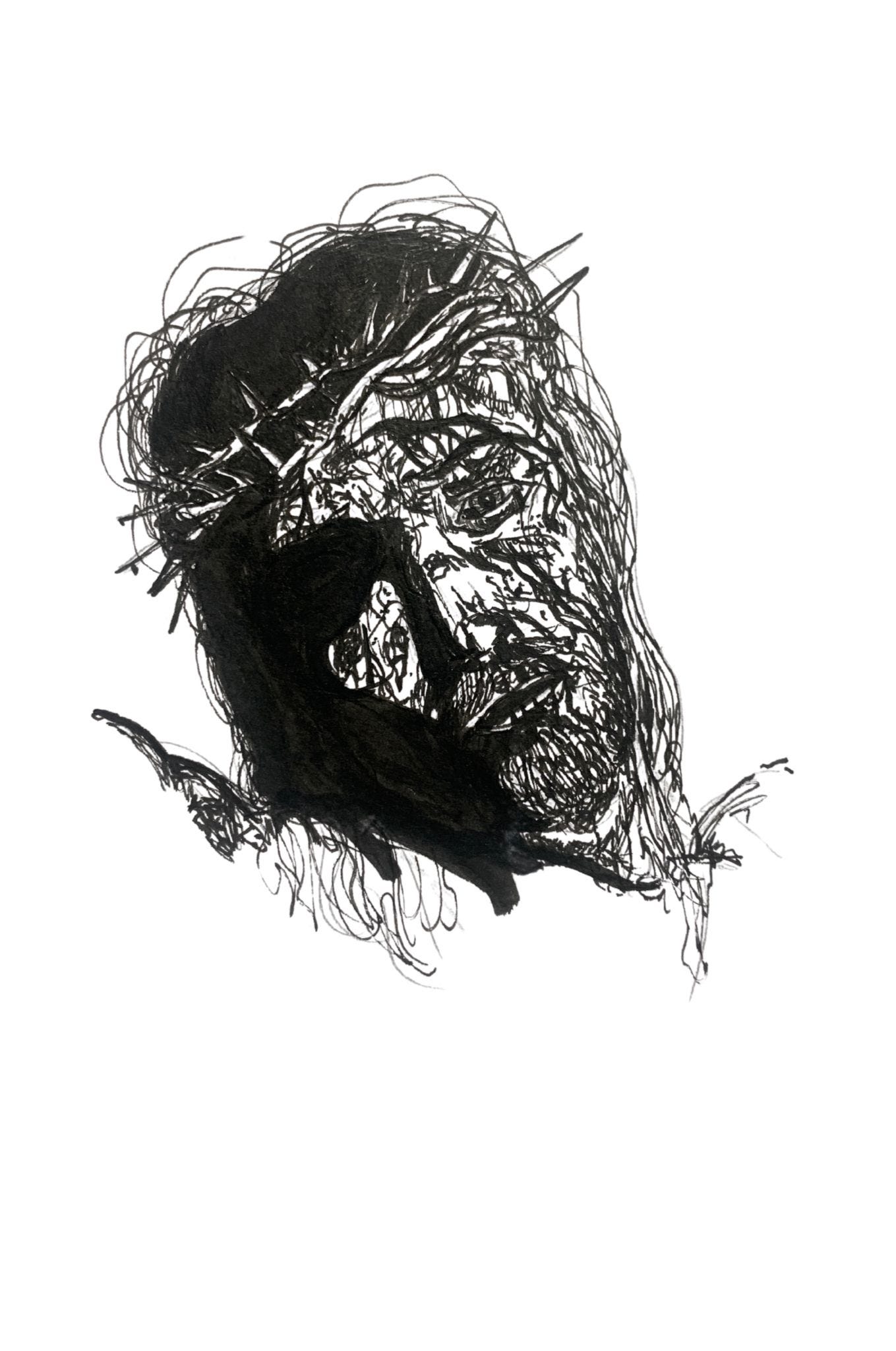
The novel includes other themes aside from adultery, like history and memory. To comment: history, I think, is insufficient for life. We must draw forward into the future. We cannot simply glance backward or even stare intently into the past for answers, as Thomas the historian does. We must look up with hope, toward a definite future history—a future already fulfilled in the second coming of Christ. Only this future hope and past fulfillment of history in Christ can drive us forward.
What We Can Know wades through the marshes of memory, history, and the limits of human knowledge and climbs out prizing emotion, passion, and relationships—for what are history, memory, and knowledge without relationships? Here’s a further question, as a Christian, I would pose: What are relationships without some grounding, anchoring, transcendent, and true story? Adultery, murder, and pride. Christ’s example alone does not make us perfect, but it does make us stronger for righteousness.
His blood, of course, does make us perfect.
Thanks for reading.
Soli Deo Gloria
If you enjoyed this essay, you might like this one:
No posts
Comments
Nothing yet. Say the first thing.
Sign in to join the conversation.