
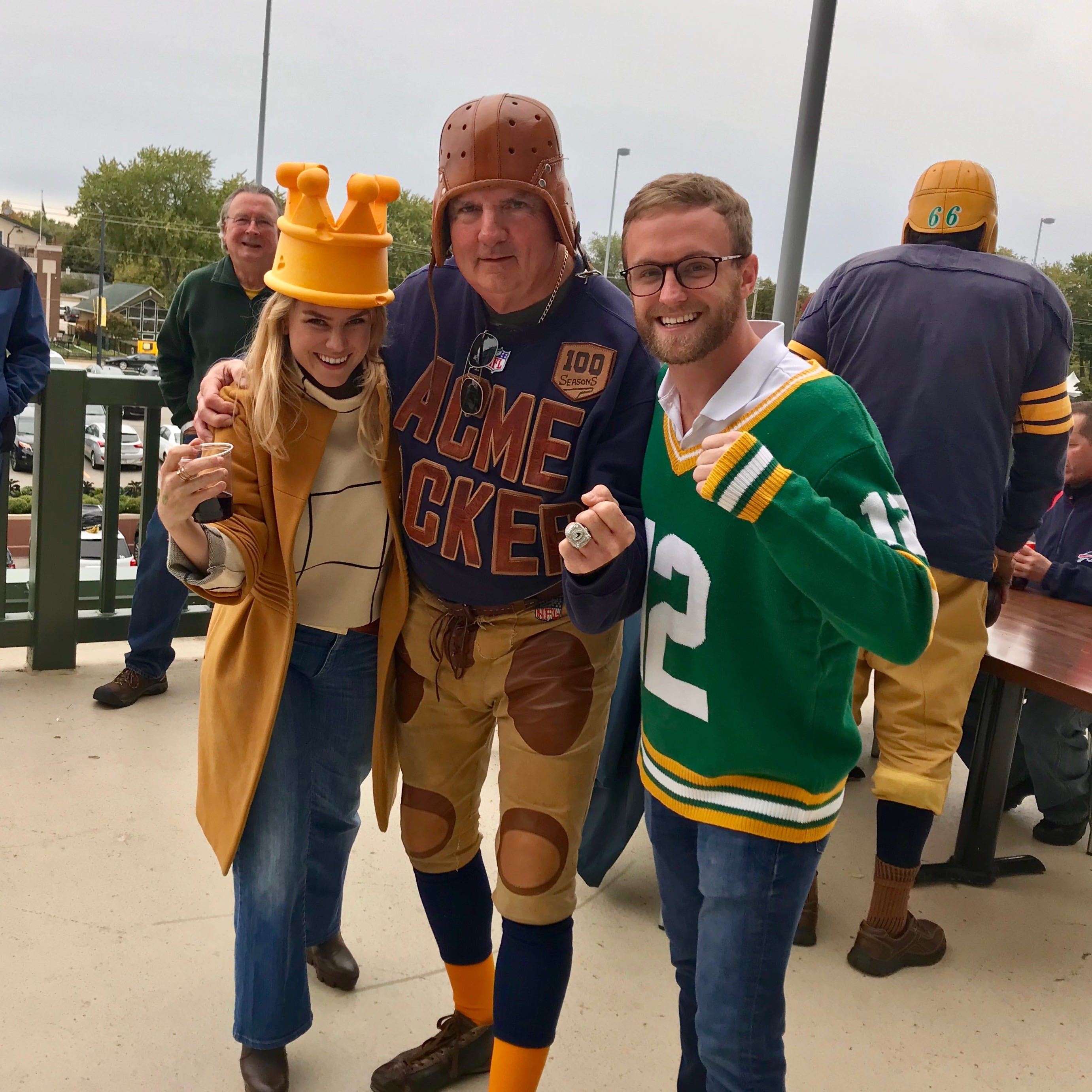
Before the Brett Farve apologists come for my throat, I want to preface this Substack by saying I’m a card-carrying shareholder of the Green Bay Packers, I’m now entering year 5 of a Fantasy League in which my mom beats me every year, and the only football memory I can vividly recall from my childhood, while fighting tears, is the 2000 Super Bowl XXXIV, when Dyson missed a touchdown by one yard, resulting in the Titans losing to the Rams 23-16.
Independent of your feelings about sports in general or major sporting events like the Super Bowl, what is universally true at this moment in American history is that sporting events are hellaciously expensive, and the communities that host them are, empirically, left footing the bill. And, that, more than ever, it’s our civic duty to incisively question the decisions being made about our city and permanently retire the “Nashville Nice,” as we’re too busy being gracious to notice we’re being robbed.
Let me make my case before your eyes gloss over.
I love economics, maybe more than politics. When I need to disassociate after a day of dealing with the most horrific consequences of violent state policy, I watch Love is Blind or read white papers or explainers on regional economic development theory, which, yes, I recognize are two equally unhinged ways to spend a Tuesday night. I’ve always been irritatingly curious, and while working at RuralOrganizing, I leveraged this past time to support rural elected leaders in building the case for brownfield redevelopment rather than constructing new jails or data centers. Often, cash-strapped cities and leaders don’t have the time or energy to look for better options, which is where I came in.
In 2023, while running my first campaign for State House, on the heels of Metro’s decision to spend your tax dollars funding the new Nissan Stadium, the largest sports subsidy in American history, with Nashville contributing $760 million and the state kicking in another $500 million, I could feel the anger emanating through the door thresholds of the East Nashville voters I spoke to. In fact, the angst was so intense, we designed mailers with “Schools not Stadiums” prominently featured. (I believe it’s important to note that the Titans franchise value increased 33% after the deal, and the Titans owner’s personal net worth climbed by $1.7 billion in 2023 to $2.8 billion today… all publicly subsidized. I also want to note that most West Nashville state legislators voted for the stadium…the same ones who clearly do not live close enough to the current Nissan Stadium to have been physically trapped in their neighborhoods for three days straight when Taylor Swift played the Eras Tour.)
At the time, I wanted to understand why stadiums were good or bad public investments, which led me down the dark, ominous path of the economic costs of major athletic events... as Samuel L. Jackson says in Jurassic Park, “Hold onto your butts.” (I think I’ve tossed this quote in another Substack, but I DON’T CARE BECAUSE I LOVE IT!) Two peer-reviewed studies by economists Victor Matheson and Robert Baade make the empirical case that Super Bowl economic impact claims are, to put it generously, padded.
The first, a 2006 paper published in the European Sports Management Quarterly, analyzed Super Bowls held between 1970 and 2001 and found that host cities experienced average income gains of just $91.9 million, roughly one-quarter of what the NFL routinely promises, and concluded there is less than a 1% chance the Super Bowl has ever genuinely delivered $400 million or more to a host economy.
The second, a 2009 working paper from the College of the Holy Cross, surveyed the full body of independent scholarship and arrived at the same conclusion: observed effects on real economic variables like employment, tax revenues, and personal income, while generally positive, are a fraction of booster claims, and the theoretical reasons why are well-documented, including the substitution effect, crowding out, and leakages that send money out of local pockets and into the hands of national hotel chains and out-of-town vendors.
So, why do cities and states continue to believe Super Bowls are economic bonanzas for local businesses and residents?
Because the NFL has been running this same play in every city for decades, and the math never adds up the way they promise. The league’s own commissioned studies routinely claim the Super Bowl delivers $300 to $500 million to host economies. Independent economists who have no financial stake in the outcome have consistently found the real impact is a fraction of that, and statistical analysis shows there’s less than a 5% chance the Super Bowl has ever contributed more than $300 million to a host city’s personal income, and less than 1% chance it’s ever hit $400 million. The economists who’ve actually tracked the numbers put real added economic activity somewhere between $30 and $130 million.
WHERE IS THE MONEY GOING, AN ANNOYINGLY CURIOUS GOVERNMENT WATCHDOG MAY ASK?
The evidence points to consequences such as corporate hotel chains tripling and quadrupling their rates during the week while failing to increase wages for their local workers, with profits heading straight into the bank accounts of their shareholders. Jacksonville learned this the hard way in 2005. The city didn’t have enough hotel rooms, so the host committee arranged for six cruise ships to dock and house up to 7,600 guests. After the game, the ships pulled up anchor and sailed away, taking with them every dollar spent on board, subject to nearly 100% “leakage” from the local economy.
Consequences like this are due to host cities’ inability to accommodate the massive amount of services demanded by visitors, ranging from high-end catering to security, which are often imported to meet the excess demand. Payments to these imported workers and vendors don’t trickle down to the city or its residents. In New Orleans for the 2025 Super Bowl, the city enacted a nine-day "clean zone" that barred street vendors and local businesses from advertising, selling from pushcarts, or hosting their own events in the French Quarter and Central Business District to protect the NFL's corporate sponsors from local competition.
So where does that leave Nashville?
We’re on the hook for two stadiums now (the jokes write themselves). Nashville is planning to pour an additional $60 million into hosting Super Bowl LXIV itself on security, transportation, staffing, and decorations on top of the $1.26 billion already committed to building the stadium. And the spending apparatus keeps expanding…
The Shadow Mayor of Nashville shepherded a bill that would redirect $300 million in tourism development zone tax collections to East Bank infrastructure for the Super Bowl (and yes, hopefully, for some affordable housing), but it also included $30 million annually toward recruiting events like the Super Bowl, which has full authorization to bypass the Metro Council.
And then there’s the secrecy problem. As Pat Garofalo documented in his Substack Boondoggle,
Tennessee Governor Bill Lee signed a law last session allowing TNECD to keep contracts it negotiates with private businesses, including the NFL, secret for up to 10 years, shielded from public records law as long as the department director and state attorney general agree the documents are of a “sensitive nature.” Wonder how many lap dances for NFL executives at Deja Vu that will pay for… WELL, NOW WE MAY NEVER KNOW.
Meanwhile, boosters are pointing to $10.25 billion in infrastructure investments scheduled to be completed before 2030 as proof that the Super Bowl is delivering for Nashville. And look, if NES uses the momentum to finally put power lines underground so that the next winter storm doesn’t leave Nashvillians without power for two weeks, I will eat my words and buy a DeAndre Hopkins jersey.
Meanwhile… our city is sinking, not just literally, WHICH ACCORDING TO A 2025 NATURE CITIES STUDY, IT IS!!!, but also under the weight of choices that keep putting corporate and billionaire interests ahead of our bar and small business owners, hospitality workers, and musicians who actually live here. The next few years require a dogged advocacy as a down payment on this city’s prosperity, so please, for the love of God, shed the Nashville Nice and start asking hard questions about the Super Bowl.
For Broadway Bar owners: What's the plan for security perimeter zones, and who's inside vs. outside them? (In San Francisco, restaurants inside the security zone reported double-digit drops in sales, and small businesses were effectively shoved out of public plazas to make room for NFL corporate partners. CBS News) Are there local purchasing requirements for the official Super Bowl Experience, NFL Honors, and other NFL-run events? Or does all the food/beverage revenue go to national concessionaires?
For workers: Will hospitality workers be covered by wage protections during the event? Is there a prevailing-wage or living-wage requirement for any publicly subsidized event infrastructure? Are temporary workers brought in for the event being hired locally, and through what mechanisms? Or are they being recruited and bused in by national staffing firms?
For local vendors: The NFL has a procurement program called NFL Source for local and underrepresented businesses. What are the specific Nashville commitments, dollar amounts, and accountability mechanisms? Who enforces it? What’s the application process for local vendor participation, and is it accessible to small operators, or is it designed for businesses with NFL-scale capacity?
None of this means Nashville won’t see some benefit from the Super Bowl. I hope to see at least the potholes on Briley Parkway filled. A GIRL CAN DREAM!!!! But this event is one weekend, while the economic consequences of Super Bowl economics and Nashville Nice could last a generation.
Some food for thought,
Aftyn
DOWNTOWN NASHVILLE TOWNHALL: Join CM Jacob Kupin and me on Monday, June 22nd, from 6:30 - 8 PM at the Downtown Presbyterian Church 154 5th Ave North
DONELSON TOWNHALL: Join CM Jeff Gregg and me on Thursday, July 23rd. Time and location TBD. FOCUS: Improving Briley Parkway
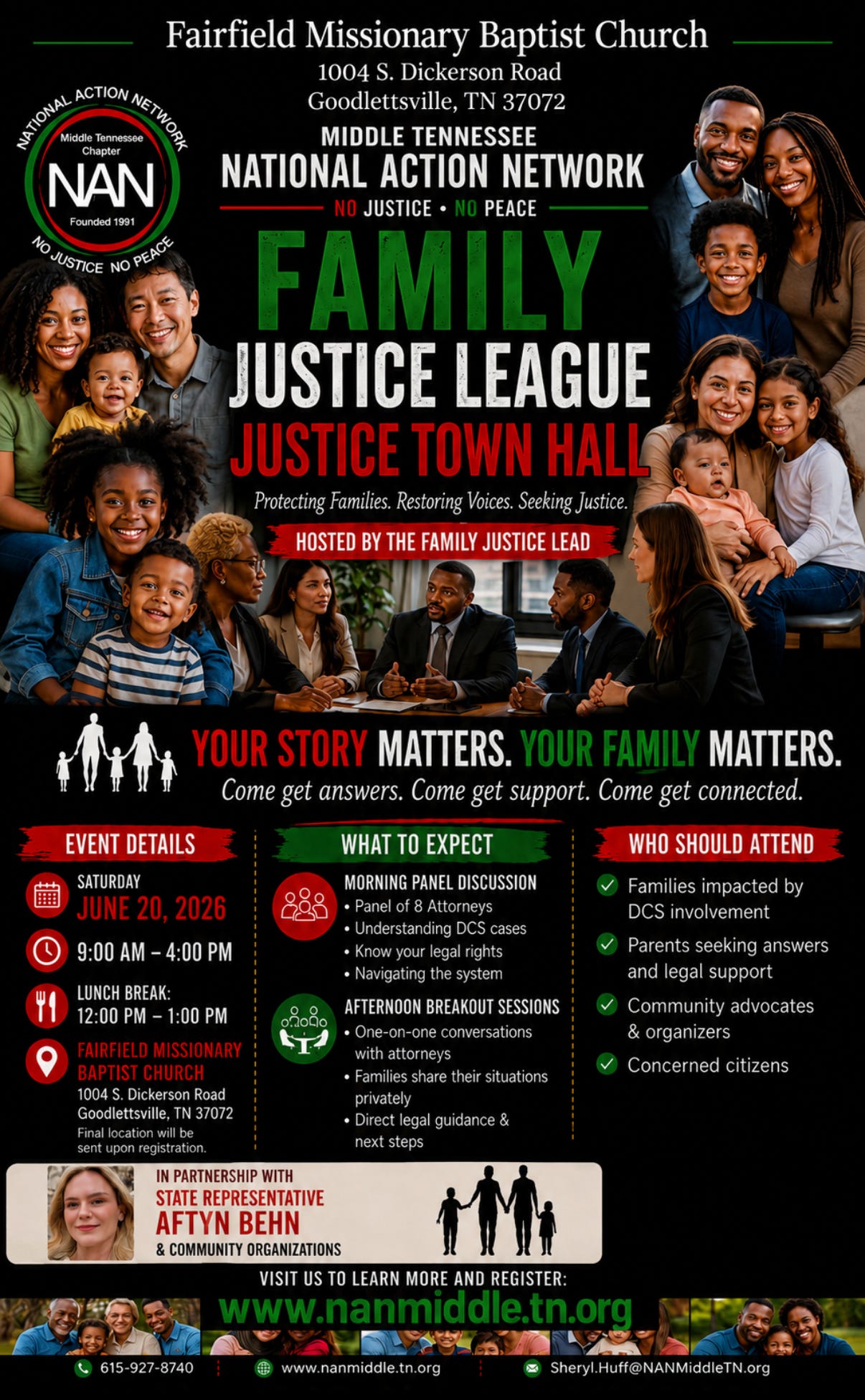
Our office is teaming up with the Middle Tennessee National Action Network to connect families impacted by DCS (Department of Children Services) policies with attorneys in Nashville. Join us Saturday, June 20th, for a legal clinic at Fairfield Missionary Baptist Church from 9-4 PM CT.
For organizations or attorneys interested in supporting this event, please contact our office at rep.aftyn.behn@capitol.tn.gov.
For families who want to participate,
I’m not a conventional legislator, as most of you know, including my constituents. While most legislators pack up and head home, attend a few ribbon-cutting ceremonies, hold campaign fundraisers, or chase the TV cameras, I throw myself back into organizing to turn the tide in Tennessee. In fact, our office is just as busy as we are during the legislative session. I plan to provide an overview of our projects and how you can plug in in my next Substack.
During the redistricting special session, I was pissed enough to consider running for Congress again, but oh… what a mess it has become!
This cycle has turned into a Fellini circus, so I’ve decided my time is better utilized training young people with the hard skills they’ll need to salvage our state and country (I have 30 interns starting next week, and I can’t wait!!!!!! If anyone has spent any time with GenZ, they keep you very humble. Politicians need that), and building the capacity of Tennesseans who care about legalizing marijuana, ending the grocery tax, and DCS reform to advocate for these issues during an election year so the next administration is pressured to materially make our lives better next year.
Electorally, I’m laser-focused on electing Rep. Justin Pearson to the newly drawn 9th Congressional District and flipping the two most competitive State House seats in the state: House District 97 in Memphis with Democratic candidate Jesse Huseth, which has a margin of less than 1500 votes and hasn’t been flipped in more than 20 years. (I hope this explains my cynicism when political hobbyists are convinced we can flip larger seats…), and House District 75 in Clarksville with Democratic candidate Allie Phillips. Join me in Clarksville on Saturday, June 13th, at 10 AM for Allie’s Kick-off canvass. If you are a candidate and are seeking an endorsement, you can complete this form.
For my constituents reading this, you know I’m always hustling, scheming, caring for y’all, but four years of non-stop campaigning has left me running on fumes. I often think about how the role of elected officials has shifted… every day I wake up to navigating deportations, DCS and prison deaths, concurrent and complex lawsuits, and insatiable unemployment and poverty, under the constant reverberation of authoritarianism. Dolly, I’m gonna need a few more cups of ambition. Consider becoming a monthly donor to support our office’s work!
Dr. Patterson, a Harvard professor and author of “How America Lost Its Mind”, reached out asking me to share his free, self-paced online course on Constitutional foundations you can take at your own pace, about 30 minutes per segment.
Select "Audit" for the free version!
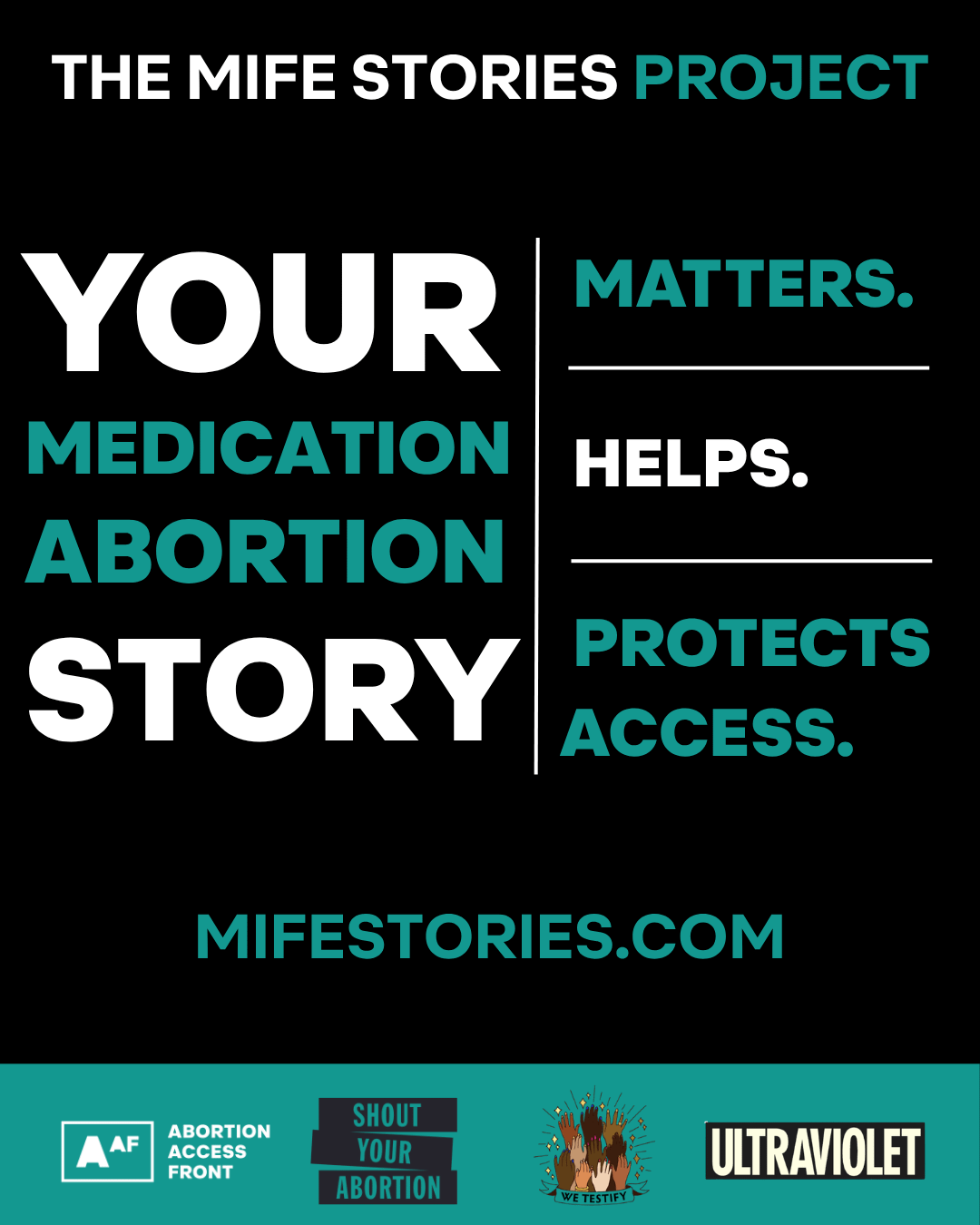
If you've ever had to fight for reproductive healthcare, or loved someone who has, the Mife Stories Project wants to hear from you. Abortion Access Front is collecting real stories from real people about their experiences with Mifepristone, because the best counter to people who want to take your medication away is the truth about who actually uses it and why. Go read the stories. Share yours if you're able. The opposition is counting on your silence. Don't give it to them.
‘An existential crisis’: residents pay for Nashville boom [Financial Times]
Gavel Down: Republicans Made Immigration Crackdowns Their Top Issue
Tennessee House Democrats say they’ve been removed from committees
Stockard on the Stump: Tennessee Republicans carefully consolidate power
More state troopers, no grocery tax cuts in Tennessee’s $58B budget
Stockard on the Stump: Tennessee Correction leader linked to botched Arizona executions
Comments
Nothing yet. Say the first thing.
Sign in to join the conversation.