
Read Raymond Brunell’s short story, “Did You Wish For Me?”:
Click the image to get your copy!

After Dinner Conversation® - Philosophy | Ethics Short Story is a reader-supported publication. To receive new posts and support my work, consider becoming a free or paid subscriber.
Q&A
Which philosophy or philosopher most aligns with your own beliefs?
I keep returning to Maurice Merleau-Ponty and his phenomenology of embodied consciousness. His idea that we don’t just have bodies—we are bodies experiencing the world—resonates deeply with how I approach character and narrative.
My fiction often explores people who become strangers to their own flesh: a teacher whose hands betray her principles, a body that catalogues its own dissolution, someone whose implants reconfigure their sense of self. Merleau-Ponty’s work reminds me that consciousness isn’t something floating above physical experience—it’s inseparable from the meat and blood doing the perceiving.
I’m also drawn to Albert Camus and his confrontation with absurdity. Not the despair, but the stubborn insistence on finding meaning anyway. My characters often face impossible moral equations—systematic injustices that can’t be individually solved, traumas that logic can’t metabolize. The question becomes: what do you do when there are no good answers? Camus suggests we keep showing up, keep choosing, even knowing the world might be fundamentally indifferent to our efforts.
Together, these philosophers capture something essential about my work: we are embodied beings trying to make meaning in a world that offers no guarantees. The body remembers what the mind tries to forget. And somehow, despite everything, we persist.
Is there any standard publishing or writing advice that you disagree with? Or any standard advice that you feel is too often neglected?
I push back against “show don’t tell” as an absolute rule. Some of my most effective stories use clinical distance, procedural language, or direct statements precisely because emotional removal serves the theme. When I’m writing about dissociation, algorithmic logic, or psychological dissolution, sometimes “telling” in a detached voice is the point. A character cataloguing their body’s failure in flat medical terminology can be more devastating than lyrical description—because the absence of feeling is the feeling.
I also reject the pressure to make every protagonist “likeable” or “relatable.” Some of my characters make morally reprehensible choices. A teacher steals food from the community kitchen she volunteers at. A parent abandons their principles to secure their child’s advantage. These aren’t people you’d want to have coffee with—but their failures reveal something true about how systems of scarcity and inequality corrupt even those who believe they’d never compromise. Fiction’s job isn’t to provide moral comfort.
As for neglected advice: Let structure serve the theme, even if it’s weird.
New writers often hear “master the basics before you experiment,” but I think that creates a false binary. If your story is about fractured consciousness, why wouldn’t you fragment the narrative? If it’s about surveillance and data collection, maybe procedural language and forms are exactly right. The “experimental” label makes it sound like decoration, but form is meaning. A story about algorithmic control that reads like a bureaucratic report isn’t being clever—it’s using the only structure that makes thematic sense.
The advice I wish more writers internalized: Your reader’s comfort is not your responsibility. Their engagement is.
Literary horror taught me this. You can make readers profoundly uncomfortable—disturbed, even—as long as you’re doing it with purpose and craft. Don’t avoid darkness because you’re worried about being “too much.” Lean into what your story needs, trust your structure, and don’t sand down the sharp edges to make your work more palatable.
Some stories need to be cold. Some need to be procedural. Some need to withhold emotional payoff. That’s not a failure of craft—that’s precision.
Is your process for writing philosophical fiction different from the way you approach other works?
I don’t really distinguish between “philosophical fiction” and my other work—every story I write is asking a question I can’t answer any other way. The philosophy isn’t something I add on top of plot; it’s why the story exists in the first place.
My process usually starts visceral, not intellectual. I’ll be haunted by an image or feeling: a teacher’s hands stealing food from children. A body that measures its own dissolution. Someone discovering their memories are being rented out to algorithms. The emotional discomfort comes first—the “wrongness” of something I can’t quite articulate.
Then the writing becomes an investigation. What makes this feel so unbearable?
With “Slow Hands” (a kindergarten teacher story), I started with that image of someone stealing from the community kitchen they volunteer at. Why would someone sabotage the very abundance they help create? The story excavated the answer: because trauma’s logic conflicts with community’s logic. Because the body remembers scarcity even when the hands serve plenty. That’s philosophical—but it emerged from the character’s contradiction, not from me deciding to “write about trauma and community systems.”
The structure follows the question.
If I’m exploring fractured consciousness, the narrative fragments. If it’s about algorithmic control, procedural language becomes the only honest choice. Stories about dissociation shouldn’t feel warm and cohesive—that would be a lie. The form has to serve whatever philosophical tension I’m investigating.
I think the real difference in my process is that I don’t resolve the questions.
Commercial fiction often demands answers: the character learns the lesson, the moral becomes clear. But philosophical fiction lives in the discomfort of irresolution. My teacher makes an impossible choice and I don’t tell the reader whether she’s a monster or a victim—because the point is that those categories fail when systems are broken enough. The reader has to sit with that ambiguity, just like the character does.
So no, my process isn’t different for “philosophical” work. All fiction is philosophy when you’re honest about what you don’t know.
What is the greatest compliment you have received as a writer? The most stinging criticism?
A reader told me one of my stories made them feel “beautifully unsafe.”
That phrase stuck with me because it captured exactly what I’m trying to do. Not shock for shock’s sake, not discomfort as punishment—but that specific sensation of being in skilled hands while experiencing something genuinely destabilizing. They trusted the craft enough to surrender to the unease. That’s the entire game: make readers feel something they can’t look away from, even when it’s uncomfortable.
Close second: An editor who rejected a story told me it was “too precisely what it needed to be for us to publish it.” They meant the clinical detachment and experimental structure served the theme so completely that it couldn’t be edited into their house style without breaking it. That rejection felt like a compliment—it meant I’d committed fully to the story’s logic rather than hedging toward palatability.
Most stinging criticism:
Early in my writing, someone told me: “Your characters observe their own suffering like they’re taking notes for later.”
It stung because it was absolutely true—and I hadn’t realized how much emotional distance I was defaulting to. I was so focused on intellectual precision that I’d forgotten bodies exist. Characters were thinking about pain rather than experiencing it.
That criticism fundamentally changed how I write. Now I’m obsessive about embodiment—how does this feel in the meat? What does the body know that consciousness can’t access? I still use clinical distance and procedural language, but now it’s a choice serving the theme, not a dodge.
The lesson: Intellectual rigor without physical grounding isn’t depth—it’s avoidance. Some of my best work now lives in that tension between the mind trying to catalogue experience and the body refusing to be reduced to data.
Both pieces of feedback taught me the same thing: Commit completely to what the story needs, even when it’s uncomfortable for you as the writer. Don’t retreat into safety. The readers can tell.
Which authors or books would you recommend to those who want to challenge their own thinking?
Octavia Butler’s Parable series should be required reading for anyone who thinks they understand power. Butler doesn’t let you have comfortable heroes or easy villains. Her characters survive by compromising, by making choices that would horrify their earlier selves. She forces you to ask: what would you actually do when principle conflicts with survival? Not what you’d like to believe you’d do—what would you actually do? That’s the kind of honesty that changes how you see the world.
Kazuo Ishiguro’s The Remains of the Day taught me more about complicity than any political theory. Stevens the butler has spent his entire life in service to Lord Darlington—a naive aristocrat manipulated into Nazi appeasement through gullibility rather than malice. Ishiguro’s genius is showing how decent, intelligent people rationalize themselves into collaboration with evil not through dramatic moral failures, but through small surrenders accumulating over decades. It’s devastating precisely because Stevens never becomes a monster—and Darlington never intended to become complicit. They just chose dignity, loyalty, and comfort over confronting uncomfortable truths.
Carmen Maria Machado’s In the Dream House explodes the boundaries between memoir, criticism, and experimental fiction. She writes about domestic abuse in a queer relationship using every narrative structure imaginable—choose-your-own-adventure, second person, noir, bildungsroman. The form is the argument: when traditional narrative structures fail to capture your experience, you have to build new ones. It’s a masterclass in letting structure serve truth.
Jeff VanderMeer’s Annihilation does what the best speculative fiction should: makes you question whether human consciousness is even equipped to understand the systems we’re embedded in. The biologist protagonist encounters something that doesn’t operate by human logic, and her attempts to catalogue and control it through scientific language fail spectacularly. It’s about the hubris of believing our frameworks can contain everything—and what happens when they can’t.
For short fiction, Kelly Link writes like reality’s coming unglued at the seams. Her work (”The Faery Handbag,” “Stone Animals”) treats the uncanny as mundane and the mundane as terrifying. She taught me that you don’t need to explain the weird parts—just commit to them completely and trust readers to follow.
The throughline: These books don’t challenge thinking by presenting new information. They challenge thinking by forcing you to confront what you’d rather not know about yourself—how easily principles collapse under pressure, how complicit we all are in broken systems, how arbitrary our sense of identity really is.
That’s the kind of reading that changes you.
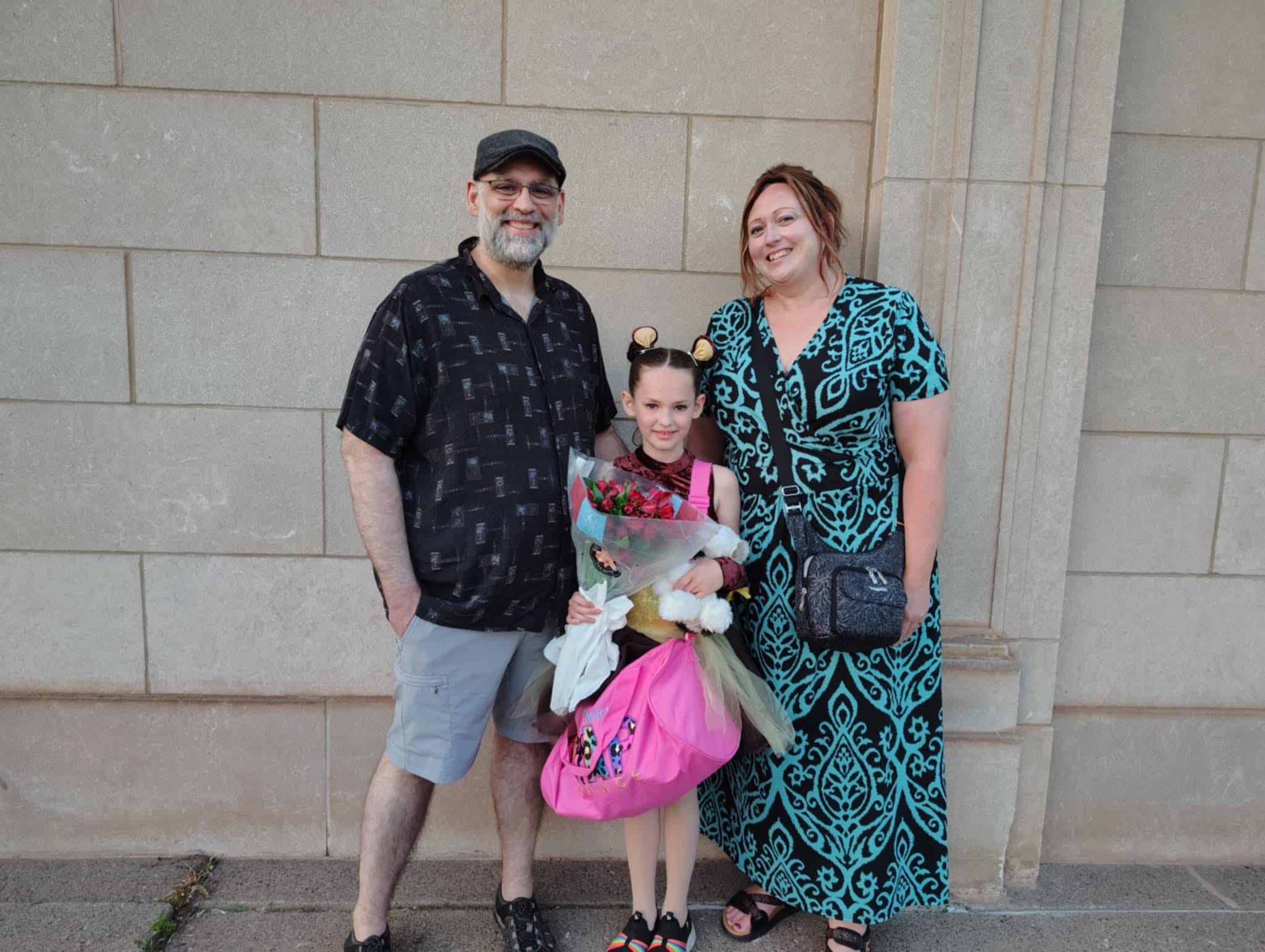
Raymond Brunell writes literary horror and speculative fiction exploring consciousness, identity, and psychological dissolution. His work has appeared in Skeleton Flowers Press, Moss Puppy Magazine, Across the Margin, Literary Garage, and over thirty other venues. Born and raised in Michigan’s Upper Peninsula, he crafts stories about what endures when everything else falls away. www.unbound-atlas.com
Share After Dinner Conversation® - Philosophy | Ethics Short Story
Comments
Nothing yet. Say the first thing.
Sign in to join the conversation.